USC Alumnus debuts ‘Neon AR’ augmented reality application
The world of augmented reality has made incredible strides in recent years, and now USC students will be among the first to demo one of the most exciting apps in the field to date. Utilizing the burgeoning technology of AR, the new app Neon AR will make it easier to meet up with friends and navigate to points of interest. With its social-friendly interface, the app is designed to give users a fun experience that complements the practicality of the service it provides.
I thought to myself, ‘Wouldn’t it be amazing if we came back to this spot years later, with friends or kids, and I was able to open my phone and see a neon sign, saying this is where David camped on July 10, 2015?’” he said. “That was the genesis of it, the ability to expand a new layer on the world, and have a more engaging visceral connection with the physical world.”
Neon AR works by latching on to the user’s phone’s GPS signal, and then digitizing their real world location onto the phone with the onboard camera. When trying to find a user’s friend, the app positions a beacon that remains in place on the screen, allowing them to make their way over to them with the virtual aid. The user interface incorporates fun elements to enliven the experience, and make the on-screen world even more engaging.
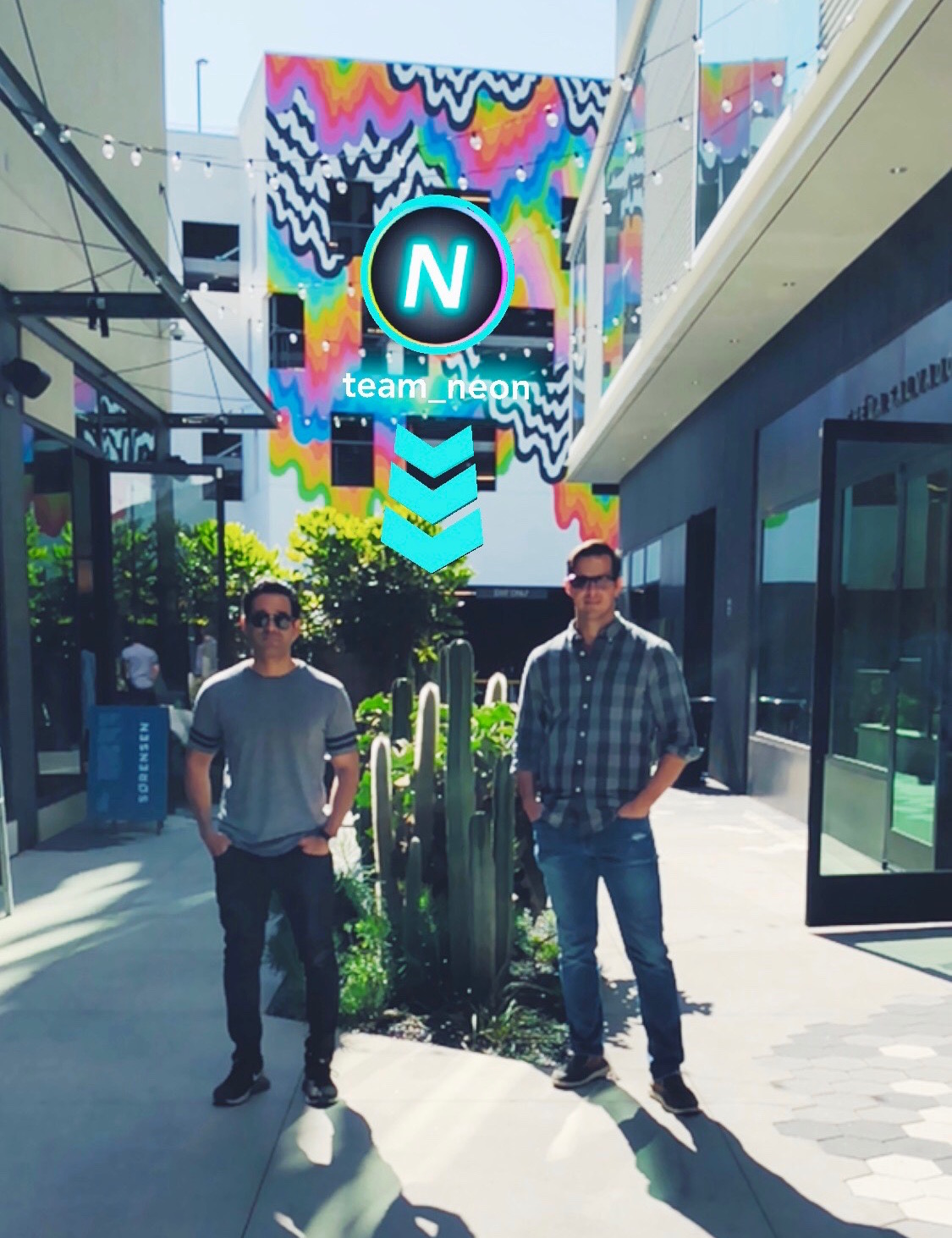
Neon, a new app created by alumnus Dave Urbina, augments reality by allowing users to see virtual makers showing where their friends are and “shoot” 3D emojis at people with the app in close proximity. Photo courtesy of Dave Urbina.
Founder Dave Urbina attended USC, and said that conducting beta testing with students at his alma mater was an easy decision.
“The way that you interact in the app, you can shoot 3-D emojis at people,” Urbina said. “So I shoot emojis at Tim and he gets a push notification, so he opens his phone and turns in my direction, and they come zooming at him, and he can fire back.
Urbina sees the app becoming popular at massive gatherings such as Coachella Valley Music and Arts Festival, where meeting up with groups amid large crowds can often be difficult.
See the full story here: https://dailytrojan.com/2018/03/01/alumnus-debuts-neon-augmented-reality-application/
Life through Lens: inside Google’s plan to re-skin reality
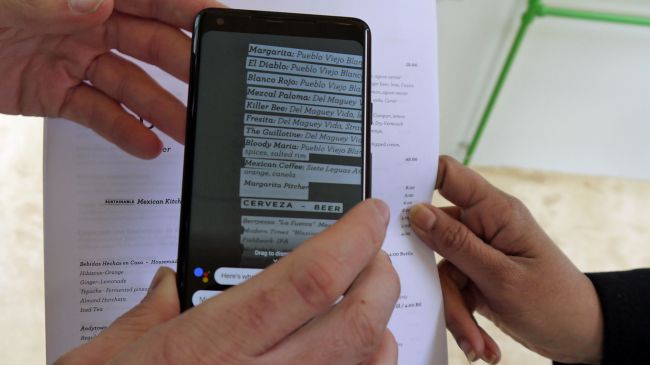
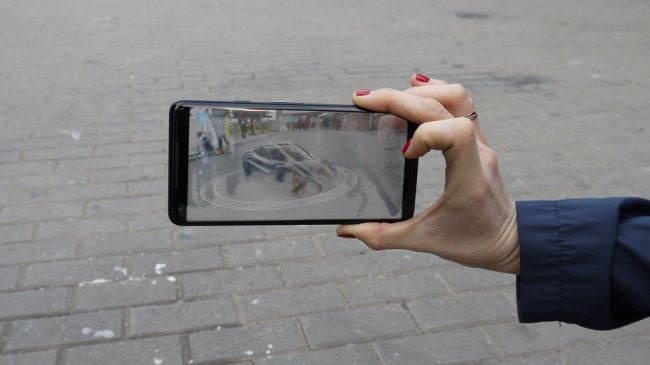 Originally locked to the Google Pixel range, Google has opened up the SDK called ARCore 1.0. It’s now out of preview and comes complete with improvements and learnings Google has amassed since first announcing ARCore in August 2017 and before that with its Project Tango platform.
“It’s the ultimate try before you buy,” says Amit Singh, vice president of AR and VR at Google.
“The ability to re-skin reality is compelling here,” says Aparna Chennapragada, Product Lead of Lens. “But to even create that space you need to know what the semantic meaning is of what you are looking at, and that is why we started Lens.
“Yes, we’re putting digital into the real world but we’re attaching semantic meaning to it. If you want to know something about an object, you tap into the rest of Google. The knowledge graph, maps, the whole shebang.
"Lens is a powerful visual intelligence layer.”
“On the web, you know something in a bigger font is important, something that starts a paragraph is another thing. We use all of that experience and apply it to being able to browse the real world.”
“It sounds deceptively simple but it’s incredibly powerful,” continues Chennapragada. “Say, for something like Coachella - you have a lineup on a poster and you want to see what each of these bands are like. You can use Lens, immediately find them on YouTube, and instantly get a sense of who is playing there.”
See the full story here: https://www.techradar.com/news/life-through-lens-inside-googles-plan-to-re-skin-reality
Google AI now can give YouTube videos a wacky background
Machine learning proves its worth for new video effects tech: distinguishing between faces and backgrounds at 100 frames per second.
Google, though, trained a neural network with lots of carefully labeled imagery that helped it learn how to distinguish facial features -- eyes, hair, glasses, mouths and so on -- from everything else. The result is a system that can swap out backgrounds fast enough to keep up with video. Digital video frames whip by at 30 frames per second, but Google's technology works at 40 frames per second on a Google Pixel 2 phone and more than 100 frames per second on an Apple iPhone 7.
Want to try it out for yourself? Sorry. For now, it's available to only a pretty small number of high-profile YouTubers with access to the YouTube stories service, which offers an ability to share Snapchat-esque short videos.
Google detailed the research in a blog post Thursday.
"Our new segmentation technology allows creators to replace and modify the background, effortlessly increasing videos' production value without specialized equipment," Google programmers Valentin Bazarevsky and Andrei Tkachenka said in the blog post.
See the full story here: https://www.cnet.com/news/google-ai-can-give-youtube-videos-a-wacky-background/
Home Society & Culture Society Virtual Reality Technology Enters A Chinese CourtroomSOCIETYVirtual Reality Technology Enters A Chinese Courtroom
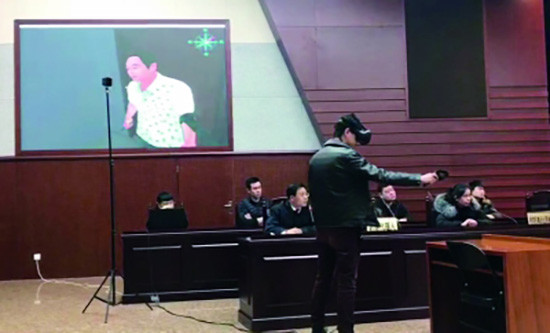 On Thursday, March 1, at a courtroom in Beijing’s No. 1 Intermediate People’s Court, a man surnamed Dong became the first person in China using virtual reality technology to revisit a crime scene from last September, where he was the only witness at the scene.
Wearing a VR headset and with his hands on a console, Dong immersed himself in the middle of the scene, while a projector screen in front of him simultaneously showed what he saw to everyone in the courtroom, including judges and lawyers.
The case that Dong is testifying about, according to Legal Daily, concerns a 30-year-old suspect named Zhang who is charged with murder. On September 13, 2017, the suspect came to an office building in Haidian District in Beijing to argue with his 19-year-old girlfriend, Liu. During the dispute, Zhang stabbed Liu to death after he cut himself with a knife three times.
The introduction of VR technology is part of a “courtroom evidence visualization system” developed by the local court. The system also includes a newly developed computer program that allows lawyers to present evidence with higher quality and efficiency, which will replace a traditional PowerPoint slideshow.
It is reported that the system will soon be implemented in courtrooms across the city of Beijing.
See the full story here: http://supchina.com/2018/03/01/virtual-reality-technology-enters-a-chinese-courtroom/
Virtual reality theme park opens at Dubai Mall
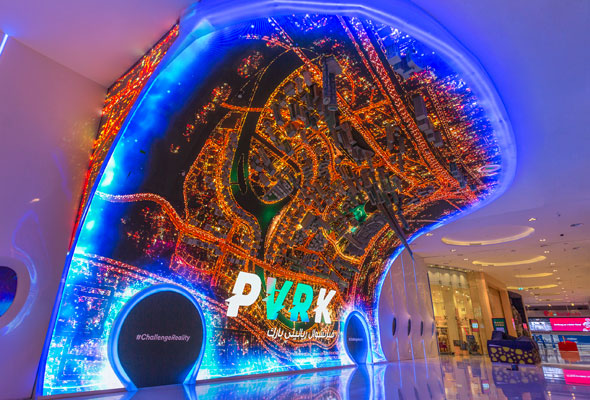
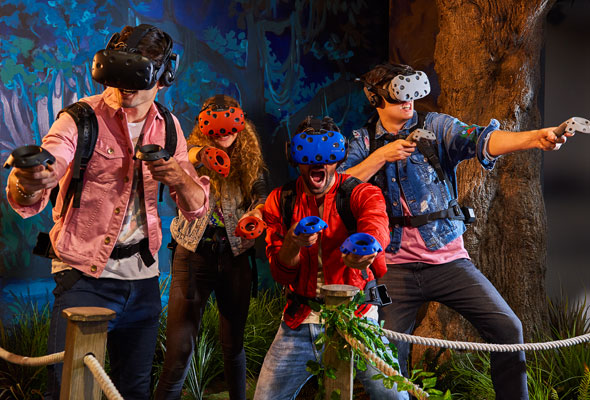
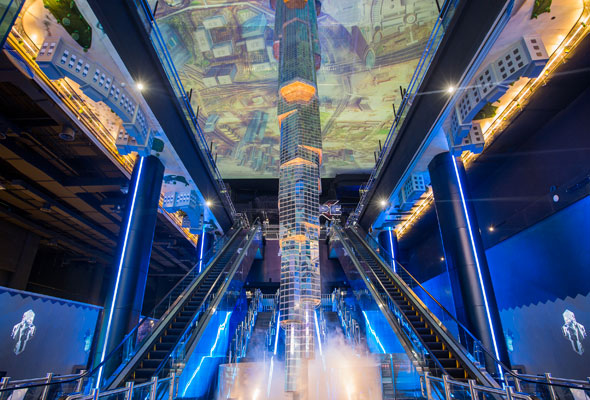 The two-storey attraction comes complete with 18 experiences suitable for different ages. Entry to VR park is free, with each activity and experience priced individually from Dhs15 to Dhs45.
Combining augmented reality, virtual reality and experiential attractions, expect to feel like you’re propelling down the side of Burj Khalifa in “Burj Drop”, or hold on tight as your “Dubai Drone Taxi” spins out of control on a rollercoaster adventure ride.
Adrenaline junkies should head to “Plummet”, the skydiving experience giving aerial views of the city, or take on a hair-raising “Dune Bash” experience featuring encounters with camel spiders, scorpions and snakes.
Level 2, The Dubai Mall, Downtown Dubai, 10am to 11pm Sunday to Wednesday, 10am to 1am Thursday to Saturday, free entry, experiences priced from Dhs15 to Dhs45. VRparkdubai.com
See the full story here; http://whatson.ae/dubai/2018/03/virtual-reality-theme-park-opens-dubai-mall/
FoxNext VR Selects ‘Planet of the Apes’ for its First VR Game
 VentureBeat reports that, in “Crisis on the Planet of the Apes,” “players can expect to band together with other captive apes, confront human violence and channel primate instincts to survive.”
“VR has always held the promise of bringing together the cinematic storytelling of film and the deeply immersive interactivity of games,” said FoxNext VR Studio senior vice president/general manager Brendan Handler. “‘Crisis on the Planet of the Apes’ VR takes this potential to the next level. We set out to give the fan a lead role in this dark Planet of the Apes world — to feel the ape’s strength, power and movement as he fights his way to safety.”
See the full story here: http://www.etcentric.org/foxnext-vr-selects-planet-of-the-apes-for-its-first-vr-game/