FoxNext VR Selects ‘Planet of the Apes’ for its First VR Game
 VentureBeat reports that, in “Crisis on the Planet of the Apes,” “players can expect to band together with other captive apes, confront human violence and channel primate instincts to survive.”
“VR has always held the promise of bringing together the cinematic storytelling of film and the deeply immersive interactivity of games,” said FoxNext VR Studio senior vice president/general manager Brendan Handler. “‘Crisis on the Planet of the Apes’ VR takes this potential to the next level. We set out to give the fan a lead role in this dark Planet of the Apes world — to feel the ape’s strength, power and movement as he fights his way to safety.”
See the full story here: http://www.etcentric.org/foxnext-vr-selects-planet-of-the-apes-for-its-first-vr-game/
High Fidelity Takes Us Dancing In A Virtual Reality Club
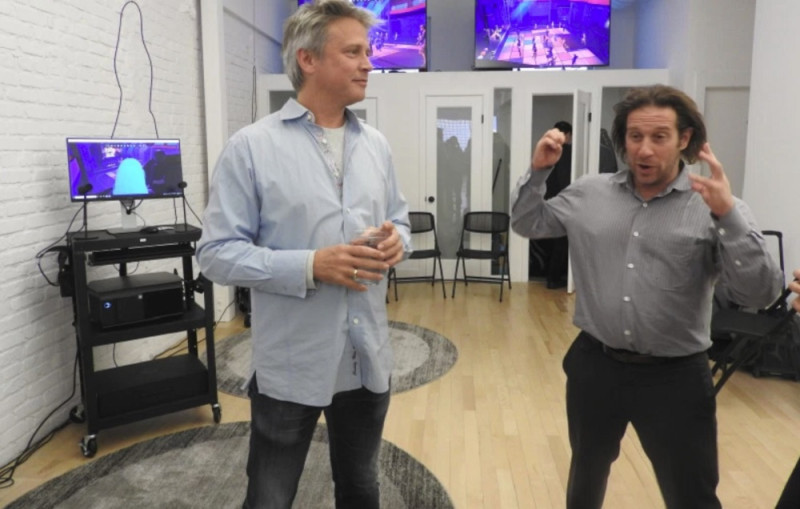 Yes, I went dancing in the dance club in VR, and talked to a bunch of people all at once. I even allowed strangers to touch my avatar in VR so that I could physically feel what it was like to have a sense of touch in the cyber world.
The experience felt real, as the movements of the real dancers were in sync with their virtual characters. High Fidelity made it possible by bringing down the latency, or interaction delays, to about a tenth of a second. The quick interaction, combined with the lights and the sound of music and voices, made the dancing experience more believable in VR, Rosedale said.
We saw a dancer floating in the air, like they do in Ready Player One. And we saw a dancer upside down, defying gravity, walking on the bottom of a crystal disco ball. We gathered around Rosedale and struggled to listen to him amid the dance music. But I could hear him. The audio seemed to come from different directions, but I had trouble identifying which avatar was talking until I saw the avatar’s lips move in sync with the voice.
High Fidelity brought in a half-dozen dancers and equipped them with HTC Vive VR headsets. They also had Vive Trackers, or sensors that were attached to their legs, hips, and backs. Those sensors captured their full body movements, and High Fidelity translated those moves into much better action on the dance floor. I could only wave my arms around, but those dancers were moving everything.
See the full story here: https://uploadvr.com/high-fidelity-takes-us-dancing-virtual-reality-club/
Paul Allen Wants to Teach Machines Common Sense

But these machines struggle with other basic tasks. Though Amazon’s Alexa does a good job of recognizing what you say, it cannot respond to anything more than basic commands and questions. When confronted with heavy traffic or unexpected situations, driverless cars just sit there.
A.I. “recognizes objects, but can’t explain what it sees. It can’t read a textbook and understand the questions in the back of the book,” said Oren Etzioni, a former University of Washington professor who oversees the Allen Institute for Artificial Intelligence. “It is devoid of common sense.”
Mr. Allen helped fund Cyc, and he believes it is time to take a fresh approach, he said, because modern technologies make it easier to build this kind of system.
Mr. Lenat welcomed the new project. But he also warned of challenges: Cyc has burned through hundreds of millions of dollars in funding, running into countless problems that were not evident when the project began. He called them “buzz saws.”
See the full story here: https://www.nytimes.com/2018/02/28/technology/paul-allen-ai-common-sense.html
These Augmented Reality Sculptures Make Any Environment An Art Installation
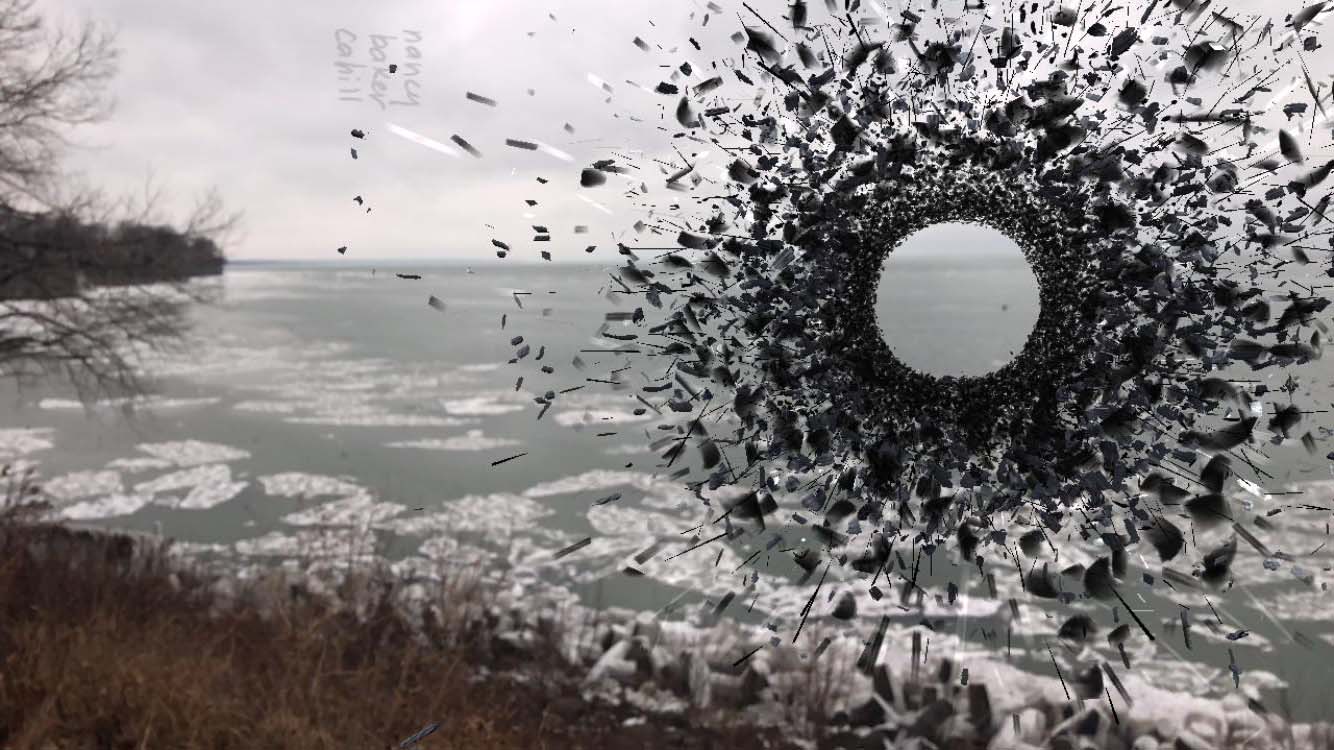 Los Angeles-based artist Nancy Baker Cahill recently released 4th Wall, an iOS appthat allows audiences across the globe to view her drawings in their own environments through the wonders of augmented reality. With AR, they can become a part of many different environments, at least temporarily. Over the last few weeks, her work has turned up in some surprising places, a few of which have been documented on the app's Instagram feed. They've flown through the sky above Malawi, dangled over a London street, and floated down the Los Angeles River. One even traveled the baggage carousel at Los Angeles International Airport. With an app, Cahill's drawings can go anywhere.
"It really is a new iteration of public art," says Cahill by phone. To create this project, the artist herself stepped inside AR's cousin, virtual reality.
See the full story here: https://www.good.is/articles/nancy-baker-cahill-vr-ar
Midwifery students use virtual reality to learn the stages of pregnancy with 3D female figure
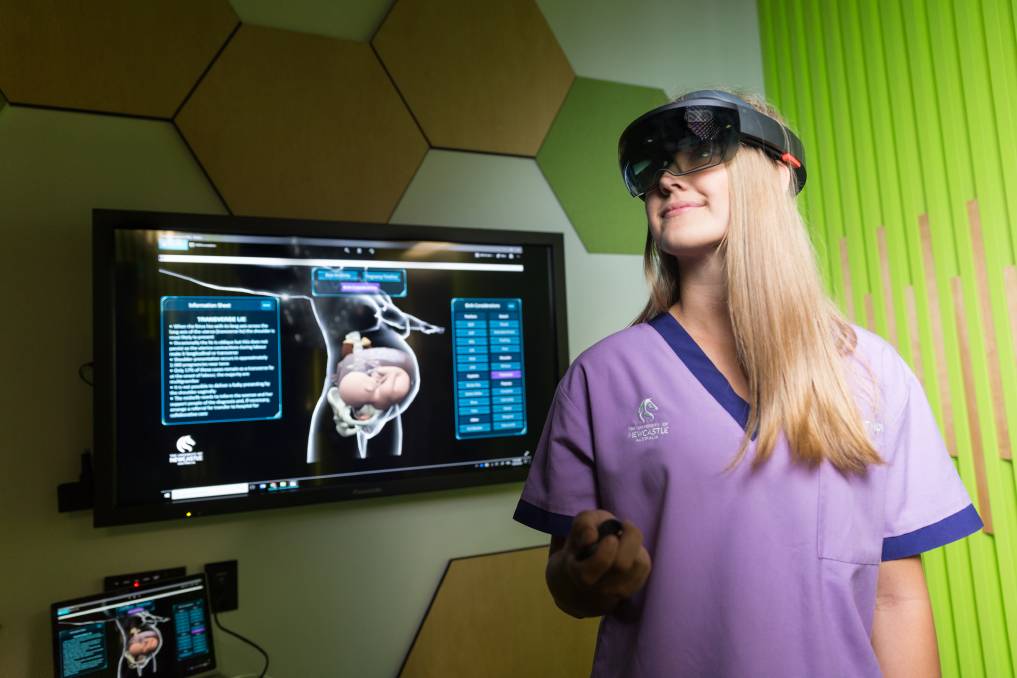 MIDWIFERY students at the University of Newcastle are going beyond textbooks, dolls and diagrams to learn about the stages of pregnancy via a virtual window into the human body.
The world-first virtual reality technology, developed by the university’s School of Nursing and Midwifery and IT Innovation team, is giving students a visual insight into the internal stages of childbearing, and its effect on the human body.
“At the moment we teach with dolls and pelvises, and I can tell you firsthand from being a student, as well as an educator, the position of the placenta is one of the hardest things to learn, and yet it’s absolutely one of the most imperative things to know."
With a digital headset, students can explore and observe the gestational stages of a detailed, life-sized 3D female figure without any visual barriers.
See the full story here: http://www.theherald.com.au/story/5258905/world-first-virtual-reality-tech-gets-under-the-skin-for-students/
CryptoHunt Aims To Mix Cryptocurrency With Augmented Reality
 Those interested in a new way to earn some extra Cryptocurrency will be pleased to know that it is getting the gamification treatment with CryptoHunt.
CryptoHunt is a location based augmented reality (AR) videogame that is designed to make the act of farming Cryptocurrency a more social and fun activity. By using a similar setup to that of Pokémon Go, players will be able to walk about, earning real value coins as they explore, hunt and solve riddles to collect the CryptoHunt tokens.
A demo for CryptoHunt allows users on both iOS and Android to create an account and start exploring the title in real time.
See the full story here: https://www.vrfocus.com/2018/02/cryptohunt-aims-to-mix-cryptocurrency-with-augmented-reality/