Bad News: the game researchers hope will ‘vaccinate’ public against fake news
 Fake news is already an entire industry, an anti-democratic weapon, a movie, a play, an insult and a cliche.
Now it is being turned into a game – to help people understand its wiles and deceptions.
Cambridge researchers have built an online game, simply titled Bad News, in which players compete to become “a disinformation and fake news tycoon”. By shedding light on the shady practices, they hope the game will “vaccinate” the public, and make people immune to the spread of untruths.
“The idea is that once you’ve seen the tactics, and used them in the game, you build up resistance,” said Sander van der Linden, director of the Cambridge Social Decision-Making Lab. “We want the public to learn what these people are doing by walking in their shoes.”
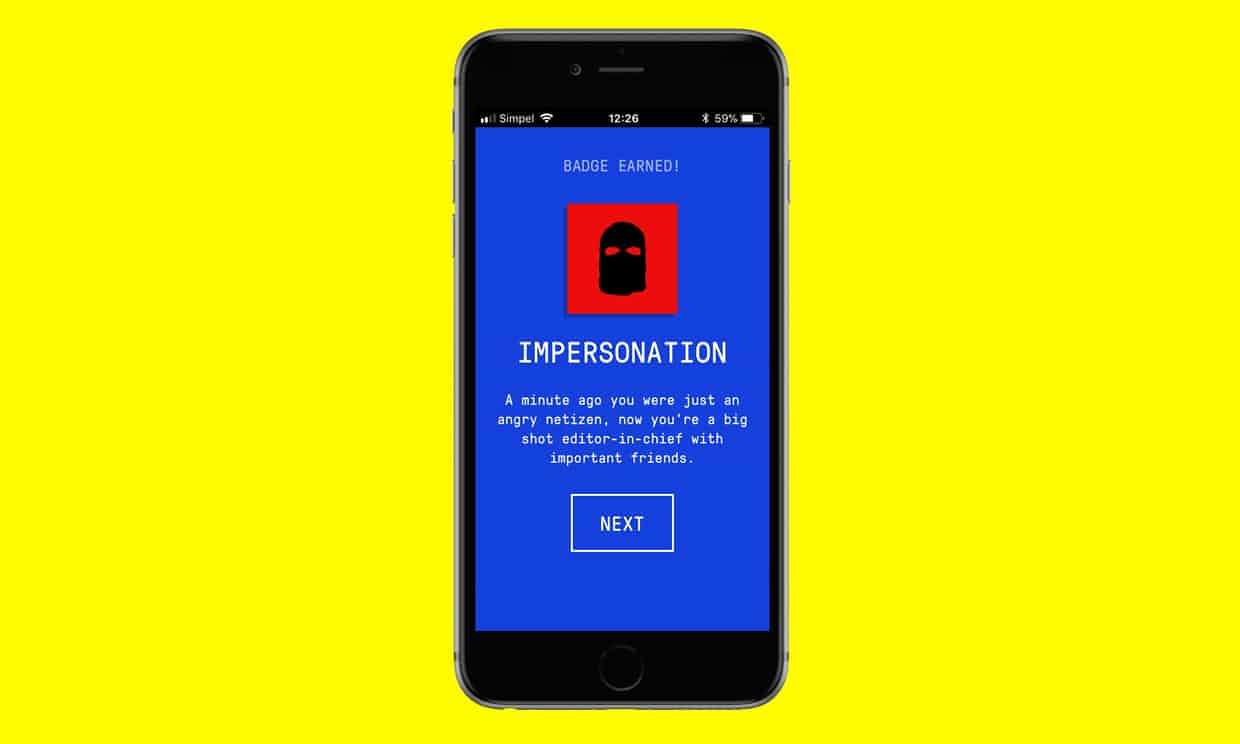
The game distills the art of undermining the truth into six key strategies. Once a player has demonstrated a knack for each, they are rewarded with a badge.
Is there a danger the game might turn players to the dark side? “I think it’s worth taking the risk given how many people we could educate with this.”
The work is due to be published in the Journal of Risk Research.
See the full story here: https://www.theguardian.com/technology/2018/feb/20/bad-news-the-game-researchers-hope-will-vaccinate-public-against-fake-news
IBM teams up with Unity to bring Watson into virtual reality environments
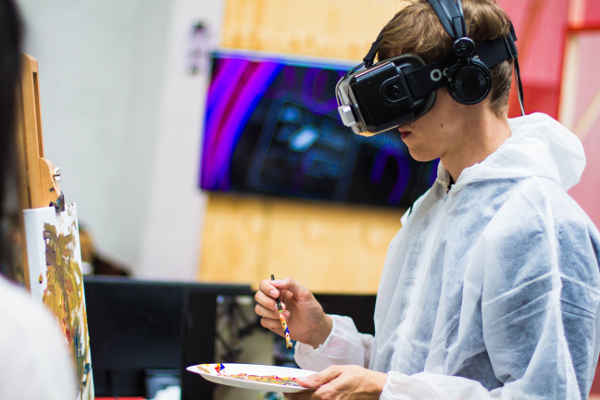 Companies have begun seriously experimenting with how virtual reality can be applied in work environments to streamline tasks such as product design. Now, IBM Corp. is looking to capitalize on the trend.
As part of the effort, the technology giant today announced a partnership with Unity Technologies Inc., the maker of a popular game engine touted as the industry’s most widely used platform for building VR applications. The software also lends itself to creating augmented realityservices. IBM has collaborated with Unity to build a development kit for the platform that will let companies draw on its cloud-based Watson artificial intelligence suite in their projects.
The offering brings several major capabilities to the table. The first and arguably most versatile of the bunch is the ability to analyze the objects in a virtual environment using Watson Visual Recognition.
See the full story here: https://siliconangle.com/blog/2018/02/20/ibm-teams-unity-bring-watson-virtual-reality-environments/
Meet the World’s First Personal Augmented Reality Planetarium
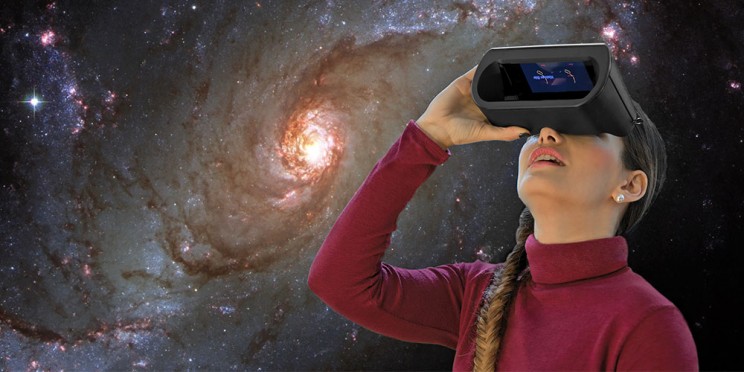 Universe2Go—the world’s first smartphone-based augmented reality viewer—is here to help, by allowing you to view the heavens with unprecedented clarity and insight for just $46.99.
Compatible with both Android and iOS systems, Universe2Go is your go-to gadget for visualizing and understanding the universe. You’ll enjoy a stunning close-up view of the night sky while getting detailed information about what you’re looking at—whether it’s a constellation, planet, or nebula.
See the full story here: https://interestingengineering.com/meet-the-worlds-first-personal-augmented-reality-planetarium
Fake news is an existential crisis for social media
 The funny thing about fake news is how mind-numbingly boring it can be. Not the fakes themselves — they’re constructed to be catnip clickbait to stoke the fires of rage of their intended targets. Be they gun owners. People of color. Racists. Republican voters. And so on.
The really tedious stuff is all the also incomplete, equally self-serving pronouncements that surround ‘fake news’. Some very visibly, a lot a lot less so.
....
As Zeynep Tufekci has eloquently argued: “The most effective forms of censorship today involve meddling with trust and attention, not muzzling speech itself.”
So we also get subjected to all this intentional padding, applied selectively, to defuse debate and derail clear lines of argument; to encourage confusion and apathy; to shift blame and buy time. Bored people are less likely to call their political representatives to complain.
Truly fake news is the inception layer cake that never stops being baked. Because pouring FUD onto an already polarized debate — and seeking to shift what are by nature shifty sands (after all information, misinformation and disinformation can be relative concepts, depending on your personal perspective/prejudices) — makes it hard for any outsider to nail this gelatinous fakery to the wall.
....
Every gun outrage in America is now routinely followed by a flood of Russian-linked Twitter bot activity. Exacerbating social division is the name of this game. And it’s playing out all over social media continually, not just around elections.
...
Really, the case for social media regulation is starting to look unstoppable.
But even with unfettered access to internal data and the potential to control content-sifting engines, how do you fix a problem that scales so very big and broad?
Regulating such massive, global platforms would clearly not be easy. In some countries Facebook is so dominant it essentially is the Internet.
So, again, this problem looks existential. And Zuck’s 2018 challenge is more Sisyphean than Herculean.
And it might well be that competition concerns are not the only trigger-call for big tech to get broken up this year.
See the full story here: https://techcrunch.com/2018/02/18/fake-news-is-an-existential-crisis-for-social-media/?utm_medium=TCnewsletter
How Magic Leap Wants to Help Publishers Bring Their Videos to Mixed Reality (Q&A)
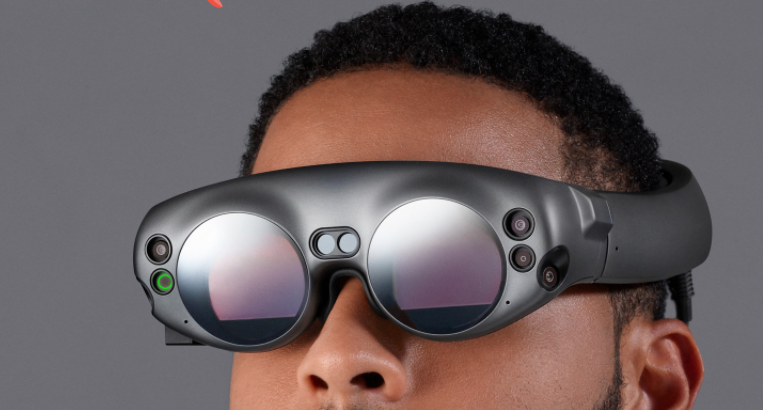 What exactly is the Magic Leap Screens platform?
Screens is a platform that traditional video publishers can use to distribute content on Magic Leap. We’ve created a special set of APIs that will be available to key early video publishing partners.
Is this primarily for 2D content, or also holographic video?
The Screens platform showcases both volumetric video and traditional 2D video content. We will have tools and plug-ins to enable volumetric playback of 3D-captured scenes, and there are third parties that can help with the capture and production of sophisticated volumetric video.
See the full story here: http://variety.com/2018/digital/news/magic-leap-screens-video-publishers-1202702269/
HOW AUGMENTED REALITY IS SHAPING THE FUTURE OF PLAY

 Now, Snyder acts as an AR ambassador to his friend group. Sometimes, when friends come over, they see Snyder's Merge AR/VR goggles, which he leaves on the dresser in his bedroom. He’ll slide in his phone, show them how it works, and let them take it for a spin. “Their eyes pop,” he says. “They always ask me, ‘Where can you buy this?’”
Jackie Marsh, a researcher at the University of Sheffield who studies digital literacy in children, says AR experiences can be beneficial for kids, especially when the apps help kids learn something or indulge in their own fantasy play. But research also warns that these types of games, toys, and apps can fail to engage kids meaningfully, or worse, mess with a child's sense of “reality testing”—understanding what's real, and what's not. It all depends on how the AR experience is designed.
See the full story here: https://www.wired.com/story/ar-toys-the-future-of-play/