Hands On Review: Knockout League VR Boxing Is The Best Virtual Reality Fist Fight You Can Have
 The VR Health Institute estimates that playing Knockout League burns 8-10 calories a minute. At some point, this calorie counting mechanism will get more sophisticated — adding in the option for gender selection, for example, as men and women tend to burn calories at different rates due to muscle mass.
See the full story here: https://www.forbes.com/sites/zarastone/2018/02/16/hands-on-review-knockout-league-vr-boxing-is-the-best-virtual-reality-fist-fight-you-can-have/#3219b7f46eeb
The DeanBeat: High Fidelity takes us dancing in a virtual reality club
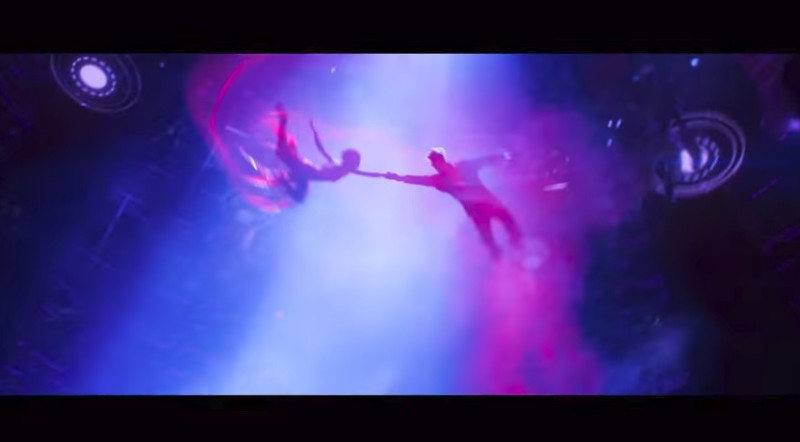
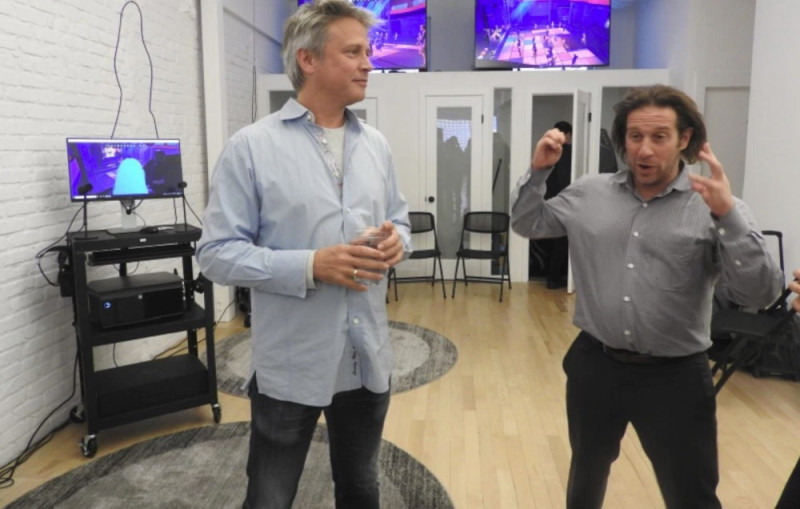 Yes, I went dancing in the dance club in VR, and talked to a bunch of people all at once. I even allowed strangers to touch my avatar in VR so that I could physically feel what it was like to have a sense of touch in the cyber world.
“‘We’re showing this for a little party today, and it’s just the beginning,” said Philip Rosedale, CEO of High Fidelity, in an interview, pointing at the room with a couple of dozen VR headsets and computers. “In a short while, we’ll bring in teachers and a class on a field trip here. We’ll start going on virtual trips with tour guides, so the teacher can take you through the pyramids in Egypt. They could send kids out to look in the environment for a hieroglyphic of a jackal and then come back. This is the start of social VR experiences. Games are fun, but it’s the social experiences that will bring people together and make a lasting impact.”
The experience felt real, as the movements of the real dancers were in sync with their virtual characters. High Fidelity made it possible by bringing down the latency, or interaction delays, to about a tenth of a second. The quick interaction, combined with the lights and the sound of music and voices, made the dancing experience more believable in VR, Rosedale said.
“You can test a lot of things in VR to see how they compare to real life,” said Jeremy Bailenson, a VR expert and communications professor at Stanford University, in an interview.
After I got out of it, Bailenson said that over time, you’ll be able to hire people who are experts at moving your body around, such as dance gyrations, and you can concentrate on things like talking to people. It will be one more aspect of a vast virtual economy, and it will be fun because it will be more intimate.
See the full story here: https://venturebeat.com/2018/02/16/the-deanbeat-high-fidelity-takes-us-dancing-in-a-virtual-reality-club/
Scientists are failing to replicate AI studies.
 Missing code and data make it tough to compare AI work. That may hurt progress.
The problem: Science reports that of a sample of 400 papers from AI conferences in recent years, only 6 percent of presenters shared code. Just a third shared data.
Why it matters: Without access to that information it’s hard to reproduce a study’s findings, making it impossible to benchmark tools that could push the field forward.
At the AAAI meeting, Peter Henderson, a computer scientist at McGill University in Montreal, showed that the performance of AIs designed to learn by trial and error is highly sensitive not only to the exact code used, but also to the random numbers generated to kick off training, and to "hyperparameters"—settings that are not core to the algorithm but that affect how quickly it learns. He ran several of these "reinforcement learning" algorithms under different conditions and found wildly different results.
Henderson's experiment was conducted in a test bed for reinforcement learning algorithms called Gym, created by OpenAI, a nonprofit based in San Francisco, California. John Schulman, a computer scientist at OpenAI who helped create Gym, says that it helps standardize experiments.
How to solve it: There’s a clear culture of keeping such details under wraps. Some meetings and journals are now encouraging sharing. Perhaps more ought follow.
Psychology has dealt with its reproducibility crisis in part by creating a culture that favors replication, and AI is starting to do the same.
Yet AI researchers say the incentives are still not aligned with reproducibility. They don't have time to test algorithms under every condition, or the space in articles to document every hyperparameter they tried.
See the full story here: http://www.sciencemag.org/news/2018/02/missing-data-hinder-replication-artificial-intelligence-studies
DroneBase raises $12 million to bring augmented reality to aerial drone imagery
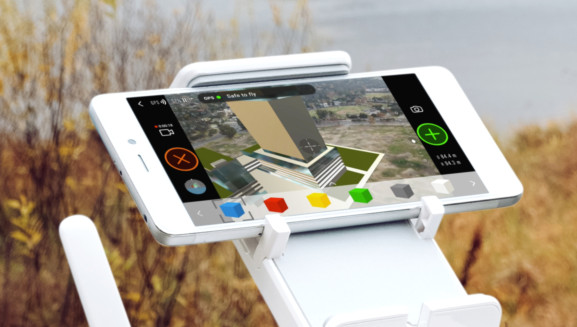 Founded out of Santa Monica in 2014, DroneBase is one of a number of drone companies to raise venture capital cash in recent years, particularly since the U.S. Federal Aviation Administration (FAA) passed new rules in 2016 allowing drones to be used commercially.
DroneBase works with businesses to provide them with drones that can capture aerial photos and videos for specific industrial work, be it analyzing construction sites or inspecting cell phone towers.
AirCraft is a beta service within the DroneBase pilot’s app that allows you to overlay virtual objects onto the landscape to build an obstacle course or help visualize how a new structure, for example, may look. While the current incarnation of AirCraft is aimed at the recreational market, the new Pro service will allow companies to upload 3D computer design models, images, and data at scale to showcase anything they want.
See the full story here: https://venturebeat.com/2018/02/15/dronebase-raises-12-million-to-bring-augmented-reality-to-aerial-drone-imagery/
The smartphone is eventually going to die, and we’re not ready for what comes next – AR and the dark side
 Again: These tech companies are asking us to hand control of our senses over to a computer with these smart glasses. If, today, a dedicated and unscrupulous party can figure out ways to get you to watch a video you don't want to see, it's anyone's guess what can happen when those same principles are applied to what we see in our everyday lives.
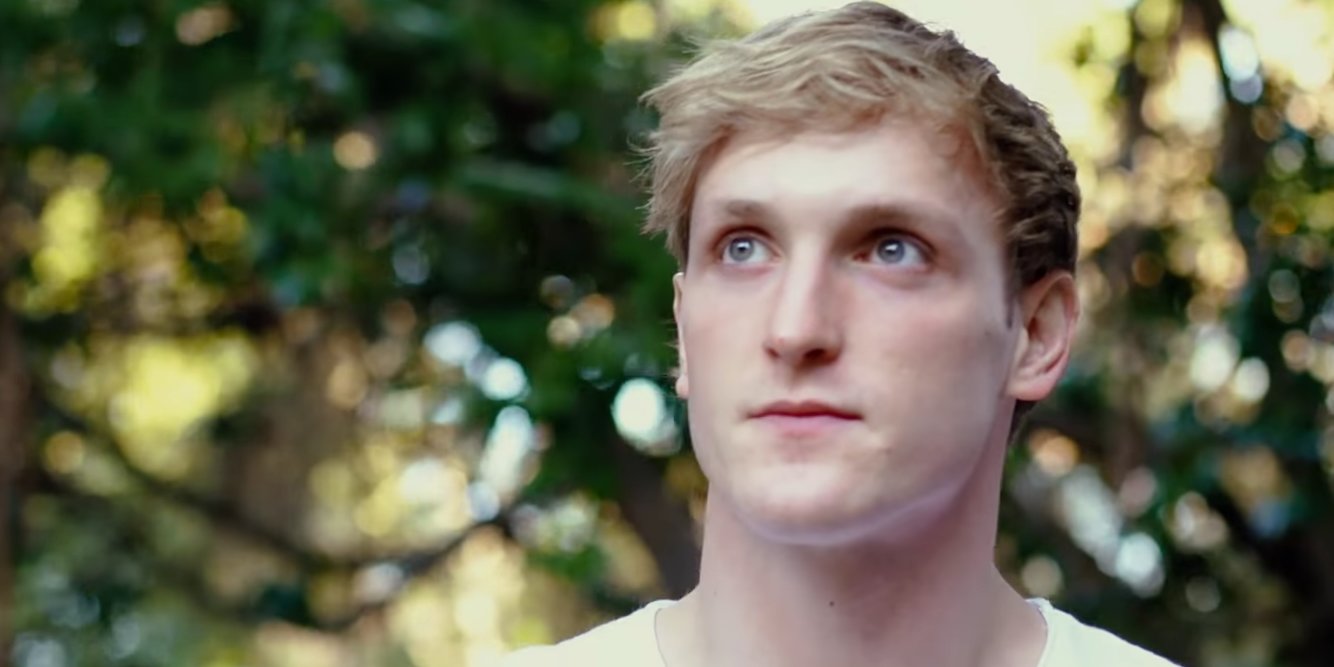
And, as Engadget pointed out, the recent controversies over YouTube star Logan Paul prove that the algorithm isn't necessarily self-policing. His now-notorious video of finding a dead body in Japan's "suicide forest" wouldn't have been picked up by any computer system as objectionable — it took the very human response of outrage to prove that.
In other words, we're trusting an imperfect system to rank the information in our lives, and soon, our senses. It's a harder problem to solve - you can always improve the quality of information you spread, but it's harder to come up with a mathematical algorithm that sorts data that doesn't have some kind of bias, one way or the other.
See the full story here: http://www.businessinsider.com/augmented-reality-could-make-fake-news-worse-2018-2
Virtual-reality field trips give Brooklyn students advanced adventure
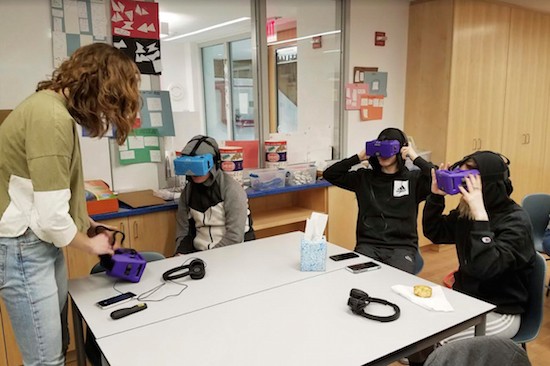 The effect on learning, he said, is to improve interest, understanding and recall.
It's unknown how many classrooms have or will adopt the technology, but experts say it's still relatively rare. While individual headsets that require a user's phone can cost as little as $20 or $30, systems and software for classes run into the thousands of dollars. Early complaints about a lack of good software are fading as more companies enter the market, but the rules for use haven't necessarily caught up to the technology.
In New York, for example, simulated lab experiments don't count toward the state's hands-on lab time requirements.
Even so, experts say, the sciences are an area where virtual reality, especially enhanced to let users manipulate their surroundings, holds particular promise for classrooms.
"The biggest hindrance, I think, is going to be the quality of that experience, how closely it mimics the physical world," said David Evans, executive director of the National Science Teachers Association.
But, he said, "the ability to do dangerous things, the ability to run many, many more cases in a simulation space as opposed to the real physical space represents a huge learning opportunity."
See the full story here: http://www.brooklyneagle.com/articles/2018/2/14/virtual-reality-field-trips-give-brooklyn-students-advanced-adventure
Japanese tour firm offers virtual reality holidays – with a first-class seat
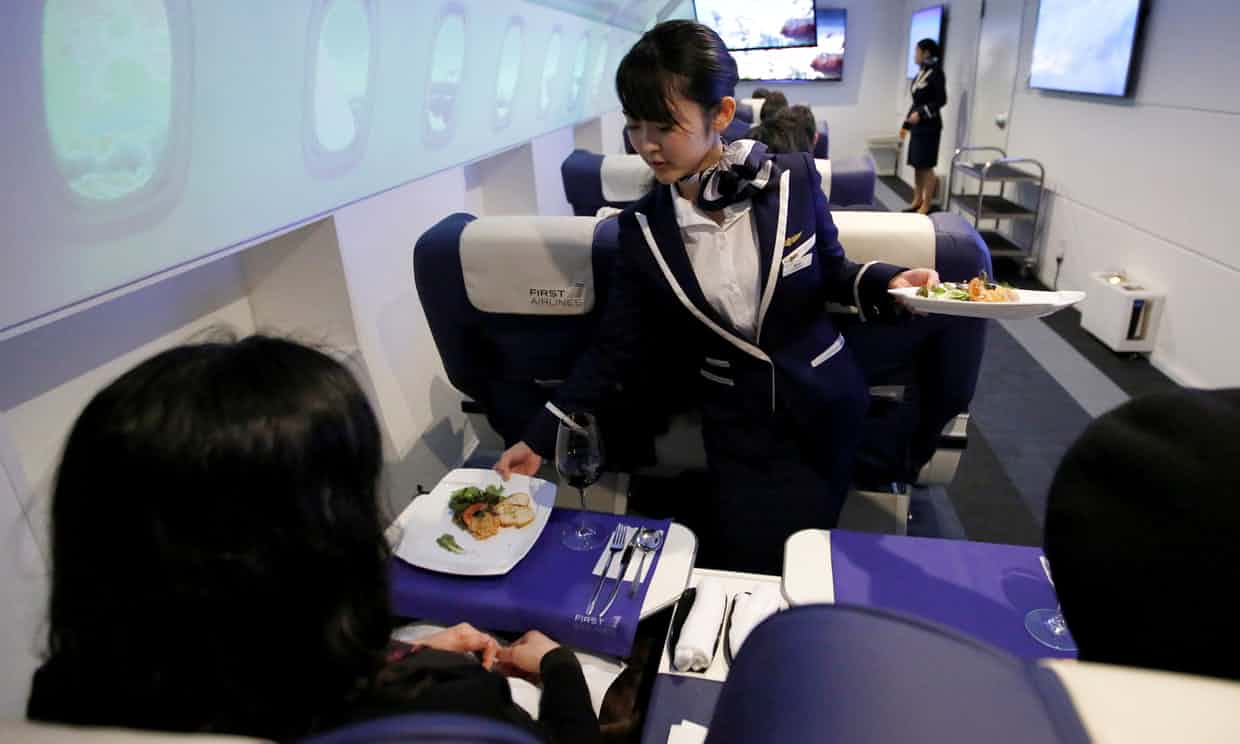 [PhilNote: dinner theatre 2.0]
Fasten your seatbelts for a flight departing to Paris – and never leave the ground.
That’s exactly what 12 passengers did at First Airlines in central Tokyo this week, where they relaxed in first and business-class seats and were served four-course dinners, before immersing themselves in 360-degree virtual reality (VR) tours of the City of Light’s sights.
At 6,600 yen ($62), a fraction of the cost of an actual trip overseas, it’s easy to see why First Airline’s two-hour “flights” to Paris, Rome, Hawaii and New York have been fully booked since the company opened in 2016.
“We have lots of elderly customers who want to go overseas but are not able to easily, given their physical limitations,” Abe said, explaining that the majority of First Airlines’ customers are older Japanese from around the country.
Abe added that domestic flights around Japan would be added soon, with meals highlighting the region’s cuisine.
See the full story here: https://www.theguardian.com/world/2018/feb/15/japanese-tour-firm-offers-virtual-reality-holidays-with-a-first-class-seat