Fable Studio: Oculus Story Studio Alumni Form New Studio to Push Boundaries of VR Storytelling & Affordability
 “Where we’re going is not VR movies anymore. It’s characters who live with us and who we believe in,” said studio co-founder Edward Saatchi, pointing towards the future of character-building.
Fable says all of its future projects will be paid experiences, something they hope will “kickstart a new phase in VR movies of charging for content and seeking to break even.” The studio will charge $1 for every 10 minutes of content, meaning a 20 minute experience would cost $2. Considering how arbitrary pricing seems to most people right now, setting a standard pricing model could give smaller studios incentive to start creating VR narratives.
Fable Studio’s Upcoming Projects
Origin
A group of artists work together to solve a virtual reality scavenger hunt to recover stolen art.
10
10 is an illustrative realtime documentary using Quill to explore a real life story.
Derailed
A social virtual amusement park ride with the theme of sleep anxiety.
Magic River Yacht Club
The viewer follows a giant salmon and its crew up river as they compete in a 500 mile regatta.
Nicolas Cage makes the leap to virtual reality in new movie
 The movie, which is a near-future science fiction tale about global warming, will release "as a standalone episodic virtual reality series [called] The Humanity Bureau VRevolution," according to a report in Variety. It's just not clear what that means, exactly.
Producer Kevin DeWalt told the trade magazine that The Humanity Bureauwas shot in three formats: standard theatrical, "Barco Escape" theatrical (a gimmicky three-screen setup), and VR. His comment suggests that you'll be able to watch the full movie in VR, but that isn't quite it, apparently.
Variety notes that VRevolution is "based on" the main film, and that it "takes the user through alternative storylines that co-exist with the feature film, but can be viewed as standalone episodes."
See the full story here: http://mashable.com/2018/01/17/nicolas-cage-humanity-bureau-vrevolution-virtual-reality/#eexKvcPcjkqG
Disney hits reset on mobile games with new development partners
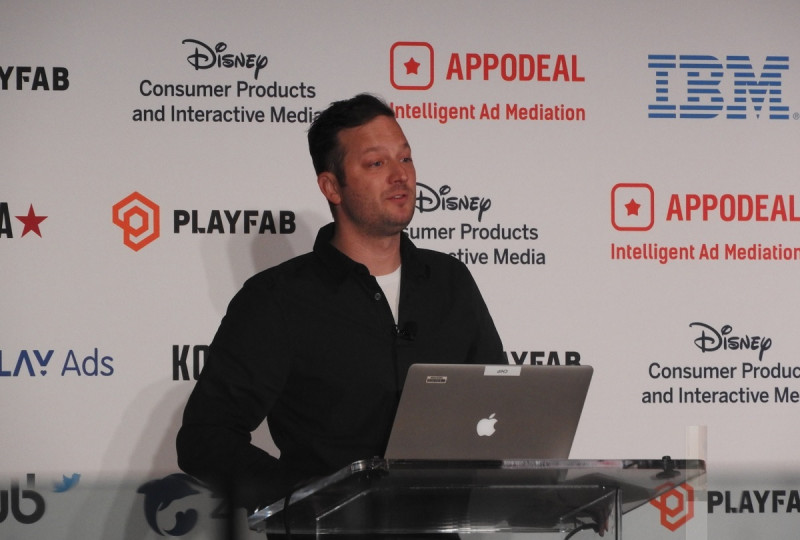 Disney executive Kyle Laughlin announced today that the entertainment giant has hit reset on its game strategy and formed new relationships with four development partners.
Disney will work on future games with Ludia, Glu, Gameloft, and PerBlue. These are all established mobile game publishers, and each is working on a new unannounced game based on Disney’s franchises, Laughlin said. He made the announcement at Casual Connect USA, the game conference in Anaheim, California.
Disney shut down Avalanche, the 250-person studio that made Infinity in May 2016. Warner Bros. picked up a big part of that team. Disney also shut its Marvel: Avengers Alliance, an internally produced mobile game, and it also recently shuttered Marvel Heroes, a massively multiplayer online game made by outside studio Gazillion, which also closed its doors.
See the full story here: https://venturebeat.com/2018/01/16/disney-hits-reset-on-mobile-games-with-new-development-partners/
What a Hologram of Maria Callas Can Teach Us About Opera
 When Maria Callas appeared onstage at the Rose Theater at Jazz at Lincoln Center on Sunday night, she looked a little pale, a little spectral.
This was understandable, perhaps: She has been dead since 1977. This Callas was a three-dimensional hologram, the latest in a series of musical-visual resurrections that have included Tupac Shakur, Michael Jackson and Ronnie James Dio. She shared the program, in fact, with Roy Orbison, who died in 1988.
Arguably the greatest singer of the 20th century, Callas — eerily, well, radiant in a white satiny gown and rich red stole — was recreated for the occasion, down to the minutest movements of her hands and the subtlest facial gestures. Her voice, in arias from Bizet’s “Carmen” and Verdi’s “Macbeth,” came from her own recordings, backed by a live orchestra at the Rose Theater. We in the audience saw only about 30 minutes of what will eventually be an evening-length concert. (The finished program, created by a division of the company Base Entertainment, begins an international tour this May in Tokyo.)
In introductory comments, Mr. Wadsworth said that the project has tried to present Callas with “restraint, subtlety and delicacy.” The notion of a singing hologram might seem incompatible with such a goal. Yet moments during Sunday’s preview were surprisingly affecting.
But what is the point of this spectacle? Who is the intended audience? Callas, a symbol of chic, remains an object of fascination extending even beyond opera fans. Perhaps the hologram will introduce some newcomers to her incredible artistry; I’d urge everyone to listen to Callas’s extensive discography.
See the full story here: https://www.nytimes.com/2018/01/15/arts/music/maria-callas-hologram-opera.html
Upskill Is the Coolest AR Startup You Haven’t Heard of Yet
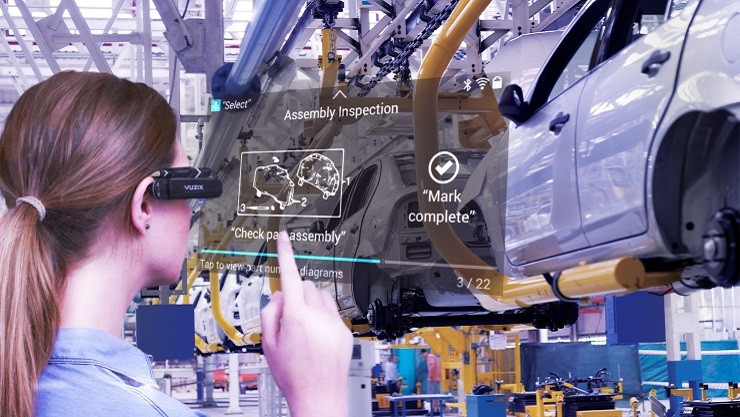 Inside the GE- and Boeing-backed augmented reality startup powering headsets from Vuzix and ODG to Google Glass Enterprise.
In mid-2010, the US military was looking to develop new head-up display technology for soldiers in the field. A company called Battlefield Telecommunications Systems (BTS) was tasked as the government's software provider for biometric force predictions, meaning real-time data displayed to a soldier's headset to indicate whether the person in front of them is a friend or foe.
The startup now creates software for companies like Boeing, Coca Cola, and GE, boasting more than $28 million in venture capital (VC) funding. That includes money from Boeing and GE Ventures, which have now bought into Upskill's future.
Skylight, Upskill's industrial AR platform, is deployed in production across an array of fieldwork, heavy manufacturing, and warehousing environments. The technology augments workers' experiences with custom voice and gesture-driven apps, and provides HD audio and video feeds for a first-person view into everything from field service training to constructing jet engines.
See the full story here: https://www.pcmag.com/news/358437/upskill-is-the-coolest-ar-startup-you-havent-heard-of-yet
‘VRChat’ Blasts Past 1 Million Installs Amidst a Skyrocketing Meme Economy
 VRChat, the social chatroom for VR and non-VR users, is doing booming business. According to SteamSpy, the app has seen a mind-boggling 1.2 million fresh installs since Christmas – putting it currently at 1.5 million users globally.
According to Valve’s Steam report, VRChat garnered 20,000 peak concurrent users on Sunday, putting it in the top 30 games with highest concurrent user rates. Today, a Monday morning, over 13,000 people are playing VRChat concurrently.
VRChat owes much of its recent viral success thanks to coverage by YouTubers like PewDiePie, videogamedunkey, and Jameskii, not to mention a host of Twitch streamers. The app’s ‘anything goes’ user-generated content system, which lets you import your own self-made avatar replete with animation macros, has also produced plenty of meme magic since its launch on Steam – no doubt drawing more curious would-be users to the social VR platform.
CES 2018, Fox Innovation Lab Highlights Movies Anywhere
 Engadget reports that, “according to general manager Karin Gilford, people have already moved around 80 million movies onto the new platform, which unlocks titles across iTunes, Amazon Video, Vudu and Google Play.” These users have also streamed more than three million hours.
The service debuted “with backing from 20th Century Fox, Disney, Sony Pictures, Universal Pictures, and Warner Bros. and a catalog of 7500 titles.” Disney’s previously offered Disney Movies Anywhere will be replaced by Movies Anywhere. Sony’s Ultraviolet also tried to do something similar, “but didn’t have its own apps — or a buy-in from Disney, for that matter.”
Movies Anywhere also plans to add exclusive content, “a recipe that is working, according to 20th Century Fox Home Entertainment president Keith Feldman.” He reports that the studio has over 1,250 movies, almost 1,000 hours of “additional content,” including an extra action sequence for “Kingsman 2,” exclusively on Movies Anywhere, and plans to add future releases to the service.
See the full story here: http://www.etcentric.org/at-ces-2018-fox-innovation-lab-highlights-movies-anywhere/