 The sensors can also be used in office buildings to reduce energy costs and in nursing homes to determine when someone falls. But retailers make up the majority of Scanalytics' customers, highlighting one of several efforts brick-and-mortar stores are undertaking to better understand consumer habits and catch up with e-commerce giant Amazon.
15Jan/18Off
‘AR As A Feature’ Is The Best Use Of AR Tech Right Now, And Amazon Gets It
Combining image/object recognition with AR can result in many new opportunities. This demo by Intopalo shows facial recognition being used in an office setting.
 One of the more interesting features in AR is the use of portals. By placing portals in the world, users can teleport to new places using 360 photos, 360 videos or 3D worlds.
Travel apps can add AR Portals as a feature to help users experience their desired destination. From viewing hotel rooms and patio views to previewing an adventure tour, mixed reality can provide the customer with an experience rich enough to validate making the purchase.
AR represents a new opportunity for companies and developers to engage their customers with new features. As more customers upgrade to ARKit enabled devices like iPhone 8 and X and ARCore comes to Android, the number of AR users grow exponentially.
12Jan/18Off
Blockchain at CES: Evaluating the Tech’s Hype and Potential
 Blockchain technologies could also prove a potent solution to drastically reduce piracy by certifying ownership, identity, and licensing agreements. An Austrialian company, Veredictum, is building a platform that proposes to do just that.
Veredictum claims the ambitious goal of reducing “film and video piracy by 80 percent within 10 years.” Their Ventana tokens are ERC-20 compatible tokens distributed on the Ethereum blockchain via a smart contract. They are currently in the token sale process.
One company looking to leverage this model to disrupt the video industry is VideoCoin (CEO Halsey Minor pictured below). VideoCoin is deploying a decentralized video encoding, storage and content distribution network to enable video streaming. Built on a distributed storage system, it incentivizes users to make their compute resources available for encoding chunks of video that can be stitched together to minimize lag and maximize video quality.
See the full story here: http://www.etcentric.org/blockchain-at-ces-evaluating-the-techs-hype-and-potential/
11Jan/18Off
The Wall: Samsung Wows CES Attendees With MicroLED TV
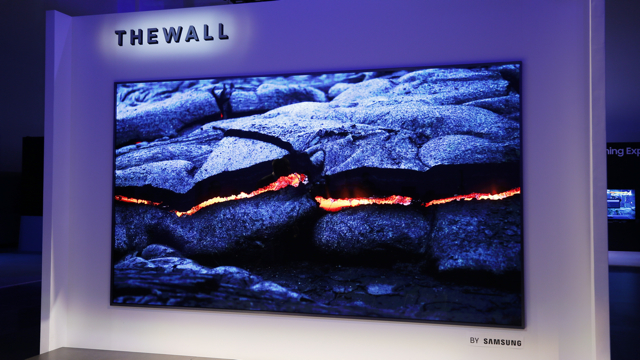 In Las Vegas this week, Samsung is showcasing its first MicroLED consumer television. Dubbed “The Wall,” the 146-inch, bezel-less, 4K TV is modular, offering consumers the ability to customize its size and shape by adding or removing sections without affecting image quality. MicroLED’s self-emitting tech uses millions of micro-sized chips that individually emit light, which eliminates the need for color filters or backlighting. If one day affordable, this tech could replace LED for consumer TVs and lead to wallpaper screens. The Wall by Samsung is expected to be available later this year, although pricing has yet to be announced.
“On a wall screen, you can watch TV, designating any section or portion of the display to act like a TV,” McQuivey noted. “But the rest of the wall can continue to display other things: family memories, simulated decor, or the avatars of family members watching remotely.”
OLED does not require backlight, one of the primary reasons its blacks and overall picture quality look so impressive. MicroLED aims to take this quality to the next level.
See the full story here: http://www.etcentric.org/the-wall-samsung-wows-ces-attendees-with-microled-tv/
11Jan/18Off
This VR glove startup wants you to touch virtual worlds
"This is 1% of the possibility," Sense Glove CEO Gijs den Butter said, referring to the company's current technology. "Our vision is definitely to feel the shape, density and texture of objects."
The Sense Gloves are available for pre-order now and will begin shipping in July. The wired version of the gloves cost $1,200, while the wireless models costs $1,500.
The startup is part of a growing trend of VR gloves. Several other companies such as Dexmo and HaptX have also unveiled similar products.
See the full story here: http://money.cnn.com/2018/01/10/technology/virtual-reality-glove-ces-2018/index.html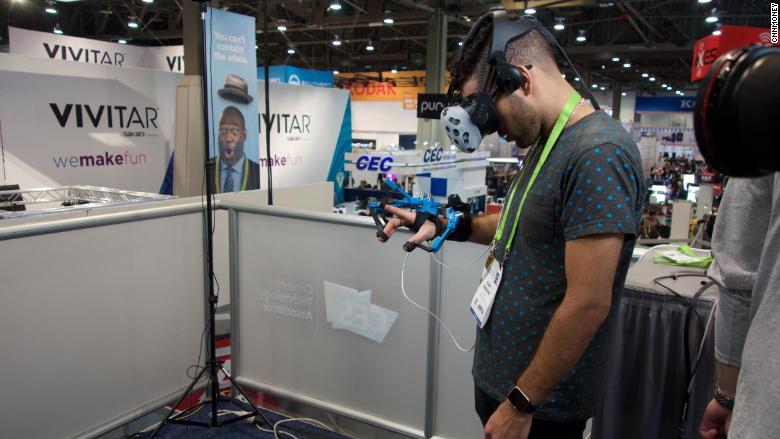
11Jan/18Off
Consumers Warm To Virtual, Augmented Reality: CES Study
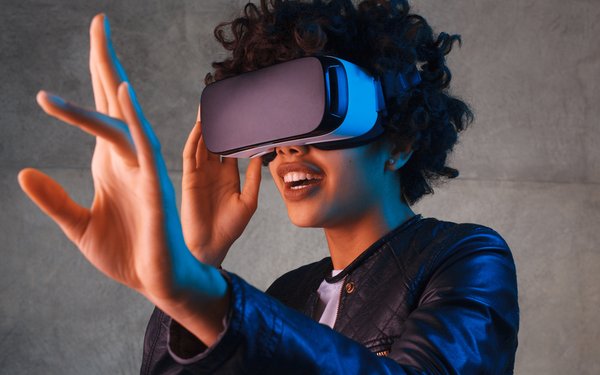 The study comprised a survey of 21,000 consumers in 19 countries conducted by Harris Interactive for Accenture. The sample in each country was representative of the online population in each region.
The group of those interested in practical VR or AR applications have lower average purchase intent, its larger size provides a sales potential the same as gamers, according to the study.
Here are the interest levels in virtual or augmented reality applications:
- 67% -- Learning more about a place they are visiting
- 67% -- Want to learn new skills or techniques
- 61% -- To visualize how clothes might fit
- 58% -- To view 3D manuals
- 54% -- Want to shop for household items and furniture
- 47% -- To play games
Consumers also appear to be attracted to wearable solutions. The majority (55%) of consumers said they would like to replace their smartphone with a wearable solution that has all smartphone functions via voice, augmented reality and hologram interfaces.
See the full story here: https://www.mediapost.com/publications/article/312758/consumers-warm-to-virtual-augmented-reality-ces.html
11Jan/18Off
Can Firing Augmented Reality Energy Balls Make HADO A Global Sport?
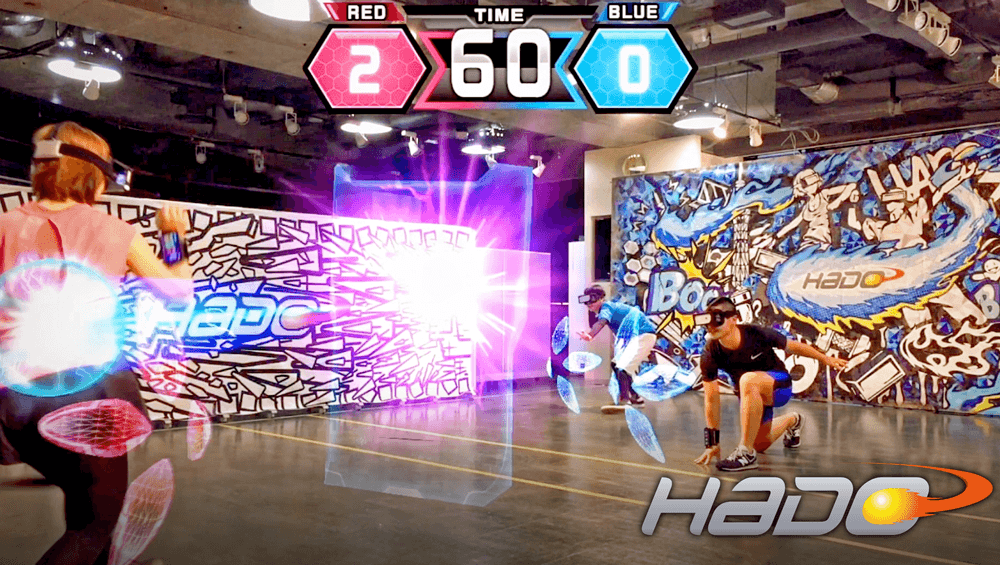 Using a motion sensor worn on the wrist, a head-mounted display (specifically for iPhone 6s) and AR markers, the game is played with virtual objects within the real world.
While you can play on your own, HADO’s most prominent type of gameplay is player versus player. In PvP, two teams of either two or three players will compete and use their hands to fire “energy balls” at one another and also activate shields to dodge attacks. The winning team scores the most points within a time period.
See the full story here: https://www.sporttechie.com/hado-augmented-reality-energy-balls-global-sport/
10Jan/18Off
CES: Examining the Results of the Radical Disruption of News
 “The Future of News” panel at CES 2018 drew together pundits across the political spectrum to puzzle out the difference between news and opinion, what exactly fake news is, and how to pop the partisan bubbles. A conversation led by United Talent Agency head of digital media Brent Weinstein started his challenge to define the line between news and opinion — if consumers even care. The Daily Wire editor-in-chief and conservative political commentator Ben Shapiro said that the news media should not portray itself as objective.
“News reporters can’t remove their biases,” he said. His colleague on the left, Thiel Capital managing director Eric Weinstein, PhD, agreed. “I don’t think it hinges on fact-based versus opinion-based,” he said. “There is no known way of producing news that is simply fact-based. The question is if we can unspin the news that we are given.”
Shapiro drew a distinction between facts versus arguing over opinions. “Once you label an opinion as fake news, we’re arguing over opinions,” he said. “I would like to relegate fake news to just that, not an opinion that you find unpalatable.”
Eric Weinstein believes we should apply the term “fake news” more broadly. “The taxonomy I have is that it’s the algorithm, narrative-driven and just false, and false is the least interesting,” he said. “After the election, there was a sudden mania over fake news that I find incredibly inauthentic. Everyone is now a conspiracy theorist. Where did this fake news thing explode from? It doesn’t feel real. We’re out of control and it’s more important to go after the narrative driven and algorithmic.”
Shapiro agreed, saying that, “actual fake news is actually small.” “People give Google enormous amounts of power to curb what they don’t like,” he said.
See the full story here: http://www.etcentric.org/ces-examining-the-results-of-the-radical-disruption-of-news/