Experience On Demand: Stanford Researcher’s New VR Book Is Required Reading
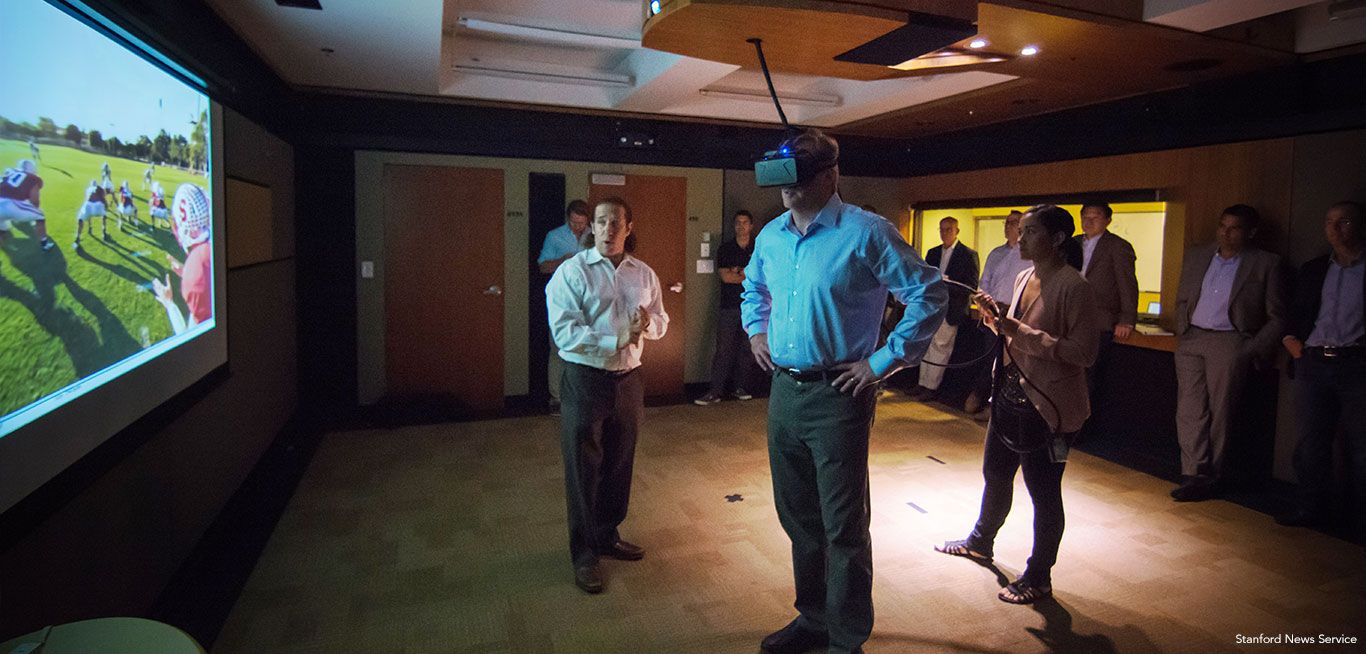 The majority of the book’s 10 chapters are devoted to focusing on what VR can do to help society. Examples include changing a person’s worldview for the better, becoming better at your job or a sport through lots of practice in a simulation, the fun of visiting a virtual world rich with things to discover, or changing the perception of pain by distracting someone:
The power of presence–the mental transportation into a virtual world–has a useful side effect: absence. Being present in a virtual world takes one’s attention away from his own body.
That said, Chapter 2 “You Are What You Eat” contains some nuggets for people to ponder about the risk of VR, including learning bad behavior from others and escaping the real world for too long.
...
frame rates:
It’s always the right strategy to reduce visual detail to ensure the highest frame rate
The role of tracking:
For every unit increase on the technology side of tracking there was a bigger increase in psychological presence compared to the other technological improvements
Bottom Line
Those who closely follow the VR industry will find sections of Experience on Demand familiar and skimmable, but I would still recommend the book to practically anyone.
See the full story here: https://uploadvr.com/experience-on-demand-vr-jeremy-bailenson-book/