Virtual Reality Visor Could Help Protect Drivers
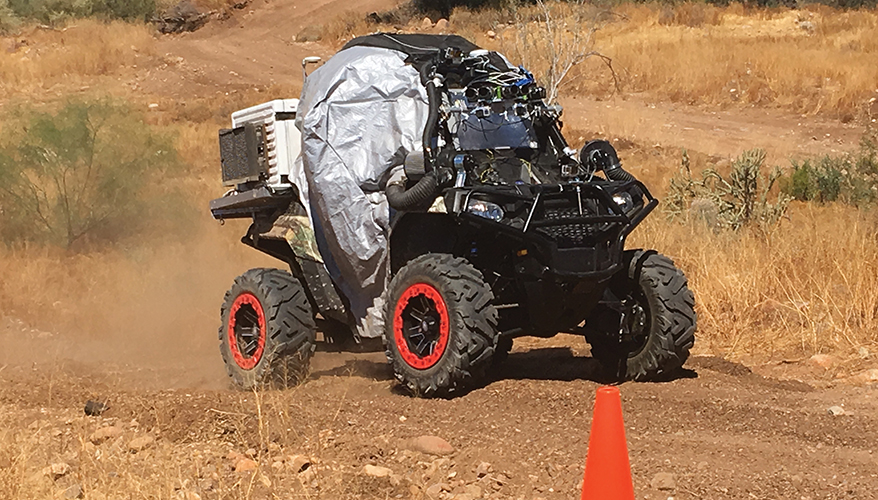 As part of the Defense Advanced Research Projects Agency’s Ground-X Vehicles technology program, the company demonstrated a visor that provides the driver with a 160-degree virtual reality image of outside terrain. Drivers can then operate in an enclosed, windowless vehicle, “which would then allow the driver to be safe, protected from snipers, shrapnel or anything else,” Brian Aleksa, senior technical manager of research and development at the company, said in an interview.
One important feature of the visor is the “snap algorithm,” Aleska explained, meaning that the user is unconsciously switching his view among multiple cameras as he turns his head.
“You turn your head from left to right and you’re actually looking through different camera pairs, different high [resolution] high-definition cameras,” he said. “You don’t even . . . perceive you’re switching from one pair to the next, so it’s really like a natural vision system.”
See the full story here: http://www.nationaldefensemagazine.org/articles/2017/12/18/virtual-reality-visor-could-help-protect-drivers
IMMERSIVE VIRTUAL REALITY EXPERIENCES AT THE NATIONAL MUSEUM OF SINGAPORE
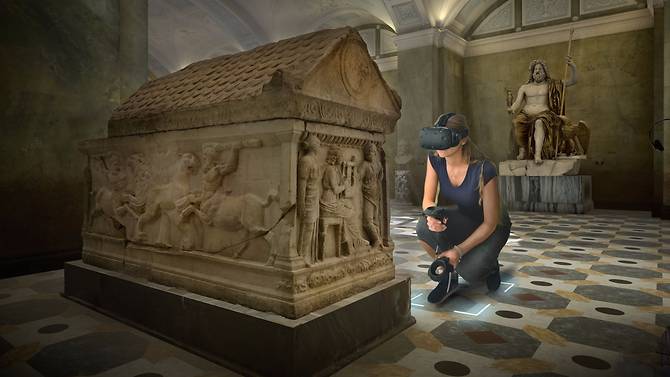 18 immersive VR experiences are available to the public at the National Museum
of Singapore. The innovation in the adaption of virtual reality in this museum has
been the logical next step in its digital adventures. Also, this innovation has had
some effect, which is, for instance, the increased number of visitors wanting to see Farquhar’s actual drawings, after viewing the corresponding interactive digital installation of Farquhar’s animal and plant drawings.
See the full story here: https://www.vi-mm.eu/2017/12/17/immersive-virtual-reality-experiences-at-the-national-museum-of-singapore/
All the world’s a virtual stage: augmented reality theatre venture raises cash
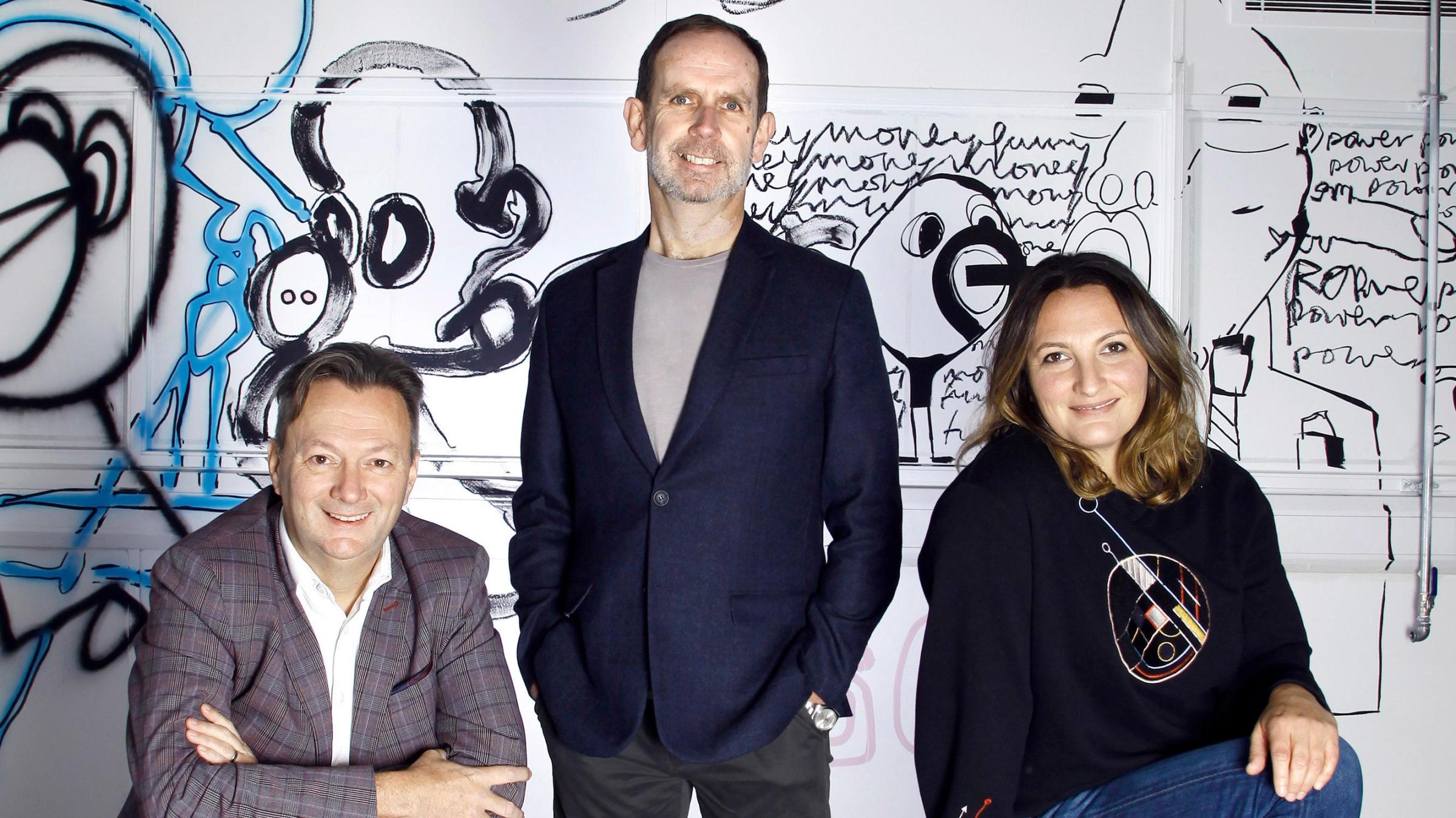 A start-up that promises a new type of theatre experience has raised £3m from investors, including the founders of online estate agency Purplebricks.
Ellipsis Entertainment is developing a method of “fusing augmented reality with the sets and actors of traditional theatre”, said co-founder Andrew McGuinness, an advertising executive.
See the full story here: https://www.thetimes.co.uk/edition/business/all-the-worlds-a-virtual-stage-augmented-reality-theatre-venture-raises-cash-th90s2s9w
Google to shut down its augmented reality platform Project Tango for ARCore
 ARCore uses three key technologies: motion tracking, environmental understanding and light estimation.
“ARCore’s understanding of the real world lets you place objects, annotations, or other information in a way that integrates seamlessly with the real world. You can place a napping kitten on the corner of your coffee table, or annotate a painting with biographical information about the artist. Motion tracking means that you can move around and view these objects from any angle, and even if you turn around and leave the room, when you come back, the kitten or annotation will be right where you left it,” Google wrote on ARCore’s website.
ARCore is available today as a developer preview, enabling developers to experiment with AR apps. It currently supports Google Pixel, Pixel XL, Pixel 2, Pixel 2 XL and Samsung Galaxy S8.
“We’re turning down support for Tango on March 1, 2018.
See the full story here: https://sdtimes.com/google-shut-augmented-reality-platform-project-tango/
Also
But how different are the two technologies? Despite its limitations, Tango’s refined hardware makes it faster and more accurate than ARCore. Instead of tracking planes in a video feed like ARCore and ARKit does, Tango uses its hardware to compile a 3D map of a designated area, one that allows you to leave objects in space and return to them later.
Currently, there are only two devices that utilize Tango: The Lenovo Phab 2 Pro and the Asus Zenfone AR. They are both optimized with extra hardware — such as a barometer, motion-tracking camera, and an infrared depth-sensing camera — which improve the function of various AR applications. ARCore, which will run on many Android phones and doesn’t require specific hardware components, has made these two phones redundant.
See this full story here: https://www.digitaltrends.com/mobile/tango-vs-arcore-theunlockr/
Dreamscape Raises $30 Million For Location-based VR
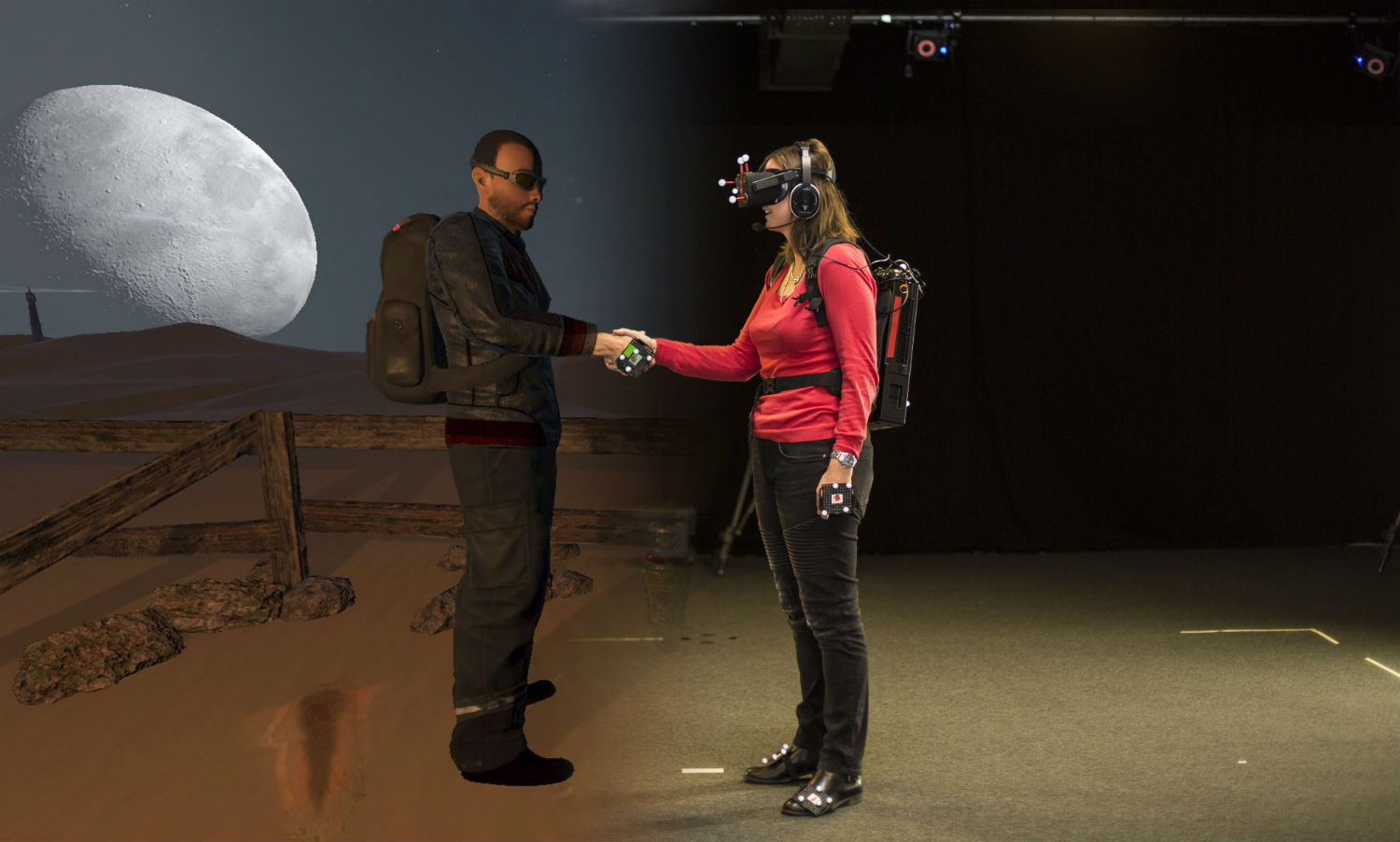 Los Angeles-based Dreamscape Immersive says it closed a $30 million Series B financing round.
The location-based VR company was previously backed by 21st Century Fox and Warner Bros., among others. Those investors also participated in this round, which was led by AMC Entertainment. New investors include Nickelodeon, Majid Al Futtaim, VRSense Solutions Limited, and Image Nation Abu Dhabi.
The money is intended to help the company build more locations alongside securing quality content for its VR centers. Nickelodeon, for example, will produce an experience with Dreamscape. The company’s flagship location is expected to open next year at the Westfield Century City Mall in Los Angeles and AMC plans to work with Dreamscape to open up six more centers.
Dreamscape says it uses body-mapping tech developed by a Swiss research foundation. That’s an interesting piece of the efforts by Dreamscape because the absence of totally accurate full-body tracking is one of the things lacking from our last trip through The VOID.
See the full story here: https://uploadvr.com/dreamscape-raises-30-million-location-based-vr/
Dreamscape Immersive & Nickelodeon Partner on Location-Based VR
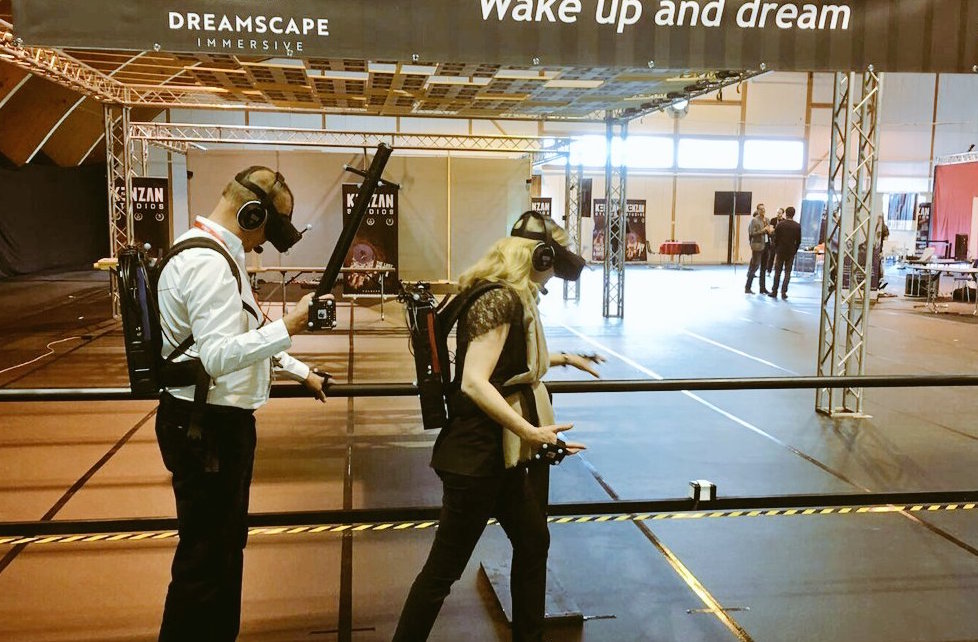 It has already been confirmed that Nickelodeon and Dreamscape are partnering for a new IP aimed specifically for children and families. Meanwhile VRSense Solutions, a developer of VR backpacks will be responsible for advancing Dreamscape hardware development, Middle Eastern lifestyle conglomerate Majid Al Futtaim will focus its efforts on expanding the start-up globally and media company Image Nation Abu Dhabi will assist in developing a large catalogue of immersive experiences to enjoy.
Other advisors on the project include filmmaker Gore Verbinski (Pirates of the Caribbean, The Ring), composer Hans Zimmer (Inception, Interstellar), production designer Rick Carter, former Warner Bros. executive Dan Fellman and former Disney COO Tom Staggs.
Survios Announce VR Music Creation App Electronauts
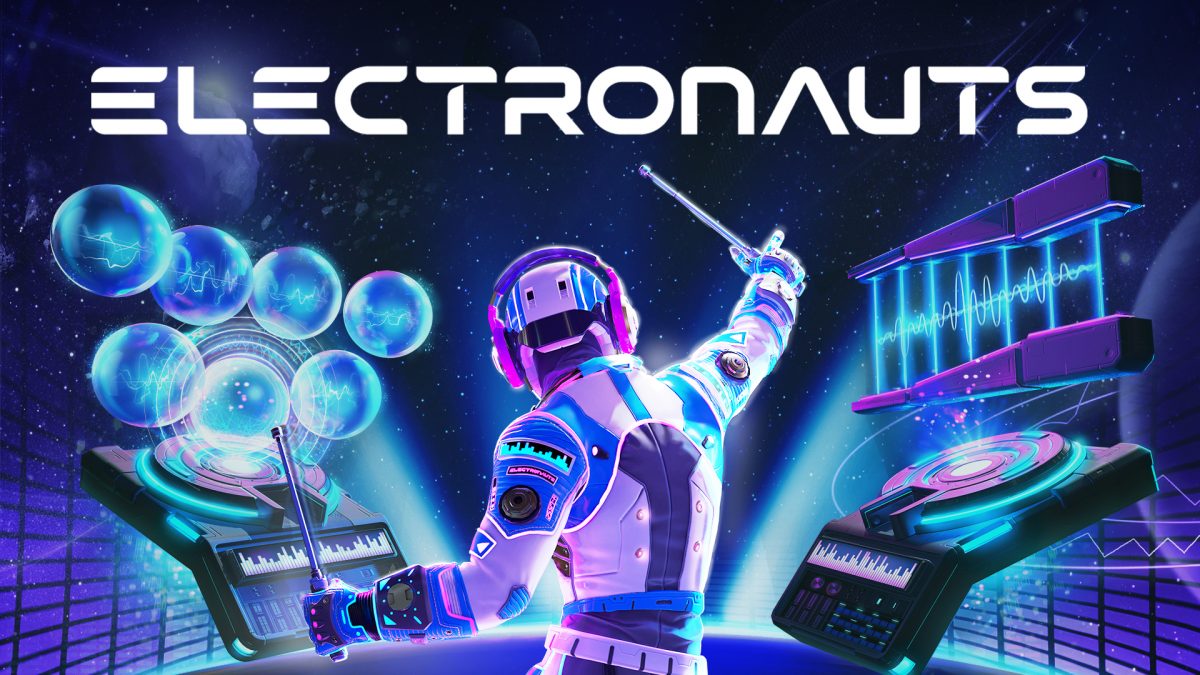 Survios, the development studio behind Raw Data and Sprint Vector, announced Electronauts today, which marks their third VR project. Electronauts is an immersive, VR music creation tool with a heavy focus on interactivity. Users will be able to experience music in new, surreal ways by remixing, composing, and performing all while using electronic instruments inside VR.
Additionally, Survios is partnering with Grammy-winning “superproducer” duo Stargate (as well as other unannounced artists) to incorporate well-known, top-tier talent into the experience. The official fact sheet also mentions you can “jam with your friends” hinting at a potential multiplayer feature.
We still don’t know a whole lot about this new project, so the assertion that users have “never before” been able to “create and interact with sound in a truly immersive way” feels like it might be a bit hyperbolic in the face of existing VR music apps such as SoundStage and EXA. According to press materials, it reportedly utilizes a new “Music Reality Engine” that’s been trademarked presumably by Survios for this app specifically.
See the full story here: https://uploadvr.com/survios-announce-vr-music-creation-app-electronauts/
VR and AR Expected to Further Redefine Experiences at CES
By Phil Lelyveld with Erick Moen
December 14, 2017
Virtual reality, augmented reality and immersive experiences crossed over the apex of the hype curve and are now tracking the slope of enlightenment as they develop into niche market applications or pivot into location-based entertainment. Resolution, frame rate, horizontal and vertical field of view in the HMDs (head mounted displays), and head and body tracking technology, have all improved over the last year with further advances expected next month at CES 2018 in Las Vegas. This applies equally to next generation HMDs, projection, and heads-up approaches to immersive experiences.
Audio, especially head-tracked spatial audio, got more respect in 2017, although monophonic or non-tracking 360 experiences are still common. Other control and sensory input technologies, such as eye- and hand-tracking control systems and haptic feedback solutions also continue to improve, both adding creative options for experience design and muddying the waters of what will constitute a clearly messaged consumer immersive media experience product.

Embedded sensors communicating with either internal processors or cloud-based resources such as geolocation, object/facial recognition, obstacle avoidance, and AI/personal assistants are expanding the tools available to experienced developers and blurring the distinction between the real and virtual worlds of work and play.
Location-based immersive experiences, from theme parks to small installations within arcades and purpose-built attractions in storefronts, received a significant amount of funding and support in 2017, especially in Asia. Press coverage of IAAPA Attractions Expo 2017, the annual out-of-home amusement conference, highlighted both VR and AR overlays on traditional rides and mixed reality experiences incorporating escape rooms, puzzle solving, and immersive experiences.
Hologate, the creator of turnkey multiplayer VR experiences, sold more than 60 units of its easily-maintained 4-player experience at IAAPA.
The number of funded startups and established companies in both the VR and AR ecosystem continues to grow, implying sustained confidence in the future of the industry. The press was filled with announcements of advances in cameras, photogrammetry tools, volumetric and lightfield image capture and processing, audio and video editing and game engine tools.
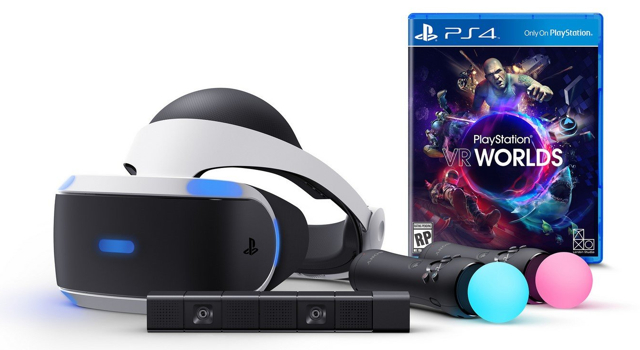
Price cuts and product bundles drove an increase in integrated HMD sales in the second half of 2017. One million HMDs were shipped in Q3. Sony accounted for 49 percent of those, followed by Oculus (21 percent) and HTC Vive (16 percent). Those numbers are separate from mobile HMD sales. For example, Samsung Gear VR has sold well over 5 million units in the past year.
A large number of key players, with the notable exception of Apple, are involved in the OpenXR effort run by the Khronos Group to standardize the way AR and VR apps communicate with HMDs. Microsoft joined OpenXR in November.
AREA, the Augmented Reality for Enterprise Alliance, released functional requirements for AR devices that could be a good template for entertainment guidelines. Many other standardization efforts, including the IEEE’s, are still in the early stages of developing big picture statements of what they want to drill down to before they work on specific recommendations.
The market, technology and art of immersive experiences is still immature, so it is not clear what should be standardized as opposed to what provides competitive advantage.
Immersion and engagement are the keys to driving adoption of VR and AR, but they must be built on a good story-world. Alejandro Iñárritu was awarded a special Oscar for illustrating how this could be done in a site-specific way with his “Carne y Arena” (Virtual Present, Physically Invisible) installation piece at the Los Angeles County Museum of Art.
A potentially mass-market example is “Wolves in the Walls” from the former Oculus Story Studio team. The work is getting strong buzz for the way it uses game engine technology to support compelling interactive moments that don’t distract from the overall narrative.
This year saw growth in the number of VR, AR and immersive experience competitions at existing festivals, as well as festivals dedicated to immersive experiences. The 2018 edition of New Frontier at the Sundance Film Festival is a collection of mixed media performance pieces, AI-enabled experiences, multisensory interactive experiences, and mobile VR/360 documentaries.
The heat that was on VR and AR last year has moved on to Bitcoin, blockchain and cryptocurrencies this year, and there are efforts to use blockchain to enable new entertainment opportunities and business models.
StreamSpace, an Austin, Texas startup, is building a platform for secure video distribution using blockchain. StreamSpace is funding its business build-out with an ICO (Initial Coin Offering).

Similarly, OTOY has announced the Render Token, a blockchain-based currency that underpins a distributed GPU rendering network for rendering lightfield image files. People who buy the Render Token will be able to redeem it for computer rendering time in the future, with the hope that the coin will increase in value so the amount of computer resources it will buy will also increase over time.
ICOs are a new way to fund the build-out of elements of the immersive media ecosystem ahead of and in support of the development of the market for immersive experiences.
For more information on CES 2018 (#CES2018), visit the event’s official website or its Facebook page. If you plan on attending, you can save $200 when registering by December 18. The ETCentric community should also be interested in C Space at CES, which examines “disruptive trends and how they are going to change the future of brand marketing and entertainment.”
See the original post here: http://www.etcentric.org/vr-and-ar-expected-to-further-redefine-experiences-at-ces/