Inside The Greatest Showman: Watch Hugh Jackman’s Showstopping Performance in Virtual Reality

DF-07720 ‚Ä" P.T. Barnum (Hugh Jackman) comes alive with the oddities in Twentieth Century Fox‚Äôs THE GREATEST SHOWMAN. TM & © 2017
credit: Niko Tavernise/Twentieth Century fox
In this exclusive video, viewers can go onto the rehearsal stage where Jackman and the cast, which includes Zac Efron, Zendaya and Michelle Williams, are putting the final touches on the film’s show-stopping number “Come Alive.”
See the VIDEO and full story here: http://people.com/movies/inside-the-greatest-showman-watch-hugh-jackmans-showstopping-performance-in-virtual-reality/
Exploring how to build standards for Virtual Reality
 Ericsson hosted a workshop last week on Virtual Reality Ecosystem & Standards at our Silicon Valley campus in Santa Clara. The goals of the workshop included collecting vision and requirements from service providers and operators, assessing production format constraints, and learning about the various VR 360° standardization efforts that have been initiated by 3GPP, the VR Industry Forum, MPEG, DVB and Khronos.
One of the highlights of the workshop was to hear studio execs and content creators presenting their vision of what they want to achieve using VR. We also heard about some of their challenges, namely how to develop new ways of storytelling and attracting attention...
From device and ecosystem manufacturers we learned that the success of VR will depend on many factors, including device capabilities, high data rates and low so-called motion-to-photon latencies,...
Ericsson’s media standardization team hosted the workshop which was initiated by 3GPP, now in the process of defining 5G, and organized together with the VR Industry Forum, whose mission is to further the widespread availability of high quality audiovisual VR experiences for the benefit of consumers.
See the full story here: https://www.ericsson.com/research-blog/exploring-build-standards-virtual-reality/
What To Expect From China’s $46 Billion AI Focus As It Hits CES
 In fact, 1000 of CES' 4000 exhibitors are from China this year, and they will show developments that have arisen from various business concepts. For instance, BIKI, the underwater robotic fish-of-sorts powered by AI will make its CES debut in January. This is the initial product developed by a China tech company called ROBOSEA which was launched in 2015. Now, after three rounds of funding, the company has an unprecedented robot offering.
Mindshow now offers VR sharing for its improv app
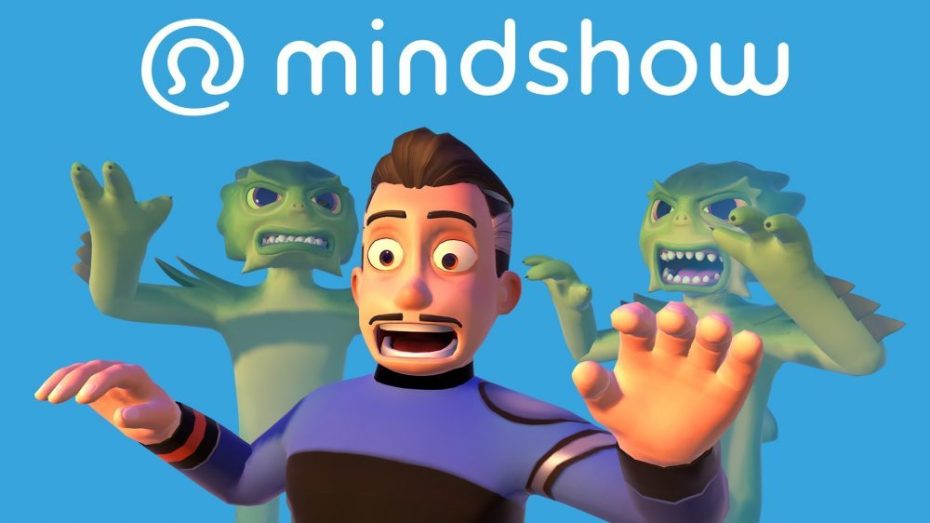 Free VR improvisation software Mindshow is adding a major feature — sharing. So performances in Mindshow can be added to or remixed by others.
See the full story here: https://venturebeat.com/2017/12/17/mindshow-now-offers-vr-sharing-for-its-improv-app/
IEEE Transmitter features ways the technologies can be used to explore outer space and to treat medical conditions
 The project is being led by IEEE Member Todd Richmond, director of the ICT’s advanced prototype development. ICT VR-exposure therapy is now offered at more than 60 locations including U.S. Veterans Health Administration hospitals, military bases, and university centers. According to the ICT website, younger military personnel might be more comfortable with a VR treatment approach than with traditional talk therapy.
See the full story here: http://theinstitute.ieee.org/ieee-roundup/blogs/blog/immerse-yourself-in-new-worlds-with-augmented-and-virtual-reality
The very real health dangers of virtual reality
 "I see more falling than anything else," said Marientina Gotsis, an associate professor of research at the Interactive Media and Games Division of the University of Southern California. "You can trip and hit your head or break a limb and get seriously hurt, so someone needs to watch over you when you are using VR. That's mandatory."
Augmented Reality Menorah Transports Chanukah Into a New Dimension
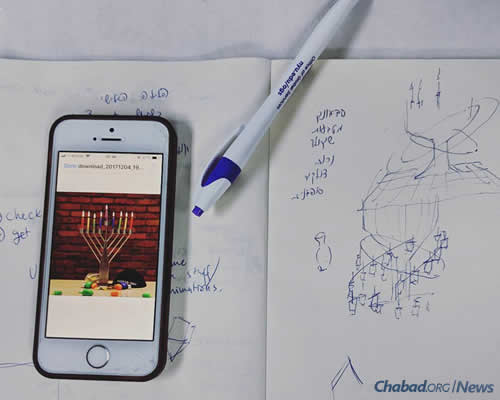 The augmented reality menorah will include sufganiyot (doughnuts), chocolate gelt, dreidels and a jar of oil.
This very different kind of menorah is the latest effort from Tech Tribe, a Chabad-affiliated organization dedicated to enhancing and creating Jewish experiences for those working in tech and digital media.
See the full story here: http://www.chabad.org/news/article_cdo/aid/3877642/jewish/Augmented-Reality-Menorah-Transports-Chanukah-Into-a-New-Dimension.htm
New In-Game Cryptocurrency Systems Let You Buy Assets in the Virtual Reality World
 High Fidelity is announcing the launch of Avatar Island, a VR domain where High Fidelity users can purchase items for their avatars, all contributed by digital artists from around the world.
High Fidelity is a next-generation platform for Virtual Reality (VR) worlds developed by Philip Rosedale, the creator of the once very popular Second Life. In September 2017, the company announced that it was developing a blockchain for intellectual property protection and an in-game cryptocurrency .
High Fidelity allows developers to host VR worlds independently. In November 2017, High Fidelity released an update that allows developers to rapidly deploy High Fidelity VR domains to the cloud, in collaboration with DigitalOcean. The distributed nature of the upcoming High Fidelity VR network calls for full interoperability between different servers, including network-wide recognition of ownership rights.
High Fidelity’s Digital Asset Registry (DAR), is a decentralized, publicly auditable ledger that serves as a record of transactions made by High Fidelity users. Each item is uniquely identified with a digital fingerprint (a hash algorithm) and can be purchased using High Fidelity’s blockchain-based cryptocurrency, the High Fidelity Coin (HFC). The DAR includes tamper-proof PoP services for any asset’s chain of ownership, its characteristics and its entire history, from certification onward.
Rosedale’s team opted for a new, public but “permissioned” blockchain.
Considering high price volatility as a roadblock, High Fidelity will try and stabilize the value of HFC at 100 HFC = $1 USD.
See the full story here: https://bitcoinmagazine.com/articles/new-game-cryptocurrency-systems-let-you-buy-assets-virtual-world/