First Ever Blockchain Protected Virtual Land Auction
 However, a new Blockchain based platform has made its way onto the market, and is using Blockchain technology to secure virtual land ownership, so that users can actually own the platform itself. The company is also using a proprietary cryptocurrency as a means of internal monetization. The first ever land auction for the company will go live in December, as the company sells the ‘Genesis City’ with coordinates (0,0).
By utilizing the protective aspects of Blockchain technology, the platform is able to both protect the ownership aspect, as well as secure the rights to each parcel. Within each parcel, users are able to create and monetize any type of content they choose. Many have long believed it only a matter of time before the Blockchain was used to record real property, though others have warned against the practice. It should be no surprise the virtual world is taking the same concept and running with it.
See the full story here: https://cointelegraph.com/news/first-ever-blockchain-protected-virtual-land-auction
The Other Side Of Singles’ Day: Alibaba’s Virtual Reality Testing Ground
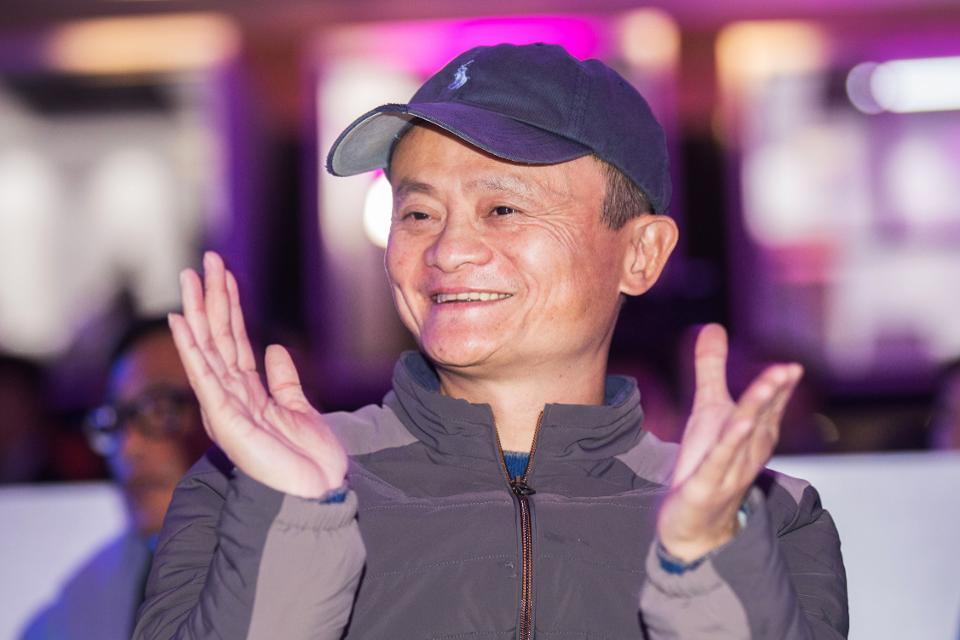 In an augmented reality game, similar to a lo-fi PokemonGo, consumers follow a cartoon cat around the real world to unlock virtual items that they still have to pay for with real money.
Mike Evans, president of Alibaba group, explained in 2016 that the technology is intended to "move the relationship with the consumers beyond a highly transnational one." The entire process, none the less, funnels towards purchase. On the Buy+ platform, that action is performed by looking at a product and then nodding in assent.
Virtual and augmented reality will also "allow the brand to create a stronger bond" with those consumers, said Evans. That means fewer traditional efforts at community outreach. There is no longer a need, if a corporation wants to access a community, to be present in its area or employing its people. Nor would efforts at embodied visibility, like working with charities, schools, or NGOs, be as relevant.
See the full story here: https://www.forbes.com/sites/augustrick/2017/11/12/the-other-side-of-singles-day-alibabas-virtual-reality-testing-ground/#422e556e1c81
Snapchat launches a new feature that transforms its lenses and filters into an opportunity to shop from the app
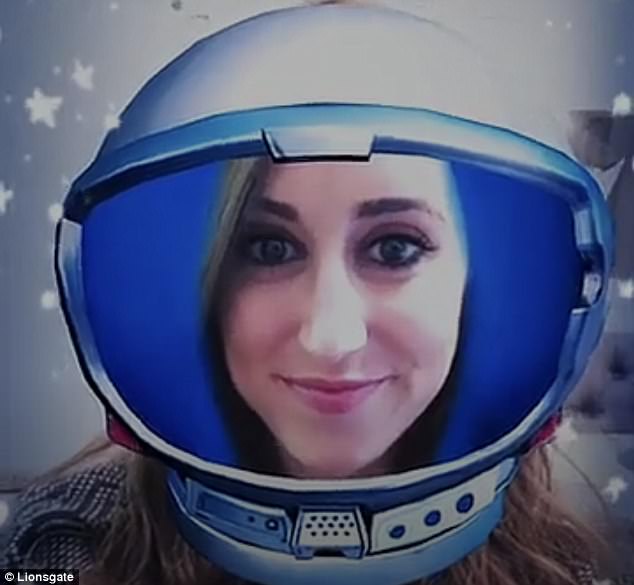 The Los-Angeles based photo sharing app has added a touch of Hollywood glamour to the debut of its Context Cards for sponsored lenses and filters.
Entertainment firm Lionsgate is the first brand to trial the new technology, running a promotion of its upcoming film Wonder, in cinemas on Friday.
Users can see themselves in an astronaut's helmet by using the lens, which celebrates World Kindness Day.
See the full story here; http://www.dailymail.co.uk/sciencetech/article-5077351/Augmented-reality-Snapchat-ads-link-product-s-URL.html
The Inevitability Of Augmented Reality HMDs
 It is strange to see the old movies and TV shows where characters use landline phones, especially pay phones. It reminds us that so much more than fashion has changed. Time and space are different.
In eight generations we have gone from cavemen to star-traveling magicians. In the context of the 125,000 generations that came before us, that is astounding. It is the ultimate hockey stick.
We are constantly shifting between the world in our hands and the physical world. Tens of thousands of people die every year because of this incredibly bad form factor, and the need to change it is urgent. It took 15 years to dig this hole, and it will take 15 years to dig out, but when we do, it's going to be a very different world because augmentation is happening at many other levels, AI, the blockchain, cloud computing, are also rapidly changing computing. And then there are the unintended consequences of our greatest inventions, like Facebook, which may better connect us, but also make us less free.
Pattie Maes of the Media Lab really influenced my thinking about AR and how this tool is going change humankind. Well known for her compelling TED talks, at the “AR in Action” conference at MIT January 17, 2017, she gave a mesmerizing big picture presentation on the state of modern life: living simultaneously, imperfectly and superficially in the real and digital worlds, multitasking, continually interrupting ourselves by checking our smartphones 100+ times a day.
“Tech has become part of us,” she said, “and we all know there is no going back. Instead, we need to make our integration with technology more seamless. In the short term, our technology is making us less mindful and attentive, but in the long term, it will make us much, much better. Better learners, better workers, better able to reach our potential. We will become augmented. Cyborgs.”
The goal is to get this information into the brain. Right now, the eyes and the ears are the only ways into the brain. “Computing interfaces will become more and more invisible to the user/wearer" says Will Schumaker, a postdoctoral scholar at Stanford University whose focus is optics. "But going beyond HMDs will be tricky and require quantum leaps in optics or biotech, which might take some time.”
Neuralink Corp. is a startup co-founded earlier this year by billionaire Elon Musk, who runs Tesla and Space X. Musk disclosed he has invested 27M in Neuralink, a company that implants electrodes into the brain in order to create a "neural lace", the ultimate man-machine interface. It may be decades away, but it's not as crazy as it sounds.
See the full story here: https://www.forbes.com/sites/charliefink/2017/11/13/the-inevitability-of-augmented-reality-hmds/#40416cff42f8
Podcast: The World of Virtual Reality with China Regional President Vive HTC
Alvin Wang Graylin is the China Regional President of Vive (VIVE.com) at HTC, leading all aspects of the Vive/VR business in the region. He is also currently Vice-Chairman of the 300-member company Industry of Virtual Reality Alliance (IVRA.com), President of the $18B Virtual Reality Venture Capital Alliance (VRVCA.com) and oversees the Vive X VR accelerator (VIVEX.co) in Asia. Alvin spoke to ATP at length about how Virtual Reality will literally impact every aspect of our lives…while most people think of gaming and entertainment when considering VR, Alvin was passionate about how Virtual Reality tools could radically change the way we educate and get educated. Listen very carefully as Alvin explains how immersive VR experiences, tested in real classrooms in China, can completely recalibrate a student 's ability to learn even the most difficult subjects.
 Listen to the podcast here: http://www.asiatechpodcast.com/alvin-wang-graylin-world-virtual-reality-china-regional-president-vive-htc/
PTC’s Jim Heppelmann Talks Augmented Reality in HBR
 Heppelmann, MassTLC’s 2015 CEO of the Year and a globally recognized thought leader in AR and IoT, recently co-authored with Harvard Business School Professor, Michael Porter, a comprehensive report on navigating AR for business. The report, which appears in the November/December issue of Harvard Business Review, is titled A Manager’s Guide to Augmented Reality: Why Every Organization Needs an Augmented Reality Strategy.
See the full story here: http://www.masstlc.org/ptcs-jim-heppelmann-talks-augmented-reality-hbr/
Filmmaker Steven Soderbergh: Virtual reality ‘is never going to work’ for real movies
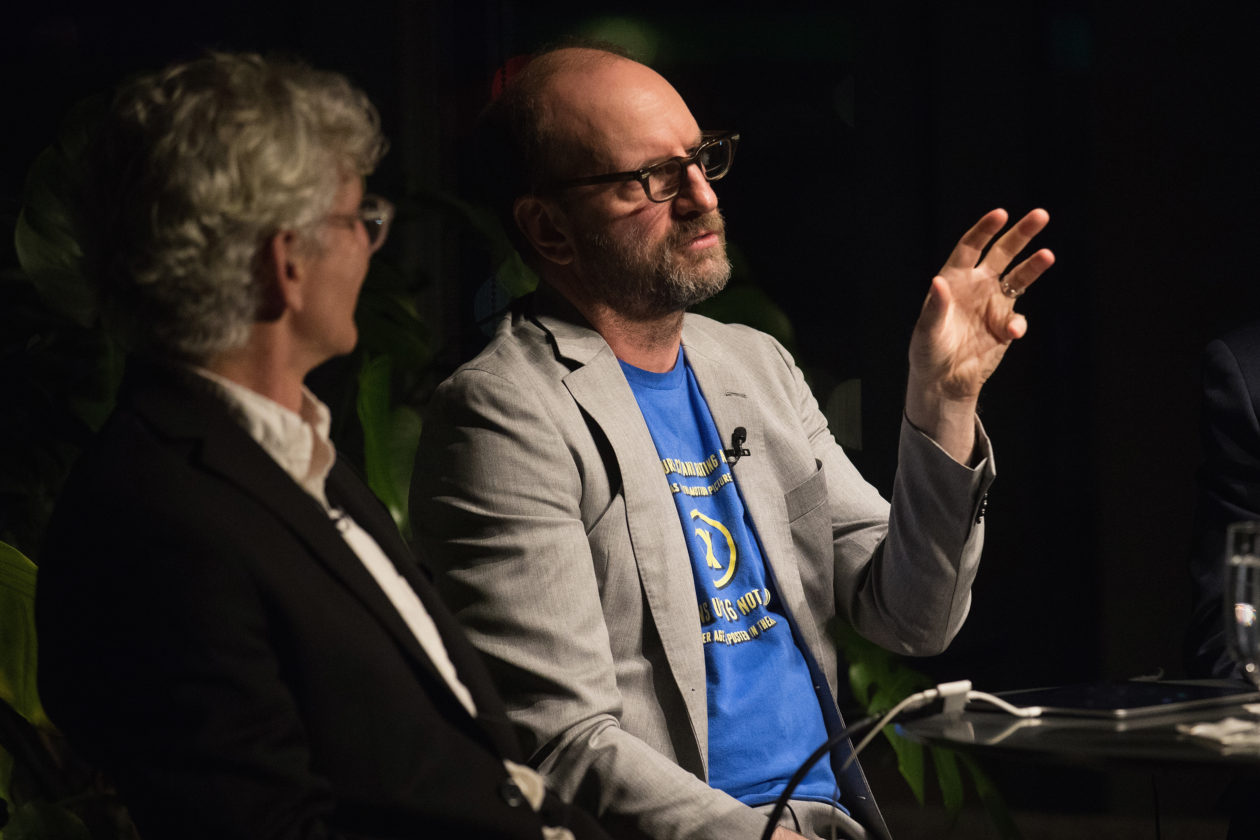
SEATTLE, WA - NOVEMBER 06: Writer Ed Solomon (L) and Director and Filmmaker Steven Soderbergh speak during an exclusive first look at interactive storytelling APP Mosaic from HBO and PODOP on November 6, 2017 in Seattle, Washington. (Photo by FilmMagic/FilmMagic for HBO)
[Philip Lelyveld comment: I guess he hasn't been to a play in a while. Filming an entire play from one seat doesn't create a good film-going experience, but the theatre director can create a good in-theatre experience. Having just created Mosaic, he should know better than to say VR doesn't work for long form because I can't use cinematic language in VR. ]
“I wish I could short VR, because in a narrative space, I don’t think it’s ever going to work,” Soderbergh said when I asked about virtual reality during an event at HBO’s Seattle office this week. “It’s going work in 10- to 15-minute bursts as an immersion into something, but it is never going work in a long-form narrative space. There are too many things that you’re giving up that are crucial to a viewer’s locking in to a narrative.”
The first problem, Soderbergh said, is the lack of a reverse shot in virtual reality. This is the film technique that puts the audience in the position of one character, looking directly at a second character, and then flips the perspective to look back at the first character from the perspective of the second.
See the full story here: https://www.geekwire.com/2017/filmmaker-steven-soderbergh-virtual-reality-never-going-work-real-movies/
HTC Announces Multi-million Dollar Vive Art Initiative, Bringing VR to Museums Worldwide
 [Philip Lelyveld note: 8 years ago I consulted with the Broad Foundation on 'the future of museums in the digital age.' This HTC announcement addresses a valuable but small piece of the puzzle.]
HTC announced a new multi-million dollar VR initiative aiming to support content, creators and institutions that embrace VR not only as an artistic medium itself, but as a way to better immerse users in all forms of art. The company aptly calls the program VIVE Arts.
“With the launch of Vive Arts, we are driving Virtual Reality’s influence in art and providing access to our world’s cultural heritage. We are empowering artists to create, and consumers to experience and interpret, art and culture in new ways,” said Joel Breton, vice president, VIVE Studios. “We are thrilled for the next Vive Arts’ project with Tate Modern, and support their mission to increase the public’s enjoyment and understanding of international modern and contemporary art.”
WeLens Breaks World Record for Largest Wireless Synced VR Screening at Conservation International Gala
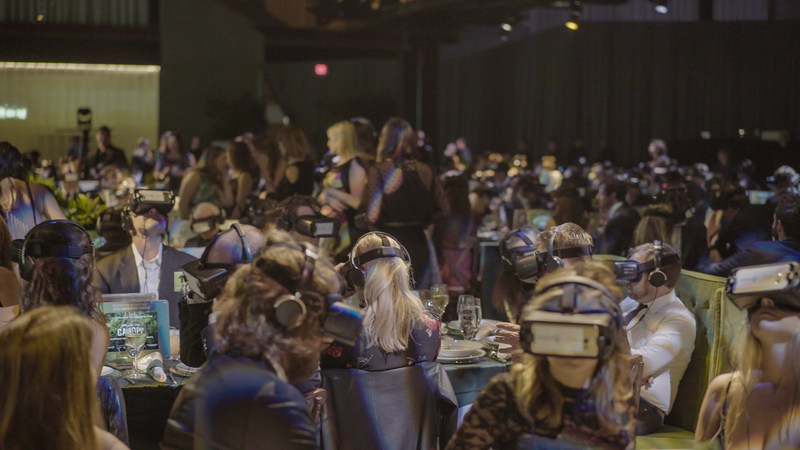
Record setting audience with WeLens wireless VR headsets (Photo Credit: Alex Suber) (PRNewsfoto/WeLens)
...the largest group in a wirelessly synchronized VR viewing in one location.
...a record-breaking audience of 425 viewers at Conservation International's 30th Anniversary fundraiser on November 2 at 3Labs in Culver City.
"WeLens has developed this new wireless technology to sync audiences together in VR and our LensPass remote control software brings the experience to a whole new level," said James Levy, WeLens's founder and CEO. "With LensPass, you can monitor how many devices are connected as well as tract their status and health stats like battery and temperature, not just for one or two devices but several hundreds."
See the full story here: https://www.prnewswire.com/news-releases/welens-breaks-world-record-for-largest-wireless-synced-vr-screening-at-conservation-international-gala-300553358.html