Portland startup wants to bring augmented reality to the home services business
The Streem app allows home services pros — think plumbers, appliance repair technicians and electricians — to invite their clients to the service that allows them to virtually assess a situation before making a house call.
Using the app, a homeowner can show a repair person the problem, and that home services pro can annotate the image with arrows and notes. The software also captures an image of the item in question and can run analysis to grab pertinent information that the home services pro will need, such as serial numbers. It could also make a model of an item, so they can show up to a job prepared with the right tools and parts.
See the full story here: https://www.bizjournals.com/portland/news/2017/10/19/portland-startup-wants-to-bring-augmented-reality.html
Who Is Thinking About Security and Privacy for Augmented Reality?
 In my view, what sets AR apart from other technologies is its immersive nature: it allows technology to directly mediate a person’s perception of and interaction with the physical world. From the perspective of how we might use AR for good, this presents exciting opportunities; but it also makes security and safety concerns much more pressing, and potentially dangerous, compared with any issues raised by more traditional technologies like phones or laptops, which don’t directly affect our view of reality.
Franziska Roesner is an assistant professor in the Paul G. Allen School of Computer Science & Engineering at the University of Washington, where she co-directs the Security & Privacy Research Lab.
See the full story here: https://www.technologyreview.com/s/609143/who-is-thinking-about-security-and-privacy-for-augmented-reality/
NZ virtual reality and augmented reality sector gains foothold
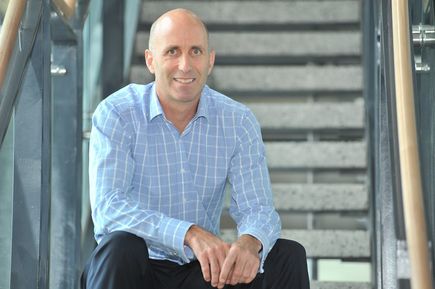 The New Zealand virtual reality and augmented reality (VRAR) industry sector is forecasting revenues of more than $320 million in two years.
This is the key finding of a report commissioned by the New Zealand Virtual Reality and Augmented Reality Association (NZVRARA), which is a part of the New Zealand Tech Alliance.
The report says more than 1100 full time equivalent staff are currently employed in the sector in New Zealand and is conservatively estimated to double in two years.
“We have researchers operating at the peak of the industry such as Victoria University and Christchurch’s HIT Lab NZ.
See the full story here: https://www.cio.co.nz/article/628824/nz-virtual-reality-augmented-reality-sector-gains-foothold/
Lucyd: the First Practical Ethereum Blockchain-Based Augmented Reality Smartglasses
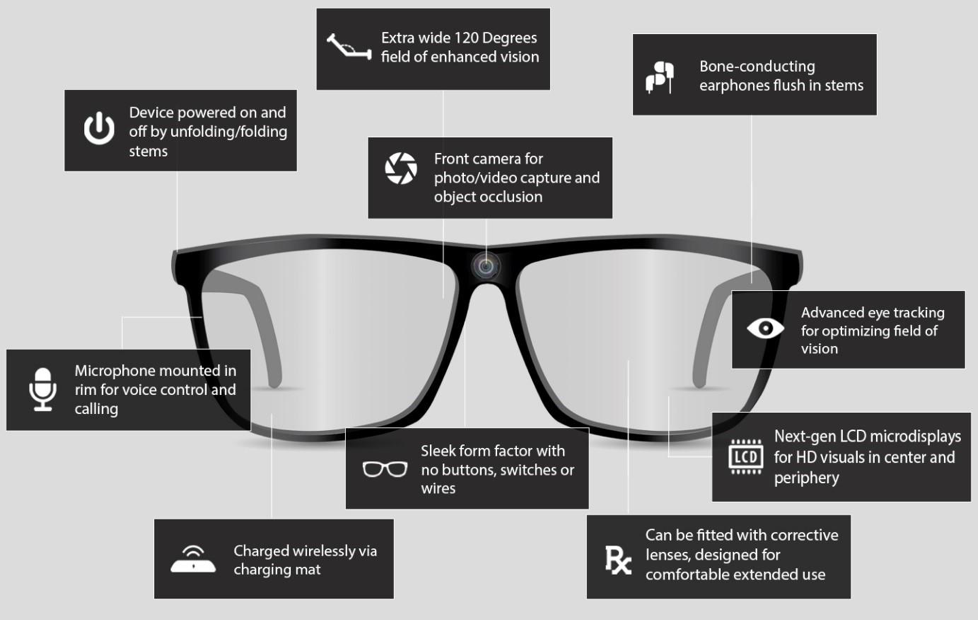 Over the last few years, Lucyd and the rest of its research team have obtained 13 patents at its premier optics facility at the University of Central Florida. With the assistance of Lucyd science advisors including Dr. Rolland and its AR team, the company has come close to creating the world’s first compact and practical AR display that can be connected to the Lucyd Lab AR and Ethereum blockchain networks to run decentralized applications.
Lucyd researchers explained that the Lucyd smartglasses will have smartphone-like use cases and applications that would allow consumers to seamlessly use the smart glasses in day-to-day operations.
See the full story here: https://coinjournal.net/sponsored-lucyd-the-first-practical-ethereum-blockchain-based-augmented-reality-smartglasses/
Samsung’s 360 Round: 4K Camera Live-Streams 3D for VR
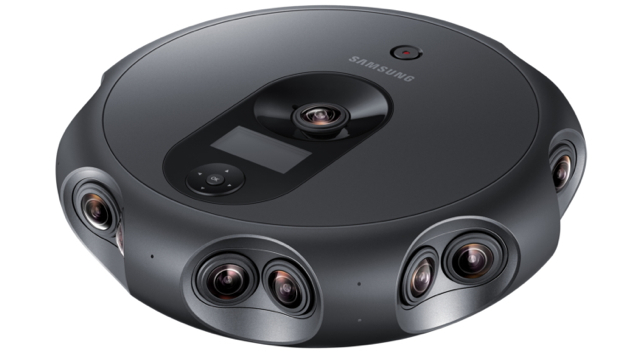 The Samsung 360 Round (above), which weighs 4.25 pounds, doesn’t yet have a price, but it will cost more than the $125 consumer-facing Gear 360 VR camera. It will, however, capture full 3D audio and offer “low-latency for live-streaming, one-step stitching, and simple editing functions.” Each of the 17 cameras will have “a 1/2.8-inch, 2 megapixel image sensor and f/1.8 lens,” and the new camera also offers “six audio microphones, LAN or USB-C connectivity, 10GB RAM and 40GB of internal storage, with expansion slots for more.”
See the full story here: http://www.etcentric.org/samsungs-360-round-4k-camera-live-streams-3d-for-vr/
The Company Bringing the Farm Right to the Table
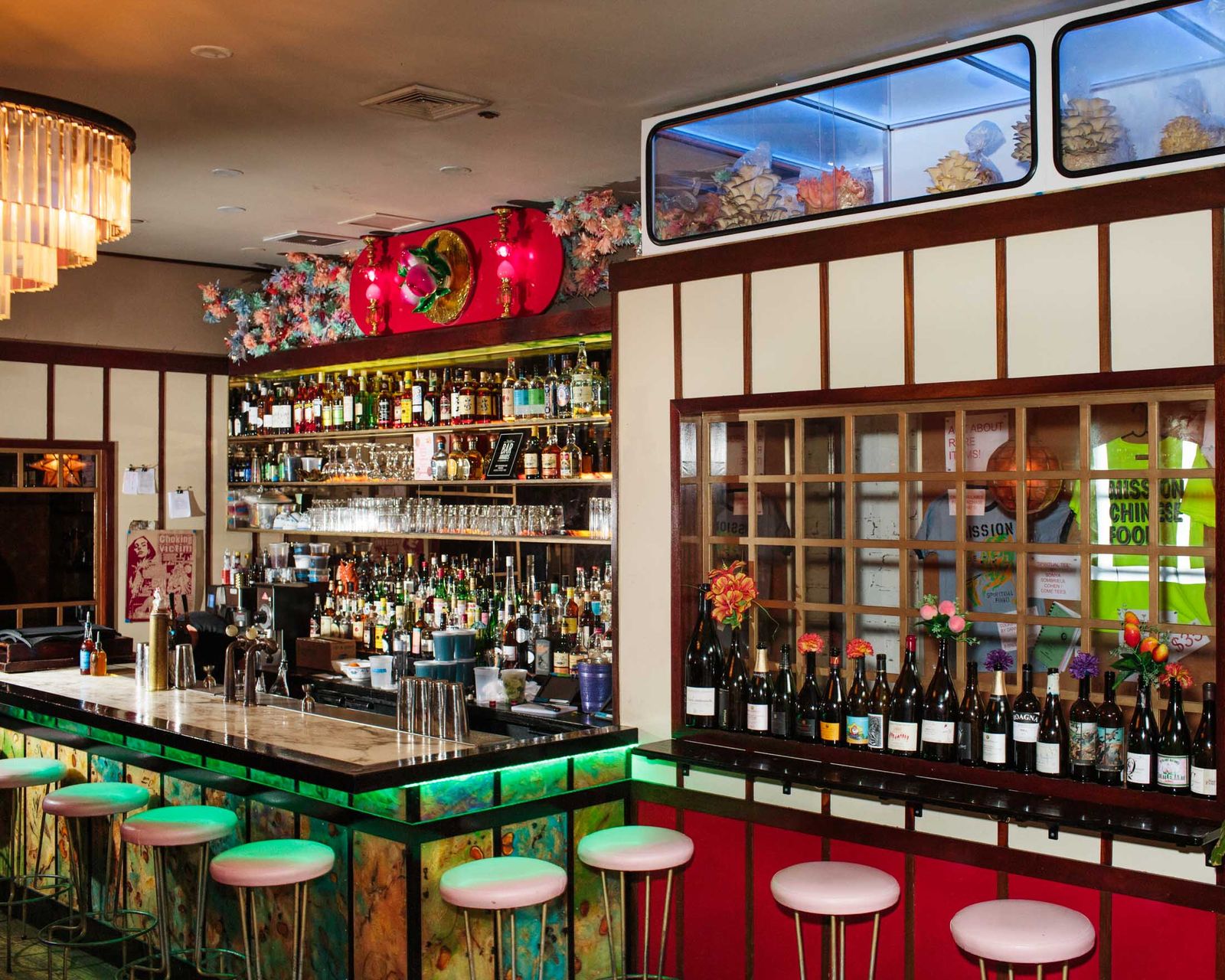 On Wednesday, the restaurant adds its newest piece of kitsch. Nestled between the entrance and the bar, above an interior window, sits a rectangular box emanating blue light. It’s filled with extraterrestrial looking life forms: mushrooms.
Designed and built by Smallhold, a Brooklyn-based, certified-organic, “distributed farming” startup, the “Minifarm” has been in the works for months. If all goes according to plan, blue, yellow and pink oysters, king and pioppino mushrooms will replace varieties such as beech, button and enoki in Dimayuga’s beef jerky fried rice. Dimayuga beamed with excitement. “A just-picked mushroom tastes the best.”
The fungi begin their life in Smallhold’s Bushwick headquarters and partner farms outside New York, in bags filled with such waste products as sawdust and coffee grounds. After three to four weeks, they are then transferred to Minifarms like that of Mission Chinese to finish growing. Harvesting on-site gives the mushrooms a longer shelf life, in addition to what Smallhold said is competitive pricing. Unlike other experiments in urban agriculture, the Minifarm uses very little space. The system, according to the company, is simply a better way to grow and distribute food.
A small Minifarm starts at $2,000, measures 4-feet wide by 2-feet deep, stands 6-feet tall and can produce up to 2,300 pounds of mushrooms a year. Inside, Wi-Fi and embedded sensors allow Smallhold to constantly monitor growth and adjust inputs such as lighting and temperature. Restaurant clients put a deposit on the machine and pay a monthly subscription fee, plus a price—from $5 to $12 per pound—for the produce.
See the full story here: https://www.bloomberg.com/news/features/2017-10-11/the-company-bringing-the-farm-right-to-the-table