Microsoft’s Windows Mixed Reality: everything you need to know
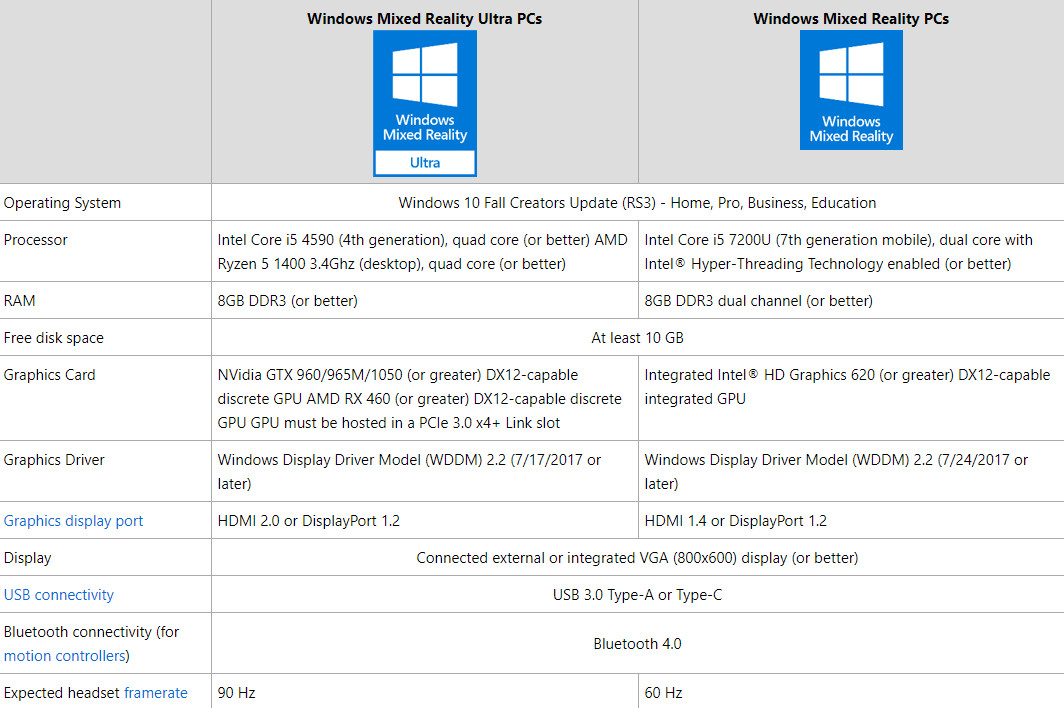 VR Games like Arizona Sunshine and Superhot VR are available today, alongside a Halo Recruit VR experience. Apps like Littlstar and Sliver.TV are also part of Microsoft’s Mixed Reality launch. Most of the games will come with SteamVR support. Microsoft is working with Valve to support this in Windows Mixed Reality, but this won’t be available in beta until the end of the year. If you’re opting for Windows Mixed Reality right now, you’ll be limited to the Microsoft Store and Microsoft’s built-in Windows 10 apps for now.
See the full story here: https://www.theverge.com/2017/10/17/16487936/microsoft-windows-mixed-reality-vr-headsets-guide-pricing-features
Palmer Luckey’s new defense company Anduril looks interested in AR and VR on the battlefield
 [PhilNote: this company is the seed for Skynet.]
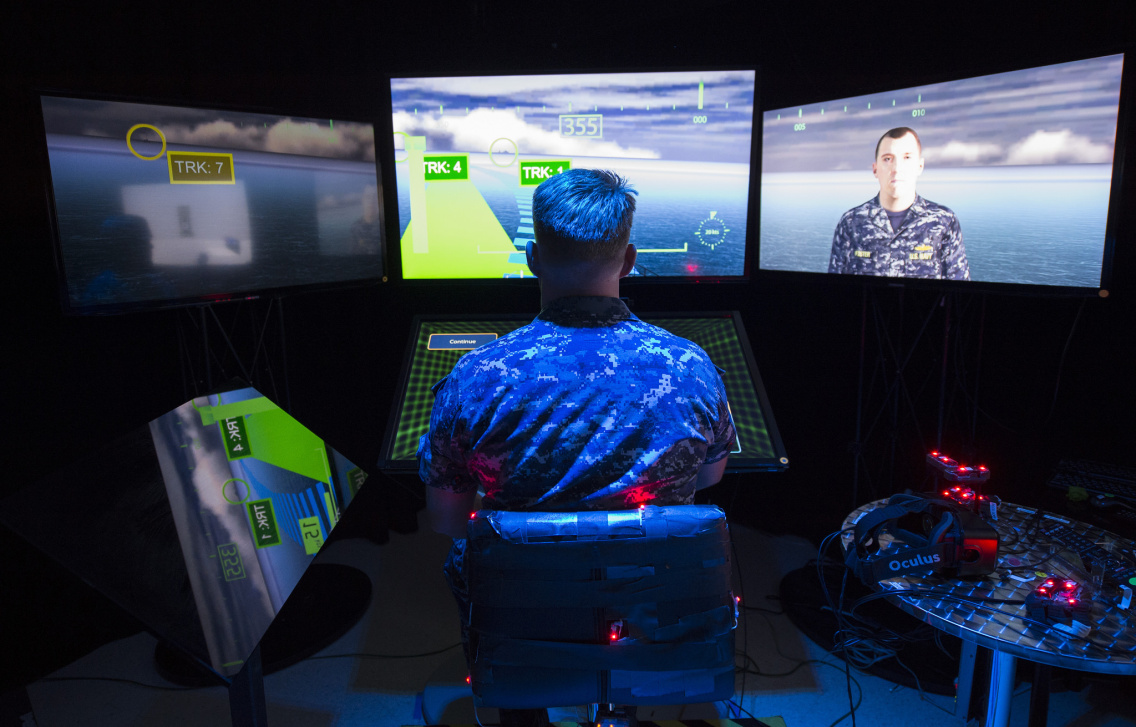
Palmer Luckey’s new defense startup Anduril has aspirations well beyond a high-tech border wall. According to new information on the company’s website and its hires, Anduril intends to apply its virtual reality pedigree to “real-time battlefield awareness for soldiers,” among other defense-centric specialties.
It’s not yet clear what role Luckey will play at Anduril, but now we know more about the team. LinkedIn lists former Palantir engineer Matt Grimm, former Oculus producer and product lead Joseph Chen and Founders Fund partner and former Palantir engineer Trae Stephens as Anduril’s co-founders.
See the full story here: https://techcrunch.com/2017/10/19/anduril-trae-stephens-battlefield-vr-ar/?utm_medium=TCnewsletter
How Augmented Reality Audio Will Let You Soundtrack Your Life
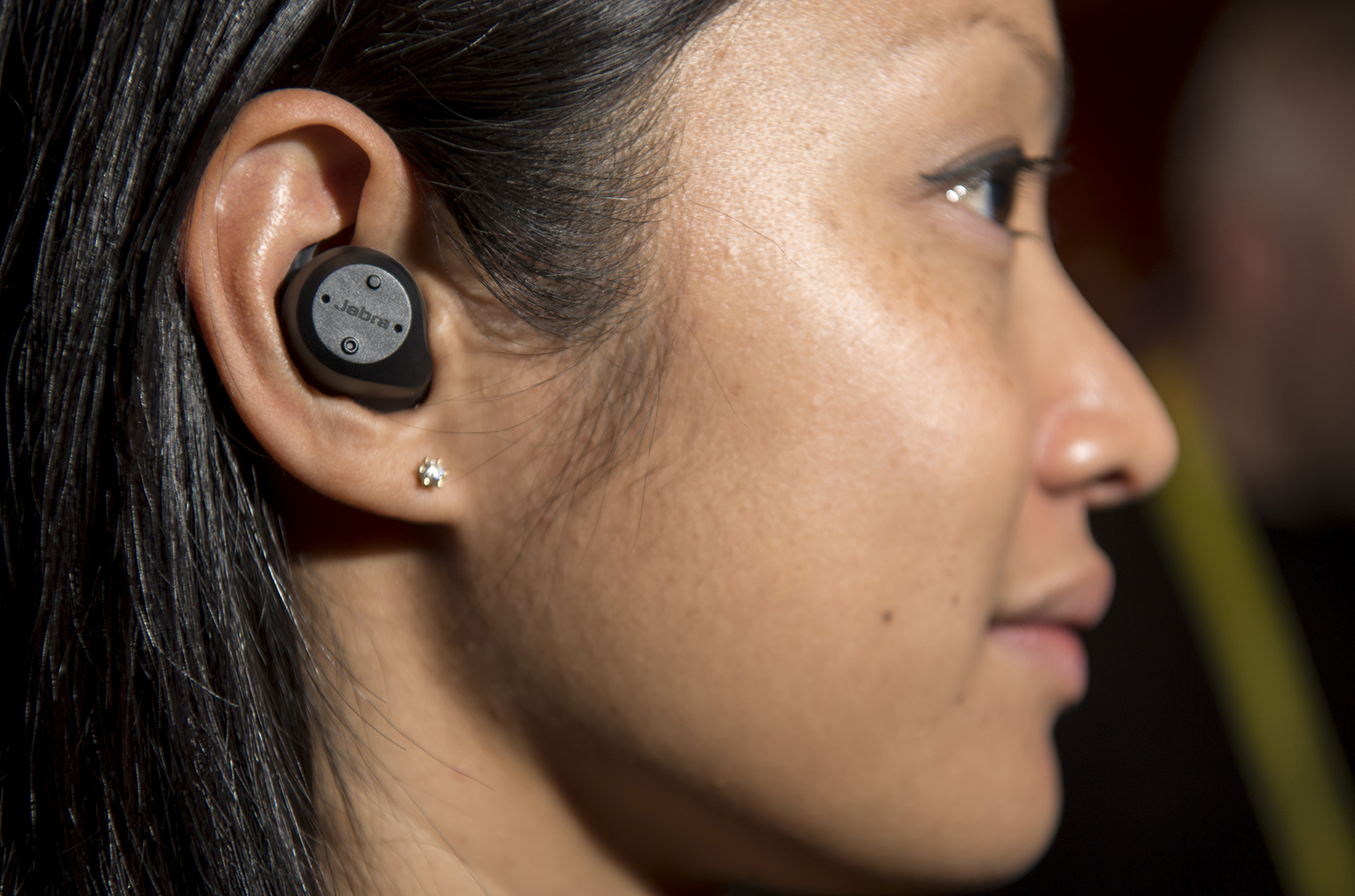
A Elite Sport Bluetooth earphone manufactured by Jabra GN is displayed during the ShowStoppers event at the 2017 Consumer Electronics Show (CES) in Las Vegas, Nevada, U.S., on Thursday, Jan. 5, 2017. CES, celebrating its 50th year, will showcase self-driving cars, TVs, drones, robots and a slew of other gadgets. Photographer: David Paul Morris/Bloomberg via Getty Images
A renaissance in “Hearables” has begun to reveal how we’ll be able to control the world of sound around us. In a nutshell, these are wireless earbuds that pair with our phones -- think of the movie Her -- but they’re so much more than a hardware upgrade. These “smart headphones,” such as Doppler’s Here One, Nuheara’s IQBuds and Google’s recently-announced Pixel Buds grant an unprecedented degree of precision in “tuning” the soundtrack of our lives -- and in blending our lives into that soundtrack.
Noise-cancelling headphones are designed to uniformly dim the sound around you, and while hearables can do that, they offer something more complex: the ability to “live mix” the world with realtime signal processing. We've been able to EQ our music and devices in the past, but it wasn’t something we could make instantly responsive to the noises of life. Here One and the IQBuds have preset filters for common environments like offices and cities, but the real fun comes in the tinkering. Maybe you want to hear ambient sounds louder than you otherwise would, or you’d prefer to tweak certain ranges, or you just want to add reverb for kicks. That’s the power of smart sound.
Intel has begun manufacturing chips for quantum computers.
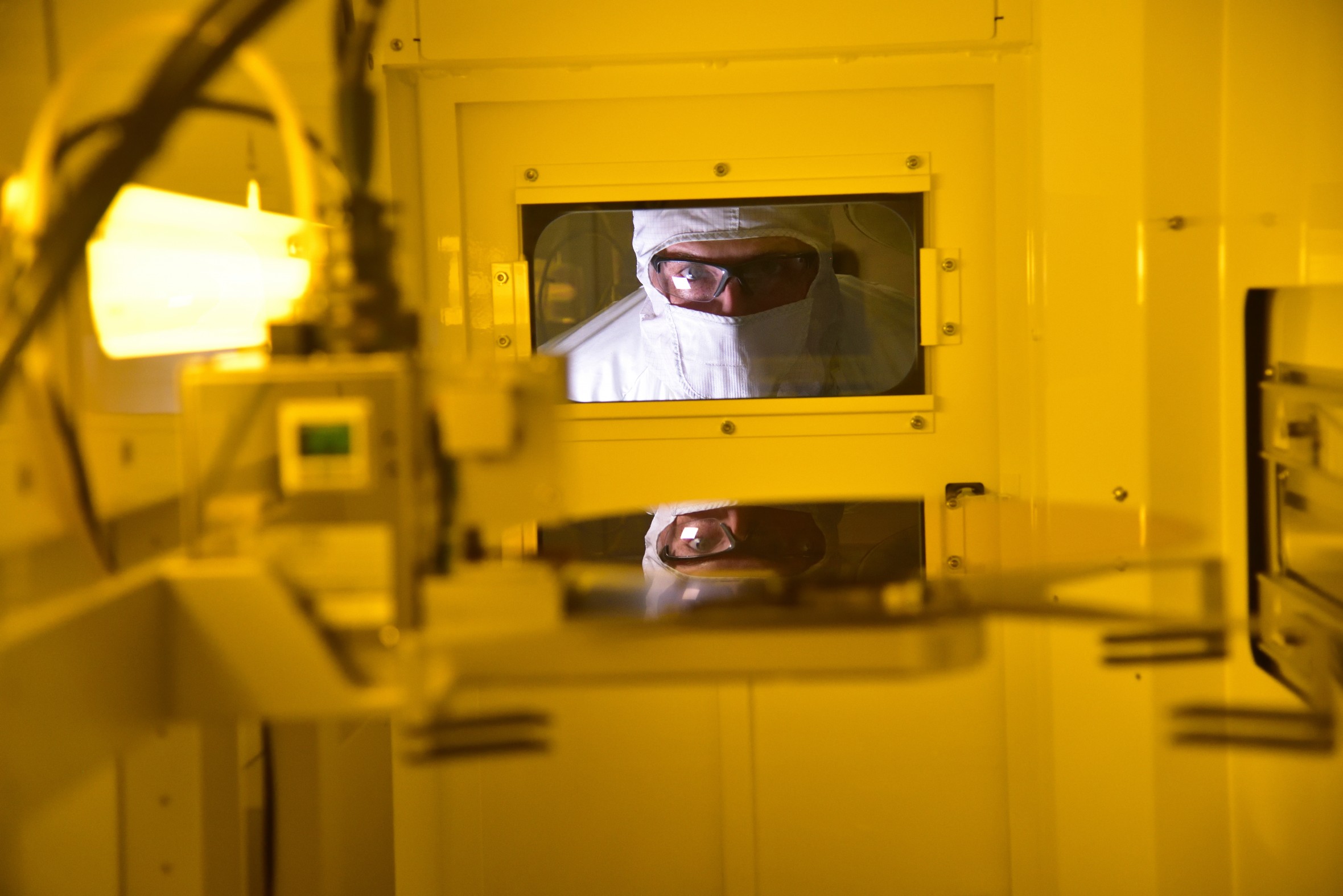
The new hardware is too feeble to do much real work, but it offers a strong signal that the technology is inching closer to real-world applications. “We’re [moving] quantum computing from the academic space to the semiconductor space,” says Jim Clarke, director of quantum hardware at Intel.
While regular computers store and manipulate data by representing binary 1s and 0s, a quantum computer uses quantum bits or “qubits,” exploiting quantum phenomena to represent data in more than one state at once. This makes it possible to compute information in a fundamentally different way, and to perform some parallel calculations in the same time it would take to perform a single one.
Hartmut Neven, who leads Google’s quantum computing project, has said that the company will build a 49-qubit system by next year. At that point the machine would be able to perform calculations that could not be simulated on a conventional supercomputer, a benchmark referred to as “quantum supremacy.”
NVIDIA FINALLY ANNOUNCED ITS VR PLATFORM HOLODECK
 Nvidia announced this week that it has opened early access to Nvidia Holodeck, its intelligent virtual reality platform, for select designers and developers.
“Nvidia Holodeck empowers designers to bring peers, partners and customers along the design journey to explore intricate, life-like 3D worlds together and ensure that the best ideas are discovered,” said Bob Pette, vice president of Professional Visualization at Nvidia. “It’s an unparalleled environment for deploying and testing AI-based agents — and will only get better as we add more AI capabilities.”
See the full story here: https://vrworld.com/2017/10/14/nvidia-finally-announced-vr-platform-holodeck/
Jewellers use virtual reality to give unique experience to customers
 "The buyer needs to just wear the VR headset and feel she is in a virtual showroom. The user can get virtual in-store experience of choosing any jewellery, seeing the piece from different angles, and zoom in on the item to appreciate intricate designs,” said Balram Garg, Managing Director of PC Jeweller.
NEWSKellogg’s replaces cereal toys with augmented reality trick or treat experience
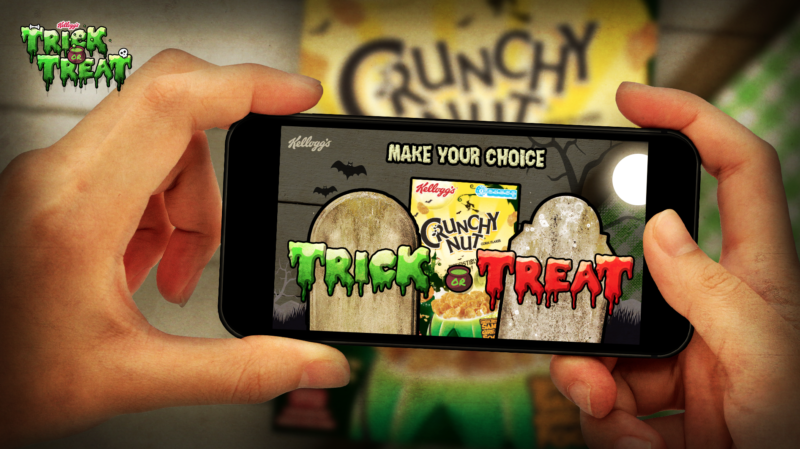 Kellogg’s has partnered with media identifying platform Shazam to create an augmented reality Halloween trick or treat experience for selected Kellogg’s cereal packs.
In conjunction with creative agency Orchard, selected cereal boxes will display a Shazam code which will take customers to Kellogg’s Amazing Creations website, where they can find Halloween recipes and trick or treat activities including slime thrown in the face, a hula-hooping mummy and a cheeky ghost.
See the full story here: https://mumbrella.com.au/kelloggs-replaces-cereal-toys-with-augmented-reality-trick-or-treat-experience-477712
Virtual reality for defence less about ‘reality’ than results
 However, the need for realism has different connotations for the defence customer than for the average consumer. Experts say high-end graphics are in less demand than true operational outcome. But despite this key difference, the defence world is relying heavily on the entertainment industry to advance its leading solutions.
“Because we use commercial gaming technology, we can exploit the investments that industry has made,” says Simon Luck, head of systems and information assurance at BMT Defence Services (BMT).
Engage has been used to immerse users into an environment of explosive ordnance disposal in order to familiarise them with the right controls and procedures for that environment.
The company’s latest effort is the QEC Walkthrough, a virtual guide to the Royal Navy’s brand new Queen Elizabeth aircraft carrier. With 3,000 compartments, this gigantic platform requires those stationed inside it to have a deep, working knowledge of how to navigate their way around. As users can form a working knowledge of the quickest escape routes and emergency operating procedures that would be costly to attempt to perform on the real vessel, the program is touted as a major benefit to mariner safety.
“The most important part of the design is determining what the training objectives are, what the users’ roles are, and what the outcomes need to be. We develop simulation around that.”
“So the end product doesn’t have to be identical to the real world. Much of it comes back to the experience and engagement of the provider. If we understand the customer and can deliver enough that they meet their goals, when it comes down to it, that’s all that matters.”
Meanwhile, QinetiQ is also embracing the incremental developments of consumer technology – including the recent elimination of ‘simulation sickness’ – as a means of expanding the overall scale of its offering.
See the full story here: https://www.defenceiq.com/news/virtual-reality-for-defence-less-about-reality