Duckpocalypse review: Duck Hunt reimagined for virtual reality
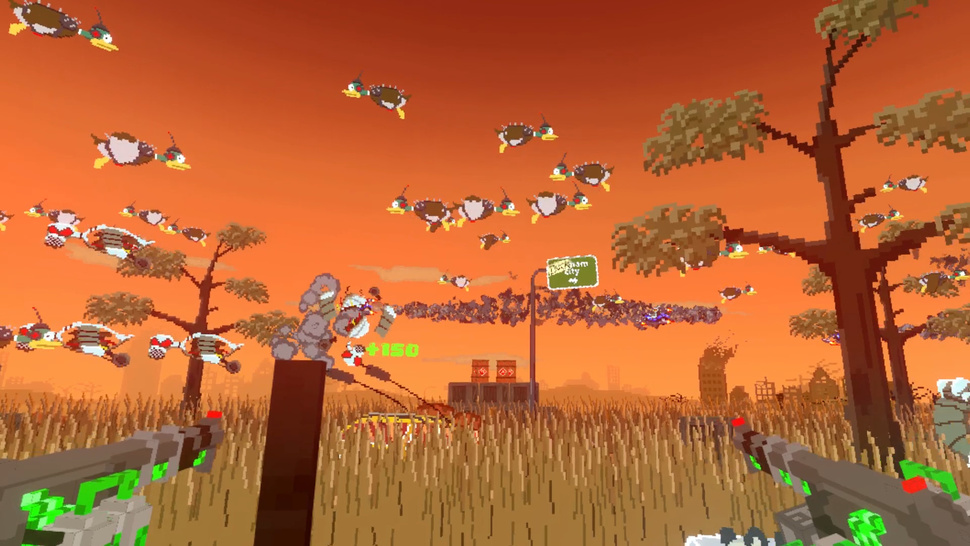 We don't generally take the time to review cheap and cheerful games, but Duckpocalypse is something special that hit us right in the nostalgia zone. It's like a smart reboot of gaming classic, Duck Hunt, but with a twist - it's in VR.
Available for Oculus Rift, HTC Vive and Gear VR, Duckpocalypse only costs a couple of quid.
The premise of Duckpocalypse is simple: you spawn in a wooden hunting hide with two pistols and a scoreboard. Shoot down as many of the angry robots ducks as you can in a short time limit.
See the full story here: http://www.pocket-lint.com/review/141919-duckpocalypse-review-duck-hunt-reimagined-for-virtual-reality
Roland Emmerich Dives Into Virtual Reality With VRenetic
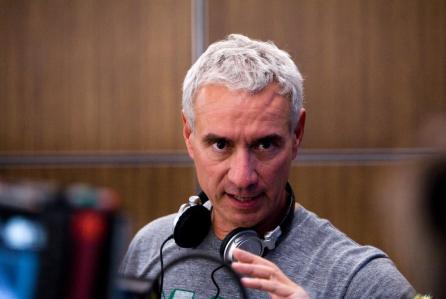 Independence Day filmmaker Roland Emmerich and entrepreneur and producer Marco Weber are diving deep into virtual reality by launching the virtual reality company VRenetic, which will specialize in “accessible, social-media enabled 360-degree streaming.” The company is privately held and headquartered in West Hollywood and Emmerich is its chairman and co-founder.
\The company’s first product – VResh – combines a free broadcasting and viewing application with mobile integrated cameras and proprietary headsets that empower users to share real time 360-degree experiences with the world without the big expense that has hampered high-quality VR adoption.
“Sure, the hardware for professional 360-degree content streaming already exists, but it’s totally inaccessible to young, cost-conscious users,” said Emmerich in a statement. “The VResh platform unlocks all of that, and more. Users will have 4K 360-degree VR streaming capabilities paired with real-time two-way audio, which does wonders to socialize and personalize what has thus far been a solitary, tethered-to-a-computer kind of experience.”
See the full story here: http://deadline.com/2017/10/roland-emmerich-virtual-reality-vrenetic-marco-weber-1202181015/
PTC announces a major new release to Vuforia augmented reality platform
 Vuforia is the world’s most widely used platform for AR development. With support for leading phones, tablets and eyewear, Vuforia has powered more than 475 million installs of AR apps from the App Store and Google Play. Vuforia Engine, the core of the platform, uses a device’s camera(s) and sensors to function as a digital “eye” inside an app. It “sees” objects and surfaces where content can be placed, and enables developers to create AR experiences using existing development tools.
Vuforia 7 will introduce Model Targets, a new feature for attaching content to objects that have not been recognisable using existing computer vision technology. Model Targets recognise objects by shape, in contrast to existing methods that rely on detailed visual designs typically found on print media, product packaging and many consumer goods.
In response to tremendous developer demand, Vuforia 7 will also introduce a new capability for placing content on horizontal surfaces. Vuforia Ground Plane enables content to be placed on the ground, floor or tabletop, whether indoors or outdoors.
Vuforia Ground Plane extends the functionality of the Vuforia Smart Terrain feature, first announced in 2013 to take advantage of depth sensing cameras.
Vuforia 7 will also introduce Vuforia Fusion, a new capability designed to provide the best possible AR experience on a wide range of devices. Vuforia Fusion solves the problem of fragmentation in AR-enabling technologies, including cameras, sensors, chipsets, and software frameworks such as ARKit and ARCore.
It senses the capabilities of the underlying device and fuses them with Vuforia features, allowing developers to rely on a single Vuforia API for an optimal AR experience. Vuforia Fusion will bring advanced Vuforia features to ARCore and ARKit-enabled devices, in addition to over 100 Android and iOS device models.
See the full story here: https://www.iot-now.com/2017/10/06/68533-ptc-announces-major-new-release-vuforia-augmented-reality-platform/
New Technology Uses Mouth Gestures to Interact in Virtual Reality
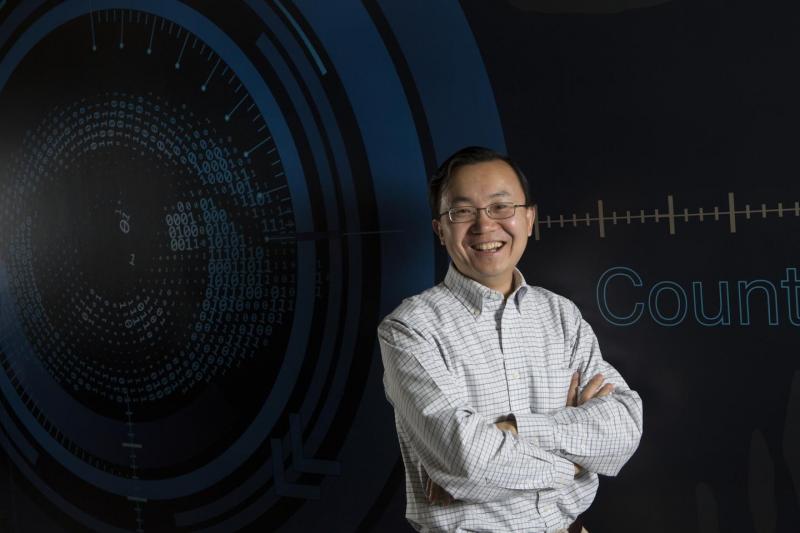 The proliferation of affordable virtual reality head-mounted displays provides users with realistic immersive visual experiences. However, head-mounted displays occlude the upper half of a user's face and prevent facial action recognition from the entire face. To combat this issue, Binghamton University Professor of Computer Science Lijun Yin and his team created a new framework that interprets mouth gestures as a medium for interaction within virtual reality in real-time.
Yin's team tested the application on a group of graduate students. Once a user put on a head-mounted display, they were presented with a simplistic game; the objective of the game was to guide the player's avatar around a forest and eat as many cakes as possible. Players had to select their movement direction using head rotation, move using mouth gestures and could only eat the cake by smiling. The system was able to describe and classify the user's mouth movements, and it achieved high correct recognition rates.
The paper, "Partially occluded facial action recognition and interaction in virtual reality applications," was presented at the 2017 IEEE International Conference on Multimedia and Expo.
See the full story https://www.rdmag.com/news/2017/10/new-technology-uses-mouth-gestures-interact-virtual-reality
How virtual reality can help seniors
 An event held at AARP innovation lab The Hatchery as part ofTechweek showcased various companies that use virtual reality to help seniors out in various ways.
Outside of their formal event at The Hatchery, AARP and Booz Allen Hamilton set up a BetaBox that showcased various virtual reality and mixed reality demos for guests to try, while also introducing the pillars of brain health mentioned above.
Inside the Hatchery, one of the startups, VRHealth, operated on a similar premise. Founder Eran Orr was onhand with an environment that allowed users to pop balloons with a sword.
While the BetaBox demo and VRHealth obviously focus primarily on the “move” pillar of brain health, Boston-based startup Rendever and cofounder Kyle Rand are aiming at to fulfull the “discover” and “connect” pillars of brain health. Their product can show virtual versions of famous landmarks and places, or offer more personalized versions of places like childhood homes and marriage locations. Rendever is intended to be used in groups, to give seniors something to talk about even after the discovery of the virtual experience has ended.
See the full story here: https://technical.ly/dc/2017/10/06/virtual-mixed-reality-offer-varied-benefits-retirees/
Bentley Advances the Power, Accessibility, and Pervasiveness of Visualization and Virtual Reality for Infrastructure Projects
 Using immersive VR, users can:
- Navigate and explore models in immersive 3D
- Teleport to any point of view
- Touch objects to view BIM information
- Create immersive walk-thru training videos
MicroStation and Bentley LumenRT also provide native support for scalable meshes. Users can leverage Bentley’s ProjectWise ContextShare service to share and stream reality meshes for use in design and visualization workflows.
See the full story here: https://www.bentley.com/en/about-us/news/2017/october/09/pna-06-microstation-lumenrt
VR in healthcare: 3 developments pushing boundaries in 2017
 1. Surgery
One of many promising elements XR brings to the medical field is that of 3D models that surgeons can use to prepare and plan operations. These models are created by merging MRI’s, CAT-scans, and ultrasounds.
2. Medical Training
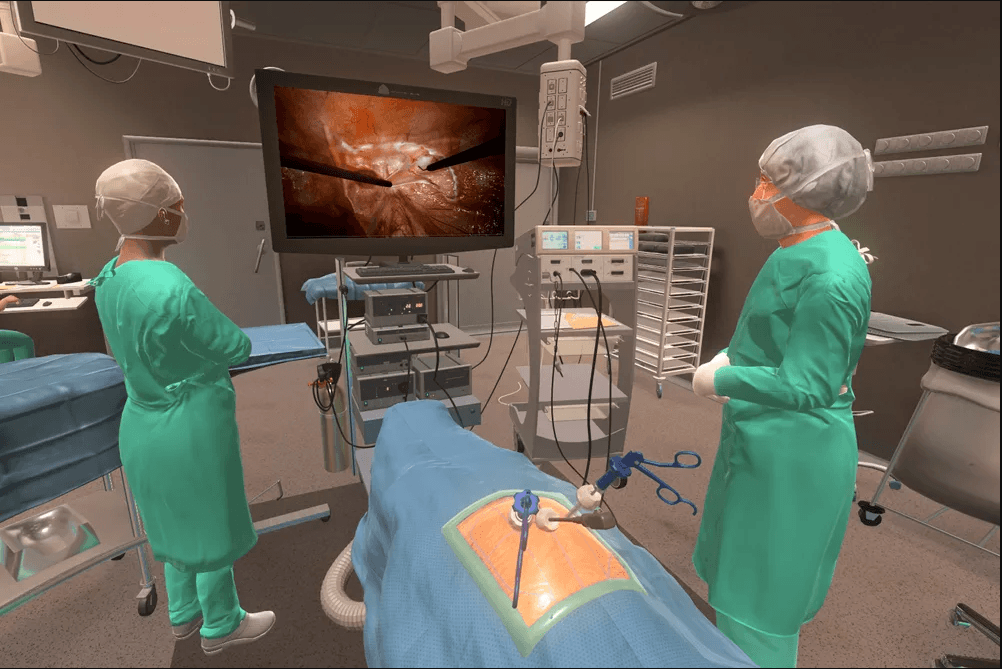
Six out of ten physicians in the US already use virtual reality to gain expertise in surgical techniques that use endoscopic tools.
Companies such as 3D Systems, Level Ex and Osso VR make it possible for today’s training to happen in a VR operating room.
Training or preparations might be virtual, but the tools used don’t have to be: ImmersiveTouch, for example, offers equipment that provides force feedback.
3. Patient Treatment
Some of the most spectacular breakthrough cases of XR in healthcare have come from the use cases for patient treatment and care. Some of these, like Isobar’s Common Ground VR, are even built for caretakers instead of patients. Common Ground VR simulates what it must be like to have a visual disability, like macular degeneration or glaucoma.
On the front of treatment, the company MindMaze uses VR to treat Parkinson’s patients, amputees, and stroke victims.
Another such company leveraging VR is Brain Power, which helps patients with autism. A demo by Brain Power’s CMO psychiatrist Dr. Arshya Vahbzadeh showed a young child making eye contact with his mother, recognizing her emotions and with that bringing his mother to tears: never before she was able to make eye contact in this way with her child.
If you’re interested in learning more about the developments of XR in healthcare, join me at the VR Days 2017 in Amsterdam on October 25-27. A dedicated track of healthcare VR-specialists will be speaking on the newest developments.
See the full story here: https://thenextweb.com/virtual-reality/2017/10/09/vr-healthcare-3-developments-pushing-boundaries-2017/