The Virtual Reality Game Gathering Data for Dementia Researchers
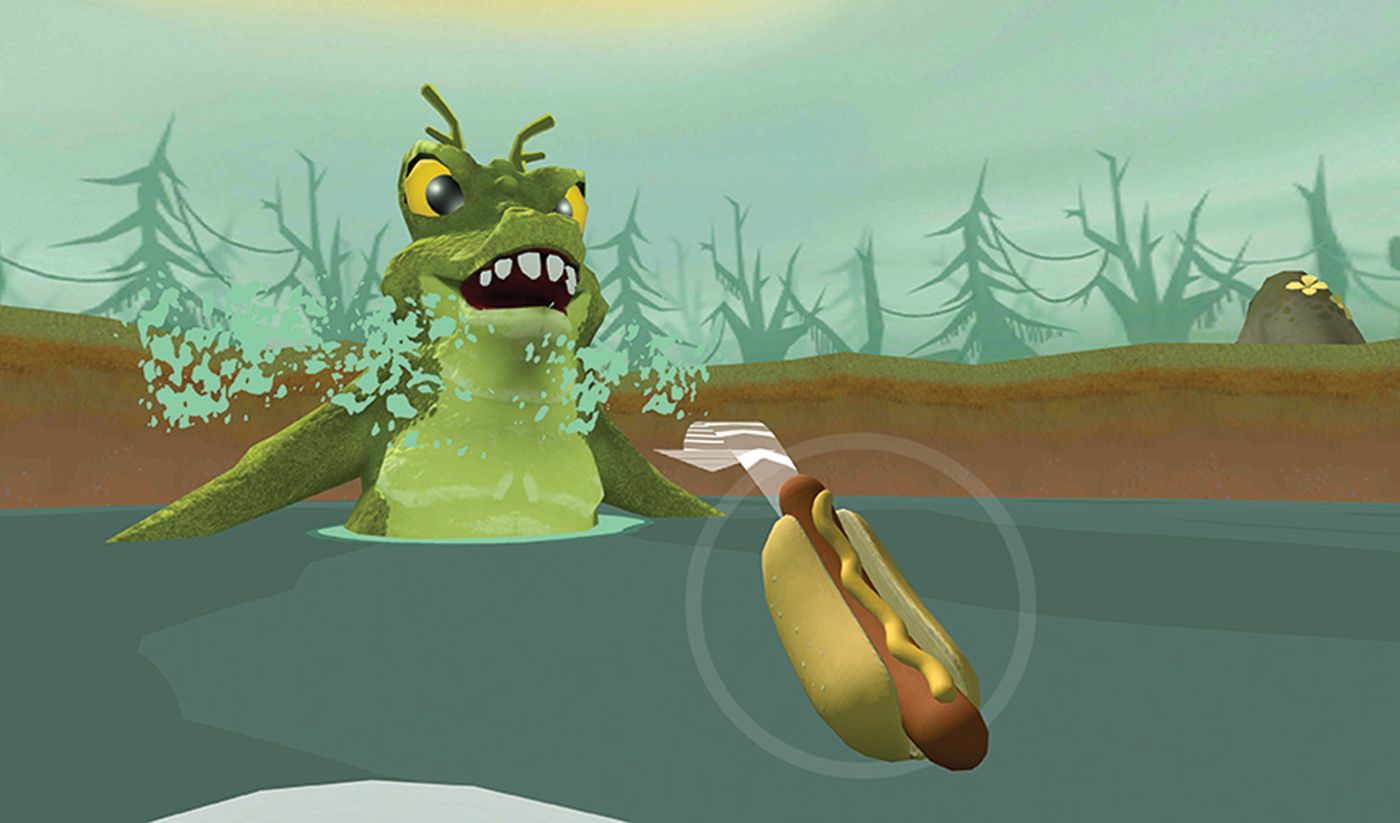 London-based game design firm Glitchers worked with researchers from British and Swiss universities, as well as dementia and Alzheimer’s charities, to create Sea Hero Quest VR. Development of the free-to-download game, which is being released Tuesday for Samsung’s Gear VR headset and Facebook Inc.’s Oculus Rift, was funded by German mobile carrier Deutsche Telekom AG.
As people play the game, anonymized data – including what actions they take and exactly where they look and for how long – is collected and stored on Deutsche Telekom’s servers in Germany. Players can also choose to provide the carrier with more detailed demographic data, such as information about their age, gender and location.
Neuroscientists and cognitive psychologists will analyze the data to hopefully learn more about how humans develop spatial awareness and navigate new environments. Researchers believe subtle degradation in these skills may be an early warning sign of dementia and that information from the game could eventually lead to new tests to detect cognitive impairment earlier.
Data from the previous Sea Hero Quest game also confirmed laboratory studies that men and women differ in their navigational strategies, with men more likely to rely on landmarks and external cues in the environment, and women more likely to use an internal, cognitive map and an intuitive sense of direction to help them get around, Holscher said.
See the full story here: https://www.bloomberg.com/news/articles/2017-08-29/the-virtual-reality-game-gathering-data-for-dementia-researchers
Amazon and Microsoft agree their voice assistants will talk (to each other)
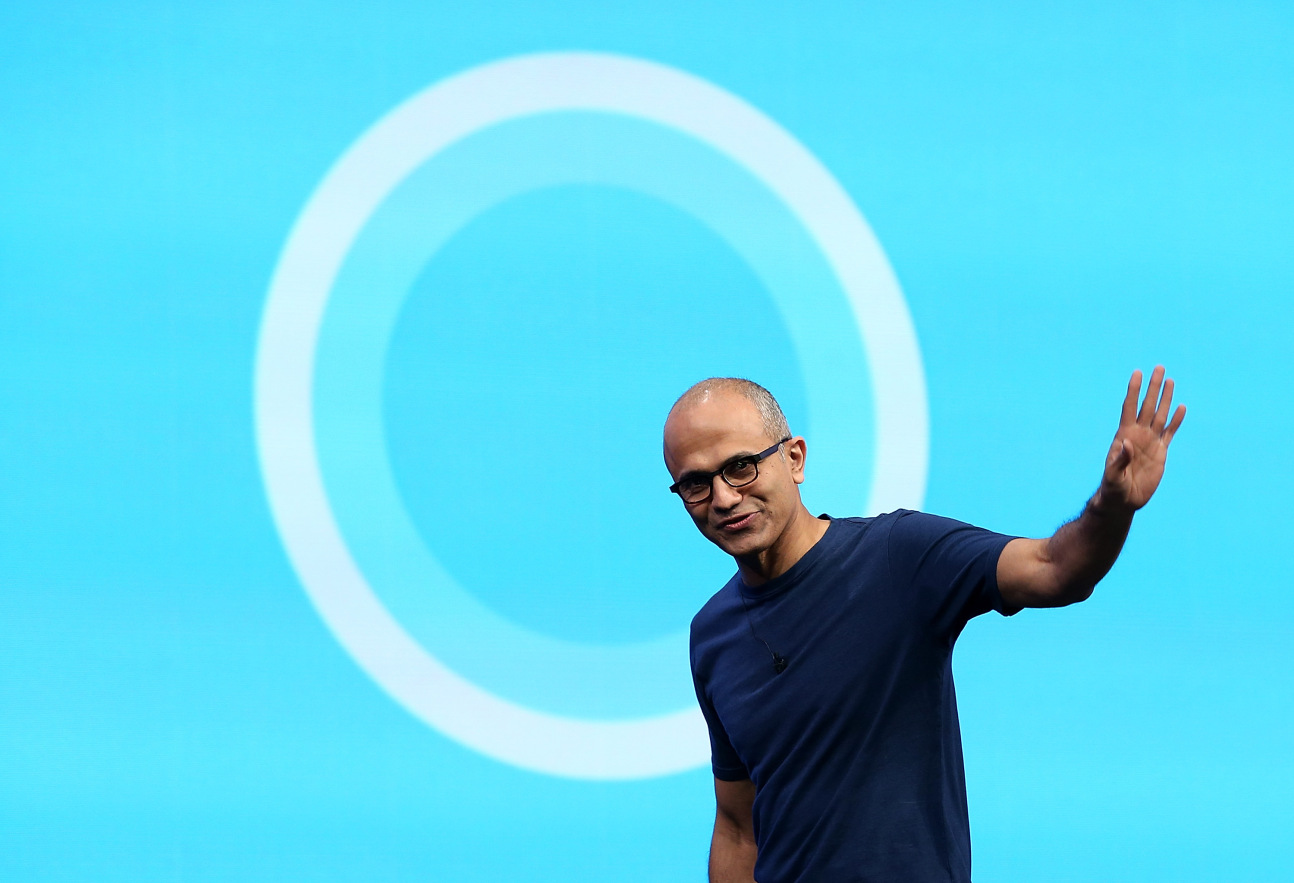
SAN FRANCISCO, CA - APRIL 02: Microsoft CEO Satya Nadella walks in front of the new Cortana logo as he delivers a keynote address during the 2014 Microsoft Build developer conference on April 2, 2014 in San Francisco, California. Satya Nadella delivered the opening keynote to kick off the 2014 Microsoft Build developer conference which runs through April 4. (Photo by Justin Sullivan/Getty Images)
And so Microsoft’s Satya Nadella and Amazon’s Jeff Bezos are today announcing a tie-up, which will — at an unspecified point later this year — enable users of the latter’s Alexa voice assistant to ask her to summon Microsoft’s Cortana voice assistant to ask it to do stuff, and vice versa.
And here’s how they sum up the win-win benefits they see for their respective users by letting their voice assistants interoperate:
Alexa customers will be able to access Cortana’s unique features like booking a meeting or accessing work calendars, reminding you to pick up flowers on your way home, or reading your work email – all using just your voice. Similarly, Cortana customers can ask Alexa to control their smart home devices, shop on Amazon.com, interact with many of the more than 20,000 skills built by third-party developers, and much more.
The main thing to note here — aside from how clumsy it’s going to be having one voice assistant summon another — is that Cortana and Alexa play in very different spheres; one being productivity and business user focused, and the other being ecommerce/entertainment and consumer focused.
Which means there’s little strategic reason for Alexa or Cortana to be overly territorial vis-a-vis each other at this point vs — on the flip side — the extra utility they reckon they can reap by agreeing to integrate their products and expanding the relative capabilities of each.
See the full story here: https://techcrunch.com/2017/08/30/amazon-and-microsoft-agree-their-voice-assistants-will-talk-to-each-other/?utm_medium=TCnewsletter
Apple teases the future of augmented reality apps
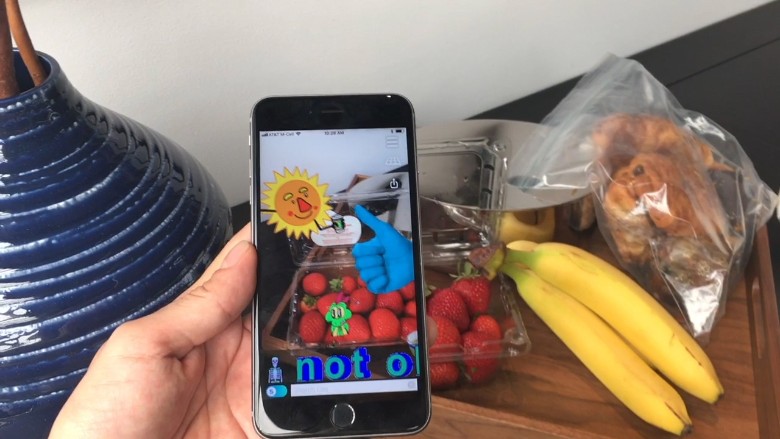 But it was also easy to see how AR could find a natural place in gaming. "Arise" by Climax Studios places its world in front of you, allowing you to walk around or move your phone to adjust the perspective -- rather than relying on buttons or a joystick to move characters.
See the full story here: http://money.cnn.com/2017/08/29/technology/apple-augmented-reality/index.html
Zeiss VR One Connect puts virtual reality PC games onto a smartphone headset
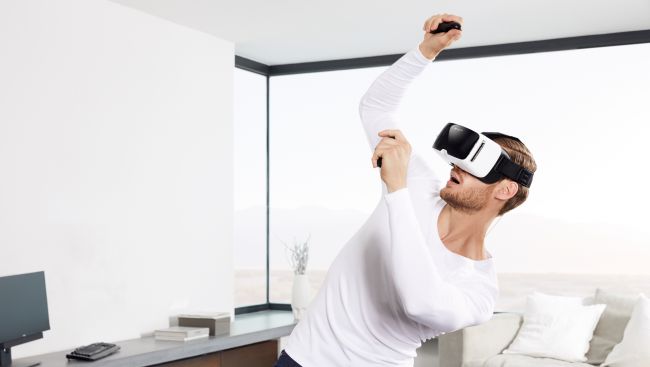 [Philip Lelyveld comment - this is a tethered mobile-based product. Zeiss's strength is the high quality of their lenses.]
The headset, with the smartphone slotted in, is connected to your PC via a USB cable, and the Zeiss VR One Connect uses the smartphone’s built-in motion sensors to provide head tracking. To control the games, a pair of wireless Bluetooth controllers are also included.
These controllers can sense three degrees of freedom (3DoF) motion thanks to sensors built by PXL Vision.
Releasing at the end of 2017, the Zeiss VR One Connect, which comes with two wireless controllers and a USB cable, along with the required software, will cost $129 (around £100, AU$160).
A bundle which includes the Zeiss VR One Plus headset will also be sold for $199 (around £150, AU$250).
See the full story here: http://www.techradar.com/news/zeiss-vr-one-connect-puts-virtual-reality-pc-games-onto-a-smartphone-headset
GOOGLE JOINS THE AUGMENTED REALITY PARTY WITH ARCORE
 Google's launching its first augmented-reality software development kit, called ARCore, to help developers start making cool stuff in AR.
The software works on most recent Android phones and doesn't require any special hardware. No dual-camera setup necessary, no wacky Project Tango depth sensor. Google's AR and VR efforts have always focused on working for everyone. This one's not for everyone, strictly speaking, but it will work on 100 million existing Android phones and most others going forward.
The ARCore SDK puts three new things in developers' toolkits. It offers super-fine motion tracking, using the sensors in your phone and the camera to keep virtual objects anchored in place. It also detects tables, floors, rugs, and walls, so you can actually place things where they make sense. ARCore maps and matches the lighting wherever you are, which makes the AR objects look a little more like real things in the room. Developers who work with the Unity and Unreal engines can work in ARCore, or they can use more common Java and OpenGL tools. Along with Google's other content-creator tools like Tilt Brush, Blocks, and the Virtual Positioning Service (which enables world-scale AR, not just room-sized), and Google has a surprisingly complete AR setup.
Looking at the AR landscape, Google seems to be a bit late to the party. But Clay Bavor, Google's VP of augmented and virtuality, thinks it can catch up quickly. ARCore won't even require a software update when it launches officially this winter—you'll just wake up one day and have an AR machine where your smartphone used to be. And as the software develops, it could even become part of Google's wildly popular Chrome browser. Google has scale unlike anyone else.
See the full story here: https://www.wired.com/story/google-joins-the-augmented-reality-party-with-arcore/
Second Life Creator Opens Social VR World Sansar to the Public
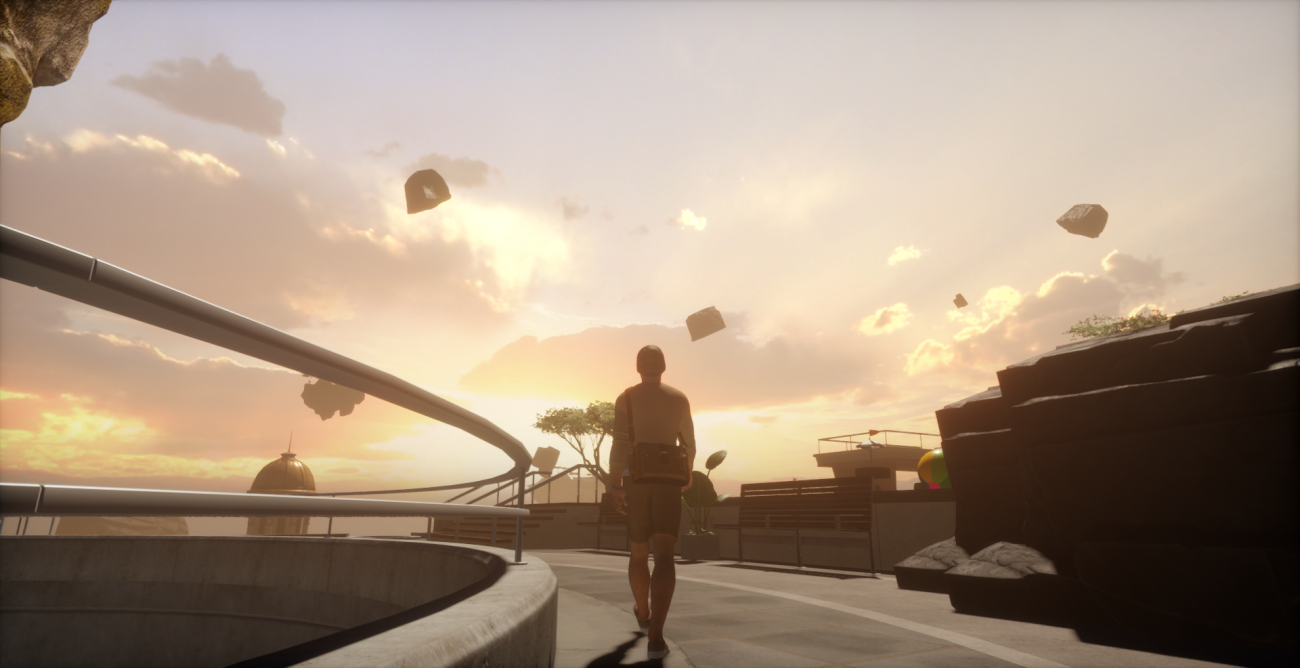 Linden Lab, the company behind Second Life, publicly launched its new social virtual reality world Sansar as part of a public beta test Monday. Sansar offers anyone with a compatible headset or PC the ability to visit VR experiences, mingle with others, as well as create their own virtual games and locations.
Linden Lab has been working on Sansar since early 2014, and began privately testing it with some 2000 creators a couple of months ago. Those creators have since built around 1700 VR experiences ranging from narrative games to virtual museums. “It’s been a very active period,” said Linden Lab vice president of product Bjorn Laurin.
Sansar offers anyone signing up during the open beta an area of 4 by 4 kilometers of virtual lands for free to develop their own residences or experiences. Users can either import existing 3D renders done with programs like Maya, or simply go tho the Sansar store and buy pre-made assets — something that Linden Lab senior director of global communications likened to real-life clothing and furniture shopping: “It’s much like most of us create in the physical world.”
Sansar comes with a free tier as well as a paid $9.99 subscription for creators that want to build more than three separate experiences.
Sansar can not only be used with the Oculus Rift and HTC Vive, but also with a regular PC without any additional VR hardware.
See the full story here: http://variety.com/2017/digital/news/sansar-vr-public-beta-1202510905/
Why Hollywood Could Make Billions From Self-Driving Cars
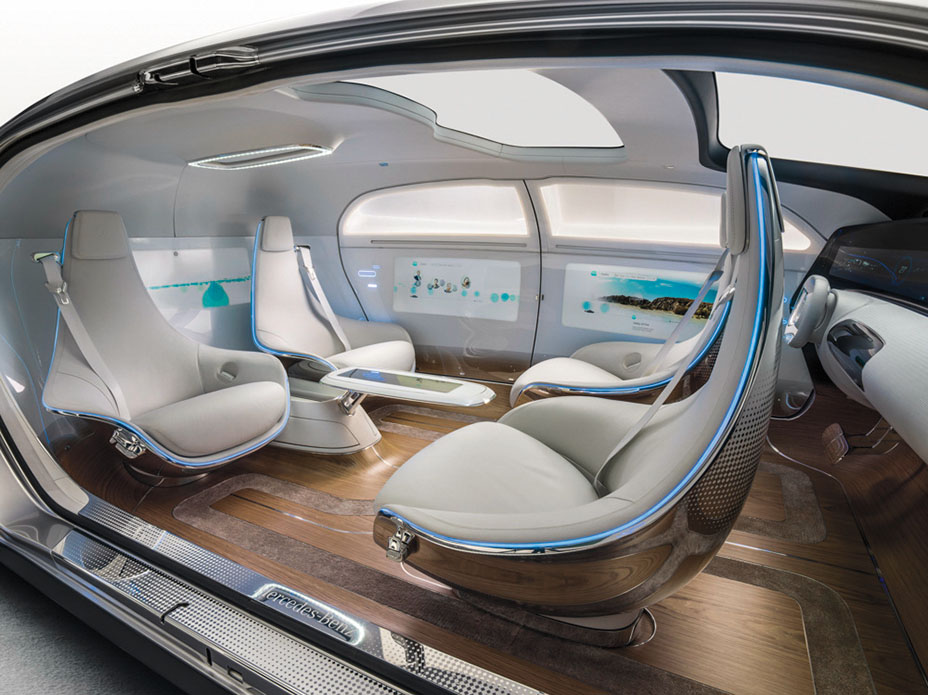
The Mercedes-Benz F 015 Luxury in Motion.
"Our mobile lifestyle is expanding into cars — that is the next journey for entertainment. Hollywood is an important part of that discussion," says Ted Schilowitz, futurist at Paramount Pictures. He points out that while passengers will continue to use personal mobile devices, a self-driving car could deliver a more sophisticated offering of movies, TV and games as well as emerging platforms such as virtual, augmented and mixed reality. In a driverless car, "there's a lot of real estate," says Schilowitz. "If you look at the windshield and windows, they are 'screens' at the right distance to be entertainment portals. Can the windshield be the movie screen of tomorrow?"
The broadcast industry is positioning itself for this scenario: Its next-gen broadcast standard (known as ATSC 3.0) brings together internet and live over-the-air signals with mobility for delivering video-on-demand content, Ultra HD (4K resolution) and High Dynamic Range TV. "In cars, that might mean riders view network or new types of programming," says ATSC spokesman Dave Arland. "Broadcasters are interested in conversations with automakers. ATSC 3.0 is a very big [content] pipe into the car."
"Artificial intelligence will be permeating every aspect, from monitoring what's going on outside the vehicle — making sure the road is clear and safe — to a robust in-car AI system that recognizes who is in the car via facial recognition," says Danny Shapiro, senior director of automotive at tech developer NVIDIA. "The content personalization possibilities are endless and will be based on a voice-activated and gesture-based system. The telcos, content providers, game developers and e-commerce companies will be transacting business within the car. We'll also see new types of interfaces — we can even turn the whole interior of the car into a holodeck."
See the full story here: http://www.hollywoodreporter.com/behind-screen/why-driving-cars-could-be-hollywoods-next-big-thing-1031554
SpaceVR Is Building Robots Controlled By VR To Reduce Labor Costs
 Speaking to UploadVR, Holmes said that Human would power low cost labor by skipping the AI factor. “As these jobs are performed, we will introduce automation blocks one task at a time using the data gathered from the tasks being performed until all human tasks are automated,” he said over email. Holmes imagines a world in which making food, performing manufacturing jobs, bar-tending, painting, playing games, elder care, child care and more can all be taken care of by robots.
See the full story here: https://uploadvr.com/spacevr-is-building-robots-controlled-by-vr-to-reduce-labor-costs/
8th Wall raises $2.4 million for augmented reality tools
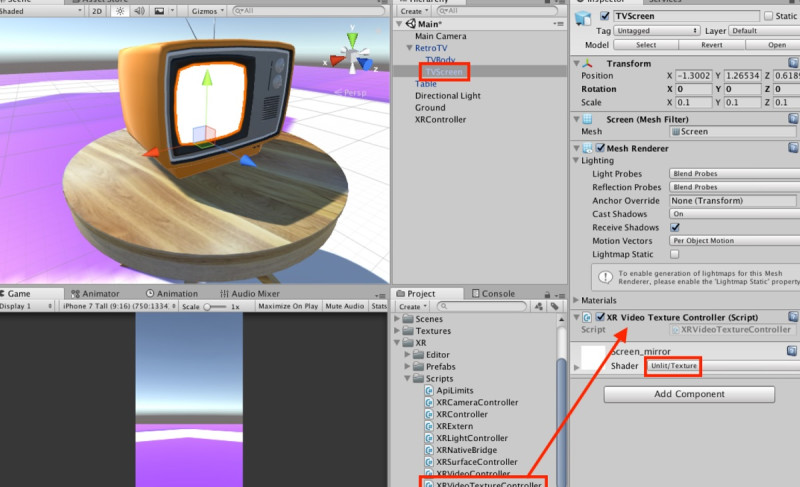
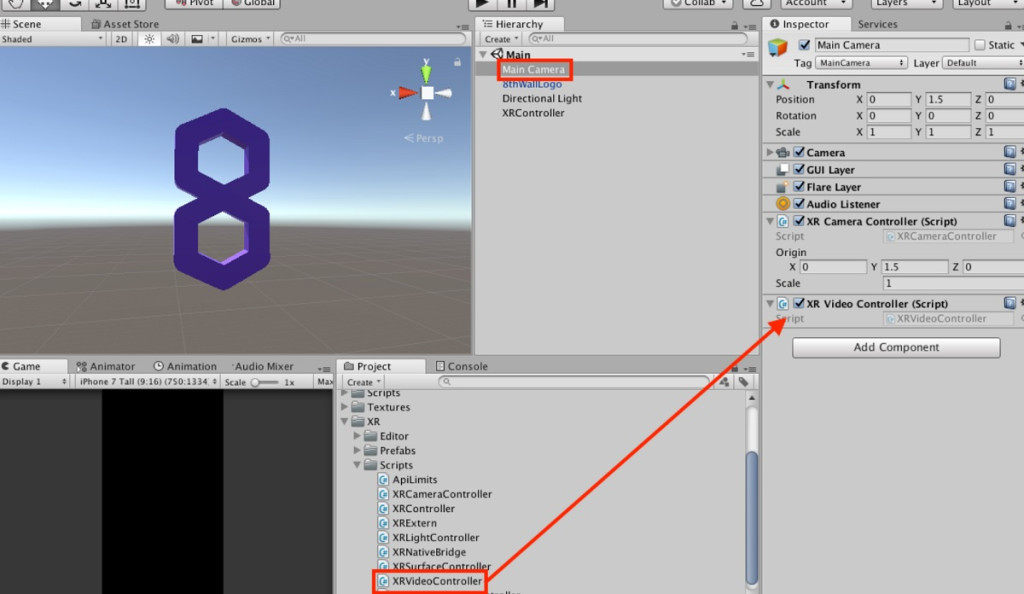 8th Wall has raised $2.4 million in funding to make a suite of tools for building augmented reality applications. The Palo Alto, California, company’s twist is that 8th Wall believes its tools can help build apps that run on 90 percent of all smartphones. It works with or without supporting native AR frameworks, such as Google’s Tango or Apple’s ARKit.
8th Wall has a team of seven people, including alums from Google and Facebook, with backgrounds in computer vision, image processing, music, and messaging.
Investors include Norwest, the VR Fund, SV Angel, Greylock, Betaworks, and Third Kind. Murphy-Chutorian cofounded the company in August 2016.
See the full story here: https://venturebeat.com/2017/08/28/8th-wall-raises-2-4-million-for-augmented-reality-tools/