
philip lelyveld The world of entertainment technology

22Aug/17Off

Gartner Identifies Three Megatrends That Will Drive Digital Business Into the Next Decade

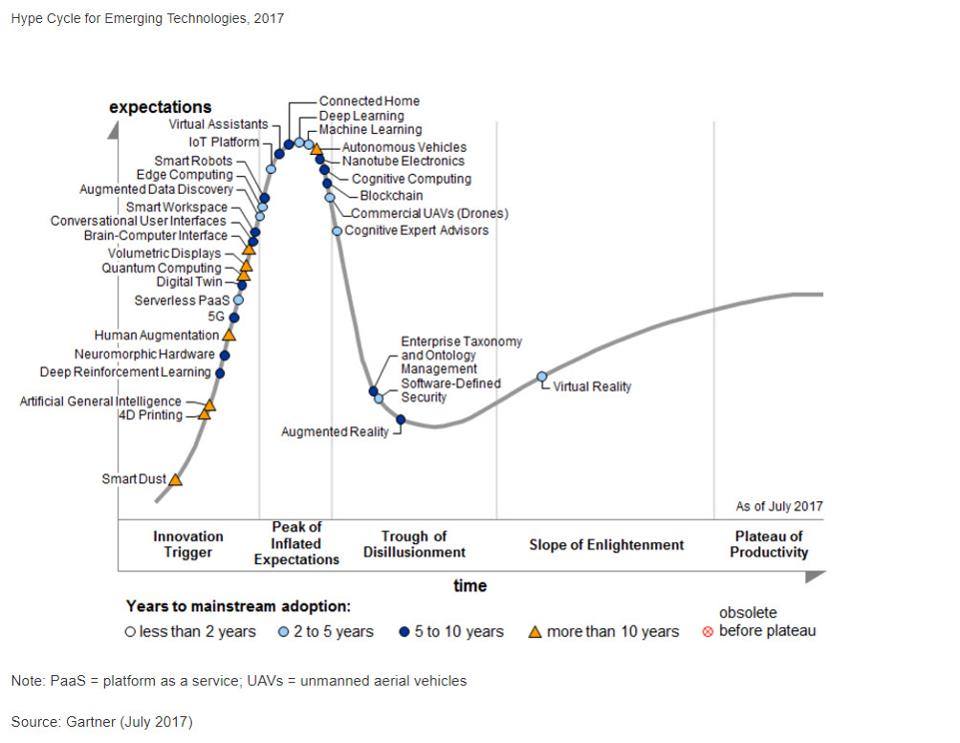
The emerging technologies on the Gartner Inc. Hype Cycle for Emerging Technologies, 2017 reveal three distinct megatrends that will enable businesses to survive and thrive in the digital economy over the next five to 10 years.

Artificial intelligence (AI) everywhere, transparently immersive experiences and digital platforms are the trends that will provide unrivaled intelligence, create profoundly new experiences and offer platforms that allow organizations to connect with new business ecosystems.

See the full story here: http://www.gartner.com/newsroom/id/378436320953851_10155710146543885_1148148900356879956_n

22Aug/17Off

Team to use virtual reality to help with real-world arms control

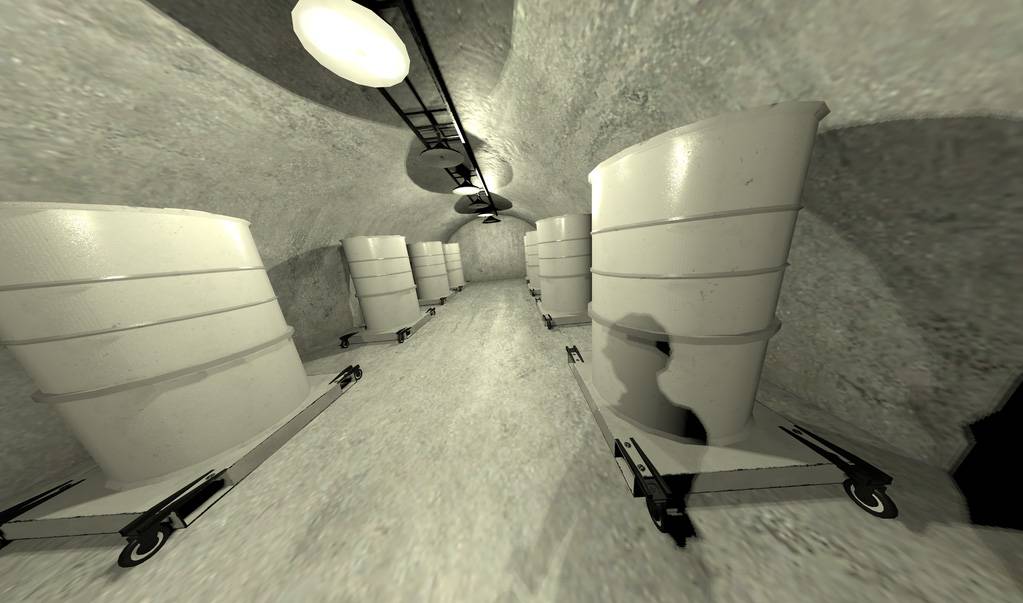
bunker-courtesy-of-researchers_0The project participants will develop a full-motion virtual reality (VR) to “design and simulate new, cohesive arms-control treaty verification approaches” to reduce and secure nuclear weapons and materials, according to the proposal.

Glaser said virtual reality can create a simulated world in which inspectors and others can see and document issues involving nuclear material. Demonstrating new verification techniques can encourage nation-to-nation cooperation with an aim of reducing nuclear materials around the globe, he said.

“It’s essential to develop some new thinking around how to reduce the numbers of these materials,” said Macfarlane. She called Glaser a “top-notch” scientist and policy expert who is uniquely qualified to deliver on the project’s promise.

See the full story here: https://www.princeton.edu/news/2017/08/21/team-use-virtual-reality-help-real-world-arms-control

21Aug/17Off

Virtual Reality Platform Created For Lab Animals

Mjk0MzYzOAScientists have devised a virtual reality platform for lab animals. Let that sink in. Zebrafish have swum with the aliens from the video game Space Invaders, mice were afraid of virtual heights, and fruit flies circled illusory obstacles.

This new holodeck for animals can help researchers see how freely-moving animals respond to a variety of illusions—work that could help scientists better understand human genes and brain circuitry, researchers say. The researchers, from the Vienna Biocenter in Austria, detailed their findings in today’s edition of the journal Nature Methods.

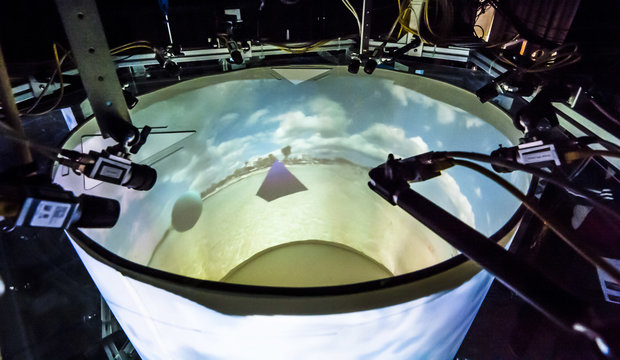
FreemoVR, immersed animals in arenas where the walls or floors were computer displays. Each screen depicted photorealistic images that accounted for each animal’s perspective as it walked, flew, or swam.

Up to 10 high-speed cameras monitored the precise 3D position of each animal. FreemoVR then updated its video imagery within milliseconds of each animal's movements to create the 3D illusion that they were moving in environments that changed in response to their actions.

The animals apparently found the illusions realistic. For instance, fruit flies circled virtual pillars just as they did real ones placed in the platforms. Moreover, mice generally avoided tracks that looked as if they were suspended at great heights, just as they would in real life.

See the full story here: http://spectrum.ieee.org/the-human-os/computing/hardware/virtual-reality-platform-created-for-lab-animals

21Aug/17Off

Chinese ‘cyber-court’ launched for online cases

_97441987_gettyimages-520166808The Hangzhou Internet Court opened on Friday and heard its first case - a copyright infringement dispute between an online writer and a web company.

The court's focus will be civil cases, including online shopping disputes.

Judges were sworn in and the first case was presented on a large screen in the courtroom.

'Saves time'

Defendants and plaintiffs appear before the judge not in person, but via video-chat.

"The internet court breaks geographic boundaries and greatly saves time in traditional hearings," said Wang Jiangqiao, the court's vice-president, via state media.

See the full story here: http://www.bbc.com/news/technology-40980004

21Aug/17Off

Project Axon Is A VR Game About Social Media’s Ability To Spread Fake News

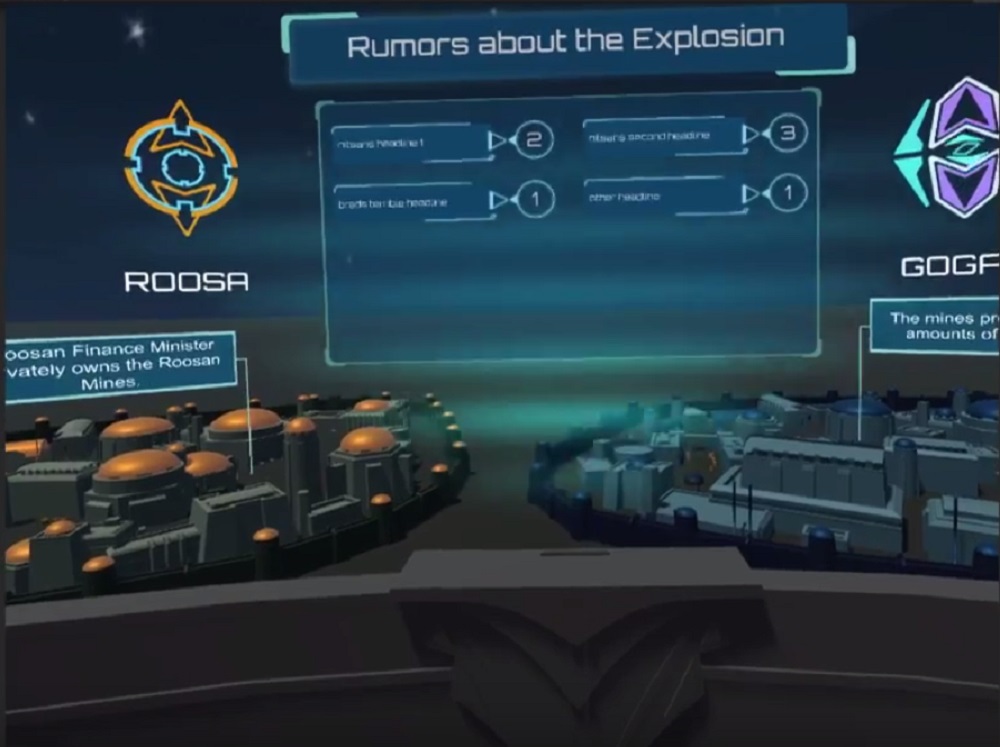
project-axonIf you’ve been online, you’ve seen fake news. A team of graduate students from Carnegie Mellon University created a virtual reality game called Project Axon to raise awareness about how our own behavior on social media platforms can contribute to this problem.

The team hails from the Entertainment Technology Center at CMU, a two-year master’s program that focuses on interactive entertainment.

See the full story here: https://uploadvr.com/project-axon-vr-fake-news/

21Aug/17Off

The Novel Effects App May Be the Future of Bedtime Stories

The other day, I was reading The Very Hungry Caterpillar to my daughter. When I got to the part where the caterpillar ate through one apple, I paused, surprised by an unmistakable munching sound coming from my coffee table.

The sound was actually emitted by an app called Novel Effect that uses voice-recognition technology to insert sound effects and music to books as you read them aloud—ideally, to make the experience of reading aloud more engaging for kids at home or in the classroom.

“You still get engagement, you still get interactivity,” says Matt Hammersley, Novel Effect’s CEO and one of its four cofounders. “But they’re not staring at a screen and you’re actually encouraging face-to-face personal communication.”

See the full story here: https://www.technologyreview.com/s/608671/this-app-may-be-the-future-of-bedtime-stories/?

21Aug/17Off

Military Robots: Armed, but How Dangerous?

The debate over using artificial intelligence to control lethal weapons in warfare is more complex than it seems.

Lin says that while the concept of unchecked killer robots is obviously worrying, the issue of automated weapons deserves a more nuanced discussion. “Emotionally, it’s a pretty straightforward case,” says Lin. “Intellectually I think they need to do more work.”

See the full story here: https://www.technologyreview.com/s/539876/military-robots-armed-but-how-dangerous/?utm_source=MIT+Technology+Review&utm_campaign=49e52897c0-The_Download&utm_medium=email&utm_term=0_997ed6f472-49e52897c0-153894145

21Aug/17Off

AN OPEN LETTER TO THE UNITED NATIONS CONVENTION ON CERTAIN CONVENTIONAL WEAPONS


https://futureoflife.org/autonomous-weapons-open-letter-2017/?utm_source=MIT+Technology+Review&utm_campaign=49e52897c0-The_Download&utm_medium=email&utm_term=0_997ed6f472-49e52897c0-153894145

AN OPEN LETTER TO THE UNITED NATIONS CONVENTION ON CERTAIN CONVENTIONAL WEAPONS

As companies building the technologies in Artificial Intelligence and Robotics that may be repurposed to develop autonomous weapons, we feel especially responsible in raising this alarm. We warmly welcome the decision of the UN’s Conference of the Convention on Certain Conventional Weapons (CCW) to establish a Group of Governmental Experts (GGE) on Lethal Autonomous Weapon Systems. Many of our researchers and engineers are eager to offer technical advice to your deliberations.

We commend the appointment of Ambassador Amandeep Singh Gill of India as chair of the GGE. We entreat the High Contracting Parties participating in the GGE to work hard at finding means to prevent an arms race in these weapons, to protect civilians from their misuse, and to avoid the destabilizing effects of these technologies. We regret that the GGE’s first meeting, which was due to start today (August 21, 2017), has been cancelled due to a small number of states failing to pay their financial contributions to the UN. We urge the High Contracting Parties therefore to double their efforts at the first meeting of the GGE now planned for November.

Lethal autonomous weapons threaten to become the third revolution in warfare. Once developed, they will permit armed conflict to be fought at a scale greater than ever, and at timescales faster than humans can comprehend. These can be weapons of terror, weapons that despots and terrorists use against innocent populations, and weapons hacked to behave in undesirable ways. We do not have long to act. Once this Pandora’s box is opened, it will be hard to close. We therefore implore the High Contracting Parties to find a way to protect us all from these dangers.

Translations: Chinese

FULL LIST OF SIGNATORIES TO THE OPEN LETTER

To add your company, please contact Toby Walsh at tw@cse.unsw.edu.au.

Tiberio Caetano, founder & Chief Scientist at Ambiata, Australia.
Mark Chatterton and Leo Gui, founders, MD & of Ingenious AI, Australia.
Charles Gretton, founder of Hivery, Australia.
Brad Lorge, founder & CEO of Premonition.io, Australia
Brenton O’Brien, founder & CEO of Microbric, Australia.
Samir Sinha, founder & CEO of Robonomics AI, Australia.
Ivan Storr, founder & CEO, Blue Ocean Robotics, Australia.
Peter Turner, founder & MD of Tribotix, Australia.
Yoshua Bengio, founder of Element AI & Montreal Institute for Learning Algorithms, Canada.
Ryan Gariepy, founder & CTO, Clearpath Robotics, found & CTO of OTTO Motors, Canada.
James Chow, founder & CEO of UBTECH Robotics, China.
Robert Li, founder & CEO of Sankobot, China.
Marek Rosa, founder & CEO of GoodAI, Czech Republic.
Søren Tranberg Hansen, founder & CEO of Brainbotics, Denmark.
Markus Järve, founder & CEO of Krakul, Estonia.
Harri Valpola, founder & CTO of ZenRobotics, founder & CEO of Curious AI Company, Finland.
Esben Østergaard, founder & CTO of Universal Robotics, Denmark.
Raul Bravo, founder & CEO of DIBOTICS, France.
Raphael Cherrier, founder & CEO of Qucit, France.
Jerome Monceaux, founder & CEO of Spoon.ai, founder & CCO of Aldebaran Robotics, France.
Charles Ollion, founder & Head of Research at Heuritech, France.
Anis Sahbani, founder & CEO of Enova Robotics, France.
Alexandre Vallette, founder of SNIPS & Ants Open Innovation Labs, France.
Marcus Frei, founder & CEO of NEXT.robotics, Germany.
Kirstinn Thorisson, founder & Director of Icelandic Institute for Intelligence Machines, Iceland.
Fahad Azad, founder of Robosoft Systems, India.
Debashis Das, Ashish Tupate, Jerwin Prabu, founders (incl. CEO) of Bharati Robotics, India.
Pulkit Gaur, founder & CTO of Gridbots Technologies, India.
Pranay Kishore, founder & CEO of Phi Robotics Research, India.
Shahid Memom, founder & CTO of Vanora Robots, India.
Krishnan Nambiar & Shahid Memon, founders, CEO & CTO of Vanora Robotics, India.
Achu Wilson, founder & CTO of Sastra Robotics, India.
Neill Gernon, founder & MD of Atrovate, founder of Dublin.AI, Ireland.
Parsa Ghaffari, founder & CEO of Aylien, Ireland.
Alan Holland, founder & CEO of Keelvar Systems, Ireland.
Alessandro Prest, founder & CTO of LogoGrab, Ireland.
Alessio Bonfietti, founder & CEO of MindIT, Italy.
Angelo Sudano, founder & CTO of ICan Robotics, Italy.
Shigeo Hirose, Michele Guarnieri, Paulo Debenest, & Nah Kitano, founders, CEO & Directors of HiBot Corporation, Japan.
Luis Samahí García González, founder & CEO of QOLbotics, Mexico.
Koen Hindriks & Joachim de Greeff, founders, CEO & COO at Interactive Robotics, the Netherlands.
Maja Rudinac, founder and CEO of Robot Care Systems, the Netherlands.
Jaap van Leeuwen, founder and CEO Blue Ocean Robotics Benelux, the Netherlands.
Dyrkoren Erik, Martin Ludvigsen & Christine Spiten, founders, CEO, CTO & Head of Marketing at BlueEye Robotics, Norway.
Sergii Kornieiev, founder & CEO of BaltRobotics, Poland.
Igor Kuznetsov, founder & CEO of NaviRobot, Russian Federation.
Aleksey Yuzhakov & Oleg Kivokurtsev, founders, CEO & COO of Promobot, Russian Federation.
Junyang Woon, founder & CEO, Infinium Robotics, former Branch Head & Naval Warfare Operations Officer, Singapore.
Jasper Horrell, founder of DeepData, South Africa.
Toni Ferrate, founder & CEO of RO-BOTICS, Spain.
José Manuel del Río, founder & CEO of Aisoy Robotics, Spain.
Victor Martin, founder & CEO of Macco Robotics, Spain.
Timothy Llewellynn, founder & CEO of nViso, Switzerland.
Francesco Mondada, founder of K-Team, Switzerland.
Jurgen Schmidhuber, Faustino Gomez, Jan Koutník, Jonathan Masci & Bas Steunebrink, founders, President & CEO of Nnaisense, Switzerland.
Satish Ramachandran, founder of AROBOT, United Arab Emirates.
Silas Adekunle, founder & CEO of Reach Robotics, UK.
Steve Allpress, founder & CTO of FiveAI, UK.
Joel Gibbard and Samantha Payne, founders, CEO & COO of Open Bionics, UK.
Richard Greenhill & Rich Walker, founders & MD of Shadow Robot Company, UK.
Nic Greenway, founder of React AI Ltd (Aiseedo), UK.
Daniel Hulme, founder & CEO of Satalia, UK.
Charlie Muirhead & Tabitha Goldstaub, founders & CEO of CognitionX, UK.
Geoff Pegman, founder & MD of R U Robots, UK.
Demis Hassabis & Mustafa Suleyman, founders, CEO & Head of Applied AI, DeepMind, UK.
Donald Szeto, Thomas Stone & Kenneth Chan, founders, CTO, COO & Head of Engineering of PredictionIO, UK.
Antoine Biondeau, founder & CEO of Sentient Technologies, USA.
Brian Gerkey, founder & CEO of Open Source Robotics, USA.
Ryan Hickman & Soohyun Bae, founders, CEO & CTO of TickTock.AI, USA.
Henry Hu, founder & CEO of Cafe X Technologies, USA.
Alfonso Íñiguez, founder & CEO of Swarm Technology, USA.
Gary Marcus, founder & CEO of Geometric Intelligence (acquired by Uber), USA.
Brian Mingus, founder & CTO of Latently, USA.
Mohammad Musa, founder & CEO at Deepen AI, USA.
Elon Musk, founder, CEO & CTO of SpaceX, co-founder & CEO of Tesla Motor, USA.
Rosanna Myers & Dan Corkum, founders, CEO & CTO of Carbon Robotics, USA.
Erik Nieves, founder & CEO of PlusOne Robotics, USA.
Steve Omohundro, founder & President of Possibility Research, USA.
Jeff Orkin, founder & CEO, Giant Otter Technologies, USA.
Dan Reuter, found & CEO of Electric Movement, USA.
Alberto Rizzoli & Simon Edwardsson, founders & CEO of AIPoly, USA.
Dan Rubins, founder & CEO of Legal Robot, USA.
Stuart Russell, founder & VP of Bayesian Logic Inc., USA.
Andrew Schroeder, founder of WeRobotics, USA.
Gabe Sibley & Alex Flint, founders, CEO & CPO of Zippy.ai, USA.
Martin Spencer, founder & CEO of GeckoSystems, USA.
Peter Stone, Mark Ring & Satinder Singh, founders, President/COO, CEO & CTO of Cogitai, USA.
Michael Stuart, founder & CEO of Lucid Holdings, USA.
Massimiliano Versace, founder, CEO & President, Neurala Inc, USA.

21Aug/17Off

How a Toronto hospital uses virtual reality to grant dying patients a last wish

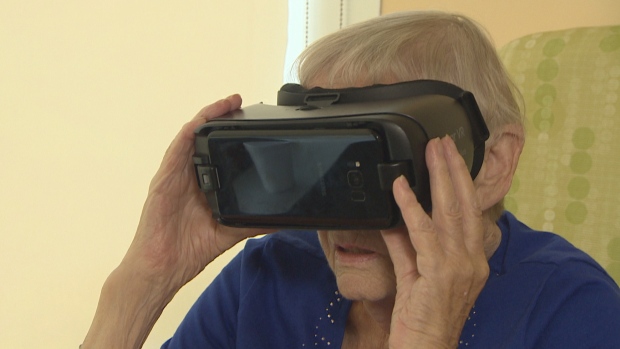
meike-muzzi"I'm not just dumping a headset on them," he said. "I'm actually sort of progressing it so they get the feeling that they're doing a trip or doing something that's special.

"How can we virtually start to cross items off [the patient's] bucket list?"

There's limited data about the efficacy of virtual reality as therapy, but both he and Dr. Leah Steinberg — the palliative care physician who has supported the project — hope to change that.

They've already cleared several hurdles simply in starting the program. For example, they've ensured that the headset can be sterilized so that it doesn't bring in any bacteria to vulnerable patients.

It's not a typical medical tool, but the escape of virtual reality can help patients cope after learning they have a terminal condition, Steinberg said.

See the full story here: http://www.cbc.ca/news/canada/toronto/palliative-care-virtual-reality-1.4254087

21Aug/17Off

Beyond Virtual Reality: Synthetic Reality And Our Co-Created Futures

960x0-2Later this century, virtual environments may become experienced comprehensively as new versions of reality, as we have explored in past articles in Forbes and HuffPost. The only way you will know they are virtual (i.e. not the “default world”) is that you will know they are so, similar to how dreams feel real while dreamt.

As computational systems become more capable of deciphering and anticipating human preferences, such systems could generate customized environments in real-time with less conscious input from users. Eventually such systems may not require conscious input to capture and respond to shifting user preferences, though user intervention might still remain an option.

We propose a new moniker to describe where we’re heading: synthetic reality. Such systems will synthesize our will and preferences, whether or not consciously provided, into new, ever-evolving realities.

See the full story here: https://www.forbes.com/sites/robertwolcott/2017/08/18/beyond-virtual-reality-synthetic-reality-and-our-co-created-futures/#3af3a58a1320