Jay Iorio – Will AI Blur the Lines Between Physical and Virtual Reality?
 Enthusiasts will probably argue that our perception is already an electrochemical illusion, and implants merely enhance our natural selves. In any case, opting out would become impractical at best. This is the stage of the technology that will raise practical questions we have never had to address before.
What Happens to Individual Choice?
At that point, what is real? How much agency are we humans deprived of when we are making decisions based on AI-generated content and guidance that may or may not be working at cross-purposes to our needs?
What if societal behavior became deliberately manipulated for the greater good, as interpreted by one entity? If efficiency and order were to supersede all other criteria as ideal social values, how could an AI-driven AR capability be dissuaded from manipulating individual behavior to those ends? What happens to individual choice? Is a person capable of being good without the option to be bad?
China Set to Toughen IP Laws in Pursuit of Tech Dominance
 The country’s Made in China 2025 plan, in which it compares “controlling global technologies and standards [as being] on par with building military muscle,” is a key driver of an effort “to strengthen laws on patents, copyrights and trademarks.” The plan “focuses on sectors like electric cars, robotics, semiconductors and artificial intelligence.”
China wants to become the most dominant nation in artificial intelligence, and it’s got three advantages that might help that become a reality. In addition to strong government support, which includes a willingness to share data about its citizens, China also has an immense number of engineers to write software and 751 million Internet users who can test out the work they do. As China seeks to gain market share, President Xi Jinping seeks to strengthen intellectual property laws to give its startups an advantage.
“In China, the population is huge, so it’s much easier to collect the data for whatever use-scenarios you need,” he said. “When we talk about data resources, really the largest data source is the government.”
Companies elsewhere in the world are also pursuing AI, but have a much tougher time getting access to data; according to Bloomberg, “DeepMind, the AI lab of Google’s Alphabet, has labored for nearly two years to access medical records from the U.K.’s National Health Service for a diagnostics app.”
“AI needs big data, and Chinese regulators are now on the side of making data accessible to accelerate AI.”
See the full story here: http://www.etcentric.org/china-set-to-toughen-ip-laws-in-pursuit-of-tech-dominance/
Stanford built a ‘4D’ camera for cars, robots and VR
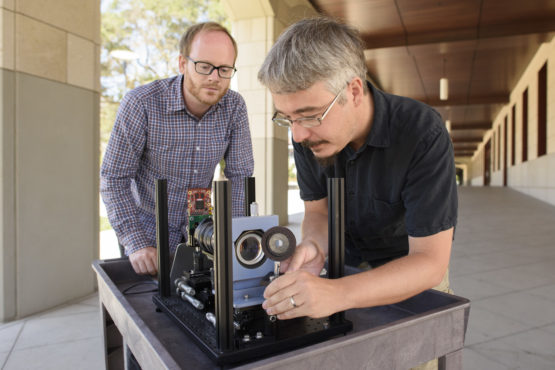
Assistant prof. Gordon Wetzstein and postdoctoral scholar Donald Dansereau with a prototype of the monocentric camera that captured the first single-lens panoramic light fields.
A team of Stanford scientists have created what could be the perfect "eye"for autonomous vehicles and delivery drones thus far. It's a 4D camera that can capture nearly 140 degrees of information, allowing it to gather more information than conventional cameras in a single image. The researchers call their design the "first-ever single-lens, wide field of view, light field camera." It relies on light field photography for the additional info to make its results four dimensional. That means it can observe and record the direction and distance of the light hitting the lens and bundle it with the resulting 2D image.
As a result, the team's robot eye has the ability to refocus images after they're taken, which is light field photography's most popular feature. Remember Lytro?
See the full story here: https://www.engadget.com/2017/07/25/stanford-4d-camera-robots/
Multiple Apple Teams Are Competing To Create AR Headset Prototypes
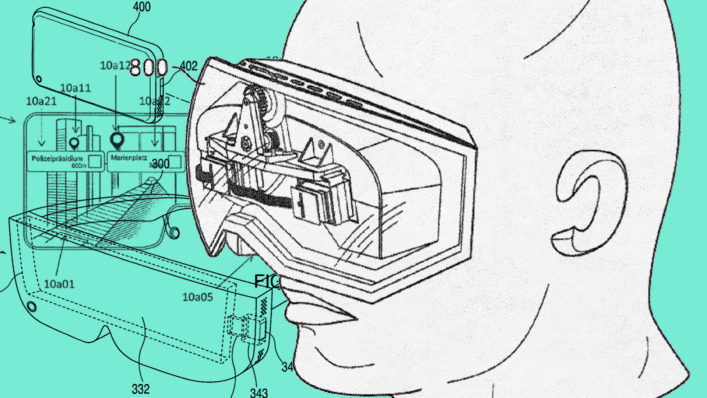
But inside Apple, engineers and designers are contemplating different ways of going about this, each defined by the level of independence of the headset from the paired iPhone.
Apple is big on thinking hard about real-life use cases, and only then thinking about the technology that might enable them. That’s a very good thing. Apple is now thinking seriously about possible killer apps for augmented reality. The internal disagreement comes down to how, exactly, people might want to use a headset or glasses.
A “BASE HIT”
“One group of engineers is said to be advocating for a pair of glasses that have 3D cameras but no screens, leaving the iPhone as the hub and main display,” Bradshaw writes, citing unnamed sources within Apple.
There’s a third option, and likely one we’ll see. Apple is likely to give the AR glasses projects time to develop internally, let the components market mature, and wait until consumers are warmed up to the idea of AR glasses, before finally trotting out a new piece of hardware.
In the meantime, it will very likely build additional sensors into new iPhones that support Pokémon-style phone-based AR experiences.
See the full story here: https://www.fastcompany.com/40453400/several-teams-at-apple-are-working-on-varying-approaches-to-augmented-reality
This new game shows what the world might look like after the death of the smartphone
 "Tacoma" showcases the potential AR future for stuff we usually do on smartphones and computers, which seems highly plausible given examples we've seen from places like Magic Leap.
In "Tacoma," set in 2088, you're an employee sent to explore an abandoned space station (named "Tacoma"). You can watch employee AR logs to unravel the game's story. In reality, that means you can watch their their lives play out through ghostly silhouettes and voice recordings.

Location-Based Virtual Reality Is the Next Big Bet for Movie Theaters, Malls
Joining Imax, Nomadic, Dreamscape and The Void are a number of other location-based VR companies including Vrcade, whose technology is being used by restaurant and entertainment franchise Dave & Buster’s. [also Spaces]
See the full story here: http://variety.com/2017/biz/features/location-based-vr-1202506197/?mc_cid=62308b4d17&mc_eid=79d3ad3512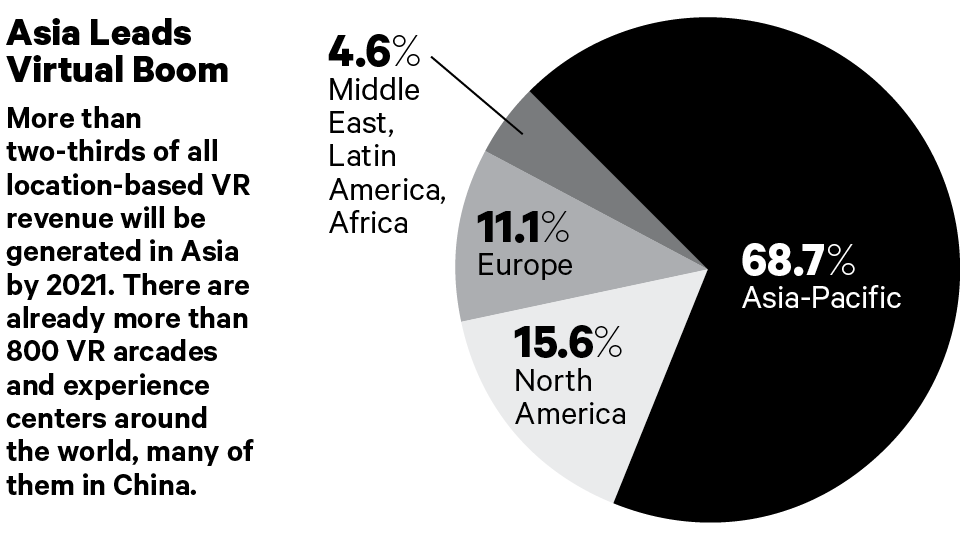
Military Augmented Reality (AR) Headgear Market Research Report 2017
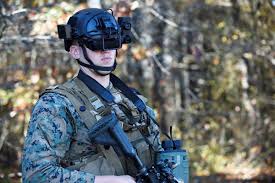 Companies Mentioned are Applied Research Associates (ARA), BAE Systems, Elbit Systems, Rockwell Collins, Thales Group, Facebook, Google, Microsoft, Osterhout Design Group, and VUZIX.
More info and purchase the report here: http://entertainmentnewsaccess.com/military-augmented-reality-ar-headgear-market/
Viacom Next + NYC Media Lab Present New VR Projects
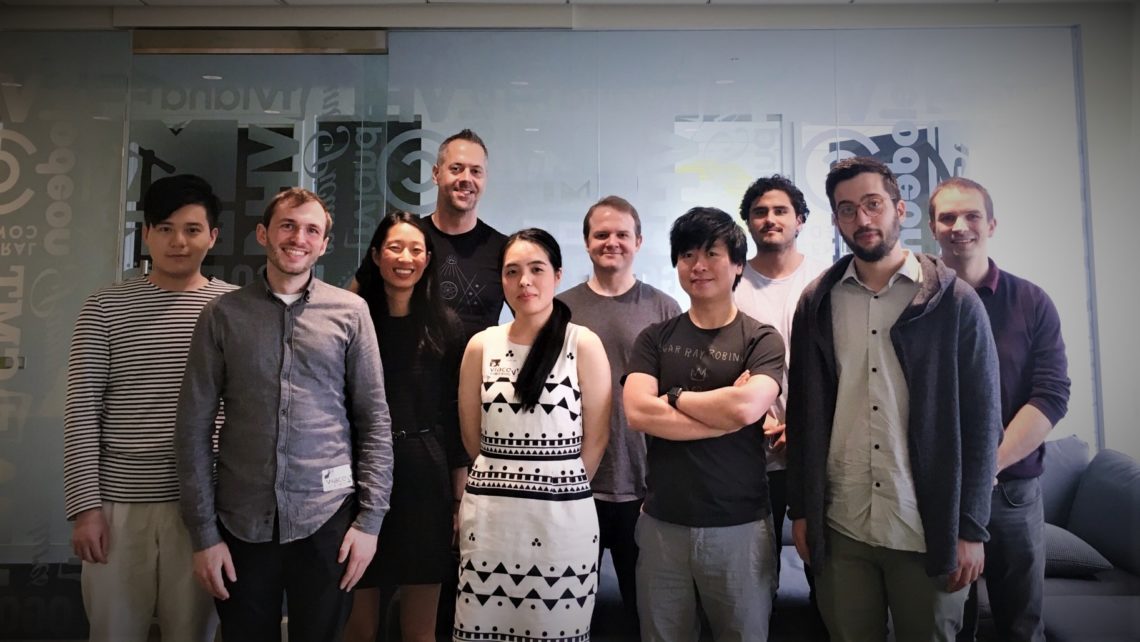 Viacom NEXT & NYC Media Lab are back yet again for their 2nd annual Viacom VR Fellowship program and so are new experimental experiences from some of the brightest students of the technology today. This year the summer program focused on blending music with virtual reality as the six graduates and undergraduates picked from universities in the NYC Media Lab consortium created experiences centered around a particular music track.
The finalists began developing their projects in June and this past Wednesday I had the chance to attend their official presentations at the Viacom HQ in New York City. Over a glass of white wine I listened to each of the student developers elaborate on their visions and delve deeper into their unique perspectives on VR and music. Finally, we entered the demo room where we were given the chance to try each project for ourselves. Here are some first impressions of the musical experiences:
See the full story here: https://vrscout.com/news/viacom-music-vr-fellowship/