Alabama Business: Five alternate applications for virtual reality from Innovation Week
 Sidewalk Film Festival partnered with commercial application sellers to a TechBirmingham for a TechTuesday event Tuesday as part of Innovation Week. Panelists ranged from traditional filmmakers to a professor of social work, all taking about unexecpted uses for virtual reality.
Here are five unusual applications for virtual reality from the panel.
- Testing: Brendan Beal, an assistant professor of social work at the University of Montevallo, used to be a child abuse investigator. No one was ever happy that he knocked on their doors. And it's hard to test his students on how they'd react to that on a final exam. So he's in the process of developing virtual reality exams: His group social work class, he hopes to see how students would react in a group social work setting and how they'd react to different factors without actually hurting people in a way that's possible in an internship.
- Field Instruction: Birmingham's Gary York has made a company on virtual reality. He told the story of his father, who bought a stereo from Best Buy but couldn't figure out how to get it wired. His father called the store, they sent out a person from Geek Squad, who also couldn't figure it out, and his father returned the stereo for a refund. This was a terrible user experience for both his father and Best Buy. But someone, he said, somewhere, knows how to set up that stereo. That's where Help Lightning comes in: the company uses a simple smartphone app that allows help professionals from anywhere in the world to use forms of virtual reality to see exactly what they're doing, and how they can help them.
See the full story here: http://www.al.com/business/index.ssf/2017/08/five_alternate_applications_fo.html
Engadget Awards $500,000 to These Five Immersive Art Projects
 Engadget first announced the Alternate Realities Grants in May, and received more than 300 submissions as a result. A selection committee helped to narrow down this list to 20 projects, and the publication’s editors finally decided on the following five winners:
-
- “Untrained Eyes” by Glenn Kaino and Jesse Williams uses facial recognition technology to scour the internet for and then display images that are similar to the face of an audience member. The installation is meant to explore issues around race and inclusion, and highlight how algorithms for image searches and other types of artificial intelligence are influenced by invisible biases.
- “Your Hands Are Feet” by Amelia Winger-Bearskin and Sarah Rothberg is an interactive room-scale VR experience that is accompanying the indie motherhood comedy “Egg.” The experience lets participants experience surreal animated worlds.
- “Dinner Party” by Laura Wexler, Charlotte Stoudt, Saschka Unseld and Angel Soto is a VR thriller that uses the plot line of an alien abduction to explore issues of race and perception in 1960s America.
- “Mapper’s Delight” by Tahir Hemphill is a VR experience that combines mapping and natural language processing to visualize the hidden geographies of hip-hop lyrics.
- “Dance with flARmingos” by Kristin Lucas is a mixed reality experience that invites participants to dance together with flamingo holograms, and build a closer relationship to a species threatened by climate change.
See the full story here: http://variety.com/2017/digital/news/engadget-alternate-reality-grantees-1202531655/
Original post here: https://www.engadget.com/2017/08/18/the-grantees-of-engadget-s-500-000-immersive-arts-program/
I was one of the first humans to see a solar eclipse in virtual reality
 Looking directly up at the Sun in VR doesn't risk permanent eye damage the way it would in real life. But it also doesn't provide the kind of "crescent Sun" effect I was hoping to see as the Moon started to cover up the corona. Luckily, CNN superimposed a large, floating "eclipse cam" view with the correct filters and telescopic zoom to show the eclipse in much sharper detail. Being able to glance back and forth between this close-up shot and the surrounding scene on the ground around me in virtual space was a pleasant "best of both worlds" that made me feel like I was in two places at once.
See the full story here: https://arstechnica.com/gaming/2017/08/i-was-one-of-the-first-humans-to-see-a-solar-eclipse-in-virtual-reality/
David Scowsill joins EON Reality as CEO
Dan Lejerskar, founder of EON Reality, said that Scowsill's international business experience as well as his vast network with global industry and government leaders made him "a perfect choice" to lead EON Reality "in our next accelerated growth phase."
David Scowsill, the recently departed head of the World Travel & Tourism Council(WTTC), has been named CEO of EON Reality, an augmented and virtual reality software developer headquartered in Irvine, Calif.

Scowsill, who will work out of a London office, has been a champion of the nascent field and told Travel Weekly last month that virtual reality would enhance the travel industry rather than compete with it.
See the full story here: http://www.travelweekly.com/Travel-News/Travel-Technology/David-Scowsill-joins-virtual-reality-company-CEO
Gartner Identifies Three Megatrends That Will Drive Digital Business Into the Next Decade
The emerging technologies on the Gartner Inc. Hype Cycle for Emerging Technologies, 2017 reveal three distinct megatrends that will enable businesses to survive and thrive in the digital economy over the next five to 10 years.
Artificial intelligence (AI) everywhere, transparently immersive experiences and digital platforms are the trends that will provide unrivaled intelligence, create profoundly new experiences and offer platforms that allow organizations to connect with new business ecosystems.
See the full story here: http://www.gartner.com/newsroom/id/3784363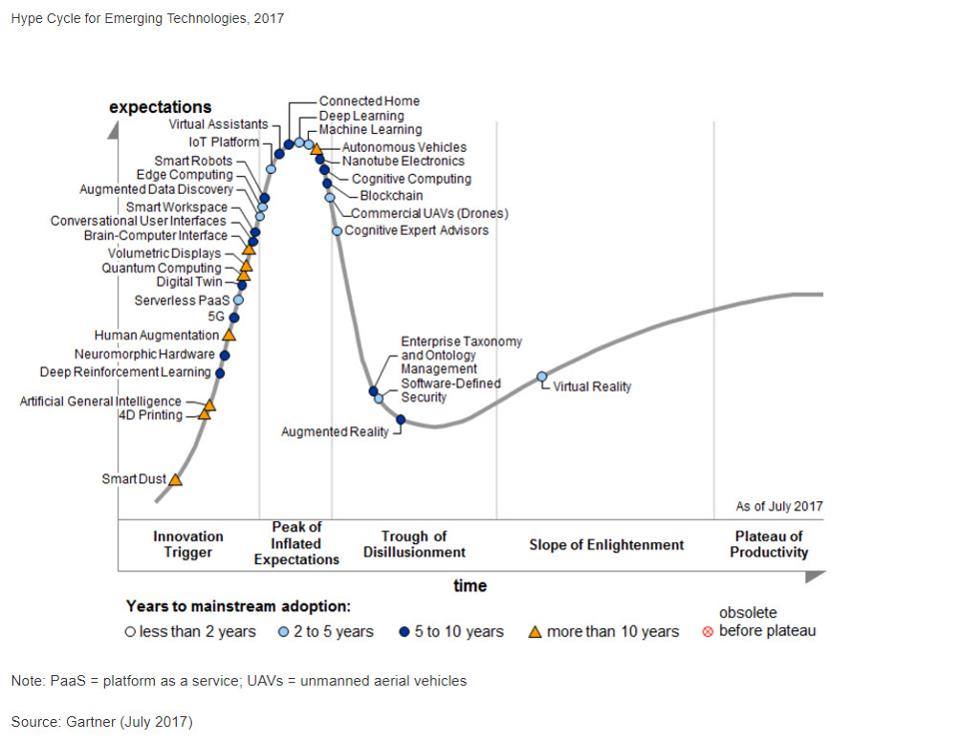
Team to use virtual reality to help with real-world arms control
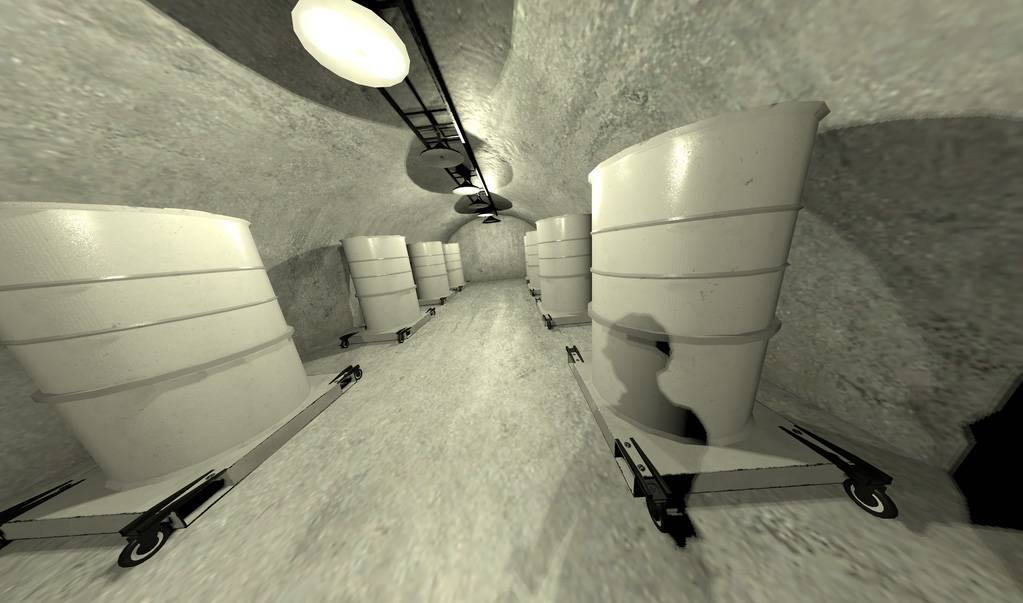 The project participants will develop a full-motion virtual reality (VR) to “design and simulate new, cohesive arms-control treaty verification approaches” to reduce and secure nuclear weapons and materials, according to the proposal.
Glaser said virtual reality can create a simulated world in which inspectors and others can see and document issues involving nuclear material. Demonstrating new verification techniques can encourage nation-to-nation cooperation with an aim of reducing nuclear materials around the globe, he said.
“It’s essential to develop some new thinking around how to reduce the numbers of these materials,” said Macfarlane. She called Glaser a “top-notch” scientist and policy expert who is uniquely qualified to deliver on the project’s promise.
See the full story here: https://www.princeton.edu/news/2017/08/21/team-use-virtual-reality-help-real-world-arms-control
Virtual Reality Platform Created For Lab Animals
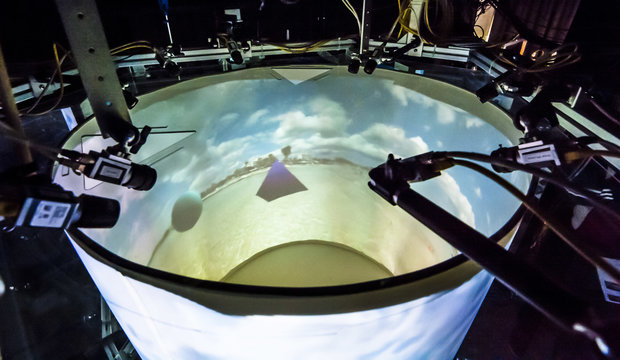 Scientists have devised a virtual reality platform for lab animals. Let that sink in. Zebrafish have swum with the aliens from the video game Space Invaders, mice were afraid of virtual heights, and fruit flies circled illusory obstacles.
This new holodeck for animals can help researchers see how freely-moving animals respond to a variety of illusions—work that could help scientists better understand human genes and brain circuitry, researchers say. The researchers, from the Vienna Biocenter in Austria, detailed their findings in today’s edition of the journal Nature Methods.
FreemoVR, immersed animals in arenas where the walls or floors were computer displays. Each screen depicted photorealistic images that accounted for each animal’s perspective as it walked, flew, or swam.
Up to 10 high-speed cameras monitored the precise 3D position of each animal. FreemoVR then updated its video imagery within milliseconds of each animal's movements to create the 3D illusion that they were moving in environments that changed in response to their actions.
The animals apparently found the illusions realistic. For instance, fruit flies circled virtual pillars just as they did real ones placed in the platforms. Moreover, mice generally avoided tracks that looked as if they were suspended at great heights, just as they would in real life.
See the full story here: http://spectrum.ieee.org/the-human-os/computing/hardware/virtual-reality-platform-created-for-lab-animals
Chinese ‘cyber-court’ launched for online cases
 The Hangzhou Internet Court opened on Friday and heard its first case - a copyright infringement dispute between an online writer and a web company.
The court's focus will be civil cases, including online shopping disputes.
Judges were sworn in and the first case was presented on a large screen in the courtroom.
'Saves time'
Defendants and plaintiffs appear before the judge not in person, but via video-chat.
"The internet court breaks geographic boundaries and greatly saves time in traditional hearings," said Wang Jiangqiao, the court's vice-president, via state media.
See the full story here: http://www.bbc.com/news/technology-40980004
Project Axon Is A VR Game About Social Media’s Ability To Spread Fake News
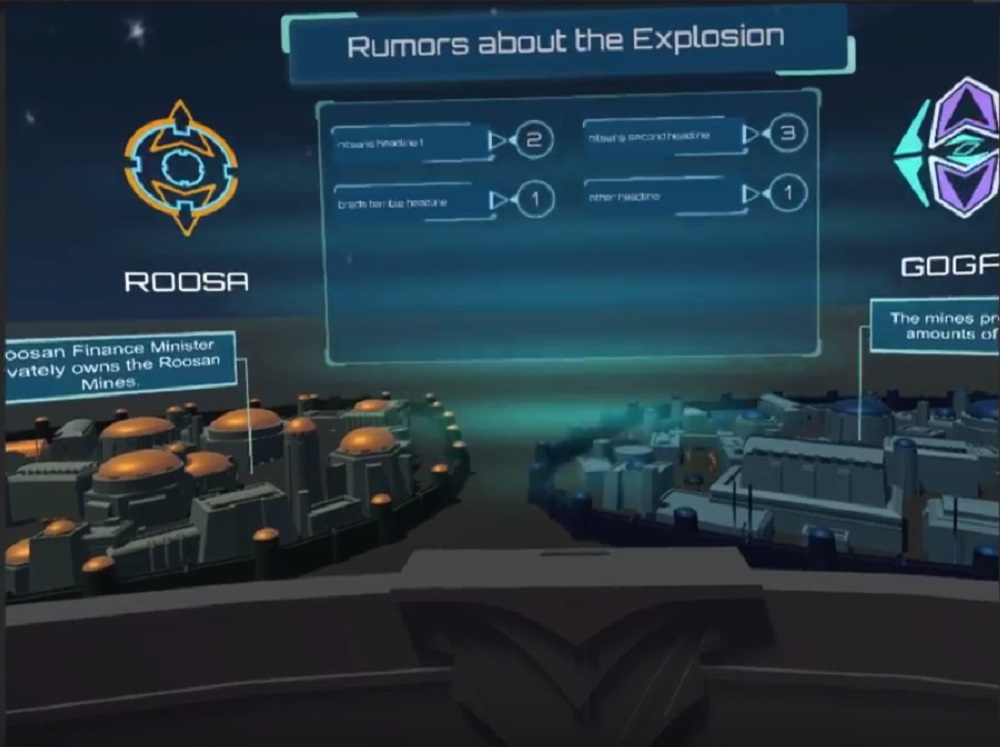 If you’ve been online, you’ve seen fake news. A team of graduate students from Carnegie Mellon University created a virtual reality game called Project Axon to raise awareness about how our own behavior on social media platforms can contribute to this problem.
The team hails from the Entertainment Technology Center at CMU, a two-year master’s program that focuses on interactive entertainment.
See the full story here: https://uploadvr.com/project-axon-vr-fake-news/