USC Taps Industry Vet Danny Bilson to Chair Games Division
 USC just brought on Danny Bilson as the new chair of its School of Cinematic Arts Interactive Media & Games Division (IMGD), reporting to the School of Cinematic Arts dean Elizabeth M. Daley. Bilson, who has held senior executive positions at THQ and Electronic Arts, is a writer, film director, producer and game developer. Since 2005, he has also been on the faculty of the USC School of Cinematic Arts, teaching screenwriting and narrative design, and, currently, leading the Advanced Games Project.
Bilson will “be part of the larger collaboration known as USC Games, which also includes the computer science department.” Former division chair Tracy Fullerton will continue as the Electronic Arts chair in Interactive Entertainment and director of USC Games. USC GamePipe Laboratory founding director Mike Zyda, a “professor of engineering practice in the computer science department,” will collaborate with Bilson and Fullerton in games education.
He encourages students “to build teams through advanced games,” and build demos “so they can attract investment dollars to complete those games and get quality, low-risk games into the indie space.”
See the full story here: http://www.etcentric.org/usc-taps-industry-vet-danny-bilson-to-chair-games-division/
Blindfold Is A Disturbing VR Tale About The Torture Of Journalists
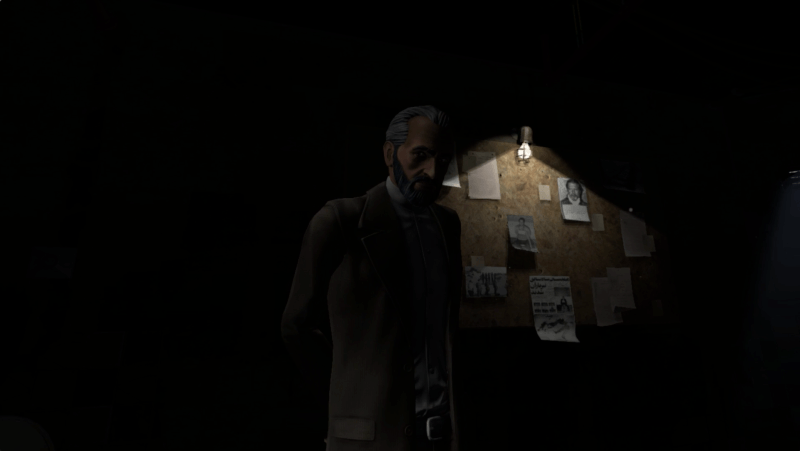 Indie studio Ink Studios is unveiling its second game, Blindfold, at the Games for Change Festival on August 2. It’s a tense virtual reality experience that gives players a first-person view of the inside of an interrogation room. After its North American debut at Games for Change, Blindfold will be available for free on the Oculus Rift headset with a gradual roll-out to all other VR platforms.
Blindfold has just two characters — Lajevardi and another man, whom he threatens to kill in front of you if you don’t confess to your crime of providing photographs to the foreign press.
See the full story here: https://uploadvr.com/blindfold-disturbing-vr-tale-torture-journalists/
Magic Leap Researchers Reveal “Deep SLAM” Tracking Algorithm
 Authored by Magic Leap researchers Daniel DeTone, Tomasz Malisiewicz, and Andrew Rabinovich, the paper describes a tracking system powered by two deep convolutional neural networks (CNNs)—a type of artificial ‘brain’ used for image processing. Called MagicPoint and MagicWarp, the researchers contend the two CNNs allow for a system that’s “fast and lean, easily running 30+ FPS on a single CPU.”
Here’s the quick and dirty: According to the paper, MagicPoint operates on single images and creates 2D points important to the purpose of tracking, with these points destined to be fed into a simultaneous localization and mapping (SLAM) visual algorithm. Comparing their network to classical point detectors, the team discovered “a significant performance gap in the presence of image noise.”
Because calculating the shape of objects as they move around isn’t an easy task—it could be either the object or the viewer moving—MagicWarp’s job is to use a pair of these images containing the 2D points generated by MagicPoint to essentially predict motion as it models the world around it.
NextVR Developing Longer Format Original VR Content, Starting With ‘Paranormal Evidence’
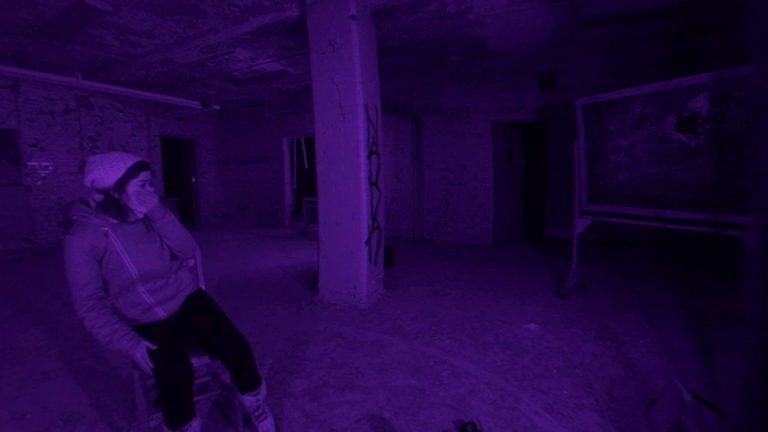 The first episode, launching August 1st, focuses on the decrepit halls of Pennhurst Asylum, aiming to capture evidence of haunted happenings with a team of investigators, led by Jack Kassewitz. The NextVR engineering team used their VR live capture expertise to build a “proprietary camera system to capture full spectrum footage in the pitch-dark environment, enabling the audience to see things imperceptible by even the investigators.”
NextVR has produced some short-form original content prior, but Paranormal Evidencemarks the start of more substantial productions, with episodes hitting the 30 minute mark.
“First and foremost, we’re programming to be a destination. We’ve identified key areas that appeal with our fans that augment our sports and entertainment slate,” Cole tells Road to VR. “Specifically, areas where we can build repeat viewership with episodic releases. We’d love to meet that programming need with partners, and we’re excited to develop our own original programming when required.”
Paranormal Evidence can be found on the NextVR app from August 1st, available for Samsung Gear VR and Google Daydream systems. A VR teaser video will be available on the NextVR app by 5PM PT this evening.
The Shard in London Brings VR Slide to Viewing Deck
 Visitors to London’s “The View from The Shard” experience (1020ft) are getting an added bonus on their visit this month, with The Shard opening up two VR experiences on the viewing deck.
See the full story here: https://vrscout.com/news/the-shard-london-vr-slide/
Using Augmented Reality To Help Disabled Shoppers
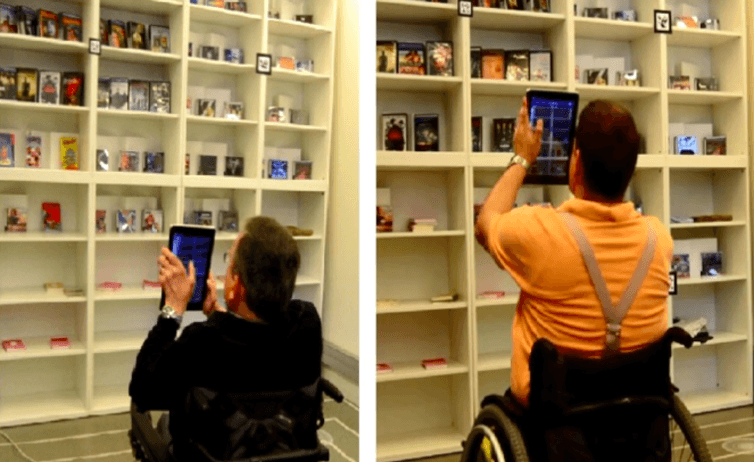 When the consumer came upon something they liked in the store, they pointed their device at it. The shelves, which were equipped with augmented reality, when communicated their contents to the device.
The information on the app was updated in real time, complete with information such as price and expiry date. As soon as the shoppers had filled their virtual baskets and were ready to check out, staff would collect each item for them, and process them.
When the test subjects were quizzed after the experiment, they revealed they felt more independent than they normally would when shopping. It was an experience more akin to that of online shopping, but in the real world.
See the full story here: http://www.huffingtonpost.com/entry/using-augmented-reality-to-help-disabled-shoppers_us_5979ea6be4b0c69ef70525ec
Virtually unknown: How to put a price tag on the most progressive form of art
 This summer in Italy, you can come face-to-face with Jesus.
Former GDC boss Meggan Scavio will run an elite game academy
 Scavio was formerly “GDC Bosslady,” or the head of the Game Developers Conference. She spent 18 years at the GDC’s owner, UBM, and was most recently general manager of GDC events for eight years.
The AIAS is the video game industry’s professional organization, with 35,000 members. The AIAS stages the DICE Summit in Las Vegas each spring, and it holds the DICE Europe event as well, with high-level talks from industry creative and business leaders. It puts on the prestigious DICE Awards, which are like the Oscars of gaming.
See the full story here: https://venturebeat.com/2017/07/26/former-gdc-bosslady-meggan-scavio-to-run-elite-game-academy/