Augmented reality startup Blippar hopes to turn your face into a digital billboard
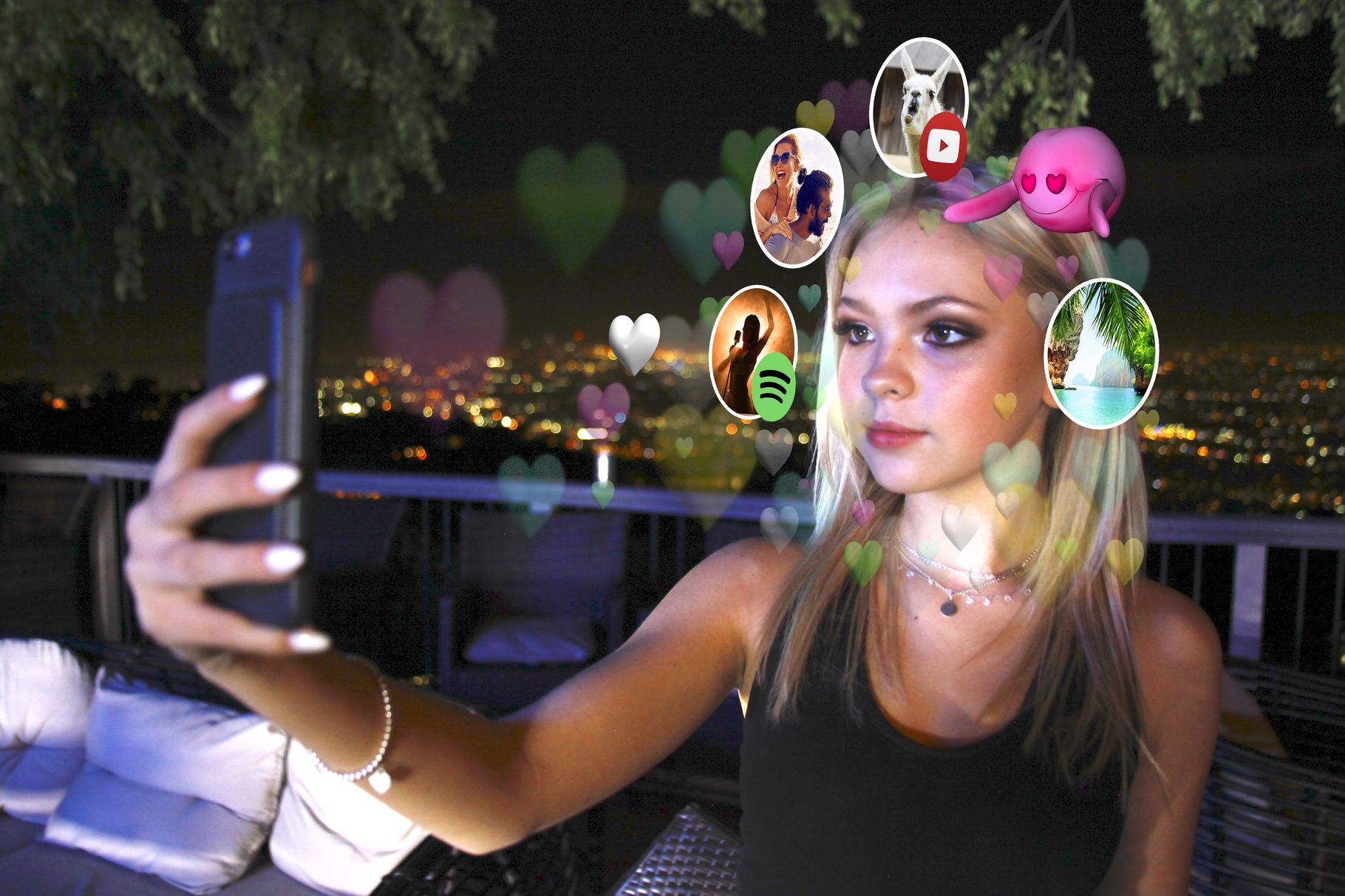 The latest product from augmented reality startup Blippar has a simple, if somewhat unnerving, pitch: what if you could turn your face into a digital billboard?
The company’s new Halos feature allows you to do exactly that. You scan your likeness with the Blippar app and it saves a version of you on its servers. You can then fill out some personal tidbits, like your favorite music or latest tweets, and anyone who “blipps” you in future (i.e., scans your face with the app) will see this information as a halo of bubbles floating around your head.
“[It’s] your unique way to express yourself,” Blippar CEO Ambarish Mitra tells The Verge. “Your face is like your billboard — we recognize human beings by their faces — and this is like a digital manifestation of that.”
See the full story here: https://www.theverge.com/2017/7/19/15989648/blippar-facial-recognition-billboards-ar
Mortenson Creates First-of-Its-Kind Augmented Reality App for Construction Visualization
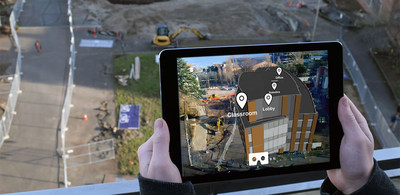
After pioneering the use of virtual design in construction, Mortenson Construction has developed a first-of-its-kind augmented reality (AR) mobile app to help the University of Washington community see its future CSE2 computer science building well before its doors open to students in January 2019. Users can experience the buildings exterior in AR, and can then teleport inside for an immersive virtual reality (VR) experience. (PRNewsfoto/Mortenson)
In addition to serving as an immersive public engagement tool, AR carries the promise of reimagining the construction site. In this spirit, Mortenson was also among the first companies of any kind to partner with AR smart-helmet maker DAQRI to test AR construction applications last year. AR headsets and goggles have the future potential to provide crews with just-in-time instruction, projections of an installation layout on a concrete slab, or a data overlay that shows how each building system has been performing over time.
See the full story here: http://www.crossroadstoday.com/story/35914842/mortenson-creates-first-of-its-kind-augmented-reality-app-for-construction-visualization
Assisted living tries virtual reality to help seniors with dementia
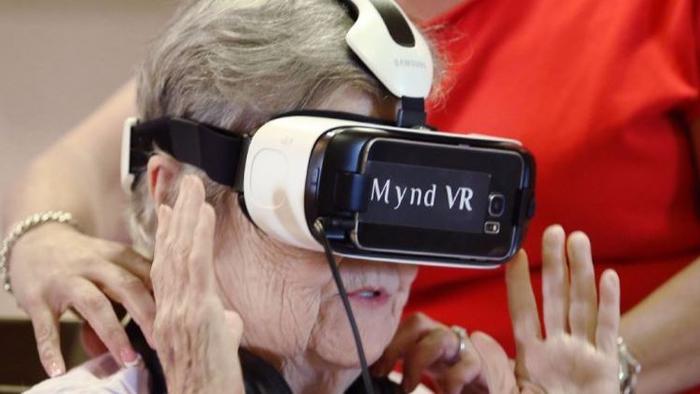 It consists of a headphones and a headset powered by a specially programmed cellphone. The user sits in an office swivel chair under the supervision of a staff member trained by MyndVR. Slowly twirling the chair and moving the head create the panoramic effect.
“The hurdles are far less than we thought, and the unintended benefits are starting to be more than we anticipated,” said Brickler, who plans to lease the equipment to senior-care residences across the Sunbelt, where many older people live.
Our plan is to essentially be the Netflix of VR for seniors,” MyndVR CEO and co-founder Chris Brickler, 45, said on a visit to kick off the trial last week at Encore at Avalon Park.
See the full story here: http://www.orlandosentinel.com/health/aging/os-virtual-reality-dementia-20170711-story.html
WaveOptics raises £12m to make augmented reality mainstream
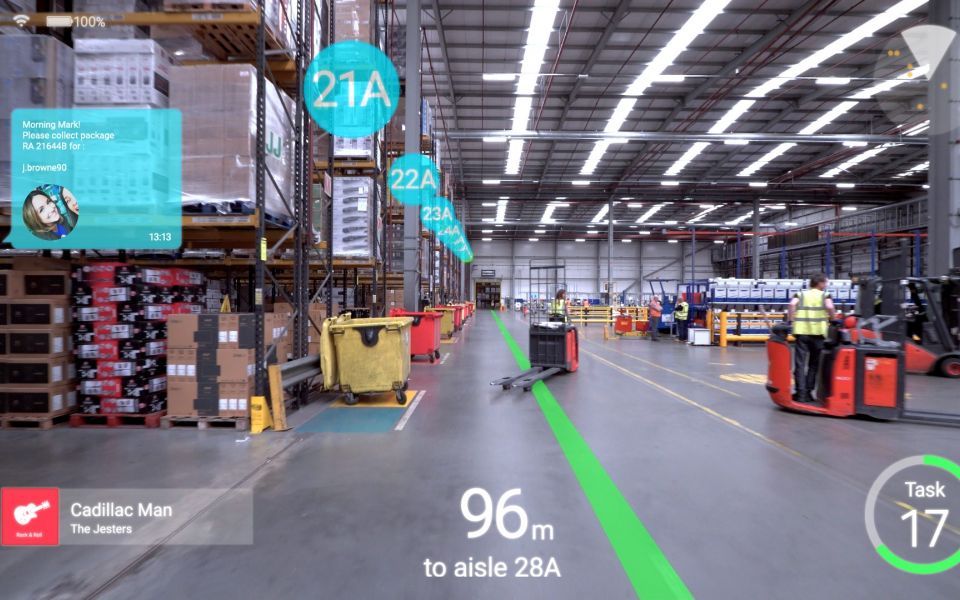 "WaveOptics is reinventing the AR market by developing a series of new AR display tech that enables a wider field of view and brighter full colour images - a unique combination in today’s market," said the startup's chairman Martin Harriman.
Previous investors before this series B include fellow AR startup Blippar and was part of the Pitch@Palace startup event.
See the full story here: http://www.cityam.com/268580/waveoptics-raises-12m-make-augmented-reality-mainstream
Mira Prism aims to turn the iPhone into a mini-HoloLens for $99
 Apple's imminent wave of iPhone augmented reality works on your phone's screen, using its camera to inject characters into the real world. But AR headsets are out there too, bringing that idea to life in front of your eyes. One of them costs less than you think.
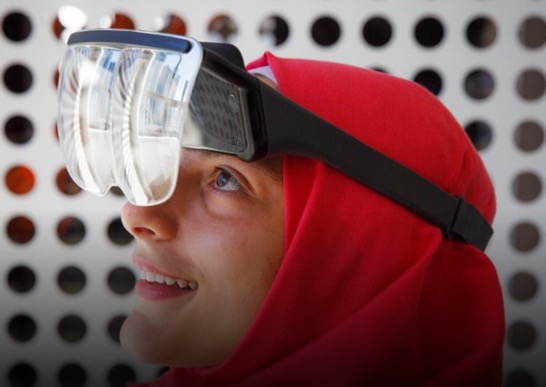
The Mira Prism, coming later in 2017, is a simple headband visor that uses your iPhone to reflect 3D images right in front of your face for about $100 (roughly £75 or AU$125).
It looks like a fancy giant sun visor or a futuristic welder's mask, and it easily fits over my head. Holding a little remote, I can point at floating cartoon planets hovering near my desk.
The Los Angeles-based company, Mira, is founded by Ben Taft, Matt Stern and Montana Reed. All three are former students of USC's Jimmy Iovine and Andre Young Academy for Arts, Technology and the Business of Innovation. Mira already has funding from Will.i.am and Salesforce CEO Marc Benioff, among others.
The Prism uses an iPhone (sorry, no Android version for now), which pops into the headband using elastic, snapping into place. A large mirrored visor reflects the phone's stereoscopic images, turning them into floating three-dimensional, but virtual, objects. I got a demonstration at CNET's offices, and the 3D images felt convincing enough. Polygonal planets spread around me and I controlled a rocket ship using a long elastic tether that I extended and retracted using a handheld wand-remote. I made the ship take off and land on the table, with the help of an included round cardboard marker.
AI coach will train hopeless chatbots to pass the Turing test (text, not voice)
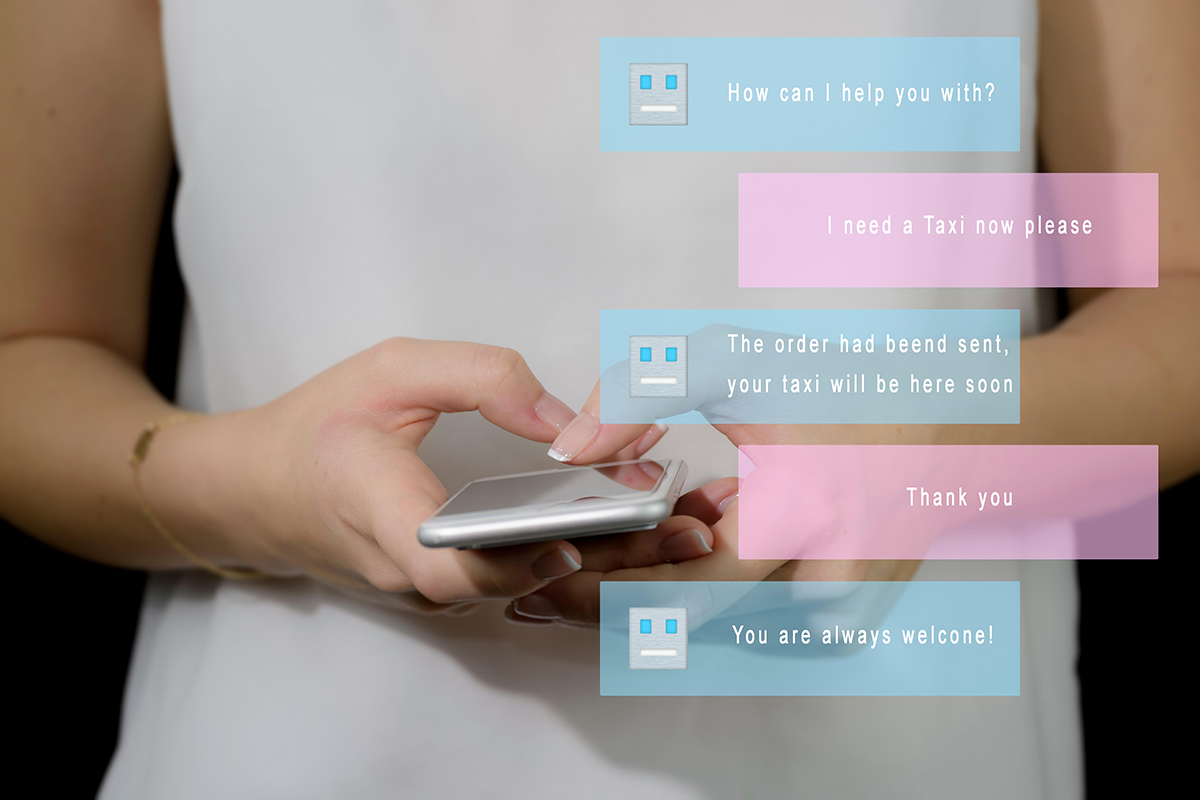 Given a snippet of dialogue between a chatbot and a human, the system predicts how convincingly human you or I would rate the chatbot’s response. This could be useful for building better virtual assistants.
Turing test
Would it be possible to cut humans out of this process altogether and just automate the Turing test instead? To find out, Lowe designed an AI system that automatically rates how human-like a piece of chatbot-generated dialogue sounds.
He chose 1000 short Twitter conversations, and got human volunteers to add a response. Then he got several chatbots of varying abilities to add their own response. Then he asked a different group of human volunteers to rate all the responses according to how human-like they were.
See the full story here: https://www.newscientist.com/article/2140809-ai-coach-will-train-hopeless-chatbots-to-pass-the-turing-test/
6 VR Experiences Nominated for 2017 Emmy Awards, Oculus Receives Multiple Nominations
 There isn’t an official ‘VR’ section of the Emmys, rather the nominations have been spread between two categories: ‘Outstanding Original Interactive Program’ and ‘Outstanding Creative Achievment in Interactive Media Within a Scripted Program’.
Outstanding Creative Achievement In Interactive Media Within A Scripted Program
- The Mr. Robot Virtual Reality Experience USA Universal Cable Productions, Here Be Dragons, Esmail Corp. and
Anonymous Content (360 video on YouTube) - Stranger Things VR Experience – Netflix – Netflix and CBS Digital (360 video on YouTube)
- The Simpsons – Planet Of The Couches – play.google.com – Gracie Films in association with 20th Century Fox Television and Google Spotlight Stories (download here for Google Cardboard)
Outstanding Original Interactive Program
- Dear Angelica – Oculus Story Studios – Oculus (download here for Oculus Rift)
- Mission: ISS – Oculus – Magnopus / Oculus (download here for Oculus Rift)
- The People’s House – Inside The White House With Barack And Michelle Obama – Samsung / Oculus – Felix & Paul Studios
and Oculus (download here for Oculus Rift)
Disney is opening an immersive Star Wars Hotel where each guest gets a storyline
- All of the employees (or ‘cast members’, in Disney Park lingo) will be in costume and in character
- Each guest will get a storyline, which Disney specifically says will “touch every single minute of your day”
- It’s meant to take place on a space ship; ‘windows’ will only show space.

AT D23 EXPO 2017, DISNEY PARKS CHAIRMAN BOB CHAPEK ANNOUNCES NEW STAR WARS-THEMED HOTEL FOR WALT DISNEY WORLD RESORT -- During D23 Expo 2017, Walt Disney Parks & Resorts Chairman Bob Chapek announced plans to create the most experiential concept ever in an immersive Star Wars-themed hotel at Walt Disney World Resort. Dedicated entirely to the galaxy of Star Wars, it will be a one-of-a-kind experience where a luxury resort meets a multi-day adventure in a galaxy far, far away.
Sadly for us Californians, Disney has only mentioned this as coming to Florida’s Walt Disney World thus far.
See the full story here: https://techcrunch.com/2017/07/15/disney-is-opening-an-immersive-star-wars-hotel-where-each-guest-gets-a-storyline/?utm_medium=TCnewsletter
Why Would Anyone Want to Program and Control IoT in Virtual Reality?
 Controlling physical objects that require electricity and an Internet connection through a novel digital realm like virtual reality seems as though it may be more hassle than it’s worth. To begin with, all the available changes you could make with a virtual reality interface would have to be programmed into the interface, so what would be the point of having a virtual reality interface to control Internet of Things (IoT) devices?
The point is to harness increasing computer power and programmable interconnectivity to make a virtual reality interface that will eliminate a user’s need to know how to program. Like the graphical user interface (GUI) created at Xerox PARC and implemented on the first Macintosh computer in 1984, this is an attempt to make a virtual world where your physical objects have a manipulatable twin.
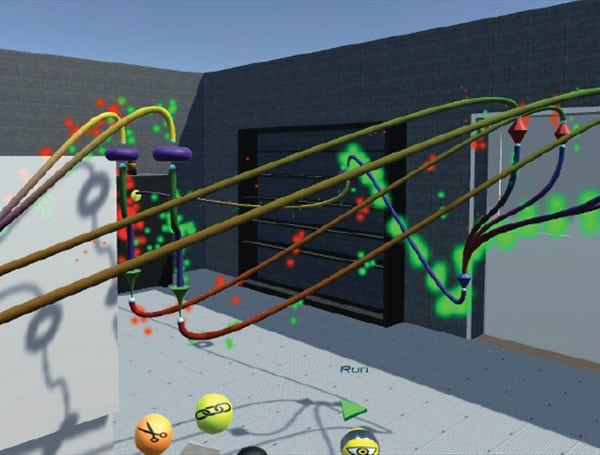
Using Unity and HTC Vive, the team of researchers created Ivy, an immersive programming tool, to help users visualize, understand and program virtual data in a digital representation of a physical space. A simple program intertwines conditional sensor data (i.e., when a sensor reaches a certain measurement) to physically activate a connected object, like a lamp or a fan.
See the full story here: http://www.engineering.com/ARVR/ArticleID/15239/Why-Would-Anyone-Want-to-Program-and-Control-IoT-in-Virtual-Reality.aspx