Amazon patents at-home augmented reality technology (Images)
Amazon.com Inc. has patented augmented reality technology that can be controlled with gestures.
The patent describes cameras, computers and projectors that display an interactive scene on a physical surface.
"The projected content may include electronic books, videos, images, interactive menus, or any other sort of visual content," Amazon said in its patent filing. "Various types of cameras and sensors may be used to capture images representing the scene and a person's hand within the scene."
The patent builds on two related patents awarded to Amazon in December 2015.
See the full story here: https://www.bizjournals.com/seattle/news/2017/07/11/amazon-patents-at-home-augmented-reality.html
Augmented reality transports classic art into the 21st century
 ReBlink is the kind of art/technology mash-up that will be decried as awful and blasphemous by some or exciting and innovative by others. Toronto-based digital artist Alex's Mayhew's modern reinterpretations of classic paintings allows viewers to witness a work of art come to life through their phone or tablet.
See the full story here: http://newatlas.com/reblink-augmented-reality-art/50450/
NPR wins award to experiment with virtual-reality audio
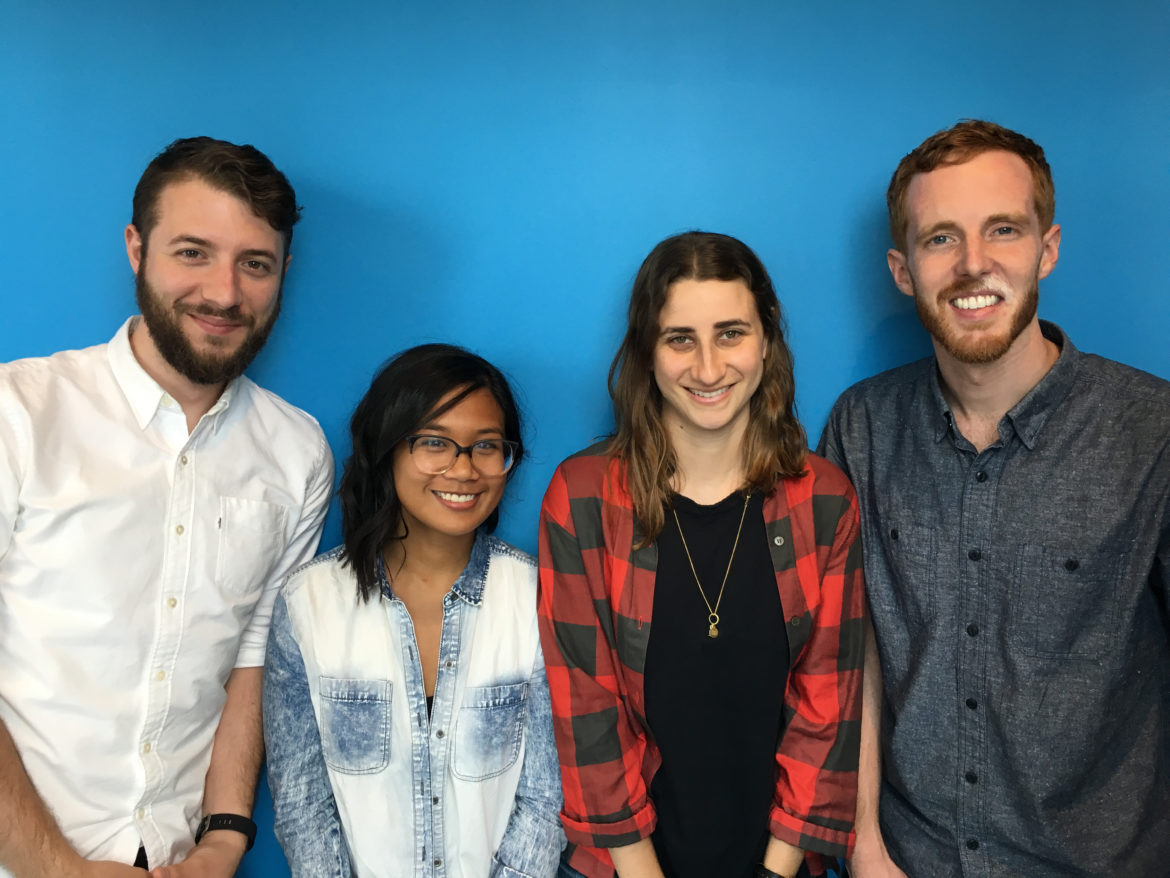 A team at NPR is the winner of a grant to develop virtual-reality stories that will transport listeners to audio-rich soundscapes.
NPR’s team is receiving $15,000 to develop “best practices for immersive storytelling audio by producing two virtual reality stories with a particular focus on sound-rich scenes,” according to a statement from the grantors.
NPR has already been dabbling in 360 experiments. Last year, NPR Music partnered with immersive media company RYOT to produce a 360-degree Tiny Desk concert featuring the band Wilco.
NPR’s team isn’t the first to experiment with dual audio fields, Michael said, but it aims to figure out how to easily gather audio and process it via dual fields. The team plans to share its findings through NPR training team sites and other mediums.
NPR’s team also wants to discover and standardize production practices so the work feels less experimental.
Grantees will build on their ideas over the next six to 12 months, attend the ONA conference in Washington, D.C., in October and share their findings at a demo day early next year.
See the full story here: https://current.org/2017/07/npr-wins-award-to-experiment-with-virtual-reality-audio/?wallit_nosession=1
Auckland retiree tries art in virtual reality, after a lifetime designing on paper
 Plugged into virtual reality, retiree Trisha Downie believed her life-sized 3D creation so real she might trip over it.
"I'm petrified I'm going to fall over or break it, because it seems to be a piece of glass – but it isn't, it's just space."
The septuagenarian, who lives at the Metlifecare Retirement Village in east Auckland's Highland Park, has spent a lifetime designing garments, art and sails with pencil and paper.
"I'm not thinking about what I'm trying to design, I'm just playing, and I think that's where design comes from – you have to play and see what works.
See the full story here: http://www.stuff.co.nz/technology/gadgets/93896983/Auckland-retiree-tries-art-in-virtual-reality-after-a-lifetime-designing-on-paper
A NEW GOOGLE PROJECT SETS OUT TO SOLVE ARTIFICIAL STUPIDITY
 Google is starting a new research push to understand and improve the relations between humans and AI. PAIR, for People + AI Research initiative, was announced today and will be led by two experts in data visualization, Fernanda Viégas and Martin Wattenberg. One thing they hope to do is create a toolkit of techniques and ideas about how to design AI systems less prone to disappointing or surprising us humans.
Viégas says that she’s interested in studying how people form expectations about what such systems can and can’t do—and how virtual assistants themselves might be designed to nudge us toward only asking things that won’t lead to disappointment.
The deep learning algorithms that have lately proved so useful for analyzing our personal data or diagnosing diseases from medical imaging also have a reputation for being what researchers dub “black boxes”, meaning it can be difficult to see why a system spat out a particular decision, such as a diagnosis.
That’s a problem as such software gets closer to being used in life-or-death situations in the clinic or on our roads inside autonomous vehicles.
Today the Ethics and Governance of Artificial Intelligence Fund, with backers including the Knight Foundation and LinkedIn cofounder Reid Hoffman, announced $7.6 million in grants to civil society organizations to study the changes AI might cause in areas such as labor markets and criminal justice systems.
See the full story here: https://www.wired.com/story/google-artificial-intelligence-people-ai-research/
Apple Embraces VR: Every Virtual Reality Announcement From Today’s WWDC Keynote
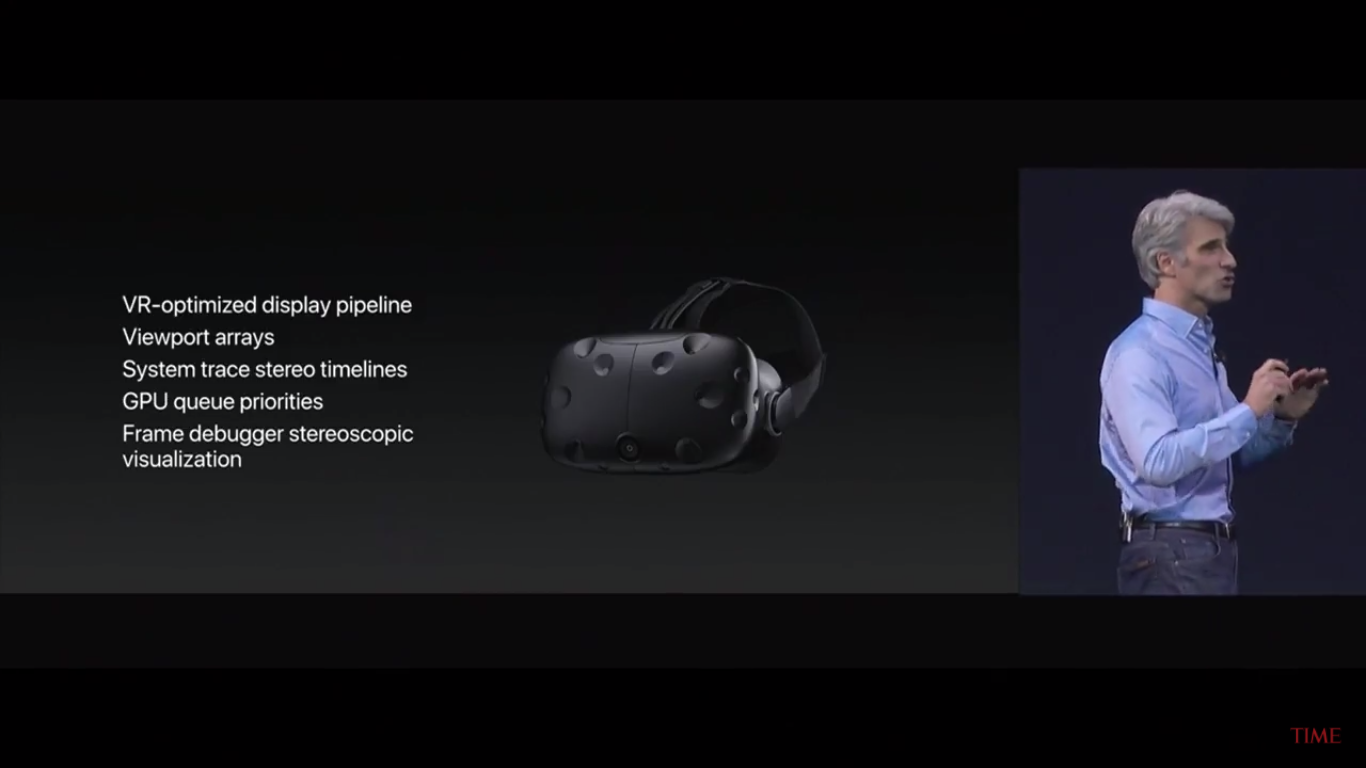 While Steam has been Mac compatible for some time now, Apple announced that Valve will be bringing SteamVR to Mac too, allowing the HTC Vive to run VR games on Mac systems.
To show the audience the power of the company’s new VR Ready 27-inch iMac—and a taste of what it’s like to be in VR—Apple showed a demo running on the HTC Vive that was created by Industrial Light and Magic. Using Epic’s Unreal Engine VR Editor, they showed how developers could build VR content inside of VR itself, using Star Wars assets.
Apple also says that both Unity and Unreal Engine—the leading VR content creation tools—will support their VR SDKs on Mac, allowing developers to create VR content on Apple’s machines.
Apple is updating their professional video editing application, Final Cut Pro X, to support 360 degree video editing. That means that video editing’s leading tools, Final Cut and Adobe’s Premiere Pro, now both offer 360 video editing capabilities, with Premiere having added support back in 2016.
STRING THEORY’S WEIRDEST IDEAS FINALLY MAKE SENSE—THANKS TO VR
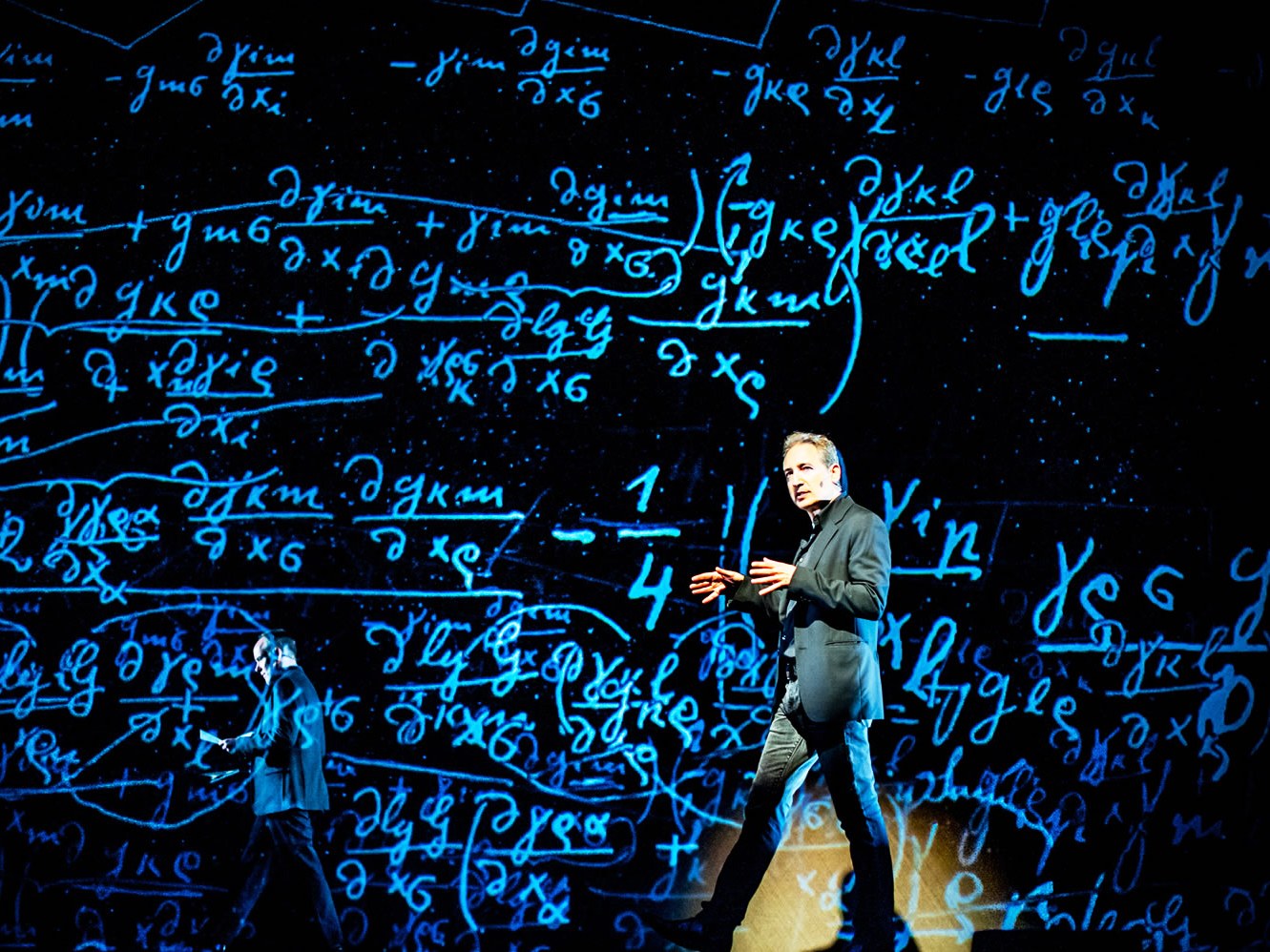 Extra dimensions are a critical part of Greene's field of study. String theory posits that the universe is built not just from three spatial dimensions (up/down, side/side, forward/backward) and the single dimension of time, but at least six other dimensions. These extra dimensions would be too small for humans to detect—about 10-33 centimeters. But, according to the theory, the six, curled up dimensions play a major role in controlling how subatomic strings vibrate, and those vibrations determine how quarks, electrons, and other fundamental particles behave. Ultimately, these phenomenon scale up to explain modern how gravity and quantum mechanics fit together: Otherwise known as The Biggest Question in Physics. "String theory," says Greene, "is speculative and hypothetical, but mathematically quite compelling."
It's also quite confusing. Those six extra dimensions some string theorists predict come wrapped together in what are known as Calabi-Yau manifolds. Greene is a great writer—bestselling, even—but even he can't perfectly explain what these things look like. VR helps him make the shapes make sense. Sort of. Greene brings up a video of a wire in the virtual reality space. To a human, he says, this is a two dimensional object: a line. The video zooms in, and something new appears: an ant, walking in a circle around the wire's girth. The lesson here is that extra dimensions are invisible unless you are the right size to see them.
Virtual Reality Could Help Combat Social Isolation in Ageing Population
 “We are primarily interested in creating opportunities for creating meaningful social interactions in a virtual world,” Baker said.
Baker said the current study, which has 23 participants over the age of 70 called “Technology Explorers”, protected the identity of participants and enabled them to create their own virtual reality avatars.
“The first stage of the project had participants sitting in different parts of the university and they were all able to interact and have conversations with each other in that virtual environment as the avatars,” he said.
Baker said the next stage of the project was to explore with participants what types of virtual reality environments they could build.
“Our project is about giving people agency and allowing them to move around and make decisions and interact in a virtual world,” he said.
Baker said after a workshop exploring different possibilities, the team had decided to build a virtual reality card game and a “highway of life”.
“In the highway of life, participants will be able to go back in time to explore different time periods and see stories from that time and be able to contribute their own artifacts,” Baker said.
The project was co-funded by the Australian Research Council and the Microsoft Centre for Social Natural User Interfaces, and the team is working in collaboration with the National Aging Research Initiative and the John Richards Initiative at Latrobe University.
See the full story here: https://probonoaustralia.com.au/news/2017/07/virtual-reality-help-combat-social-isolation-ageing-population/
Also podcast http://radioadelaide.org.au/2017/07/11/older-adults-living-socially-in-vr/
Self-Driving Cars Will Get Ethics Lessons in Virtual Reality
 ...one of the best known studies, conducted at MIT in 2015, found that people wanted self-driving cars to make utilitarian decisions that would minimize death toll even if it sacrificed the car's occupants, so long as they weren't personally occupying the car.
Now, a team of German researchers have put test subjects into virtual reality and had them make split-second decisions between crashing into adults, children, animals, and inanimate objects to see if understanding the way we make tough decisions in a simulated environment will help build a model of human behavior in the real world.
In the study, published last week in Frontiers in Behavioural Neuroscience, volunteers put on an Oculus Rift headset that simulated driving a vehicle down a suburban street. In front of the car, a pair of obstacles—sometimes people or animals, sometimes inanimate objects—would appear in two lanes, and the subject had to steer the vehicle into one of them, sacrificing it to preserve the other. (Human characters were mostly static to avoid suggesting they would move out of the way.) After multiple test runs with more than a hundred subjects, the researchers put together a hierarchy of how things were valued in relation to one another. The results were mostly unsurprising: Drivers would save a human rather than an animal, and run over an adult rather than a child.
But according to the study's authors, the specific results are less important than assessing the general suitability of VR for testing ethical scenarios.
But when algorithms do start to make decisions in life-or-death situations, designing for transparency and accountability is an important value in itself.
See the full story here: https://motherboard.vice.com/en_us/article/a3d7dk/self-driving-cars-will-get-ethics-lessons-in-virtual-reality