28Jul/17Off
Virtually unknown: How to put a price tag on the most progressive form of art
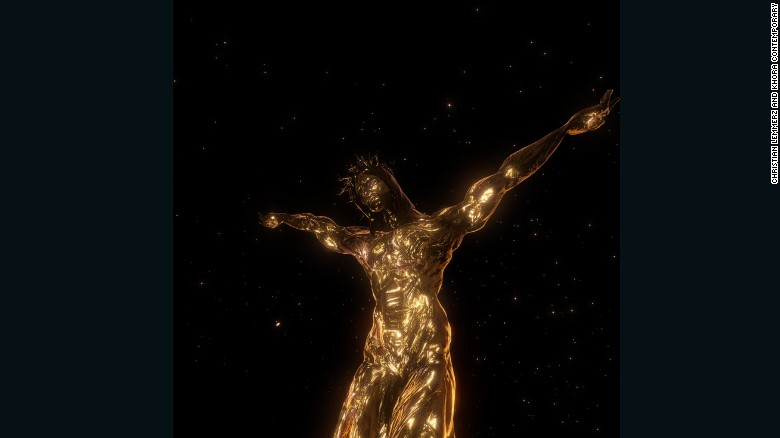 This summer in Italy, you can come face-to-face with Jesus.
Towering above you, his sinewy arms will stretch out for crucifixion. His glowing body will convulse sporadically, shooting off showers of golden embers.
But this isn't the second coming -- it's a piece of virtual reality art by the German-Danish artist Christian Lemmerz.
Titled "La Apparizione" (The Apparition), the artwork will be presented in an empty three-by-three-meter room. Viewers step inside, slip on a VR headset and are transported into outer space, where they can circle the levitating, golden Jesus.
You might not be able to hang "La Apparizione" on your wall like a painting, but it is most definitely for sale. Lemmerz has released five editions, each costing around $100,000.
Hardware is another new consideration for galleries, and those selling VR art often include a headset in the price. Nedvetskaia said that all works produced by Khora Contemporary come with HTC Vive headsets -- and a lifetime service.
"That includes updates," Nedvetskaia added, "so that this artwork doesn't become (like) a video tape that you can no longer experience."
Piracy
By deliberately restricting supply, galleries create a market for virtual reality art that is based on scarcity -- as with paintings and sculptures. But unlike other art, virtual reality pieces are infinitely replicable. In their most basic form, they are simply digital files that can be experienced by anyone with a VR headset.
See the full story here: http://www.cnn.com/2017/07/25/arts/oliver-giles-vr-art/