How a hospice’s new virtual reality treatment has a striking similarity to a Black Mirror episode
See the full story here: http://www.croydonadvertiser.co.uk/how-a-hospice-s-new-virtual-reality-treatment-has-striking-similarity-to-a-black-mirror-episode/story-30269526-detail/story.html
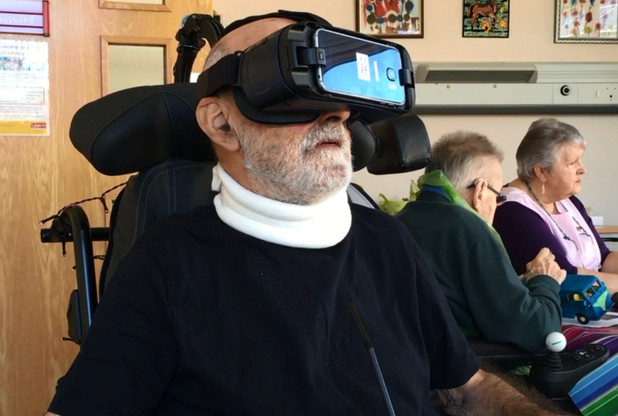
Fans of Charlie Brooker's Black Mirror are likely to recognise similarities in how a hospice has taken on a new approach to caring for terminally ill patients to an episode of the famous sci-fi series.
In similar fashion to the San Junipero episode of the show on Netflix, where terminally ill patients are given the chance to enter a virtual reality where they are in a different location, patients at a Leicester hospice can wear a headset to be transported virtually to a location they are fond of.
John Lee, 70, has Motor Neurone Disease (MND) and was the first one to try this out at LOROS.
He said it was "just like" walking through a park in Leiecester he used to visit, as he had a 360 degree view.
"You soon relax, it's just like you're there, I loved it. I nearly waved at somebody, as they walked past," Mr Lee said.
LOROS CEO, John Knight, believed it may be the first hospice in the country to use a virtual reality film of a familiar setting as a therapeutic setting.
He said: "Research suggests that the brain accepts the virtual world within 20 seconds after which the experience becomes all absorbing.
Tencent poised to launch virtual reality headset
 See the full story here: https://www.ft.com/content/71644274-2add-11e7-bc4b-5528796fe35c
High quality global journalism requires investment. Please share this article with others using the link below, do not cut & paste the article. See our T&Cs and Copyright Policy for more detail. Email ftsales.support@ft.com to buy additional rights.
https://www.ft.com/content/71644274-2add-11e7-bc4b-5528796fe35c
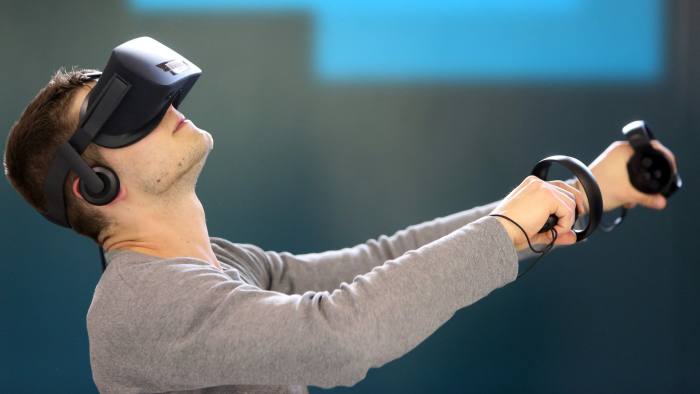
An internal research team at Shenzhen-based Tencent has been developing both PC-based VR systems, similar to Facebook-owned Oculus Rift, and mobile headsets, akin to Samsung’s Gear VR or Google’s Daydream. Whichever headset it decides to launch, Tencent is planning a release in the second half of 2017, according to people familiar with its thinking.
High quality global journalism requires investment. Please share this article with others using the link below, do not cut & paste the article. See our T&Cs and Copyright Policy for more detail. Email ftsales.support@ft.com to buy additional rights.
https://www.ft.com/content/71644274-2add-11e7-bc4b-5528796fe35c
Goldman Sachs has estimated that China accounted for a third of VR headset sales last year. According to Digi-Capital, a tech mergers and acquisitions adviser, Asia will be the largest market for such headsets by revenue by 2021, with a 45 per cent global share.
High quality global journalism requires investment. Please share this article with others using the link below, do not cut & paste the article. See our T&Cs and Copyright Policy for more detail. Email ftsales.support@ft.com to buy additional rights.
https://www.ft.com/content/71644274-2add-11e7-bc4b-5528796fe35c
“China has a large number of VR headset makers today, so fragmentation remains high,” says Tim Merel, managing director of Digi-Capital. “We expect consolidation as the market grows in the next 12 to 18 months.”
Interview: Lightform’s exciting new tech can turn anything around you into a screen
 Back when he was at Disney Imagineering eight years ago, Brett Jones saw a demo of projected augmented reality that he thought was one of the coolest things he’d ever seen. It featured an entire enchanted forest set covered in projection, with lightning and rain, fluttering butterflies and running waterfall.
The problem, though, was the demo cost millions of dollars, and only Disney could build it. That started an idea in Jones’ head — an idea to try to help make that technology more ubiquitous.
Fast forward to today, and he’s on the road to doing so. Jones is the co-founder and CEO of Lightform, a company developing a computer made specifically for AR.
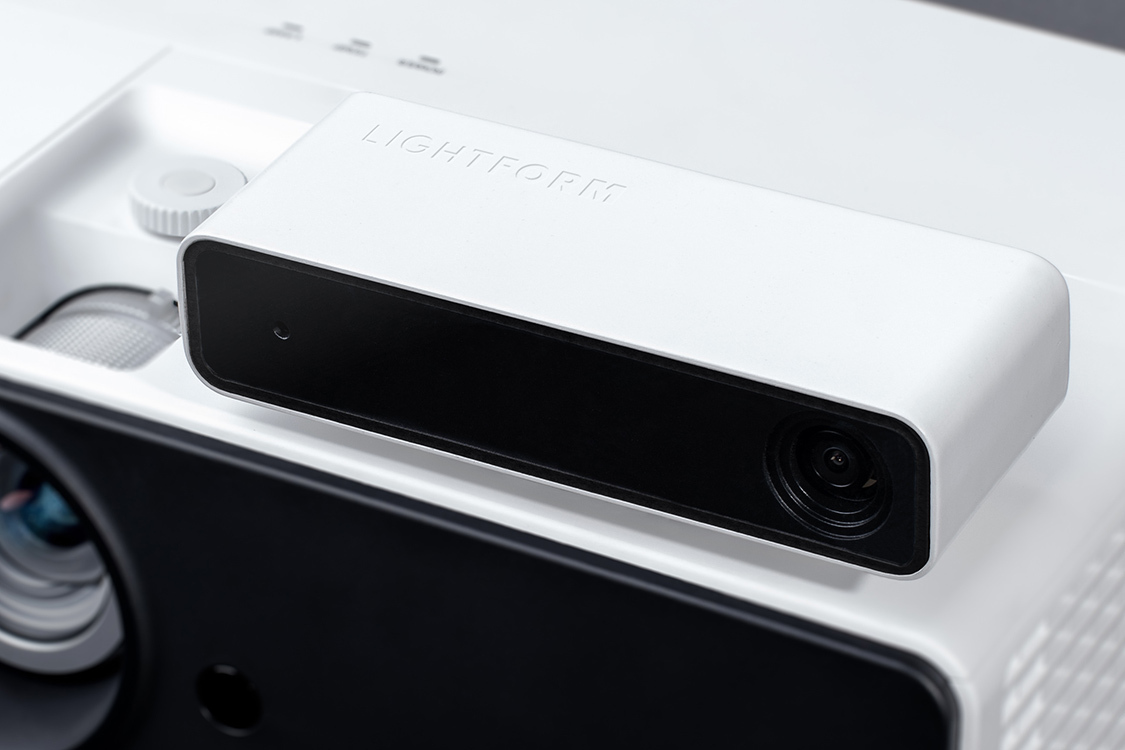
The device Lightform is developing is a computer and 3D scanning device. When connected to a video projector, it lets you scan complex scenes fast and turn basically any object into a screen. AR without a headset, as the company puts it.
The basic technology behind the company’s computer is known as projection mapping. The Lightform team’s experience with projection mapping ranges from large-scale entertainment experiences to Ph.D. research experiments, everywhere from Disney Imagineering to Microsoft Research.
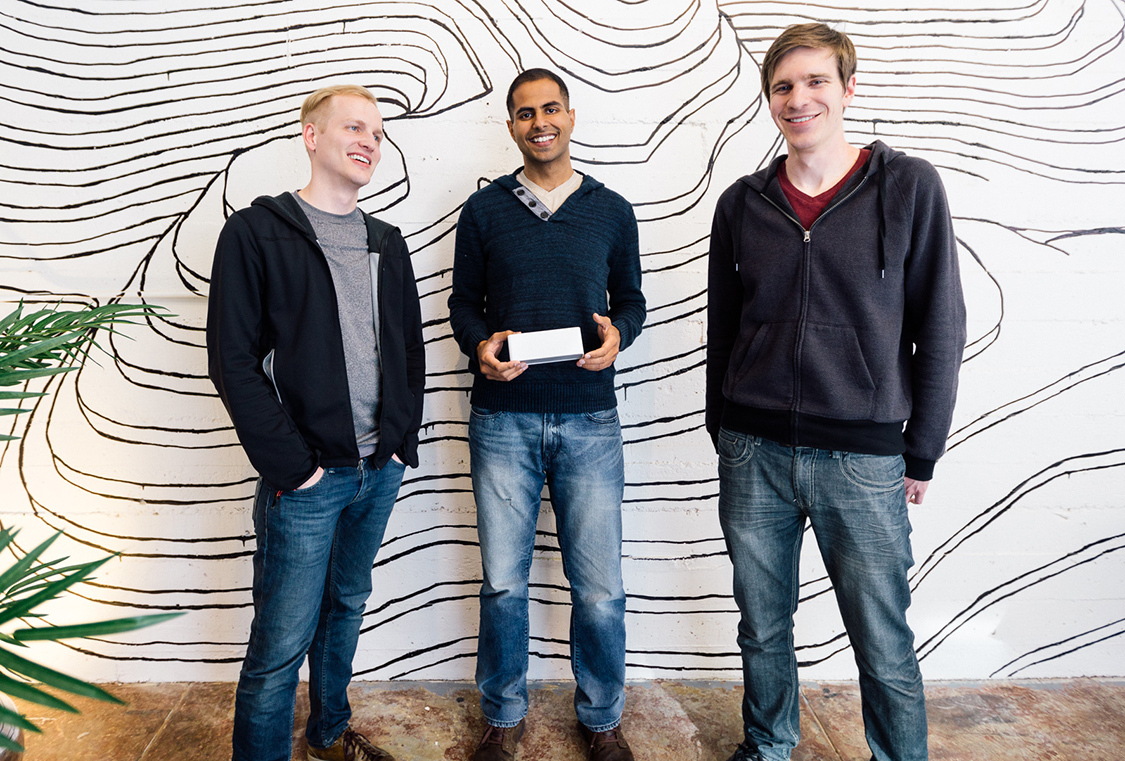
“The three founders, they were completing Ph.D.’s in human computer interaction and computer vision at the University of Illinois Urbana-Champaign,” said Lightform design director Phil Reyneri.
See the full story here: http://bgr.com/2017/04/28/augmented-reality-glasses-not-needed-lightform-interview/
UC San Diego and edX Offer Professional Virtual Reality Courses Online
The initial roster of Professional Certificate programs includes UC San Diego’s “Virtual Reality App Development” – a three-course series on how VR technology works and how to “design and implement successful interactive VR software apps using industry-standard software tools,” according to the edX announcement.
 The first course on how VR works will begin on May 15.
The VR App Development series was developed by two UC San Diego experts: Qualcomm Institute (QI) research scientist Jurgen Schulze, who is also an adjunct professor in the Computer Science and Engineering (CSE) department; and CSE professor Ravi Ramamoorthi, who also directs the Center for Visual Computing at UC San Diego. The online courses are based on courses that Schulze and Ramamoorthi teach in person in the CSE department.
See the full story here: http://ucsdnews.ucsd.edu/pressrelease/uc_san_diego_and_edx_offer_professional_virtual_reality_courses_online
You Can’t Upload Your “Self” Into Virtual Reality
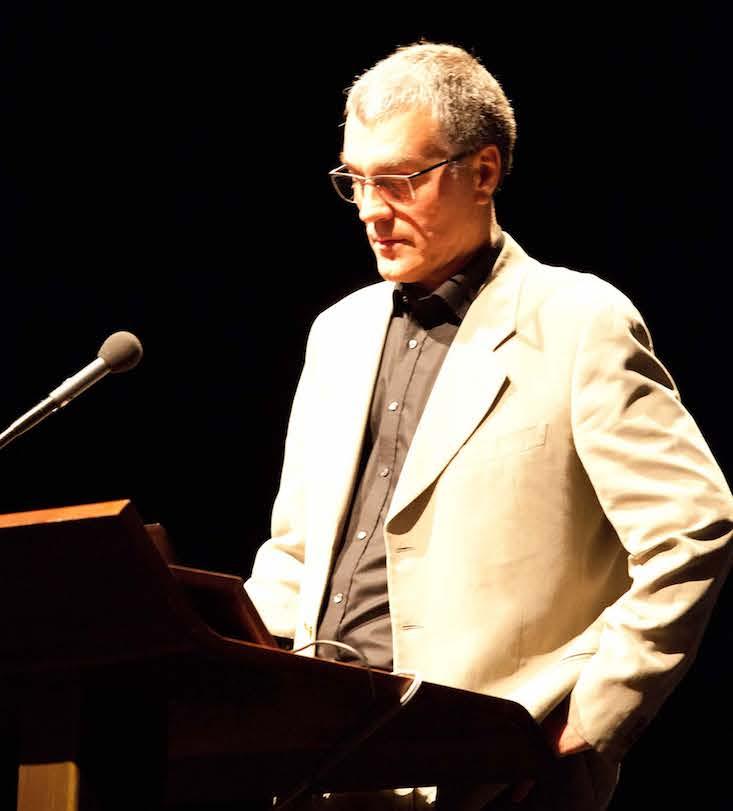 Metzinger made waves by publishing an article in Frontiers in Robotics and AI that argued that virtual reality technology—the ability to create illusions of embodiment—will “eventually change not only our general image of humanity, but also our understanding of deeply entrenched notions, such as ‘conscious experience,’ ‘selfhood,’ ‘authenticity,’ or ‘realness.’”
Now, of course, this offers itself for mortality denial; there is a religion already in California. It’s all these uploading freaks—the Singularity University, the techies. It promises immortality, but it doesn’t have all the old-fashioned stuff with God. You find these people who say will we upload our self-models into virtual reality in 30 years. They get big investors by saying this.
The problem—the technical problem—is that a large part of the human self-model is grounded in the body, in gut feelings, in inner organ perceptions, in the vestibular sense, and therefore you cannot really copy the human self-model out of the biological body unless you would at some point really cut it off, so to speak. And then you would maybe have a sense of self jumping into an avatar, but you would not have all that low-level embodiment, the gut feelings, the emotional self-model, the sense of weight and heaviness—all that would be gone.
Nevertheless, I think we’re going to see some dramatic changes in human self-awareness through these new technologies in the coming decades—no doubt about this. We may generate wildly different forms of self-experience.
One key word is “embodiment.” The bodies we have now and the way our conscious self-model is grounded in these bodies has been optimized for millions and millions of years, with our biological ancestors,.... This dense form of embodiment in virtual reality may be far away.
There is another possibility: We might have another form of embodiment, a technological form. Maybe it is something without gut feelings; maybe it is something without the sense of weight, for instance. Maybe we will have different artificial self-models that we learn to control, and with this process have different forms of self-experience as well. Why should we just replicate what biology has created? Maybe we want to create something more interesting or more cool?
See the full article here: http://nautil.us/issue/47/consciousness/you-cant-upload-your-self-into-virtual-reality
Epic Virtual Reality Experiences at Tribeca Film Festival Through April 30th
My problem with a lot of VR, especially 360 video, is that nothing really goes on behind you, while reducing the director's ability to manipulate time, space and perspective to tell a story. Remember, Remember, from Kevin Cornish, and Moth and Flame Productions. a live action 360 video, takes place during an alien invasion. It's one of the most inventive and cinematic experiences I had at the Arcade, but again I wonder if it might have been just as good as a film. Of course there's really no market for short films, while there will soon be a market for these kinds of VR experience.
Finally, no Arcade would be complete without a game. Bebylon Battle Royale was brought to the Festival by tiny LA start up, Kite and Lightning. You are in an arena driving a hovercar trading punches (and bombs) with an opponent. It takes place in a world where the fountain of youth was found, turning the entire civilization into greedy, violent babies. The company plans to turn Bebylon Battle Royale into a massive multiplayer environment, where additional player can sit in the stands and interact with the gladiators, throwing rotten tomatoes, etc.
Even sampling one third of the Tribeca Arcade's offering, one is struck by the rapid pace of the medium's development. Indeed, Tribeca should think about spinning off it's interactive hub into its own Festival. As such, it could be in a larger venue that offers more stations, which would mean more through put, and more people getting a taste of the promise of this amazing medium.
See the full story here: https://www.forbes.com/sites/charliefink/2017/04/24/epic-virtual-reality-experiences-at-tribeca-film-festival-through-april-30th/#6bd6404e4d94