Sotheby’s launches virtual reality surrealist paintings
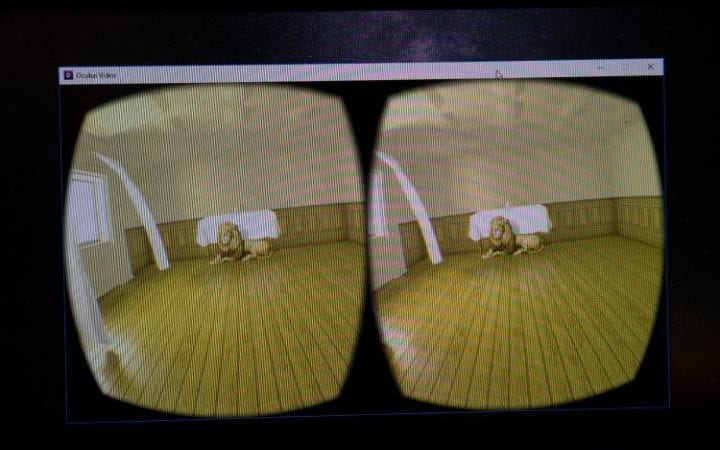 The auction house has become the first to commission designers to create a 360 degree experience, translating the original paintings into a lived experience through Occulus Rift headsets.
Nigel Hilditch, director of video for Sotheby’s Europe, said the VR technology would add to the depth of understanding of each painting, capturing the atmosphere as close to the artist’s original intentions as designers could manage.
The finished product had won over Sotheby’s surrealist specialists, he added, and was intended as a “complementary” offering alongside the traditional exhibition of paintings.
See the full story here: http://www.telegraph.co.uk/news/2017/02/23/sothebys-launches-virtual-reality-surrealist-paintings/
Virtual reality pioneer Philip Rosedale (and his avatar)
 In the High Fidelity office, south of the city’s financial district, Rosedale and I — wired up to headsets and sat in separate rooms — enter his new online universe. His avatar is dressed in black, the tall, athletic build, tousled grey hair and striking blue eyes an accurate representation of the man himself. His conventional choice turns out to be exceptional. Hearing a young woman’s voice behind me, I turn to face a dwarf skeleton with a storm trooper’s helmet for a head; Rosedale introduces Michelle, one of High Fidelity’s coders who may, or may not, be actually sitting at a desk on the other side of the office. A Shakespearean courtier with the face of an elf flies past on what appears to be a broomstick.
Within minutes I am exploring: investigating my new virtual limbs; chatting with other avatars; teleporting over vast distances; firing off a gun that shoots fireworks 100 metres into a desert sky where they explode in a colourful pyrotechnic shower. After 20 minutes of surreal, intoxicating virtual reality, I take off the headset and return, blinking and exhilarated, to the single-desk room where it has all taken place.
See the full story here; https://www.ft.com/content/97d62cae-f39e-11e6-95ee-f14e55513608
Google Research and Daydream Labs: Seeing eye to eye in mixed reality
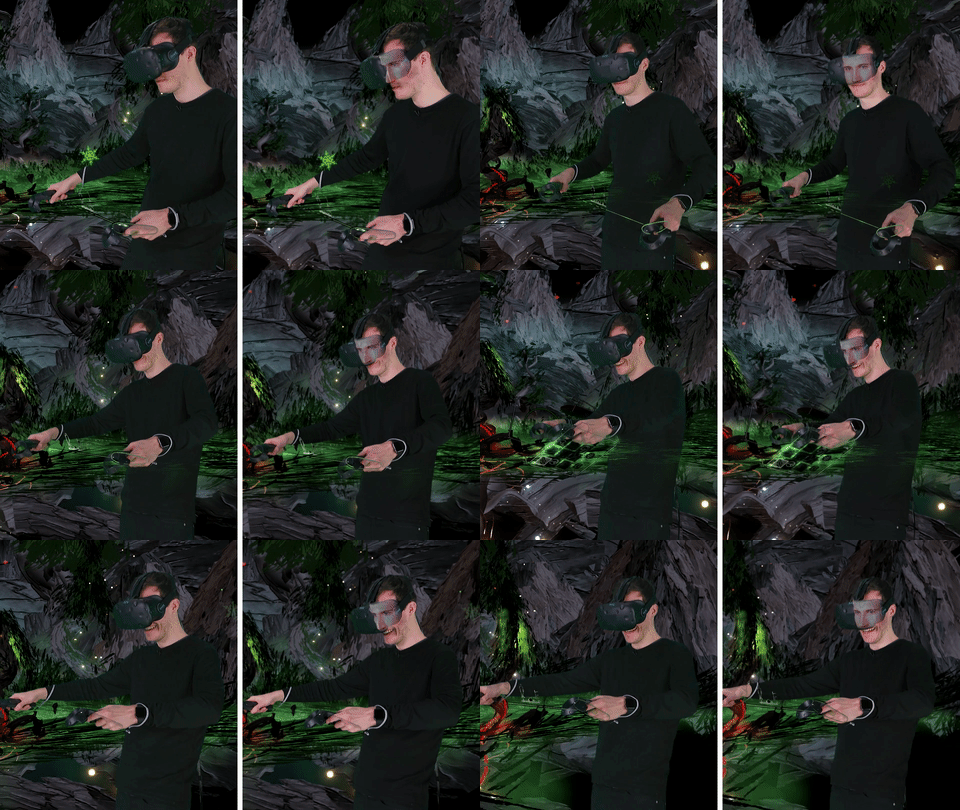 Using a combination of machine learning, 3D computer vision, and advanced rendering techniques, we’re now able to “remove” headsets and show a person’s identity, focus and full face in mixed reality. Mixed reality is a way to convey what’s happening inside and outside a virtual place in a two dimensional format. With this new technology, we’re able to make a more complete picture of the person in VR.
The first step to removing the VR headset is to construct a dynamic 3D model of the person’s face, capturing facial variations as they blink or look in different directions.
Next, we use an HTC Vive, modified by SMI to include eye-tracking, to capture the person’s eye-gaze from inside the headset. From there, we create the illusion of the person’s face by aligning and blending the 3D face model with a camera’s video stream. A translucent "scuba mask" look helps avoid an "uncanny valley" effect.
Finally, we composite the person into the virtual world, which requires calibrating between the Vive tracking system and the external camera. We’re able to automate this and make it highly accurate so movement looks natural. The end result is a complete view of both the virtual world and the person in it, including their entire face and where they’re looking.
...if you’re game to go deeper, we’ve described the technical details on the Google Research blog. This is an ongoing collaboration between Google Research, Daydream Labs, and the YouTube team.
See the full story here: https://www.blog.google/products/google-vr/google-research-and-daydream-labs-seeing-eye-eye-mixed-reality/
Augmented reality start-up Daqri to develop hologram powered super-fast 3D printing device
 The super-fast 3D printer uses a laser to cure a light activated monomer into a solid plastic. The technique is to scan the whole object at once using constant coherent radiation or hologram to create the perfect shape. The whole scanning of the desired object makes the process rapid and precise. The 3D printer flashes a green laser which shines up into a petrified dish full of goo. A paper clip then emerges which seems ghostly at first but turns solid eventually. In seconds, the clip is clean and is ready for use.
The heart of the device is a holographic chip developed by Daqri.
Since the Hologram powered Daqri’s 3D printer does not use the layer by layer scanning technique for printing the solid objects. This way, the output doesn’t suffer from minute strains. In a back and forth technique, the output product is affected by grain-sized heaps or strains.
See the full story here: https://www.technowize.com/augmented-reality-start-daqri-develop-hologram-powered-super-fast-3d-printing-device/
Phantom AR Seeks to Democratize Augmented Reality
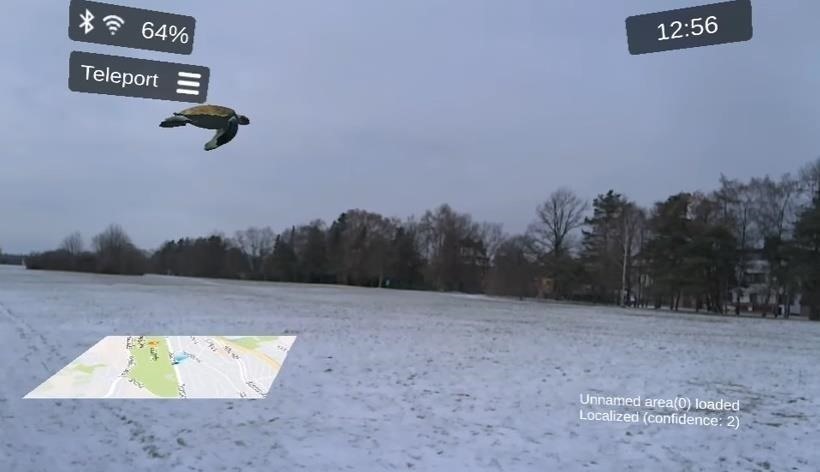 Compatible with Android and iOS-based headsets, as well as the Microsoft HoloLensand Meta 2, Phantom AR runs the entire augmented experience, including the user interface, applications, asset and resource management, and interaction with environments and other users. Running as an application over the lower layers of the operating system, Phantom replaces the default user interface with AR features.
See the full story here: https://augmented.reality.news/news/phantom-ar-seeks-democratize-augmented-reality-0176258/
Financial technology companies embrace artificial intelligence and virtual reality
 Jessica Liberi of Fidelity's eMoney delighted us with a live AI demonstration of an integration between Alexa and eMoney's eMX platform.
She asked Alexa, "What were the last three transactions in my bank account?" and "What will happen to my financial plan if I retire three years early?" and Alexa provided the answer in real time.
The audience knew we had witnessed a first and clapped loudly.
Separately, eMoney senior animator Ryan Gallini showed off the first virtual reality 3D eMX planning experience. This truly blew me away.
An initial study by the firm found that individuals said the least stressful way to create a financial plan was via a guided online experience at home, without an adviser, paired with an online video session with an adviser afterwards to discuss the results and assist with implementation.
See the full story here: http://www.investmentnews.com/article/20170217/BLOG09/170219905/financial-technology-companies-embrace-artificial-intelligence-and
8i Demos Hologram Production, Set to Debut Holo Mobile App
 Hologram production studio 8i plans to show off its technology and Holo, its new mobile app, at Recode‘s Code Media conference in California. The company, which gained visibility recently by creating a holographic video of actor Jon Hamm and NBA player D’Angelo Russell, also just received a $27 million series B round led by Time Warner Investments and including Baidu Ventures, Hearst Ventures, Verizon Ventures, German businessman Carsten Maschmeyer and others. That brings total funding up to $41 million.
8i uses 41 cameras in a cylindrical green screen space to create a “volumetric capture” of people and places. Past demos, which included one of astronaut Buzz Aldrin, required viewing with a VR headset. Now, the Holo app, which currently only runs on the Lenovo Phab 2 Pro smartphone loaded with Google’s Tango software and sensors, can scan the room and map its dimensions.
Then app users can pick from among several holograms and place one in the room. With the smartphone as a lens, the user can then interact with the hologram, and take a selfie or shoot a video.
The holograms, which are still “rough” with some pixilation, are labor-intensive to create. 8i chief executive Steve Raymond, noting that, “the most scarce resource we have in this industry is creativity,” said the company will focus on “easier, low-cost tools” so that “people in the industry… can make great content.”
Raymond notes now that 8i is offering a mobile app that obviates the need for a head-mounted display, conversations with potential clients have become easier.
See the full story here: http://www.etcentric.org/8i-demos-hologram-production-set-to-debut-holo-mobile-app/
Lytro Raises $60 Million for Its Light Field Camera, Announces First VR Project With Chris Milk’s Within
 Light field camera maker Lytro has raised a $60 million Series D round of funding, and the company is also getting closer to actually show consumers what its technology can do. Lytro announced on Wednesday that its Immerge VR camera was recently used by Chris Milk’s Within to shoot a first project, which is currently in post-production.
Lytro first announced its Immerge light field camera for virtual reality filmmakers at the end of 2015, and demonstrated some first footage shot by the camera to industry insiders last August.
During that time Lytro actually completely redesigned its camera, which was initially thought to be a spherical array of lenses. Now Immerge is using a planar array of lenses that is being rotated to film the entire 360-degree environment. Lytro’s servers then get busy to reconstruct the full light field volume for a 3D volumetric virtual reality experience.
Lytro is also looking to expand its market, and target studios in Asia as potential customers for its camera, which is where the new fundraise comes in. The new $60 million Series D was led by Blue Pool Capital, but investors also include Singapore-based EDBI, Huayi Media and Foxconn Technology Group, among others.
See the full story here: http://variety.com/2017/digital/news/lytro-60-million-series-d-1201988791/
OxSight uses augmented reality to aid the visually impaired
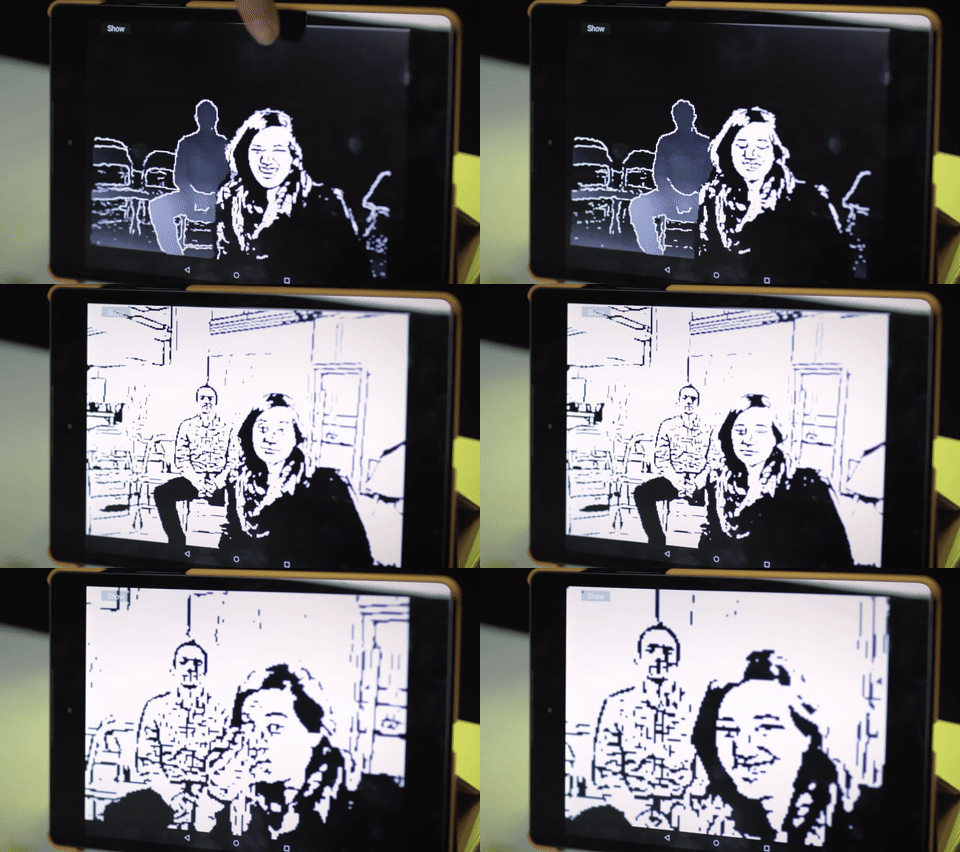
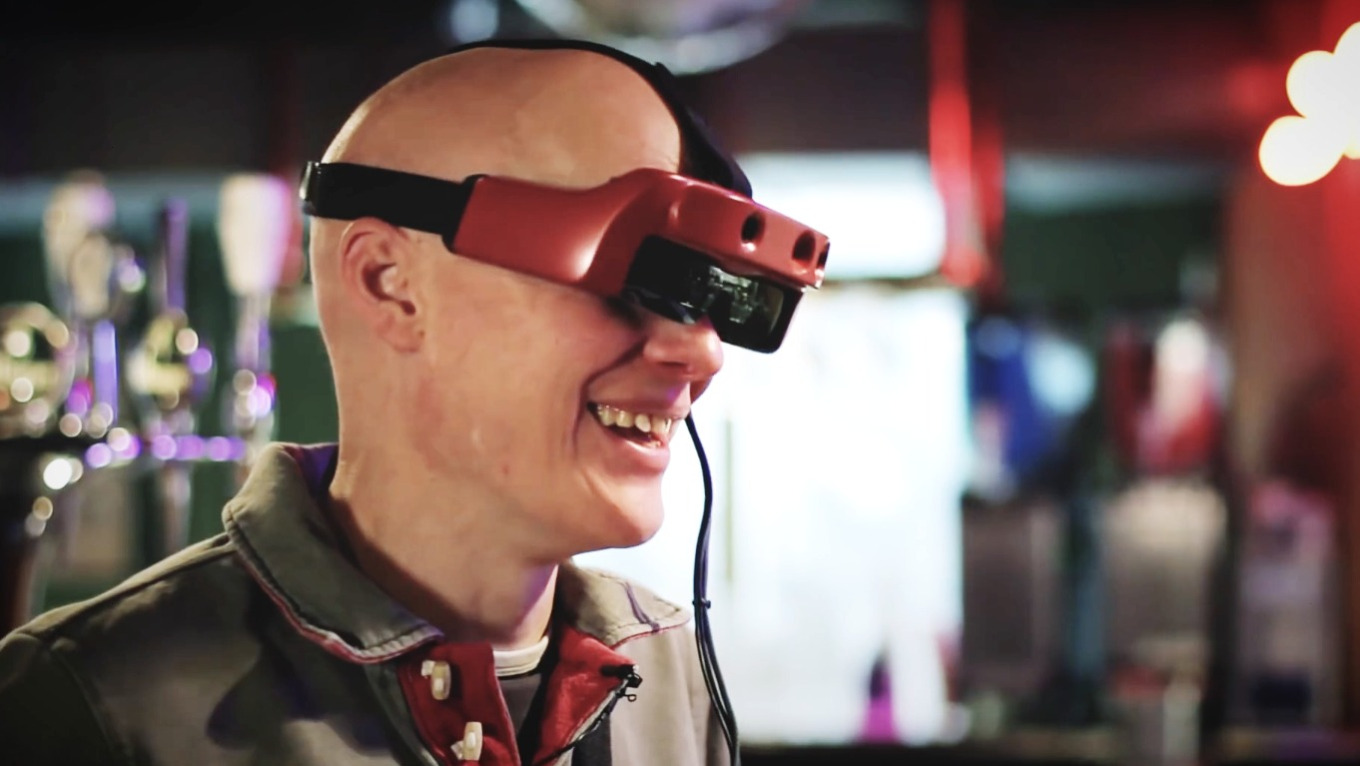 For people with minimal vision, the software can project a cardboard cutout of what a person looks like. Users who are blind but still have limited vision can customize their experience by boosting colors or zooming in or out. Because each person who is considered blind is affected differently, OxSight built a product that can be adjusted and customized to allow each unique user to understand where they are and what is around them.
There are a lot of unknowns about how to bring the product to market or how much it will cost because no one has ever tried to sell a device like this. OxSight has secured grants from private and public sources and has found an investor willing to take on the philanthropic risk. “If we don’t make a huge amount of money it is still a lot of fun. There is still a lot of technology we’ll be developing and there is so many people who can benefit from it,” said Hicks.
Currently, the company’s biggest obstacle is figuring out what minimum viable product is and bringing it to market. There are a lot of regulations for medical devices. The product must address specific needs, like recognition of objects, form factor and lasting battery life that aren’t being offered in consumer areas.
See the full story here: https://techcrunch.com/2017/02/16/oxsight-uses-augmented-reality-to-aide-the-visually-impaired/