China Bans Augmented Reality Games, Citing Security Concern
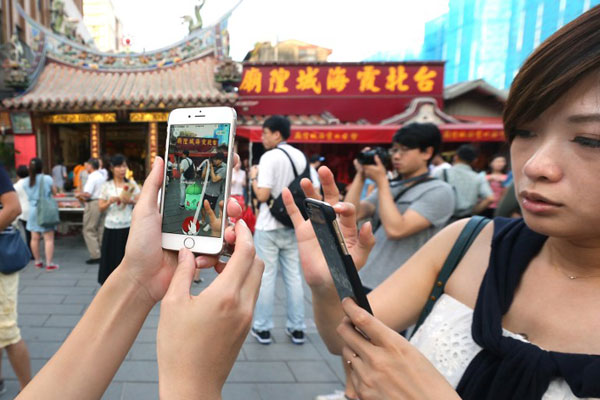 "Judging from overseas consumption patterns and a number of cases, there are major social risks linked to the operation of this game," the General Administration of Press and Publications, Radio, Film and Television said in a statement on its website.
"These include breaches of security relating to geographical information, traffic safety and threats to consumer safety," the statement said.
China already bans Google Maps, on which Pokémon Go depends, within its borders, so any attempt to play in China without government permission would result in a blank map.
"From the government's point of view, there is a risk to national security," he said. "But I think their main fear isn't actually to do with geographical information."
"I think for them the key issue is large numbers of people gathering in public places, ostensibly to play such games," Li said. "I think they may be afraid of 'mass incidents' occurring."
China sees thousands of 'mass incidents' every month, although many go unreported, ranging from anti-eviction protests, to mass petitions, to strikes and anti-pollution demonstrations.
See the full story here: http://www.rfa.org/english/news/china/china-bans-aungmented-reality-games-citing-security-concerns-01112017120933.html
Apple Granted Patent For Transparent AR Phone
[Philip Lelyveld comment: the tech allows for edge-to-edge displays with all the tech behind the screen, rather than at the edges. Cameras, speakers, touch sensors, ... can be built into openings in the screen.]
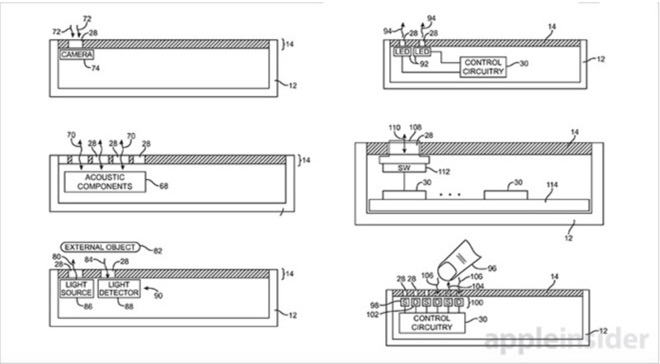 It also paves the way for a secondary display unit by making a portion of the back of the phone transparent by using glass and enabling users to view scenes through that unit. In turn, this would allow Apple to create an Augmented Reality (AR) experience, similar to the one available through the hit game Pokemon Go. Except, in this case, iPhone users will be able to view an augmented version of the scene before them through the glass display instead of through a camera lens (as happens in most AR
See the full story here: http://www.investopedia.com/news/apple-granted-patent-transparent-augmented-reality-phone/?lgl=bt1tn-above-textnote
HTC Announces Wireless Tracking for Vive, Adds Peripherals
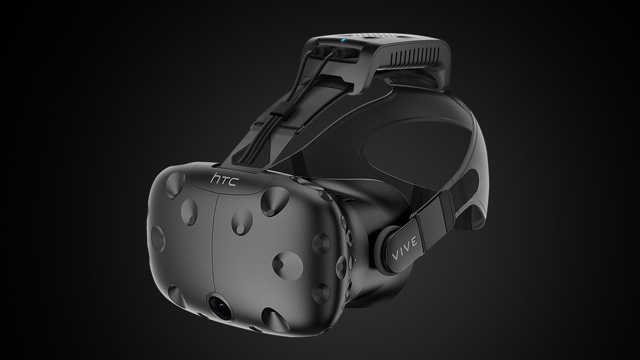
 The HTC Vive, a room-scale virtual reality headset, is expanding its feature set to include wireless functionality and peripheral devices. The company has announced that the TPCast adapter will grant the Vive fully wireless capabilities without introducing noticeable latency or degraded image quality. Developed internally and produced by TPCast, the device promises up to two hours of battery life, with the possibility of upgrading to an “XL” battery providing up to five hours. The included transmitter sends an uncompressed signal directly to a receiver mounted on top of the strap that holds the Vive to the user’s head, and the battery pack fits easily in a pocket. The TPCast will ship in Q2 of this year, and will cost $249.
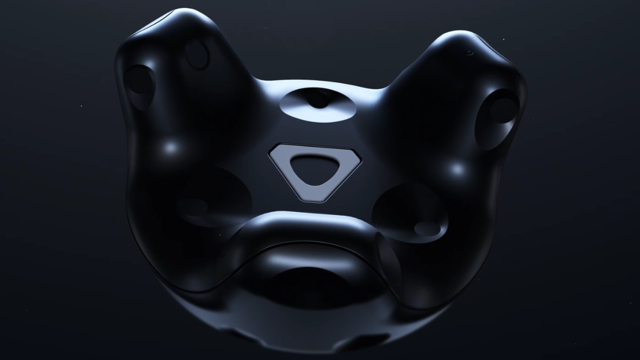
HTC also announced the Vive Tracker, a small puck-shaped device that allows peripherals to be integrated into virtual reality. Among the objects showcased were baseball bats, firehoses and guns.
The use of Vive Trackers must be carefully integrated into a developer’s chosen peripheral, meaning that gamers will not simply be attaching the device to objects around the house. Developers have commented that the device is very easy to integrate into their games.
Lastly, HTC announced the Deluxe Audio Strap, a more robust and comfortable system for holding the Vive on the user’s head. Similar to the Oculus Rift, it includes built-in headphones. The general consensus about the two devices has been that the Vive boasts greater functionality, but is heavier and less comfortable to wear. The Deluxe Audio Strap, releasing in Q2 of this year, aims to alleviate that concern.
The Royal Shakespeare Company Paves Way For Virtual Reality Theater

 In partnership with Intel and The Imaginarium, the RSC is pioneering a new kind of storytelling tech, using Shakespeare's The Tempest as a guinea pig. In it, they are creating the world's first live motion-capture performance. Think Gollum from The Lord Of The Rings - except onstage, live, and chatting you up in real-time.
The result is a character that is part flesh, part digital wizardry - a perfect match for The Tempest's Ariel, the fairy whose magic wreaks havoc on a shipwrecked crew.
It's created by twenty-seven separate projectors hidden around the theater. The actor playing Ariel, Mark Quartley, is onstage at all times, and embedded in his costume are seventeen motion sensors. When Ariel needs to perform magic, a virtual avatar appears, tracking his movements, flying around the stage, transmogrifying itself to fit the story's needs.
Then came The Imaginarium, one of the world's leading motion-capture companies, who were looking to develop live performances, not just "canned" film footage. Quartley describes the studio, founded by Gollum actor Andy Serkis, as, "this extraordinary blend of technical geekery and artistry."
The scene in which Prospero recalls Ariel's imprisonment inside a pine tree was mesmerizing. The mo-cap and projections combined to grow the tree up from the stage, engulfing him and creating a sort of living sculpture, halfway between a Tim Burton character and Donatello's Penitent Magdalene.
See the full story here; http://www.forbes.com/sites/leeseymour/2017/01/10/the-royal-shakespeare-company-is-paving-the-way-for-virtual-reality-theater/#64e7ede21657
HTC Vive GM on the New Vive Tracker & Privacy in VR
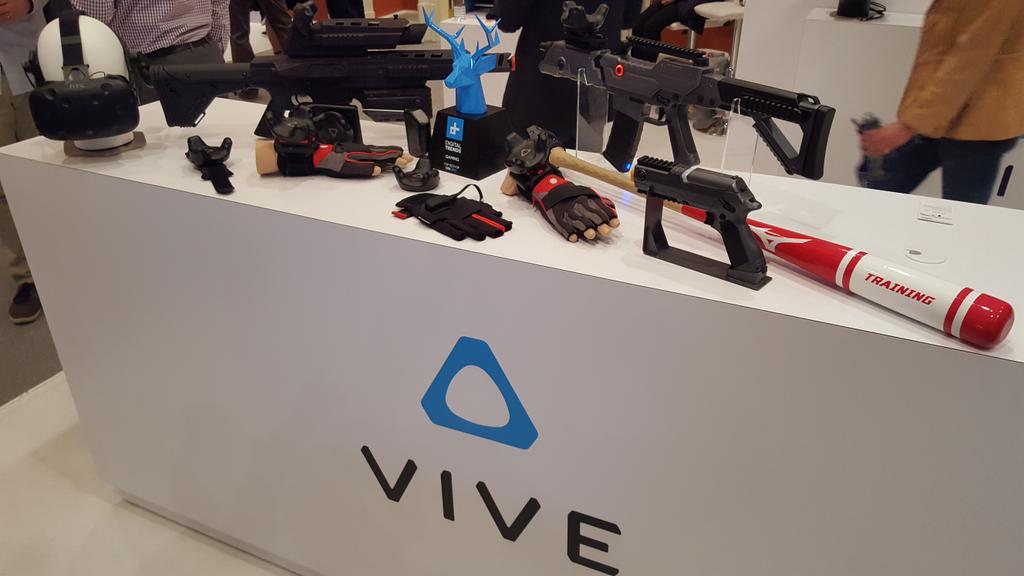 The most significant VR announcement from CES 2017 was the Vive Tracker, a modular Lighthouse-tracked ‘puck’ attachment that will enable users to track additional objects within VR experiences.
I had a chance to catch up with HTC’s Dan O’Brien, who is the Vive General Manager of America, Europe, Middle East, and Africa. We talked about HTC’s emphasis of growing the ecosystem in 2017 with this new Vive Tracker, and what type of applications he expects that it will enable. We also talk about some of the privacy implications of virtual reality, and more about HTC’s approach of minimizing, anonymizing, and protecting any private data that is collected.
Believe the Hype: HypeVR’s Volumetric Video Capture is a Glimpse at the Future of VR Video
The idea is to capture not just a series of 360 pictures and string them together (like with traditional 360 cameras), but to capture the volumetric data of the scene for each frame so that when the world is played back, the information is available to enable the user to move inside the video.
At CES 2017, I saw both the original teaser video shot with HypeVR’s monster capture rig, and a brand new, even more vivid experience, created in conjunction with Intel.
With an Oculus Rift headset, I stepped into that new scene: a 30 second loop of a picturesque valley in lush Vietnam.
It was vivid and sharp—it felt more immersive than pretty much any 360 3D video I’ve ever seen through a headset, mostly because I was able to move around within the video, with proper parallax, in a roomscale area
 HypeVR’s approach is different, their rig sits static in a scene and captures it 60 times per second, using a combination of high-quality video capture and depth-mapping LiDAR. Later, the texture data from the video is fused with the depth data to create 60 volumetric ‘frames’ of the scene per second. That means you’ll be able to see waves moving or cars driving, but still maintain the volumetric data which gives users the ability to move within some portion of the capture.
See the full story here: http://www.roadtovr.com/believe-hype-hypevrs-volumentric-video-capture-glimpse-future-vr-video/
The mind-blowing AI announcement from Google that you probably missed.
 Google Translate invented its own language to help it translate more effectively.
Using a 3-dimensional representation of internal network data, we were able to take a peek into the system as it translates a set of sentences between all possible pairs of the Japanese, Korean, and English languages.
Within a single group, we see a sentence with the same meaning but from three different languages. This means the network must be encoding something about the semantics of the sentence rather than simply memorizing phrase-to-phrase translations. We interpret this as a sign of existence of an interlingua in the network.