Virtual-reality film pushes you into Cirque’s underwater world
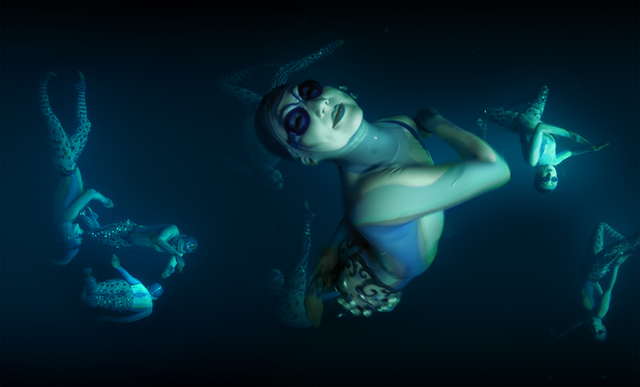 “Dreams of O” was released Thursday for CES as a follow-up to October’s “Ka The Battle Within.” Both are free downloads for Samsung Gear VR headset owners all year. But
The 12-minute “O” film took three days to shoot after a day of rehearsal, with the performers playing to a 360-degree camera in a submersible box operated remotely. A virtual-reality camera doesn’t zoom in and out, so the artist swims up to it.
See the full story here: http://www.reviewjournal.com/entertainment/shows/virtual-reality-film-pushes-you-cirque-s-underwater-world
Smart augmented reality Gorilla Glass could be coming to future cars
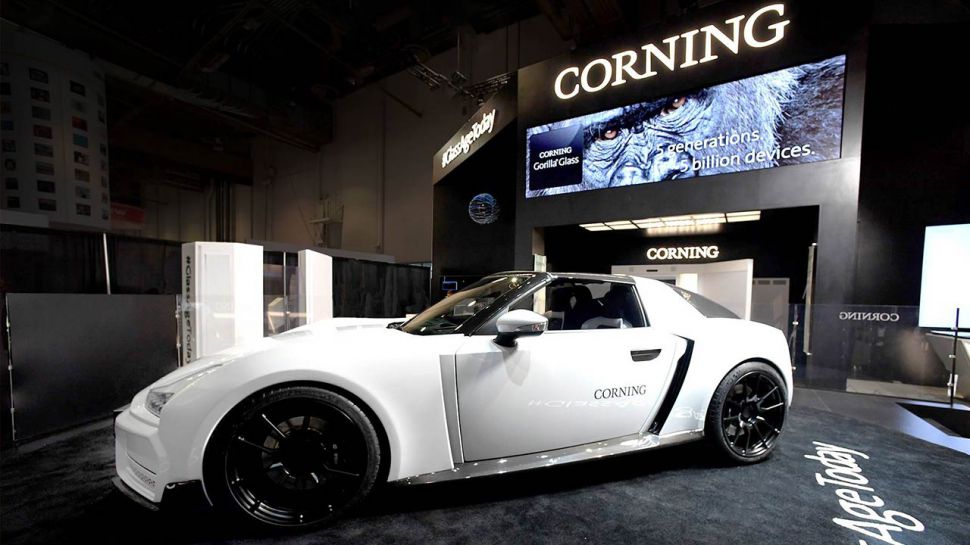 The same glass can be used in a dashboard, which (like a tablet screen) could be touch-controlled across its entire length, while the flexibility of Gorilla Glass would also allow windows to change from clear to tinted at the driver's discretion.
All this would come with the added benefit of improved fuel efficiency according to Corning, due to Gorilla Glass's strong-yet-light make-up.
“By bringing Corning Gorilla Glass to the automotive industry, Corning is delivering lighter, tougher, and more optically advantaged solutions, enabling improved fuel efficiency, and a safer, more enhanced user experience for both drivers and passengers,” said Marty Curran, executive vice president at Corning.
See the full story here: http://www.techradar.com/news/smart-augmented-reality-gorilla-glass-could-be-coming-to-future-cars
A Hidden Figures augmented reality app puts invisible scientific geniuses all over America
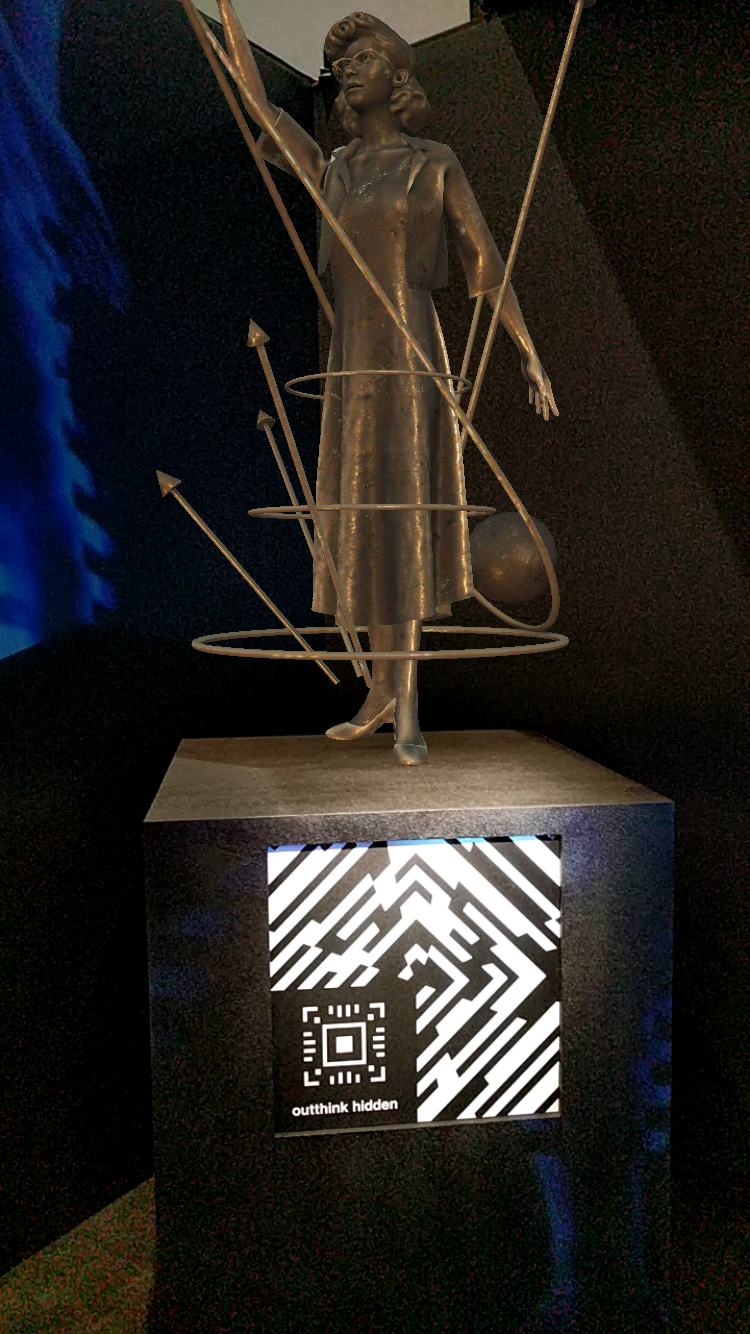 The film Hidden Figures, released late last year, follows three under-recognized female mathematicians who helped NASA launch humanity into space in the 1960s. So in order to promote it, IBM and The New York Times Company are putting literally hidden figures all around the US, waiting to be discovered with your phone. Outthink Hidden, as the project is called, is an augmented reality app that’s supposed to help people learn about marginalized doctors, engineers, and scientists. It launched at CES, and we got to check it out.
See the full story here: http://www.theverge.com/2017/1/8/14201852/outthink-hidden-figures-augmented-reality-app-ibm-nyt-ces-2017
Lumus Packed a 55 Degree Field of View into Optics Less than 2mm Thick
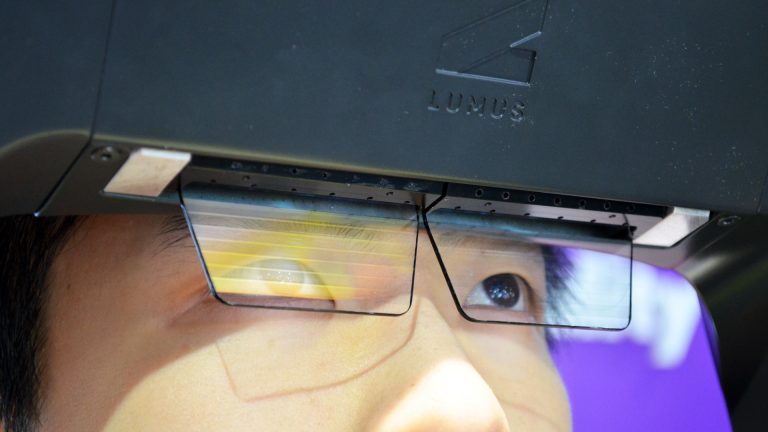 At CES 2017, Lumus is demonstrating its latest waveguide optics which achieve a 55 degree field of view from optics less than 2mm thick, potentially enabling a truly glasses-sized augmented reality headset.
Israel-based Lumus has been working on transparent optics since 2000. The company has developed a unique form of waveguide technology which allows images to be projected through and from incredibly thin glass. The tech has been sold in various forms for military and other non-consumer applications for years.
See the full story here; http://www.roadtovr.com/lumus-maximus-55-degree-field-of-view-thin-optics-augmented-reality/
Razer Reveals 4K Projector for Gamers Who Want to Go Big
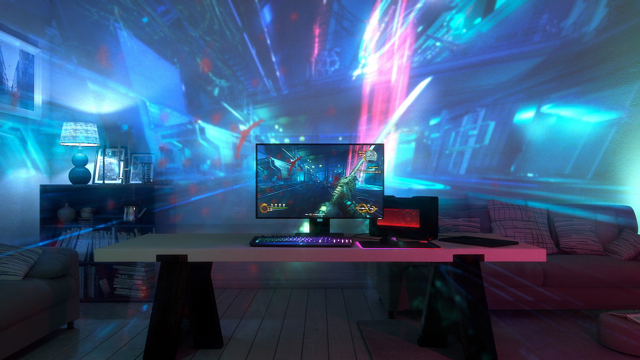 Project Ariana employs a wide-angle fisheye lens in order to project real-time video of gaming onto a wall or other surfaces, for a more immersive experience than what is traditionally offered with monitors. A pair of 3D depth-sensing cameras detects lighting, furniture and other variables. Some say it is similar to the approach taken by Microsoft’s Illumiroom concept.
See the full story here: http://www.etcentric.org/razer-reveals-4k-projector-for-gamers-who-want-to-go-big/
CES 2017: Distinguishing Between Machine Learning and AI
 As predicted, artificial intelligence has been one of the most repeated phrases of CES 2017. It seems every other vendor here is slapping the “AI” label on its technology. So much so that it inspired us to take a (short) step back and look at what AI is in relation to machine learning. The reality is: there are still very few applications that can be legitimately labeled as artificial intelligence. Self-driving cars, DeepMind’s AlphaGo, Hanson Robotics’ Sophia robot, and to a lesser extent Alexa, Siri and the Google Assistant, are all AI applications. Most of the rest, and certainly most of what we’ve seen here at CES, are robust, well productized machine learning applications (usually built on neural network architectures), often marketed as AI.
There’s a clear and substantial difference between the two…
- Machine Learning: learning machines.
- Artificial Intelligence: thinking machines.
See the full story here: http://www.etcentric.org/ces-2017-distinguishing-between-machine-learning-and-ai/
Lenovo’s Windows VR headset will do affordable room-scale virtual reality
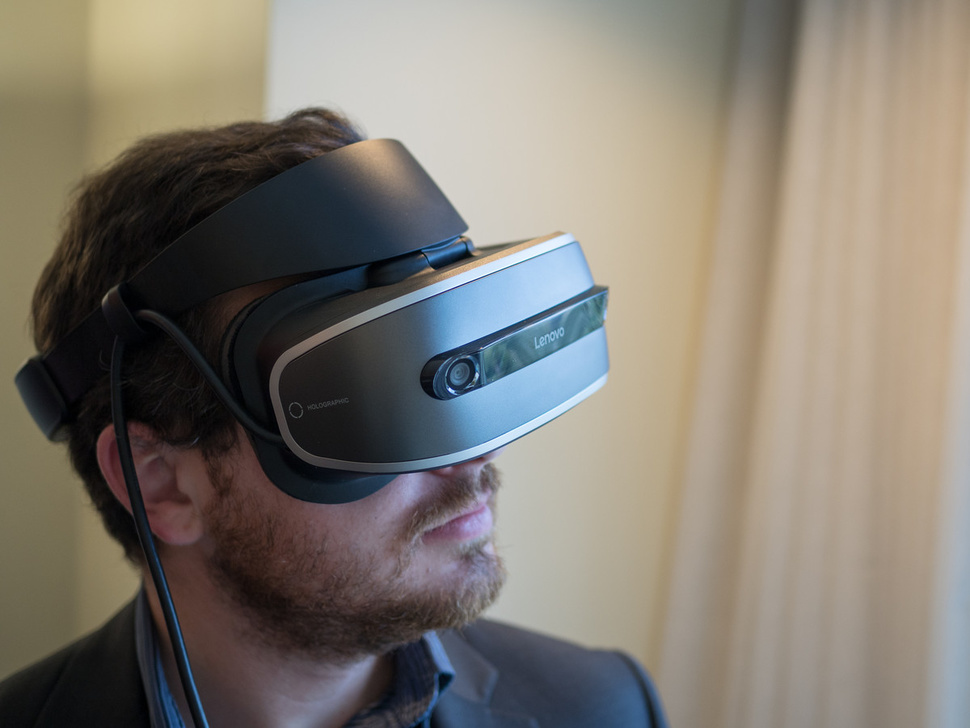 Inside the headset there's two 1440 x 1440 OLED screens, which should in theory give the headset a higher resolution than both the HTC Viveand Oculus Rift. And because the headset runs on the Windows Holographic platform, it can deliver room-scale VR, without the need for any external cameras or sensors. Instead, Lenovo's headset has front-mounted cameras to pick up depth information.
Lenovo has said it won't be making any motion controllers to use with the headset, but you'll be able to use an Xbox controller or any third-party one that works with Windows Holographic, more of which should arrive during the year.
See the full story here: http://www.pocket-lint.com/news/139842-lenovo-s-windows-vr-headset-will-do-affordable-room-scale-virtual-reality