Meta 2 Augmented Reality headset with 90 degree FoV finally ships, but disappoints with lack of progress
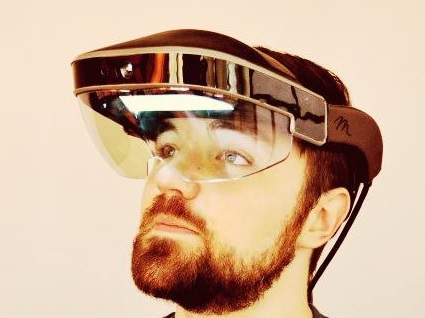 For $949 you get the headset above, which offers a high-resolution augmented reality display with a full 90 degree field of view.
While only 1/3rd to 1/5th the price of the HoloLens however it appears you may end up getting what you are paying for.
Rather than using a wave guide display like the HoloLens and other augmented reality headsets, the device use a high-resolution 2560 x 1440 screen which reflects onto a half-silvered display in front of your eyes, which we assume is a much cheaper technology, but results in a rather bulky, protuberant and somewhat comedic headset.
Compared to the HoloLens is also does not scan the environment using sensors, and manages Inside-out 6 degrees of freedom sensing by visually processing the environment and extracting relevant movement and also the usual inertial sensors as found in a smartphone.
The headset is also tethered to an external PC (Windows 8 or Windows 10),...
See the full story here: https://mspoweruser.com/meta-2-augmented-reality-headset-90-degree-fov-finally-ships-disappoints-lack-progress/
augmented reality is coming to your ears
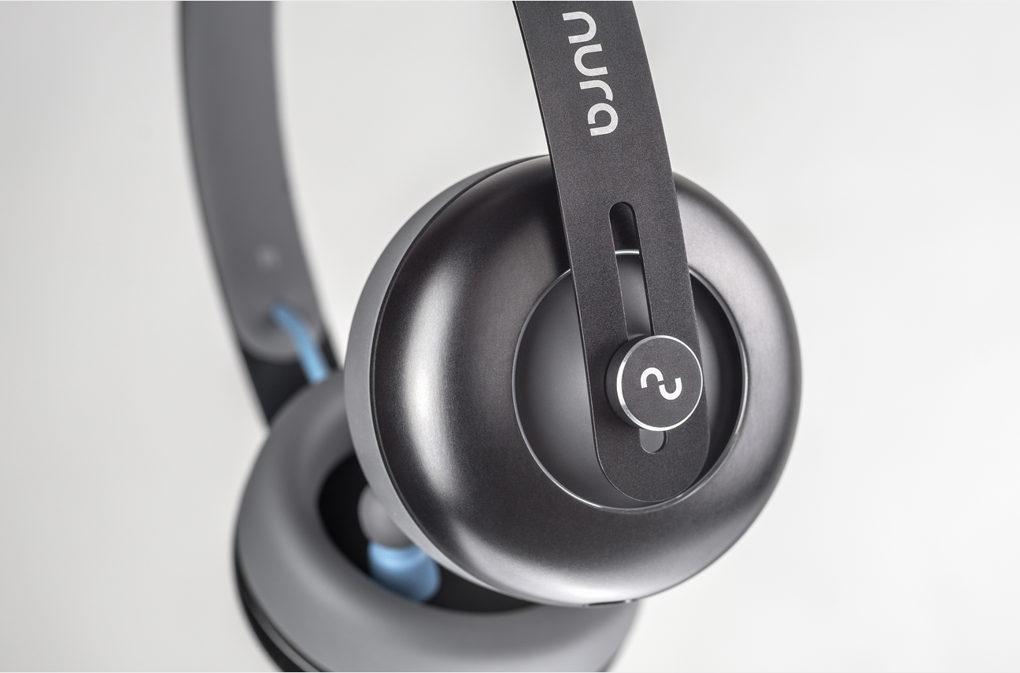 Now augmented aural reality (AAR) is here and, in the near future, ready to use.
Take Nura, a pair of "in-ear and over-ear" headphones that, in summer 2016, raised $1.88 million (£1.3m) on Kickstarter. Listening with them varies vastly from person to person; by measuring the minute vibrations of the inner ear (an adaptation of the test used to screen babies for deafness), Nura corrects its input to fit each wearer's earprint. Developed at the HAX accelerator in Shenzhen, the $399 devices are scheduled to ship in spring 2017. They are, in effect, a hearing aid for the hearing.
Other aural AR devices go further than correction. San Francisco-based Doppler Labs' 20p-sized wireless Here One earbuds can isolate specific sounds, allowing the listener to cancel out the noise of a building site, for instance, or focus on a conversation in a busy restaurant, a process Doppler calls adaptive filtering.
Even if in-ear alerts prove too disruptive, the mere act of acoustic filtering is still a dystopian prospect. Listening is democratic, because it is in most cases passive; it takes what it is given without care or favour. AAR presents a processed version of the world, loud noises sanded down, strident voices washed away.
See the full story here: http://www.wired.co.uk/article/aural-augmented-reality
China’s Year Of Virtual Reality
 A survey done by Niko Partners earlier this year showed that more than half of Chinese gamers are interested in VR and almost 30% are willing to spend up to $200 USD on a device, which is significant considering the average income in China hovers around $12,000 per year.
Hardware investments accounted for 78% of the total investments made in all VR related products in 2015 and 2016. That investment has led to a surge in VR hardware sales this year whilst software sales growth hasn’t been as high.
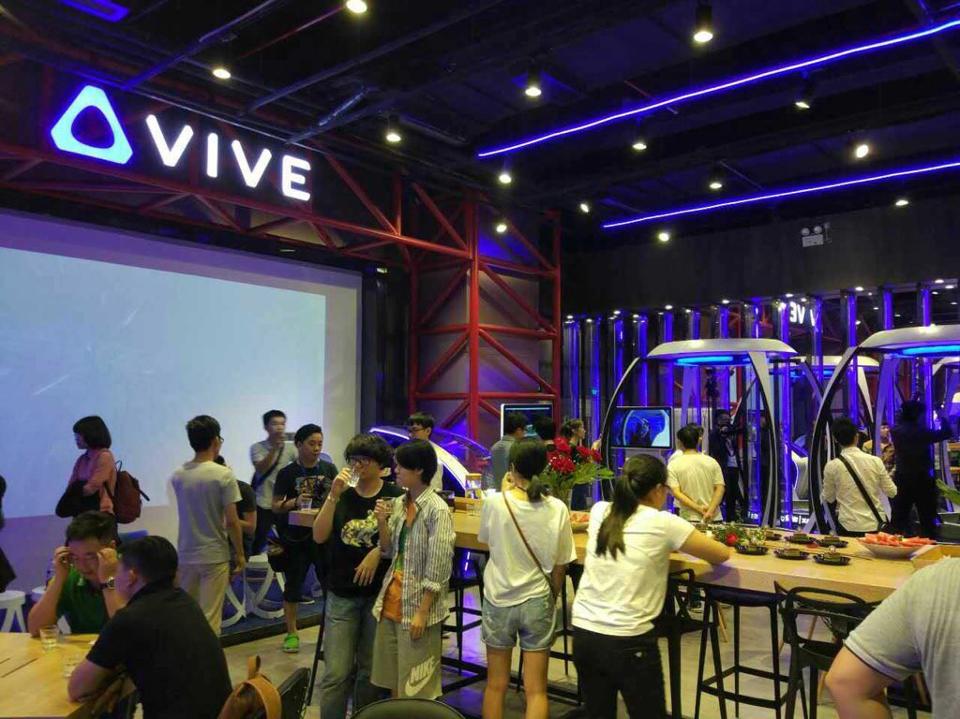
There are now more than 3,000 VR Internet cafés and experience zones in China that provide a high-end dedicated VR experience for as little as $8 USD for 30 minutes of gameplay. HTC has recently opened a new experience arcade store in Shenzhen and plans to open many more in the future (some accounts say 50 are planned, others say 1,000). Shunwang, the leading provider of Internet café management software, has released a VR-ready version of the software for VR Internet café owners. VR gaming content represents another opportunity for VR Internet café operators to diversify and grow their revenue streams.
My observation is that China already is actively investing in the promising mobile and high-end segments of VR for gaming, and beyond. Alibaba, Xiaomi, HTC, Chukong, Shanda, and Tencent are some of the leading Chinese tech companies to be embracing it in earnest. Next year is poised to be exciting for VR/AR in the Chinese (and global) digital games industry and I anticipate strong growth to continue during the next few years.
See the full story here: http://www.forbes.com/sites/lisachanson/2016/12/23/chinas-year-of-virtual-reality/#27682c6a7a99
The reality of VR/AR trial
 AKQA founding chairman Tom Bedecarre gets right to the point. “New technology follows a familiar adoption curve, and it’s easier to attract your first customers, innovators and early adopters. It’s very hard to cross the chasm and attract the early majority and beyond.”
The challenge is particularly acute for VR/AR, where even 360-degree videos can’t completely translate the surprise and delight that users get from the best VR/AR apps. For the full experience you need to have it on your face. To paraphrase, “It’s the stereoscopic vision, stupid.”
So how are VR/AR companies getting mass consumers to try it beyond early adopters?
Free is a good price point
Location, Location, Location - give people hands-on experiences
Catch them all - Pokemon exposure of low end experience
Snap Spectacles - generate buzz
There are five critical success factors for consumer AR when it gets here: hero device (i.e. an Apple quality device, whether made by Apple or someone else), cellular connectivity, all-day battery life, app ecosystem (similar in quality to early mobile) and telco cross-subsidization. Telco data revenues and cross-subsidization will be key, so how will the telcos help consumer trial?
Verizon Ventures Director Ed Ruth believes telcos will have a meaningful role to play when AR is ready for consumers.
Content is King - get it in front of the early adopter
See the full story here: https://techcrunch.com/2016/12/24/the-reality-of-vrar-trial/?ncid=tcdaily
Developer Spaces Dedicated to AR And VR Are Becoming More Popular Than Ever
 [Philip Lelyveld comment: The author completely deleted the Rothenberg Ventures space from the history books and choose not to mention Los Angeles, which is a major global hub for consumer, industrial, and location-based VR and AR development - especially in the holostic tech+content experience space and in all of the deals and strategic alliances with Asian groups and investors. Interesting choices.]
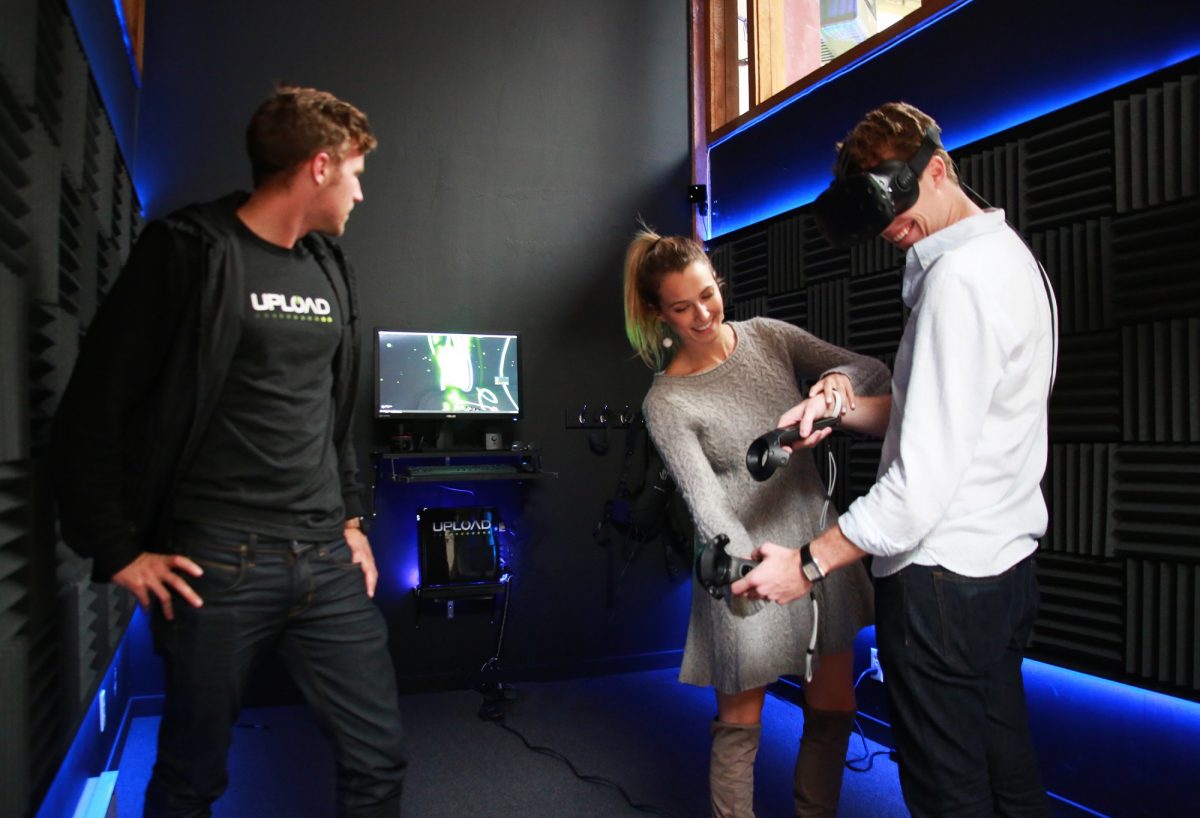
One of the first VR spaces was the Upload Collective in San Francisco, which launched at the beginning of the year as a hybrid coworking space and incubator. It has the unique resource of having Robert Scoble nearby as Upload’s entrepreneur in residence, and its incubator program includes mentors like VR pioneer Tony Parisi and Marco DeMiroz, General Partner at the Virtual Reality Fund.
The Realities Centre debuted in London earlier this month, a coworking space devoted to VR, AR, and MR makers with an incubator program that will launch in early 2017.
The World VR Forum in Geneva is set to officially open its VR lab next month, run in partnership with two production companies, Freestudios and Masé Studios, offering coaching, equipment, and postproduction facilities for selected projects.
“It’s time to foster and federate talent, investors, and the Swiss audiovisual industry in order to promote a Swiss VR excellence.” Sophie Sallin, Head of the World VR Forum’s VR Lab program, told me.
See the full story here: https://uploadvr.com/dev-spaces-vr-popular/
Snapchat buying Israeli augmented reality start-up Cimagine

A portrait of the Snapchat logo in Ventura, California December 21, 2013. REUTERS/Eric Thayer/File Photo
Cimagine developed True Marketless Augmented Reality – technology that allows users to virtually place furniture and appliances they wish to purchase in the space of their home, on their mobile devices, at the click of a button.
Cimagine will become Snapchat's research and development center in Israel and is expected to rapidly expand its workforce from its current 20 employees, Calcalist said.
The company's highly-skilled team is probably the main reason for the acquisition, rather than its technology, Calcalist said.
See the full story here: http://www.reuters.com/article/us-tech-imagine-snapchat-idUSKBN14E06X
Brain powered VR and AR (U Michigan)
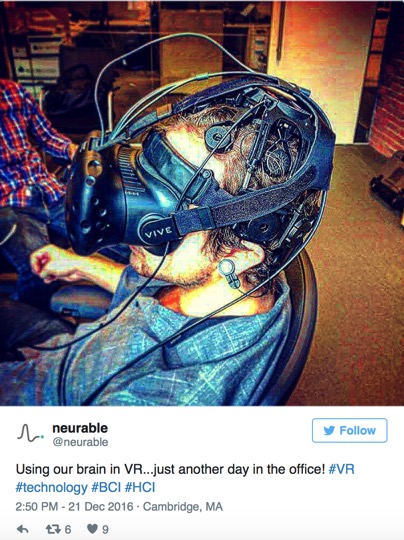 Neurable, a start-up company founded by University of Michigan graduate students... successfully developed the first non-invasive Brain-Computer Interface (BCI), which allowed untrained humans to control technologies such as electronic wheelchairs, robots and even cars.
"Neurable's brain-computer interface uses electroencephalography to record brain activity, analyze data and provide users with full three-dimensional control in real time [...]
Neurable has been gaining attention not only for its ideas but its business plan, as well. After all, the team would not have wowed judges and won a total of $330,000 at the Rice Business Plan Competition (RBPC) in April if its plan is not even possible.