Gene Munster’s last Apple note predicts AR wearables will replace the iPhone
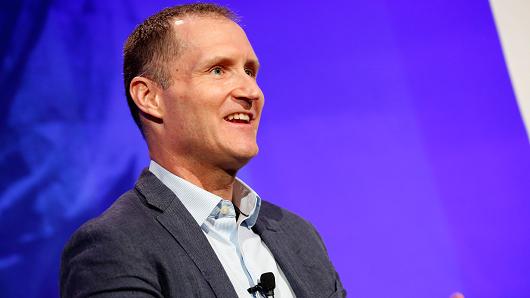 After years of being one of the most widely read and quoted Appleanalysts on Wall Street, Piper Jaffray's Gene Munster on Friday released his final research note on the company.
Munster, who is leaving Piper Jaffray for a new career in venture capitalat year's end, has written 874 research notes on Apple, most of them bullish. In the final note, Munster offers his thoughts on the next years for Apple and a cool story of what got him excited about the company in the first place.
As for Apple's future, Munster sees the company looking to increasingly become a services company and points to augmented reality as one of the key opportunities for Apple to innovate.
"The smartphone remains the world's window to augmented reality today," Munster wrote in the note. "While this will change driven by augmented and mixed reality hardware in the future, we would expect the next five years of AR innovation will happen mainly through the device in our pockets."
Adding various sensors to phones and creating external glasses are among the short-term opportunities, he said. But over the longer term (more than five years out), Munster said he believes "Apple could develop some type of AR or MR wearable that ultimately replaces the smartphone."
"We believe the efforts in automotive tie back to services in that automotive for Apple may mean partnering with experienced automakers to deliver great services rather than building the hardware itself, cars in this case," Munster wrote. "While an autonomous vehicle solution from Apple, either a car or the software, is likely multiple years away, we view auto as the next platform likely for the company to try to own."
For those who want to follow Munster's next chapter, his new company Loup Ventures has a placeholder site here.
See the full story here: http://www.cnbc.com/2016/12/16/gene-munsters-last-apple-note-predicts-ar-wearables-will-replace-the-iphone.html
Samsung Announces They’re Entering the AR Field
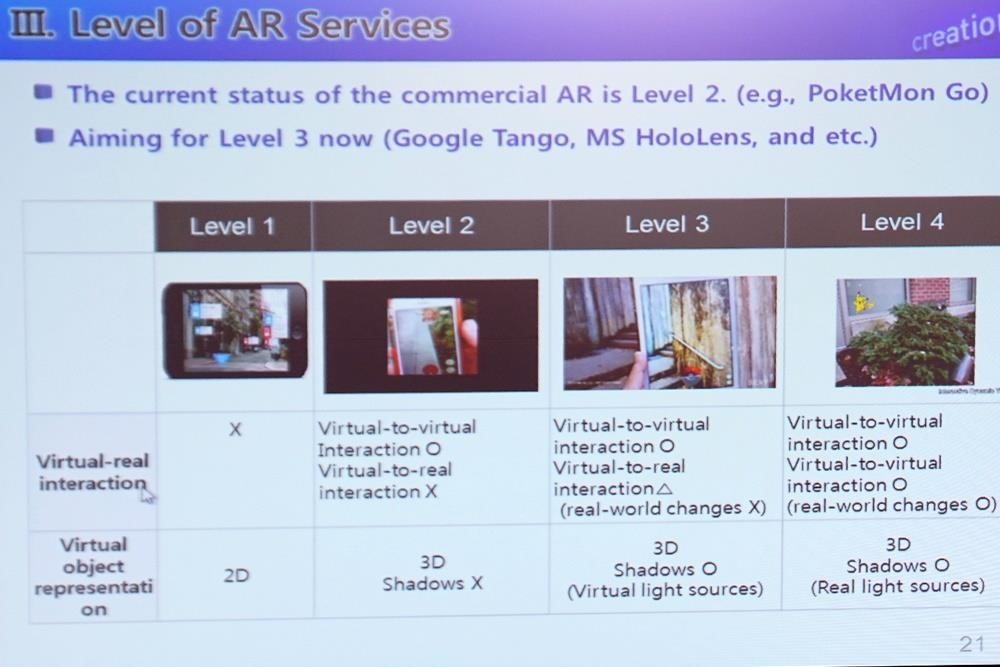 This week, Dr. Sung-Hoon Hong, Vice President of Samsung Electronics, announced at the Virtual Reality Summit in San Diego that not only does Samsung have a new virtual reality headset coming, but that Samsung intends to enter the field of augmented reality, too. In fact, Hong talked very little about virtual reality and instead spoke at length about Samsung's move into augmented reality.
AR has much better business development for Samsung. That's what we are aiming for.
"My team is developing a light field engine. Samsung's hologram technology is really, really realistic. It looks really touchable." This does seem to indicate a leaning toward building something new.
See the full story here: http://augmented.reality.news/news/samsung-announces-theyre-entering-ar-field-0175536/
AR glasses help dentists teach, allow time for more patients
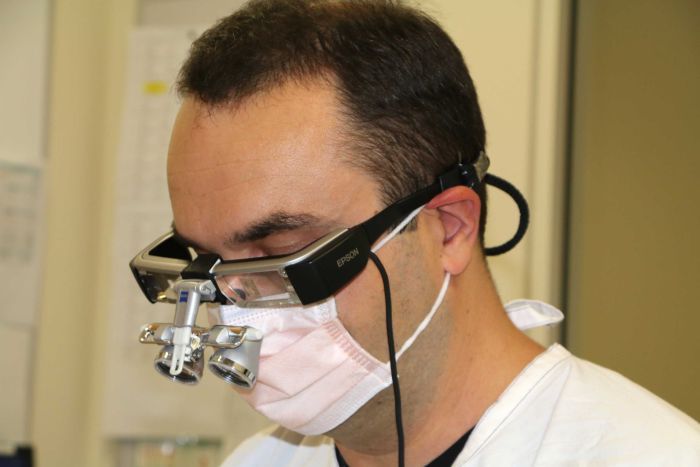 Augmented reality glasses that allow dentists to speed up procedures and help students learn faster are being trialled at the University of Western Australia.
The glasses work by projecting a semi-transparent image over the top of the actual surface the user can see, placing virtual objects into the real surroundings.
The new technology will allow the dentist to stay within the operating area, rather than refer to a computer, and it is expected the advancement will help the practitioner see an extra patient per day.
It will begin comparative clinical testing at the end of January, with the aim of being integrated into the dentistry school by mid-year.
Mr Pham hopes to have the product commercially available by the end of 2017.
See the full story here: http://www.abc.net.au/news/2016-12-14/dentists-turn-to-augmented-reality-headsets/8121550
Virtual Reality Developer Survios Raises $50 Million
 Nate Burba, Survios’ 31-year-old co-founder and CEO, said his company will use the additional capital to grow its 60-employee staff, develop more gaming titles and expand internationally.
The Culver City-based firm launched the hit virtual reality game Raw Data in July, which grossed more than $1 million in sales within about a month. The $40 first-person shooter game also became the first virtual-reality title to hit the top of the sales charts on Steam, an online gaming platform.
See the full story here: http://labusinessjournal.com/news/2016/dec/13/virtual-reality-developer-survios-raises-50-millio/
Wevr Launches First Subscription Service for Cinematic Virtual Reality
 Virtual reality startup Wevr thinks it’s time to set a price for premium virtual reality content. The company announced the launch of a new premium subscription service for cinematic virtual reality Wednesday — a first for an industry that has thus far shied away from asking its small but growing audience to pay up for most non-gaming titles.
Wevr is launching its subscription service as a premium tier of its Transport app, which is already available for HTC Vive and Samsung Gear VR headsets. Vive users will have to pay $20 a year to access premium content like Deepak Chopra’s “Finding Your True Self” and Tyler Hurd’s “Old Friend,” whereas Gear VR users are charged $8 a year for content that also works on mobile headsets.
“A lot of our content is not games,” he said, which is why it didn’t make much sense to charge for individual titles the same way as VR gaming companies do on platforms like Steam. Users would also approach these stores with certain expectations, and cinematic VR content tended to get lost between gaming titles. “It’s like vegetarian food at a meat store,” he quipped.
See the full story here: http://variety.com/2016/digital/news/wevr-transport-vr-subscription-service-1201941212/
Felix and Paul to Make Virtual Reality Experiences Based on 20th Century Fox Movies
 Award-winning virtual realty studio Felix & Paul has teamed up with the Fox Innovation Lab to develop and produce virtual reality experiences based on movies and characters owned by 20th Century Fox. First announcements about upcoming projects are expected early next year.
Felix & Paul is best known for its cooperation with Cirque du Soleil, and has also made VR experiences about subjects including Bill Clinton, Lebron James and President Obama’s celebration of the National Parks Centennial.
See the full story here: http://variety.com/2016/digital/news/felix-paul-fox-vr-1201942052/
How Game Mechanics Change In Virtual Reality
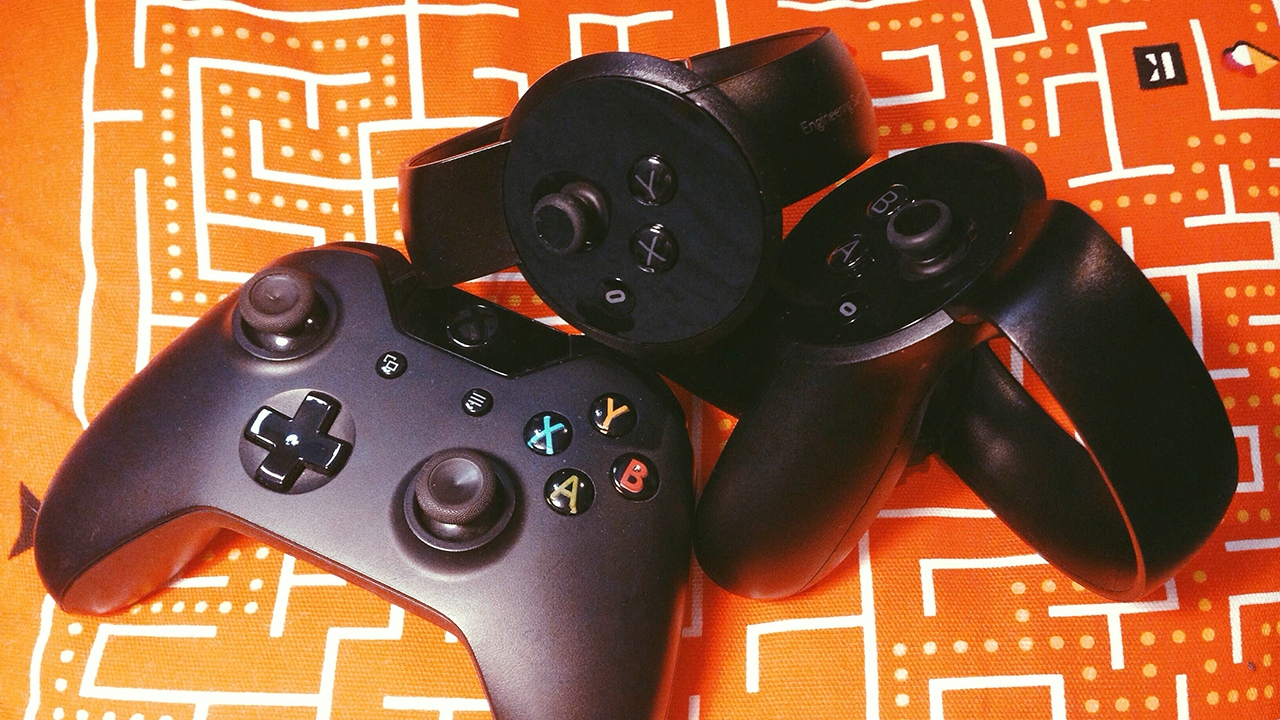 Here are four key examples:
- movement system limitations
- ways to avoid movement system limitations
- body ergonomics and tracking system
- motion-controller possibilities
There are a number of ways to avoid the motion sickness effect while completing game scenarios and still to move around game actively. A frequent response is movement via teleportation. Some players, however, find teleportation breaks the feeling of immersion.
However, some game developers decide to challenge the motion sickness issue by creating completely new ground for game mechanics. Take the project Budget Cuts for example. The whole game is based on the teleportation feature. It is not perceived as a least-evil solution but rather plays an integral part of the game. Thus, the developers implemented teleportation into game scenarios in a way that fits inside the world.
Isn’t it a cool move: to turn avoiding a limitation into a main feature of the gameplay?
...Players can also be constrained in movement by having a virtual platform to stand on. While the player can’t move beyond the platform, the platforms themselves can move in space. That’s how Hover Junkers does it. These are all different ways to reduce the possibility of motion sickness by making it one of the central features of the game.
Tracking systems introduce sometimes quite interesting game practices, for example, doing actual squats and dodging bullets. When doing physical puzzles a user is expected to place their controllers in different positions. New experiences can be created with fairly basic actions as well. For example, picking apples and “eating” them by bringing your hand to your mouth to regenerate health, or moving an arm to a shoulder to grab a sword.
In the end, locations and environments in VR become more impressive.
See the full story here: https://uploadvr.com/virtual-reality-changes-game-mechanics/