Virtual Reality Arrives on WordPress
 Native virtual reality support is coming to WordPress, the Web publishing platform that powers everything from small-time blogs to major sites like CNN and Best Buy.
WordPress is starting small with VR, initially making 360-degree photos available to its users, along with a beta experiment for 360-degree videos. The WordPress VR viewer is powered by WebVR, itself an experimental bit of code designed to offer in-browser access to content intended for VR headsets like the Oculus Rift, HTC Vive, Samsung Gear VR$95.25 at Amazon, or Google Cardboard.
If you're browsing on a mobile device, though, you can tap on a button in the lower-right corner of the photo to enter VR mode. Slip your phone into a Google Cardboard viewer, and you can look around the 360-degree sphere just by moving your head.
While plenty of closed-source websites have implemented the WebVR API or something similar, WordPress support is notable because it will let bloggers experiment with the format by dropping in a few lines of code, rather than building a VR viewer from scratch.
See the full story here: http://www.pcmag.com/news/350360/virtual-reality-arrives-on-wordpress
Samsung says a new Gear VR is coming soon, and it’s working on its own HoloLens
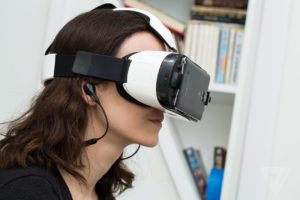 Wearable Zone has a long writeup of Hong’s appearance at this week’s Virtual Reality Summit in California, from a talk titled “Future of Artificial Intelligence, Augmented Reality and Virtual Reality and Samsung’s New Challenge.” In the talk, Hong said that Samsung is working on a “light field engine” that can produce “really, really realistic” holograms. “It looks really touchable,” he said. Augmented reality has “much better business development” possibilities than virtual reality, said Hong, echoing a similar statement by Apple CEO Tim Cook earlier this year. The technology should apparently appear at the 2017 Mobile World Congress in February.
Samsung has previously patented a holographic TV, but Hong spoke specifically about wearable computing, and Samsung is considering working with other companies in order to implement it.
See the full story here: http://www.theverge.com/2016/12/16/13980394/samsung-gear-vr-2-augmented-reality-headset
Yu Yuan’s Mission is to Improve Lives Through Virtual Reality
 IEEE Senior Member Yu Yuan, who chairs the IEEE Digital Senses Initiative, believes so much in the benefits of virtual reality, augmented reality, and human augmentation technologies to enhance and extend people’s sensory capabilities that he’s devoting his life to helping advance them. In April he launched Senses Global Corp. in Shenzhen, China, to focus on these three areas.
What are some of the challenges you’re facing?
Fundamental challenges for AR include not only making virtual objects look real but also allowing smooth interactions between virtual objects and real things. For example, a virtual object thrown against a real wall should cover the wall appropriately as it reaches the wall and bounces back.
Developers are solving this problem with SLAM [simultaneous localization and mapping], a series of complex computations and algorithms that employ sensor data to continuously scan and learn about the environment. At the same time, a person should also be able to augment the environment with useful digital content—which depends on the person’s location in the space.
Eye-tracking technologies are also being applied to understand in which direction or at which object a person is looking. This could allow for fine-tuning in both the pictures being rendered on the head-mounted display and the interactions between the objects and the person.
The grand challenge for VR is to mimic human senses. Developers are doing fairly well with sight and hearing, but touch, smell, and taste are far from perfect. A perfect immersive virtual world won’t be created until we learn how to use non-invasive or even invasive brain-machine interface technologies to mimic all the senses perfectly.
What will your startup focus on?
We are building our intellectual property portfolio in the areas of VR, AR, and human augmentation technologies. Senses Global will also serve as an integrator and broker. We help other tech companies, especially those at the startup stage, to find partners, clients, and investors.
My company also joined the IEEE-SA as an advanced corporate member—as a way to participate in standards development and build relationships with other companies. I understand the importance of collaborating with others.
See the full story here: http://theinstitute.ieee.org/members/profiles/yu-yuans-mission-is-to-improve-lives-through-virtual-reality
Strapping on the Sacred: When Religion Enters Virtual Reality
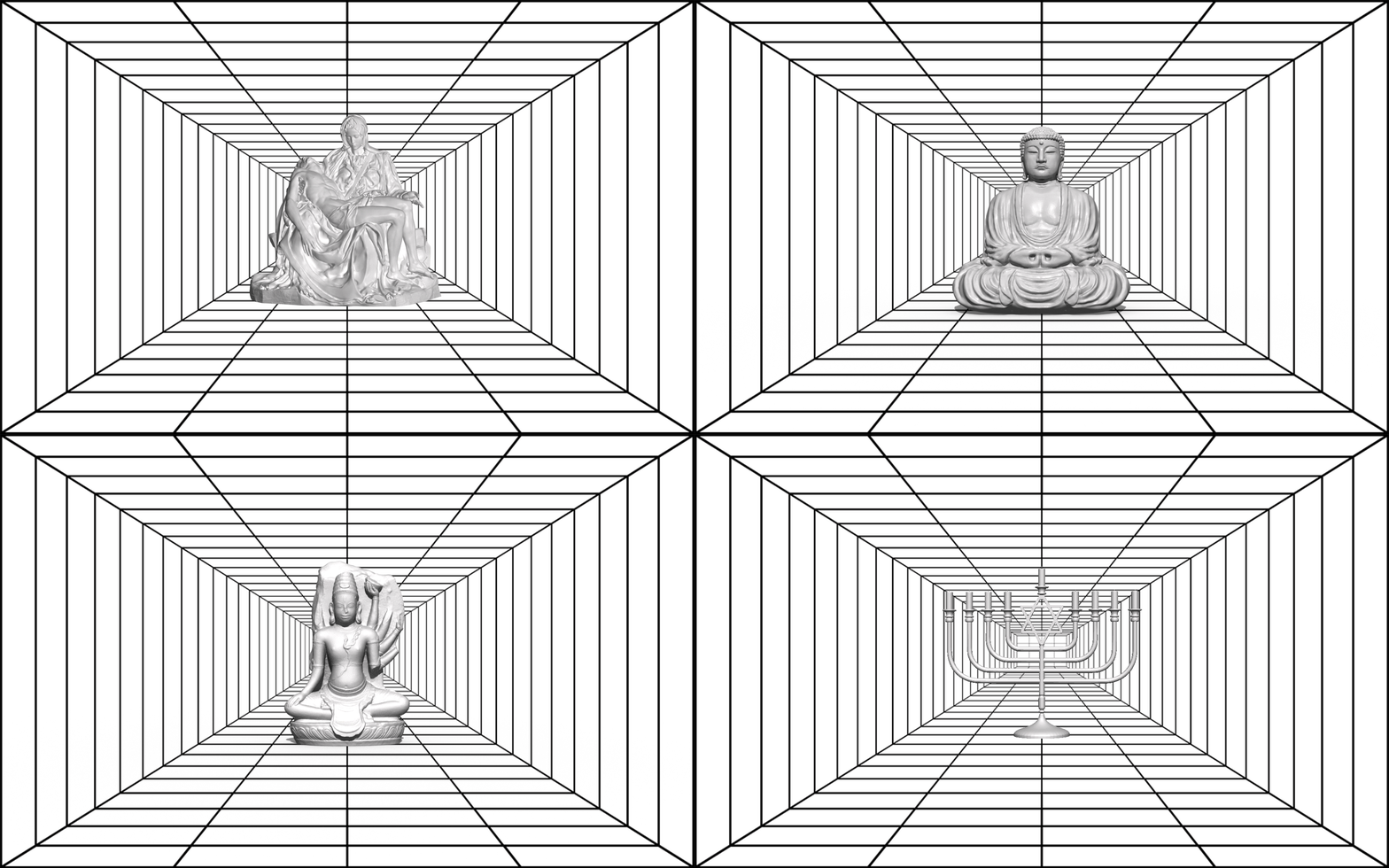 For Benek, the primary ecclesiastical service VR will enable is remote church attendance. He imagines that with the addition of augmented reality, or AR, a community could gather regardless of physical location. Although the pews may be mainly empty, with AR contact lenses, they would appear filled with all those who could not make it in person.
But the possibilities of virtual religiosity extend beyond increasing church attendance. It is easy to imagine entirely virtual chapels; spaces that defy physics and approach the divine. For centuries, religions have employed architecture to induce spiritual experiences or represent the glory of a deity; imagine the possibilities of a space untethered by the strictures of reality. Of course, different religions deal with representation and transubstantiation differently, so VR spaces would differ as much as physical sacred spaces. You can take a VR tour of the Masjid Al-Haram mosque, but don't expect recreations of the Prophet's life. Likewise, the Second Temple is being recreated in virtual reality, but Judaism's strong anticonist tradition would prohibit any depictions of YHWH.
One could argue that rituals like the Stations of the Cross already constitute a virtual reality. As one passes by a series of stained glass windows, they imagine movements layered on the glazed surface. Inherited stories take on life through their visual representation. But VR blows that open. Instead of imagining the Passions of the Christ, one could theoretically experience them—perhaps even from the vantage point Jesus himself (although that might constitute blasphemy).
See the full story here: http://archinect.com/features/article/149982444/strapping-on-the-sacred-when-religion-enters-virtual-reality
An Abandoned Landfill in West Covina Could Become a Virtual Reality Park
 “Our master plan will include a hotel and retail space as well as a performing arts center, a community art center and a K9 training facility.”
“There’s not going to be Disneyland-type rides,” says Singpoli spokesman Frank Girardot. “It’s more virtual reality. Amusement park is a bit overstated.”
See the full story here: http://www.lamag.com/askchris/abandoned-landfill-west-covina-become-virtual-reality-park/
Augmented Reality Supermarket Opens In Milan
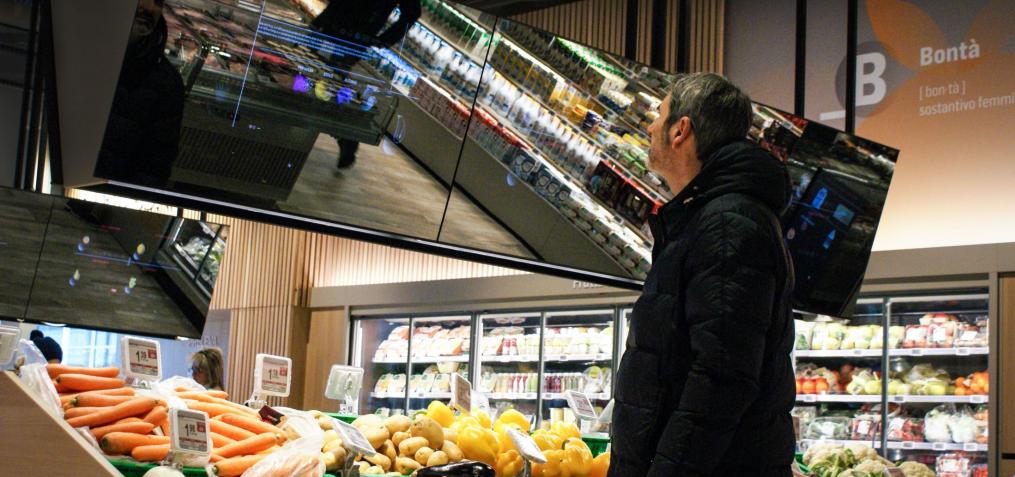 Carlo Ratti, designer, MIT professor, and author of the book, The City of Tomorrow: Sensors, Networks, Hackers, and the Future of Urban Life, is brimming with ideas about how data-driven tech can change our world. One of them, the concept of a smart, interactive supermarket, first presented at the World Expo in 2015, has already made it from prototype to reality.
Opened this week in Milan, Italy, “The Supermarket of the Future” debuts in the latest store of Coop Italia, the country’s largest grocery chain. The 10,800-square-foot shop holds some 6,000 products, which are all organized on interactive tables and shelves. When a customer moves to grab a specific product, relevant information such as nutritional value, presence of allergens, and waste disposal instructions are displayed on sleek screens suspended above as “augmented labels.”
See the full story here: http://www.vrroom.buzz/vr-news/business/augmented-reality-supermarket-opens-milan