Here’s how the learning happens: First, kids physically conduct experiments, such as burning magnesium with bright flames to ignite a chemical reaction. Next, they slip on the VR goggles, which shrinks the viewer’s perspective to the size of an atom—imagine yourself as Ant-Man, Phillipov says—to see how molecules react around you. Then, a video accompaniment explains how the reaction worked.
16Oct/16Off
Nottingham’s caves get virtual reality treatment
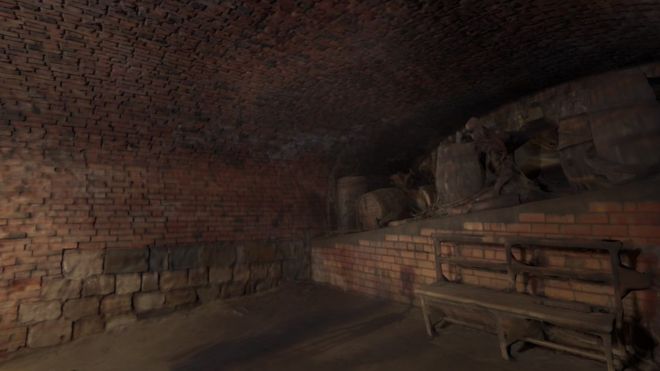 The tour will take in Mortimer's Hole under Nottingham Castle and King David's Dungeon - caves some people would not be able to access.
The city has more than 500 man-made sandstone caves which have been used for dwellings and jail cells.
He said the new virtual reality tour would allow visitors who were unable to descend the steep steps into the caves to experience them.
A series of caves has been found in the past six years due to funded projects such the Nottingham Caves Survey, which mapped and laser-scanned many of them.
See the full story here:
16Oct/16Off
How Lenovo Phab 2 Pro (Project Tango Phone) Will be Different From Other Smartphones?
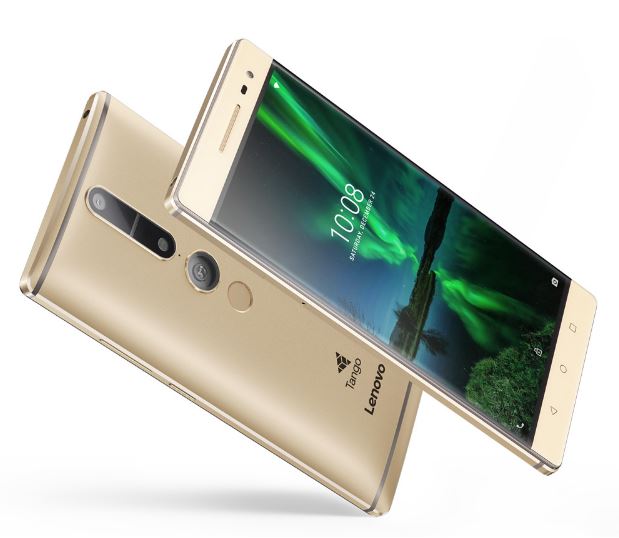 Phab 2 Pro is the world’s first smartphone to include Tango – a new technology from Google that enables augmented reality (AR) gaming and utilities. Tango looks like complete magic – when you look through the Phab 2 Pro you’ll see objects and information overlaid onto the real world – pretty much like Pokemon being embedded onto the real world!
There are a number of wonderful and useful things that you can do with the power of Tango. You can measure objects with just your phone. Or even visualize furniture – new table or sofa – to see how it fits into your home ambiance. Tango also enables you to play with your “virtual” pet. The new augmented reality technology from Google literally turns the real world into a futuristic virtual fantasy world by combining augmented reality and real world information.
Raise
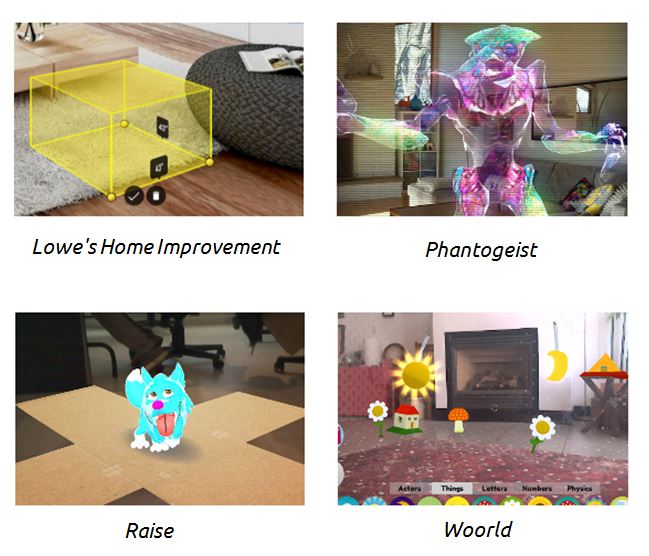 This game by Iguanabee lets you pick a pet from 3D library and take him wherever you go. If you don’t own a puppy and always wished you had one, Tango can help you train your virtual puppy. You can even teach him where his food is. Instagram freaks can share photos of the puppy as he grows into a dog. Fun, isn’t it?
Lenovo Phab 2 Pro Features and Specs
- Qualcomm Snapdragon 652 Processor
- 4GB RAM, 64GB storage space
- 6.4-inch 1440×2560 resolution QHD display
- 16MP rear camera, 8MP front camera with 0.3 seconds super-fast focus
- Dolby Atmos 5.1 Audio Capture, 3 mics with 360 voice, Noise-cancelling
- 8.9mm aluminium unibody
- Fingerprint scanner (on the rear)
- 2.5D Curved Glass
- 4050mAh battery with 2.4x turbo charging
Priced at $499, the phone is expected to be released anytime this month.
See the full story here: https://www.mobipicker.com/lenovo-phab-2-pro-project-tango-phone-will-different-smartphones/
16Oct/16Off
Boise Man Creating A Virtual Reality Fitness Program
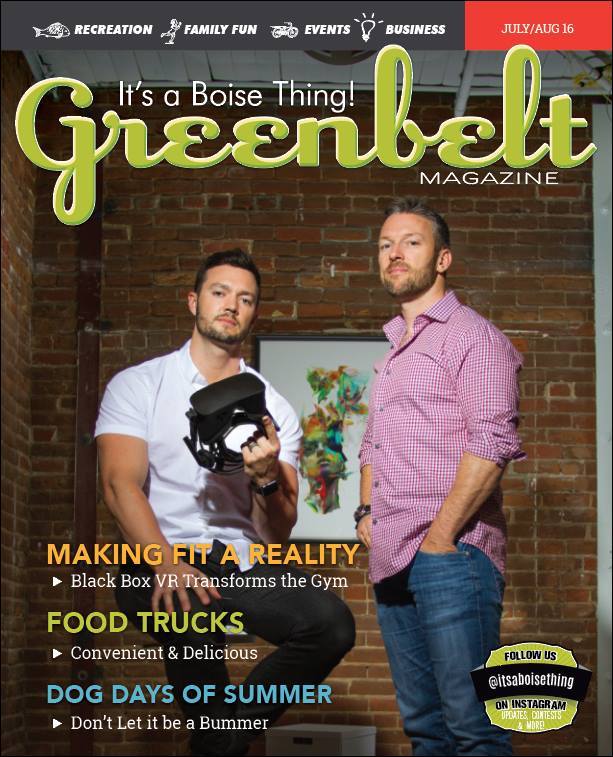 Boise native,Ryan DeLuca, who started the super successful Bodybuilding.com, is in the final stages of rolling out a virtual reality platform that just might change the way you look at working out.
He started a new tech company called Black Box that has an idea to create a full-body fitness program you use with a virtual reality headset. A game that will allow you to play with others online or alone right from your home or office.
They decided the best way to test it to make sure it’s ready is to quit the gym and only going to work out inside virtual reality to make sure it gives the results they want and expect.
They aren’t looking to put actual gyms out of business. But hope that they will get on board with the idea too and that people can enjoy doing both.
See the full story here: http://mix106radio.com/boise-man-creating-a-virtual-reality-fitness-program/
15Oct/16Off
Virtual Reality Is Just An Over-Priced Gimmick, Nothing More
 When you take all of this into account, it’s hard to justify a VR purchase. The combination of expense and the lack of compelling content, paired with the uncomfortable nature of the headsets themselves and various side effects, all makes VR a promise without a delivery.
Sure, VR can be fun. It can be amusing. It can even, at times, be awe-inspiring. Those feelings just don’t last, and what we’re left with is a headache and an empty bank account.
This is why I’ve argued that the future of VR is mobile, and that Google’s Daydream platform is much more likely to spark any kind of mainstream virtual reality adoption than high-end goggles, or even PlayStation VR.
See the full story here: http://www.forbes.com/sites/erikkain/2016/10/15/virtual-reality-is-just-an-over-priced-gimmick/#50b359482e0a
15Oct/16Off
Facebook’s Oculus Just Bought This Startup To Improve Virtual Reality
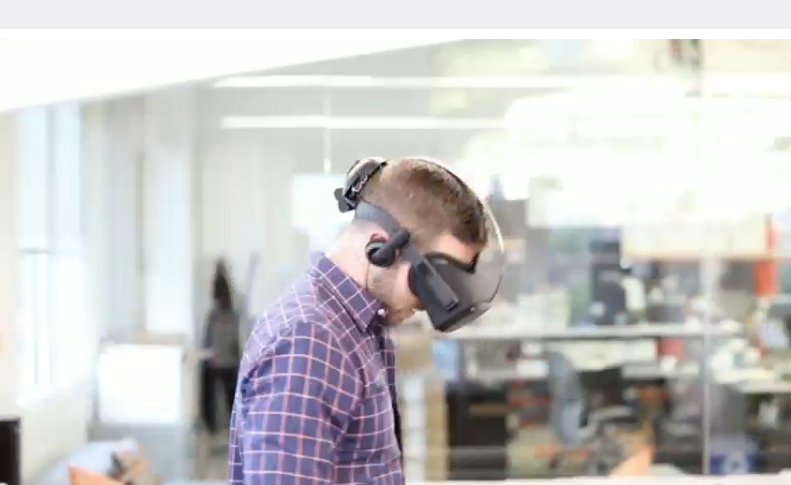
Startup InfiniLED specializes in a low-power display technology.
InfiniLED specializes in a technology called Inorganic LED Display, a variant of traditional LED technology that displays light when it absorbs an electrical current. An MIT Technology Review articledescribes the display technology as being “bright and longlasting” but costly to manufacture, thus it’s used in only a few products like the electronic billboard displays in sports stadiums.
The startup was originally spun out from the Irish technology research lab Tyndall National Institute in 2011.
See the full story here: http://fortune.com/2016/10/14/facebook-oculus-virtual-reality-infiniled/
15Oct/16Off
Google’s Daydream Keyboard app will make typing easy in virtual reality
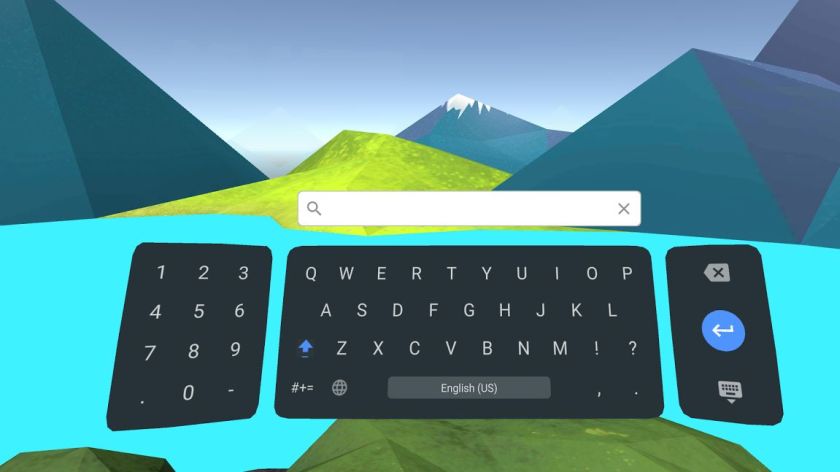 “an on-screen virtual reality keyboard for text entry in Daydream applications.” It also mentions that uninstalling the keyboard app may cause other Daydream-based apps not to work anymore.
See the full story here: http://vrsource.com/googles-daydream-keyboard-app-4943/
15Oct/16Off
Virtual reality experience attracts huge numbers
 Created by UK-based, transmedia artist Simon Wilkinson, The Cube is in Hastings as part of the Harcourts Hawke’s Bay Arts Festival. Audience members enter a shipping container one at a time where they are fitted with the latest in virtual reality technology and transported to the centre of an unsolved mass disappearance from the 1950s.
Wilkinson says Hastings is by far the smallest place The Cube has been to, yet our audience numbers have far exceeded those in large cities around the world.
The cost of The Cube has been covered by the Hastings City Vibrancy Fund in keeping with the fund’s key goal of raising the vibrancy of the central city.
“People were queuing to see The Cube and those coming out were absolutely raving about it”, she says. “The place really is buzzing; it’s fantastic to see.”
See the full story here: http://www.hbaf.co.nz/news/virtual-reality-experience-attracts-huge-numbers/
15Oct/16Off
Dosing distraction in the world of augmented-reality (2 car accidents related to AR)
 Two recent case reports are among the first in the medical literature of augmented-reality application-related injuries requiring acute intervention in a trauma center. The first incident involved four passengers in a single vehicle rollover accident, in which the driver, a 19-year-old male was “hunting Pokémon” while driving and found one across the road. In an attempt to “flick his Pokémon ball to capture the Pokémon”, he lost control of his vehicle, rolling it, and ejecting the three other passengers from the bed of the pickup. Luckily a CT scan of the head identified only a small focus of subarachnoid hemorrhage with no evidence of increased intracranial pressure and a Glasgow coma scale of 15, as well as a small laceration of the liver involving the caudate lobe. The second incident was caused indirectly by a Pokémon Go user, as a driver swerved off the road to avoid the distracted pedestrian player. The driver was a 58-year-old woman who presented to the emergency department with multiple pelvic fractures that were treated non-operatively. Two other potentially dangerous scenarios may arise in which distracted users either directly cause injury to non-users (i.e. an accident involving a distracted driver and a pedestrian), or where a non-user may inadvertently injure a distracted user (i.e. an alert driver unable to stop in time when a distracted user rushes out onto a busy street).
Five years ago, only one in three Americans owned a smartphone, and that number has since doubled. Now 46% of all smartphone users say their device is something they “cannot live without.” These applications and mobile devices improve our lives, yet the potential to be consumed by their never-ending distractions might outweigh their benefits, at least until we maintain a digital equilibrium between work and play. Further research is yet to be done on what measures can be taken to ensure the safety of mobile augmented reality applications that promote ambulatory activity and to prevent distraction-related morbidities.
See the full story here: http://blog.oup.com/2016/10/distraction-safety-augmented-reality/
15Oct/16Off
Berkeley-based startup More Equal Studios demos new virtual reality game
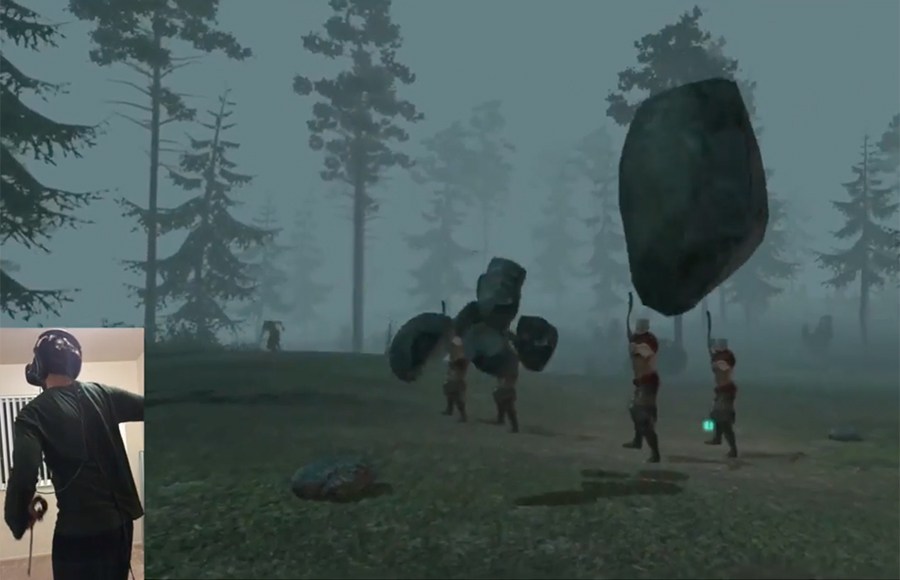 More Equal Studios, a Berkeley-based startup, showcased a demo of an elemental manipulation virtual reality, or VR, game to more than 50 community members at the Virtual Experience Convention, or VXPC, held on campus Oct. 8.
The game, Project Aether, was inspired by the cartoon show “Avatar: The Last Airbender” and allows players to use the company’s new gesture recognition system to control earth, water, fire and wind in the simulation. The six-member team at More Equal Studios, composed entirely of campus alumni, has been working on the project for approximately three months and hopes to make the game available via Steam Early Access by March 2017.
“Our gesture recognition system is completely new to the industry,” said Zain Nayer, co-founder of More Equal Studios. “It is driven by a complex machine learning algorithm, allowing for more immersive controls than simple button clicks.”
See the full story here: http://www.dailycal.org/2016/10/13/berkeley-based-startup-more-equal-studios-demos-new-virtual-reality-game/
15Oct/16Off
MEL Science Raises $2.5 Million to Make Lab Experiments a (Virtual) Reality
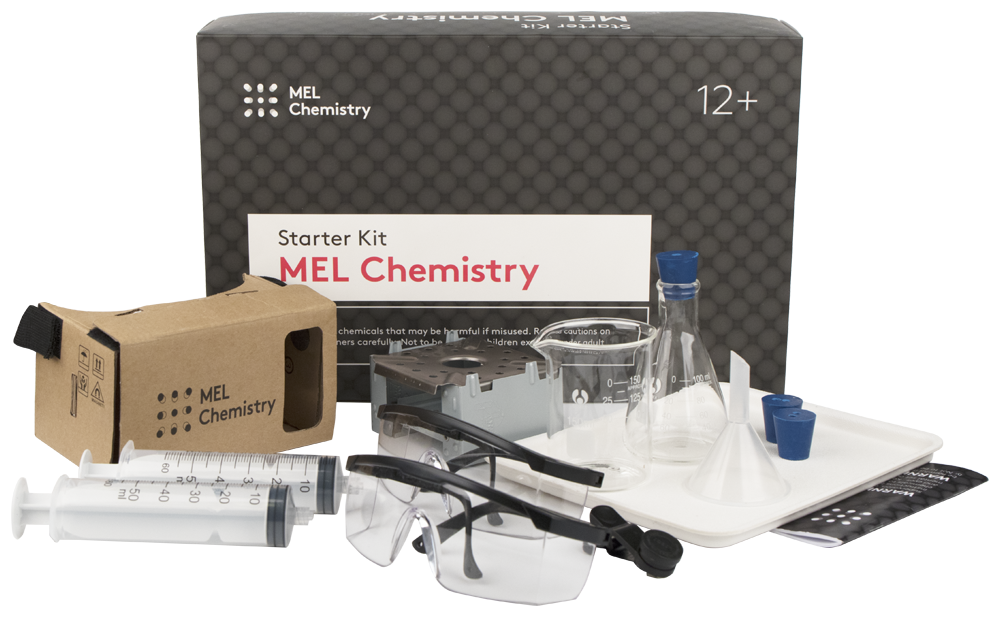 As a parent, Philippov conducted science experiments with his kids. He noticed the awe and wonder in their eye, and found videos online to explain the chemical reactions. “[Humans] are good at understanding logic, principles and how everything is built when doing something [through] hands-on experiments. But that is not enough,” he explains. “We need to combine experiments with a look inside to see the reaction, zooming in for an explanation to prove what is going on.”
The funding from Sistema will help Phillippov grow his staff of 12, which includes a mix of scientists and developers. The company is currently targeting parents and home-schooled students but plans to also expand its market to schools. The company will also expand its content to cover physics and biology and create more VR experiences.
See the full story here: https://www.edsurge.com/news/2016-10-14-mel-science-raises-2-5-million-to-make-lab-experiments-a-virtual-reality