IMAX To Bring Virtual Reality To A Movie Theater In the United Kingdom

Mandatory Credit: Photo by Paul Brown/REX/Shutterstock (1200422j)
The Printworks in Manchester, England, Britain
Manchester, Britain - Jun 2010
Visitors would be able to strap on virtual reality headsets and play VR video games or watch short films of roughly five to 15 minutes each. Stockholm-based entertainment technology company Starbreeze and hardware manufacturer Acer will provide the VR headsets.
The VR center will also include pods where attendees can play and watch VR content while moving around.
IMAX did not say what type of VR video games, film, or other content will be available for attendees, only that it is “in advanced stages with several content developers, including Hollywood studios and gaming publishers, to produce and distribute high-quality VR experiences to its centers.”
In May, IMAX said it would open a similar VR entertainment hub in Los Angeles, but it did not say when that center would be complete.
He said that the financing model for Hollywood content could be similar to that for theatrical movies, with the studios taking 50% of the proceeds for creating the content, and the exhibitor and operator taking the rest.
See the full story here: http://fortune.com/2016/10/11/imax-virtual-reality-united-kingdom/
This Cute Toy Uses Augmented Reality To Help Kids Understand Illness
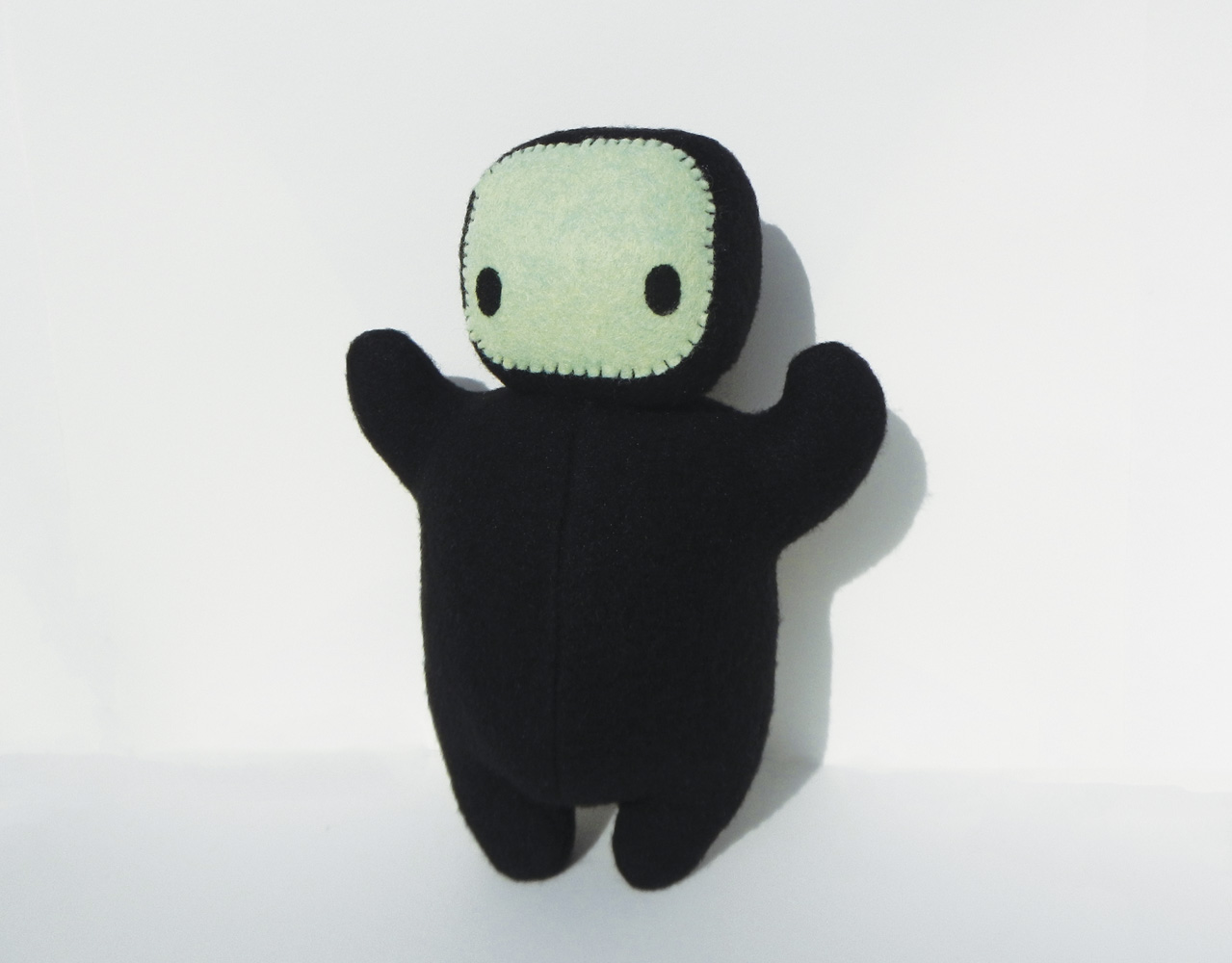
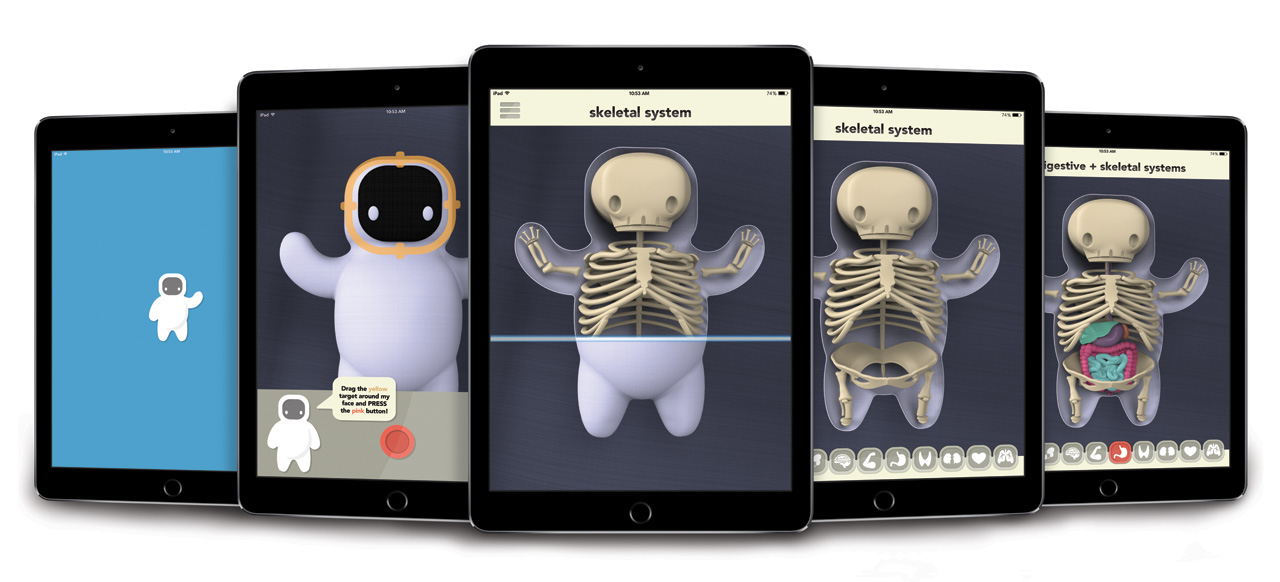 Created by the UX and industrial designer Lily Karatzas, Gomo is an adorable stuffed toy whose face acts as a point of reference for a corresponding augmented reality app, which can project different bodily systems onto the toy. It's meant so that medical staff can explain how illnesses and treatments work on the body to preschool-age children. The Gomo prototype is metal-free, which means it can also act as a cuddly partner when young patients have to enter CAT scan or MRI machines on their own.
While Karatzas wasn't able to test Gomo with sick children because of privacy restrictions, she hopes that it may someday truly make a difference for pediatric patients. She hopes to continue developing her prototype in the future.
Gomo recently won a Red Dot award for Design Concept.
See the full story here: https://www.fastcodesign.com/3064514/this-cute-toy-uses-augmented-reality-to-help-kids-understand-illness
BMW just unveiled a stunning motorcycle concept that comes with augmented reality glasses
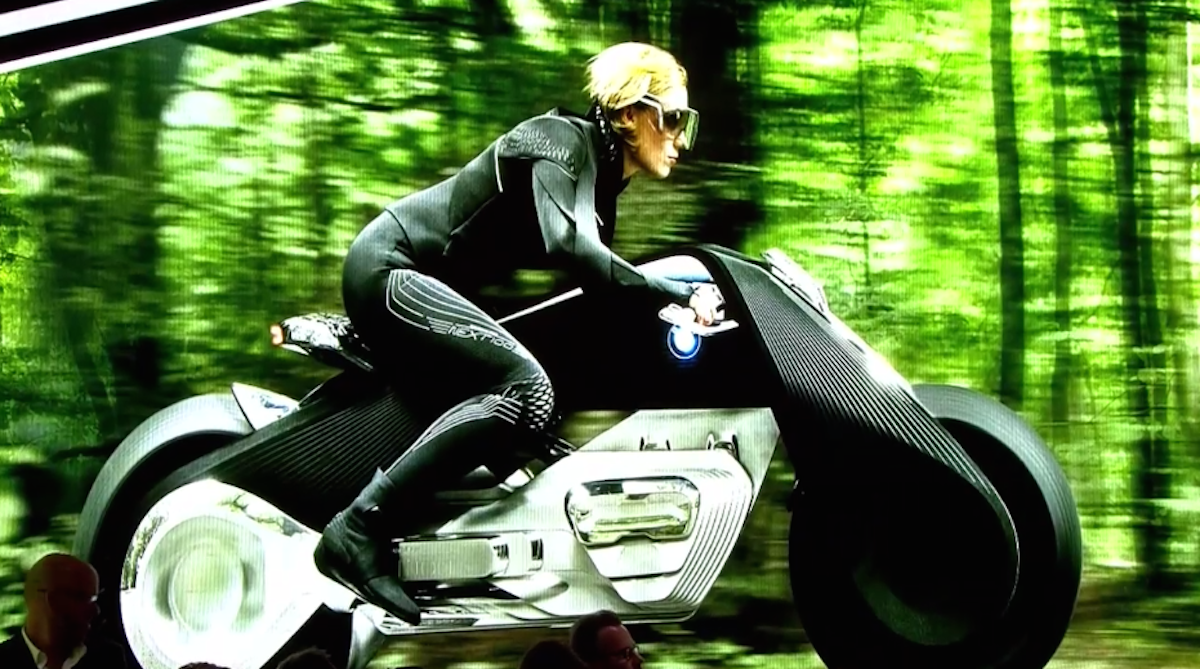 BMW just unveiled a wildly impressive motorcycle concept with a suite of high-tech features.
Called the BMW Motorrad, the motorcycle is part of the German automaker's Vision Next 100 line. The line is meant to explore what the next century of driving could look like as part of BMW's 100th anniversary celebration.
So far, BMW has released three different self-driving concept cars as part of the line, but the Motorrad marks the first motorcycle.
But perhaps the coolest part of BMW's motorcycle vision is its augmented reality glasses that display information about the motorcycle directly in front of the rider's point of view.
The rider can control what information they see with their gaze. At level gaze, the display shows as little information as possible.
... But if the rider needs specific information, she can adjust her gaze to get more information.
Facial Recognition Software Advances Trigger Worries
 ...festival organizers used facial-identification technology to pick out revelers and send them their pictures directly to their phone. All they needed to do was opt in, by sending a selfie.
The technology is the product of NTechLab, a Moscow-based firm whose algorithm to identify facial features is getting attention in the broader information technology world. NTechLab co-founders Artem Kukharenko and Alexander Kabakov believe the possible uses of their technology are almost endless, and mostly positive: from allowing police to search for criminals in real time, to helping amusement parks identify and sell photos to their guests.
But the technology comes with a darker side. One of the company’s products touched off a privacy scandal in Russia, and the founders say they are in negotiations to sell its products to state-affiliated security firms from China and Turkey, among other countries, many of whom have spotty records of protecting civil liberties.
The 26-year-old Mr. Kukharenko and 29-year-old Mr. Kabakov largely brushed off any fears that their technology could end up in the wrong hands. Mr. Kabakov said that simply owning a smartphone means you can’t opt out of surveillance.
“There is no private life,” he said. “Your government can control you now…. You take your iPhone or Android phone and it has information about your behavior, your movements, about what you buy, about who you are talking to.”
Mr. Kabakov says the technology should be welcomed, rather than condemned: He compared the resistance to facial-recognition technology to the debate brought on by Uber Technologies Inc.’s ride-hailing app that has courted controversy in some countries.
“There is always a conflict between progress and some scared people,” he said. “But in any way, progress wins.”
See the full story here: http://www.wsj.com/articles/facial-recognition-software-advances-trigger-worries-1476138569
Oculus Chief Scientist Predicts the Future of VR Platform Tech
 by Rochelle Winters.
Starting with VR optics and displays, the technology that put Oculus on the map, Abrash said that in five years, panel resolution will be 4K x 4K per eye as compared to today’s 1200 x 1800 and field of view will expand from 90-degrees to 140-degrees. Because there is a trade-off between field of view and pixel density, and field of view is material to creating presence, pixels per degree will only double from 15 to 30. Abrash also predicted the introduction of flexible depth of focus. The image won’t be 20/20, but it will be clear enough “to pass the driver’s test,” he concluded.
“Foveated rendering will be a core VR technology,” continued Abrash, significantly reducing the number of pixels required to maintain a 90 fps frame rate and to produce quality graphics.
Nevertheless, eye-tracking “at the level you need for foveated rendering, is not a solved problem,” warned Abrash, who described the challenge of accurate and robust eye-tracking as the “single greatest risk factor for his predictions.”
Audio solutions “are more straight forward” and in 2021, users will be able to “quickly and easily generate a personalized head related transfer function — or HRTF,” which describes how sound bounces off and moves around the head and ears. In addition, Abrash believes that technologies that model how sounds reflects, diffracts and interferes in space will emerge and they will be applied to virtual worlds in a few limited scenarios.
Moving on to interfaces Abrash proclaimed, “It is quite likely touch will be the mouse of VR,” and remain the primary interaction technology for complex interactions in virtual space. While he sees the potential for direct hand manipulation, he said the necessary kinematic and haptic technologies are not “even on the direct horizon.”
He drew a picture of mixed reality that he dubbed “augmented virtual reality,” one that differs from current AR experiences supported by see-through glasses.
Augmented virtual reality brings the real world into VR and users will be able to manipulate both in anyway they want, at will. Abrash described an experience “where we can move around safely and confidently, pick up coffee mugs, see who just came into the room, be anywhere on earth where we want to be, and interact with anyone on the planet.”
See the full story here: http://www.etcentric.org/oculus-chief-scientist-predicts-the-future-of-vr-platform-tech/
SPACES Introduces Virtual Reality Solution for Researchers and Trainers to Address Implicit Bias
 Implicit bias refers to measurable, objective attitudes and stereotypes that everyone carries. In recent months, implicit bias has become a topic of growing interest – and concern – leading to discussion of national programs to directly address it.
Initially developed to assist an academic research examination of implicit bias, the SPACES program “embodies” participants – bringing to life the age-old adage of “stepping into someone else’s skin” to develop greater sensitivity.
“The work we’ve done with researchers indicates that VR could possibly reduce the effects of implicit bias,” Akmal said. “The idea that VR can be used for much more than entertainment is one of our core philosophies, and is particularly important at a time when the issue of racial sensitivity is reaching a critical point in our society.”
The SPACES implicit bias VR program is designed to be used in both research environments and in training programs, ranging from law-enforcement to corporate training.
See the full story here: http://www.businesswire.com/news/home/20161010005220/en/SPACES-Introduces-Virtual-Reality-Solution-Researchers-Trainers
Madefire Launches Virtual Reality App For Comics
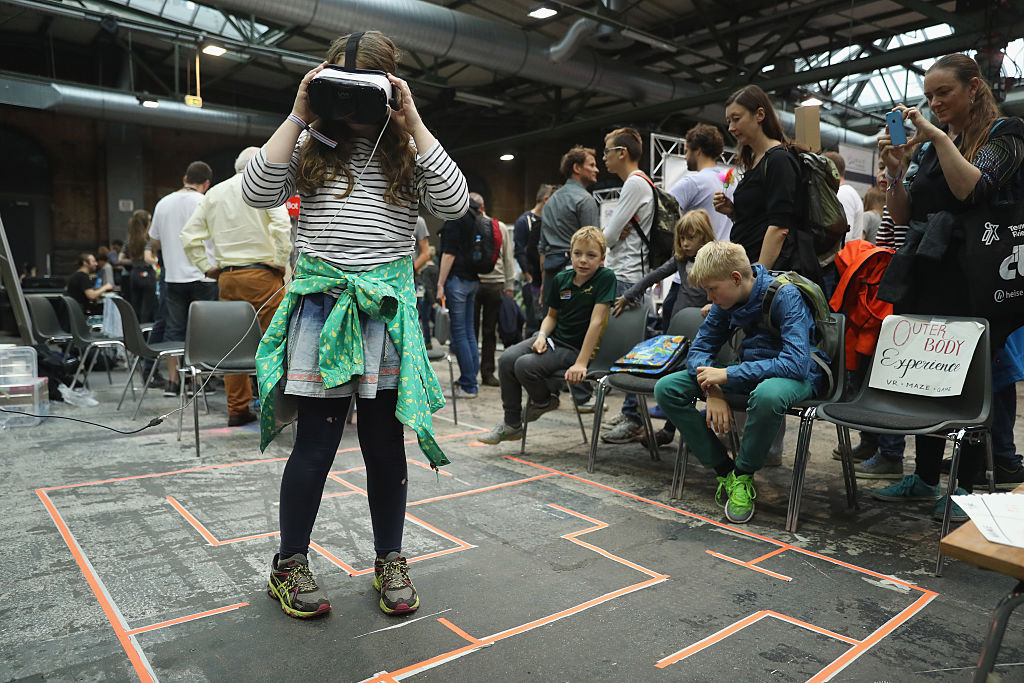
BERLIN, GERMANY - OCTOBER 01: A young visitor explores a Virtual Reality landscape with VR goggles at the 2016 Berlin Maker Faire on October 1, 2016 in Berlin, Germany. The Maker Faire combines a trade fair with hands-on opportunities and workshops for both children and adults to explore a wide realm of new technologies and do-it-yourself projects. (Photo by Sean Gallup/Getty Images)
According to TechCrunch, far from creating an experience that doesn't have any relation with reading a book, this VR app will change the comic-reading experience, because the most important detail to them is to maintain its nature.
"Comics are such a powerful storytelling format. People learn to read through comics; people are transported to other worlds through comics. Comics are words-and-pictures, perfect for storytelling in virtual reality. It's a new era and announcing our investment from world-class investors and creators like Plus Capital, True Ventures, Kevin Spacey, Drake, and Framestore supports our mission to be where the myths of the 21st Century are created," saidMadefire CEO Ben Wolstenholm.
The free Madefire VR app will show a small anthology of great comics optimized for this new way of reading, including pieces as MONO: The Old Curiosity Shop, Injustice: Year One, Somnia: Origins and Revolution.
See the full story here: http://www.itechpost.com/articles/38314/20161009/madefire-comic-vr-app.htm
Internet of Stranger Things: ‘Black Mirror’ tackles horrors of augmented reality in new Netflix episode
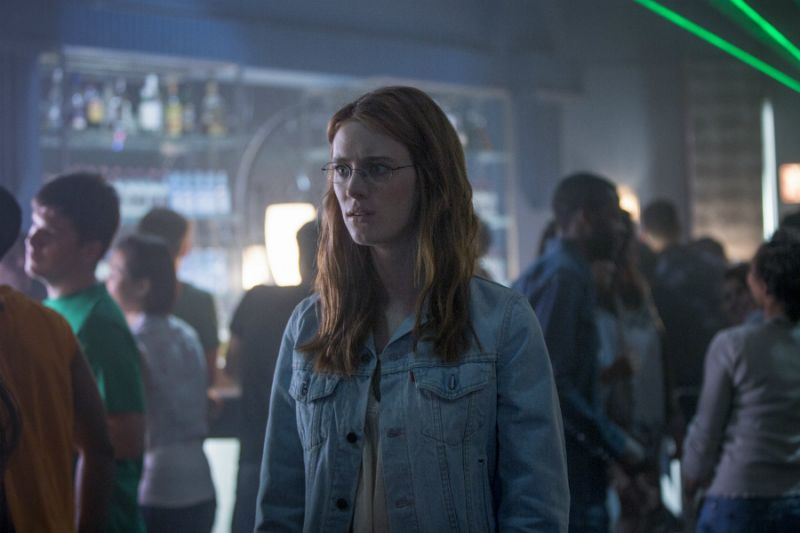 Netflix is now in the business of Black Mirror, and one of its newest villains shares qualities with Pokémon Go. Earlier today, a new episode from the upcoming anthology series premiered at New York Comic Con,
The episode, Playtest, centers around an American tourist named Cooper — played by Wyatt Russell — who agrees to test out a new interactive augmented reality system from a gaming company. He does so in order to make money to return home, after his funds were stolen by a cyber thief. The system is a network of devices able to tap into Cooper’s brain, and by using a neural net, learn and adapt to his fears. This leads to the creation of “the most personal survival horror game in history,” according to one of the characters.
Within the first 5 minutes of Playtest, it becomes abundantly clear that Black Mirror as a Netflix original makes more changes beyond offering the ability to binge on show creator Charlie Brooker’s dystopia.
See the full story here: https://www.yahoo.com/tech/black-mirror-makes-horror-augmented-211040484.html
How Facebook’s virtual reality shakedown could bring a new dimension to marketing
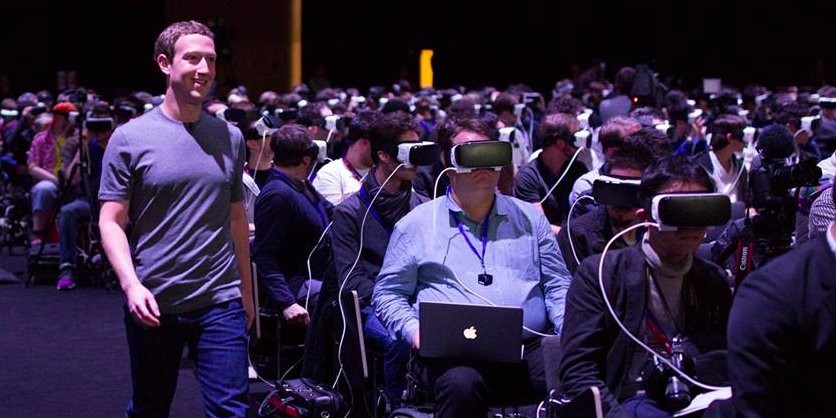 Little is yet known of Carmel, but one of the demos shown on stage by Zuckerberg during his speech was a product called Photo Spheres, which uses 360-degree photography to make users feel as though they are in a restaurant or a foreign location. Within that space, users can do things like pick up a menu, or make a reservation.
In terms of retail, e-commerce and live experiences, there are almost limitless opportunities this could offer up to brands and consumers. For example, imagine shopping for a new sofa and getting the chance to see what it would look like in your lounge, or 'visiting' a selection of potential wedding venues without having to travel.
Glyn Britton, chief strategy officer at innovation agency Albion believes that VR could be the best place to serve up what she describes at the "fourth era of customer service," which combines the best of local retail with the best of the internet.
"Some people are more than ready for VR, some people will soon be, some are nowhere near ready and some never will be," asserts Azor, adding: I believe one of the biggest barriers to overcome is the fragmented VR/AR/MR landscape."
"Be it Betamax and VHS, or more recently Blu-ray and HD DVDS, it has always slowed down adoption for the masses and that adoption is needed for the technology to become mainstream and for us marketers to start to truly take advantage of what this technology is capable of achieving."
See the full story here: http://www.thedrum.com/news/2016/10/09/how-facebook-s-virtual-reality-shakedown-could-bring-new-dimension-marketing