The Mainstreaming of Augmented Reality: A Brief History
 The launch of Pokémon Go this summer was a huge success—both for the gaming industry and for Augmented Reality (AR). After launching in July 2016, the game hit its peak in August of almost 45 million users. ...(its current user base is now 30 million users), the phenomenon demonstrated AR’s potential to be adopted by mainstream culture.
Aside from complex technological advances (e.g., mobile devices are now powerful enough to handle AR software and tracking systems), three other elements have enabled the mass adoption of AR apps: 1) meaningful content, 2) convincing and realistic interaction of the virtual with the physical environment, and 3) unique value that goes beyond what other technologies deliver.
See the full story here: https://hbr.org/2016/10/the-mainstreaming-of-augmented-reality-a-brief-history
PlayStation VR provides a lot of bang for your virtual reality buck
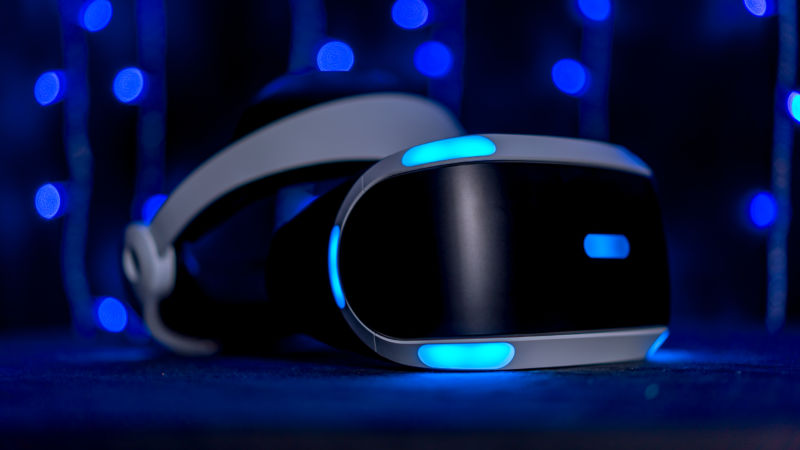 While I've been able to endure multi-hour sessions in other VR hardware, the PlayStation VR is the first headset I've been able to actually enjoy spending time in for hours on end without needing any significant breaks to let my face get air and decompress (though eye strain can still be a problem after prolonged use). It's a design that I strongly encourage other VR companies to shamelessly steal if they want VR to really be something people can enjoy for long time periods.
At only 1920 x 1080, the display on the PSVR is a bit less pixel-packed than the 2160 x 1200 screens on its PC-based competition
The relatively low resolution doesn't mean the full-blown return of the dreaded "screen door effect" that was so noticeable on the 1280 x 800 screen of the Oculus Rift DK2. But it does mean the individual pixels are much easier to pick out when looking at a VR scene. Playing Job Simulatoron the PSVR, you're much more likely to notice distracting jagged edges on the sides of in-game objects and characters than if you were playing on the HTC Vive, for instance. And in a game like Batman: Arkham VR, trying to read small type on an in-game clipboard just resulted in a blurry mess up close. These kinds of problems also exist on higher-resolution headsets, but they're more noticeable on the lower-resolution PlayStation VR.
See the full story here: http://arstechnica.com/gaming/2016/10/playstation-vr-provides-a-lot-of-bang-for-your-virtual-reality-buck/
Why Google Daydream Could Be The Future Of Virtual Reality
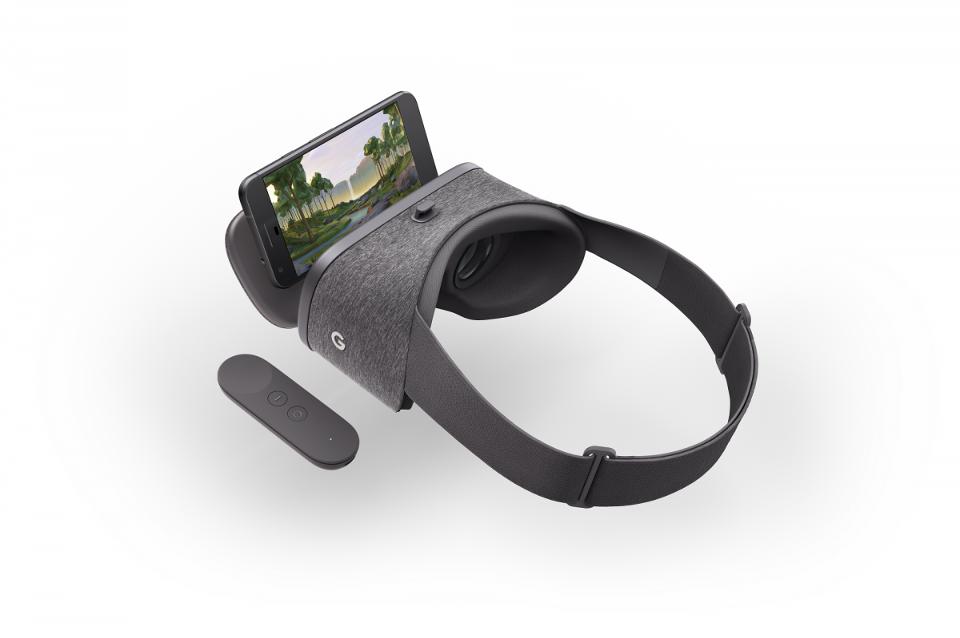 Google also announced Daydream View, a “really comfortable” headset that you put your phone into, which then connects wirelessly to the headset and a small remote.
The Daydream View costs just $79, and launches this November. That’s over $300 cheaper than a PlayStation VR, over $500 cheaper than an Oculus Rift, and over $700 cheaper than an HTC Vive. Of course, one of Google’s Pixel phones will set you back $649, but these are almost always purchased on a month-to-month basis, taking the sting out of the purchase. More to the point, everybody has a smartphone these days. Daydream View will be an easy sell for anyone who already owns a Daydream compatible phone.
With mobile graphics rapidly improving, Daydream VR gaming should provide an experience that’s at least approaching what you can play on more expensive headsets.
See the full story here: http://www.forbes.com/sites/erikkain/2016/10/04/why-google-daydream-could-be-the-future-of-virtual-reality/#2d4dc6bf4a89
Restoring the Allure of the Movie Theater
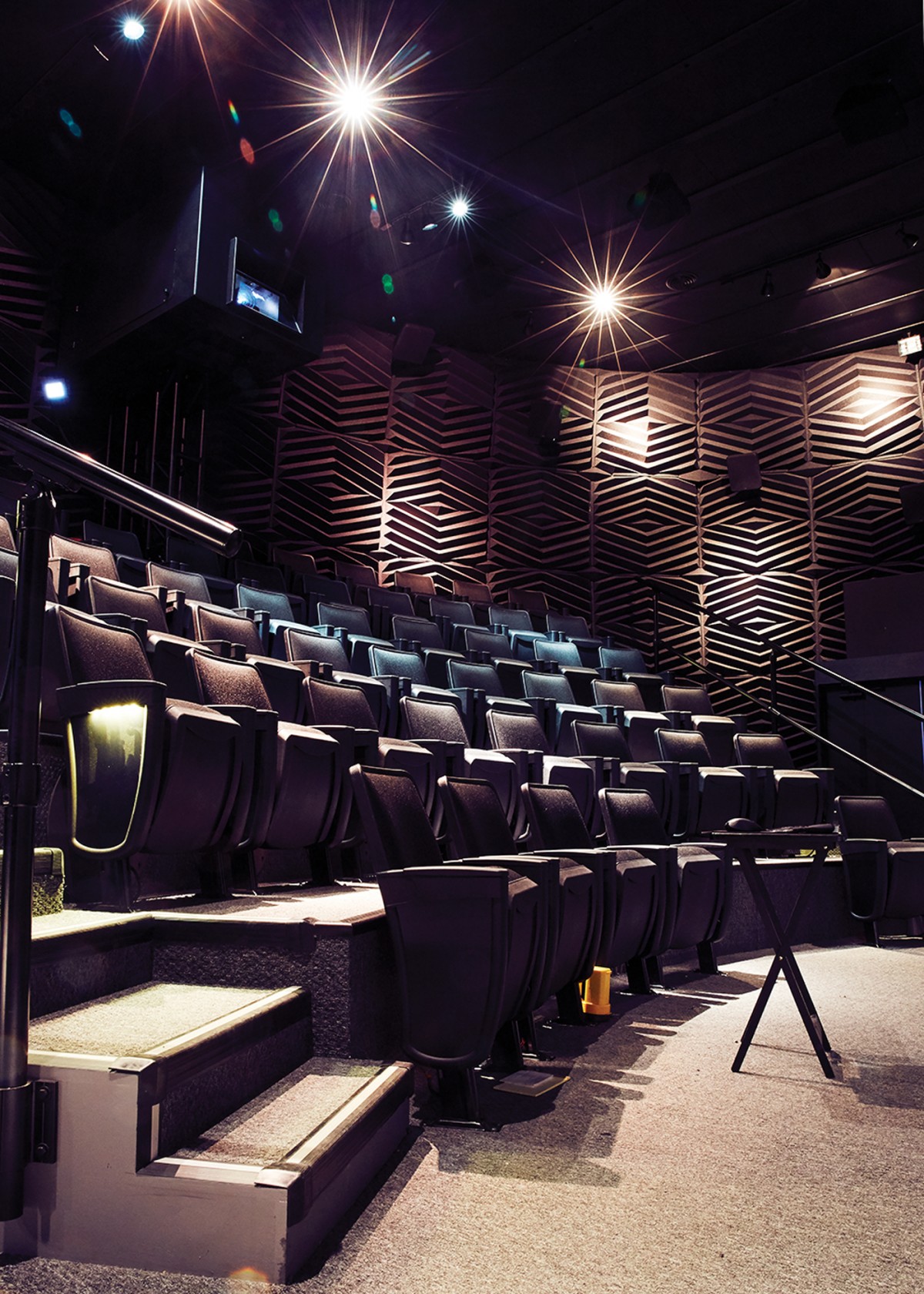 ...combining 3-D, 4K resolution, and ultrahigh frame rates.
After years of analysis, Trumbull thinks 120 fps is the optimal projection speed for digital 3-D movies. To make Magi movies, he uses two cameras or two sensors in one camera, and he photographs the left- and right-eye images at a slight offset instead of simultaneously, which is how conventional 3-D movies are made. Because one of the two camera shutters is open at any given moment, the Magi process captures all the action instead of just half of it. Trumbull then projects the movies in the same way they were shot—alternating left and right frames at 60 fps per eye—for a result that looks incredibly realistic.
Every aspect of the Magi Pod is meant to amplify the immersive nature of the Magi experience. The theater is deliberately small (1,300 square feet), to reduce audience eyestrain. Rows are laid out to ensure that each seat faces the center of the 36-foot-wide, 17-foot-tall screen, which offers a field of view twice that afforded by a regular movie screen. Because the screen is curved, to act as a lens focusing the light emitted by the projector, images appear three times brighter than the industry standard. Trumbull also included a 32-channel surround-sound system for more realistic audio effects and put special insulation inside the walls to eliminate reverberation.
The pod might solve several problems for the movie industry by helping to ensure that the theater experience far exceeds what’s possible at home.
He recently joined the advisory board of Magic Leap and has been mulling how to create content that would begin in Magi Pods and then live on in the startup’s “mixed reality” device.
Ambarish Mitra, Blippar, sees the business potential of augmented reality
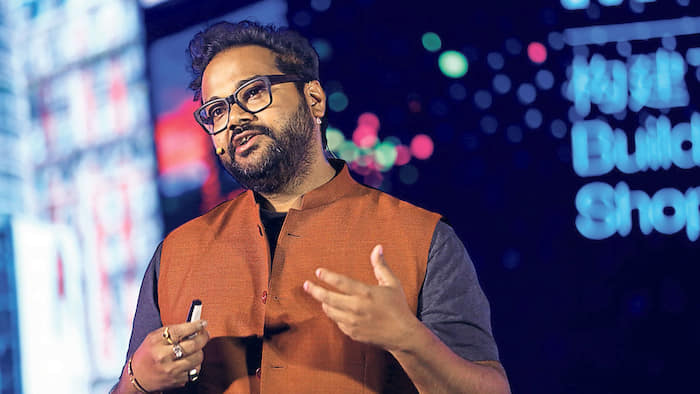 Mr Mitra is chief executive and co-founder of Blippar, a rapidly growing tech company, which specialises in augmented reality, artificial intelligence and computer vision. Its free app turns a smartphone camera into a tool that scans, recognises and identifies everyday objects and brings up online information about them on the screen. Blippar can also use augmented reality to launch videos and other content.
“Fifty per cent of things are in your control. But the macro environment is not,” Mr Mitra says, speaking by phone on a trip to Cologne. Blippar could not have predicted the explosion in smartphone camera use when the founders first thought of harnessing the power of visual recognition.
“It was just good timing,” he says. “Our industry is full of dead bodies.”
The future of protest involves light, holograms and augmented reality
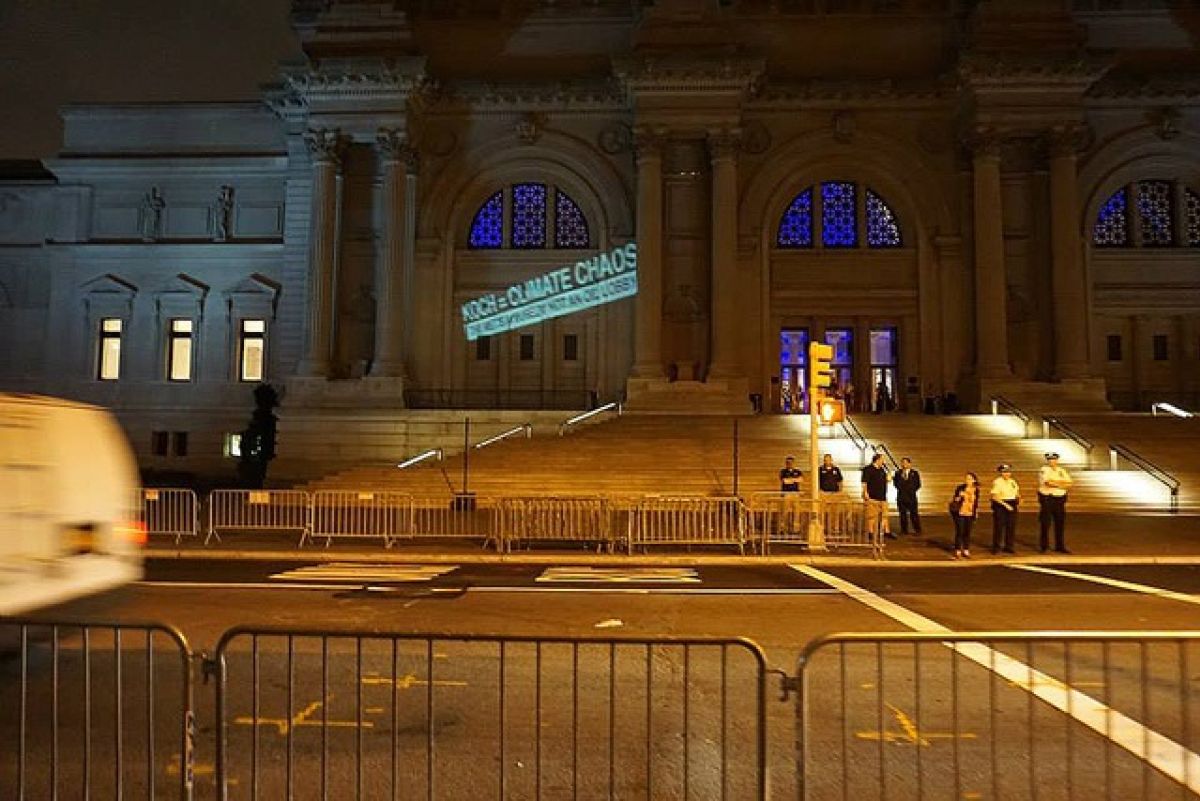 With the explosion of technologies that allow us to augment our physical environments, the question of “permission” is increasingly crucial. Is it needed to project light, holograms and images onto people’s real world property? Sure, scrawling a message in spray paint on the front of the building would clearly be illegal, but what of light?
The biggest challenge for these protest innovators is that they can only conduct their campaigns at night, because it needs to be dark for their technology to work. And their messages could be neutralized if someone fought fire with fire, or in this case, light with light. If you were to simply blast the area being projected on with more light, it could erase the projection.
See the full story here: http://fusion.net/story/339019/protests-that-cant-be-stopped/
Virtual Reality Dazzles Harvard University
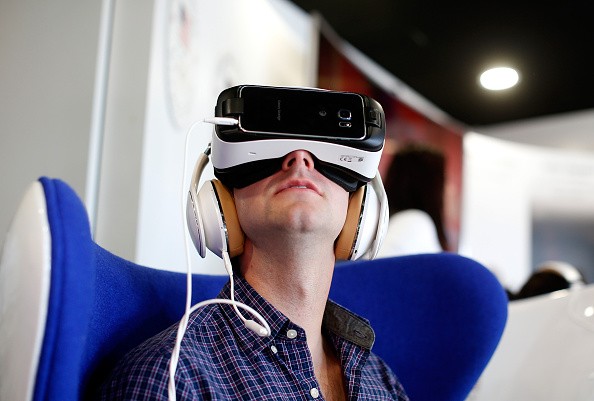 This will be discussed and demonstrated at the i-lab in the coming weeks with Rony Abovitz, CEO of Magic Leap Inc., as the keynote speaker.
Abovitz was responsible for developing the "Mixed Reality Lightfield," a technology that combines augmented and virtual reality. According to Abovitz, it will help those who are struggling to "transfer two-dimensional information or text into "spatial learning."
Aside from Abovitz, Javender Jagadeesan and Chris Dede also gave their presentation on the use of virtual reality in different fields. Jagadeesan, an assistant professor at the Harvard Medical School, talked about using augmented reality to determine the exact location of a tumor. Dede, who is from the Harvard Graduate School of Education, discussed the impact of augmented and virtual reality-based tools in teaching young learners.
See the full story here: http://www.universityherald.com/articles/42727/20161003/virtual-reality-dazzles-harvard-university.htm
Rupert Murdoch’s Sky Launches Virtual Reality App
 Content highlights in the app at launch include:
Sky Cinema’s “Star Wars: Red Carpet” – walk the red carpet at the premiere of “Star Wars: The Force Awakens”
“Anthony Joshua: Becoming World Champion” – see Joshua as he becomes IBF world heavyweight boxing champion.
Disney’s two VR experiences from “The Jungle Book” — enabling viewers to get up close and personal with King Louie and Kaa
Fox Innovation Lab’s “The Martian Sneak Peek” – transports viewers to Mars to follow the film’s protagonist Mark Watney after he has been stranded on the planet
Warner Brothers’ “Suicide Squad: Squad 360” – viewers can see what it’s like to be a member of the Suicide Squad during a scene from the film.
“Team Sky – Journey to the Tour” — follow the Sky cycling team preparing for their third Tour de France.
“F1 – Team Williams” – lets fans go behind the scenes of the Williams Formula 1 racing team, in the pit lane and in-car viewing.
“Sky News – Calais: The Jungle” – taking viewers inside “The Jungle,” a refugee camp in Northern France.
“Baobab Studios — Invasion” – a VR animation about a duo of aliens aiming to take over the world, but needing to overcome two fearsome rabbits.
“Jaunt – Paul McCartney: Dance Tonight” — McCartney takes viewers through the “creation story” of this song and its music video.
See the full story here: http://variety.com/2016/digital/global/sky-ups-vr-ante-launch-app-video-david-beckham-1201876154/
Are Virtual Reality Headsets Safe for Children?
A lack of data and guidelines is leaving consumers in the dark about virtual reality's potential negative side effects for kids
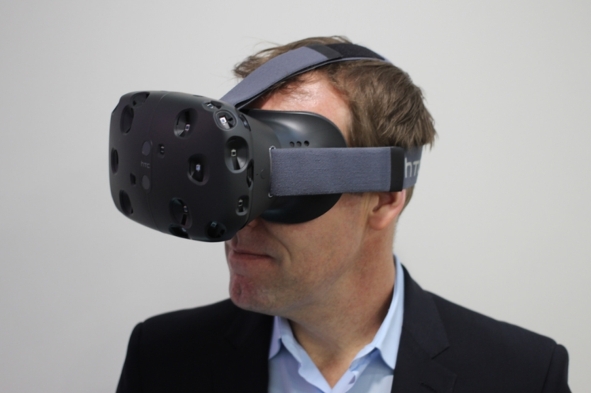 The Oculus Rift and Samsung's Gear VR headsets are recommended for ages 13+, while Sony's recommendation for its PlayStation VR is ages 12 and up. HTC's Vive is not designed for children, according to the company, and HTC said young children shouldn't be allowed to use the headset at all. And Google said its relatively low-tech Cardboard headset should be used by kids only under adult supervision.
Companies have offered little explanation for these age recommendations. So what does the science say? According to Marientina Gotsis, director of the Creative Media & Behavioral Health Center at the University of Southern California School of Cinematic Arts, not a lot.
"We do not have enough data on the safety of current VR technology for children," she told Live Science. "So, the sparsity of research data and what we know about neuroplasticity [the brain's ability to reorganize itself] and children does not make me comfortable to recommend what is available now as is."
See the full story here: http://www.scientificamerican.com/article/are-virtual-reality-headsets-safe-for-children/