Intel Acquires Movidius, Plans Next Wave of RealSense Tech

Computer vision is a critical technology for smart, connected devices of the future. (Credit: Intel Corporation)
Intel has major plans for its RealSense technology, which it sees as “the next wave of computing.” According to the company’s release on the Movidius deal, Intel is aggressively pursuing connected devices, computer vision, deep learning, perceptual computing and much more.
“Intel is seeking to move into new markets beyond the shrinking personal computer business, where sales of microprocessors are its largest source of revenue,” reports The Wall Street Journal. “The company, which failed to build a major business in chips for smartphones, has announced a series of moves to provide technology for drones, wearable devices and other connected gadgets associated with a trend called the Internet of Things.”
While rival Nvidia may currently have a leg up in artificial intelligence, with graphical processing chips designed for rendering images in video games, Intel recently unveiled plans for a new version of its Xeon Phi processor specifically for artificial intelligence applications.
See the full story here: http://www.etcentric.org/intel-acquires-movidius-plans-next-wave-of-realsense-tech/
Virtual reality now has Emmy winners, too
 Virtual reality has official entered awards season territory.
Henry, a VR animated short about a hedgehog, received an Emmy for Outstanding Original Interactive Program. It's part of the juried Emmy awards given before the ceremony on Sept. 18, and it's the first piece of VR narrative to win such an award.
"People really feel for him, in a different way than in a movie.That emotional connection made people feel differently. They'd say, 'I really want to reach out and hug him,' or 'I really want to help him out," Dau said.
The eventual success, and the Emmy jury's recognition of it, gives Dau hope for the future of VR storytelling.
"It shows the industry is really backing us, by giving us big, massive, important award is going to VR," Dau said. "There's so much potential for great storytelling down the road."
See the full story here: http://mashable.com/2016/09/08/henry-oculus-emmy/#EESl5.X.qgqz
Henry is available to watch for free through the Oculus storefront.
Virtual Reality, with Feeling
 In the past, external cameras have been used to monitor the movement of facial features as a means of adding emotion to VR. The new system, developed by Emteq, uses small sensors embedded into a VR headset to measure electrical signals, heart rate, and muscle movement. According to Engineering & Technology, that allows the system, known as Faceteq, to capture a wider range of emotional response than visual approaches.
...observing another person’s emotions in the virtual world could add an extra layer of realism.
It’s not the only approach being used to make VR more convincing. A small startup called Midas Touch Games is developing more accurate physics engines to help make human movement in the virtual world look more realistic, and the likes of Dolby are trying to make 3-D sound as convincing as possible.
See the full story here: https://www.technologyreview.com/s/602323/virtual-reality-with-feeling/
Niantic Is Working On More Augmented Reality Projects
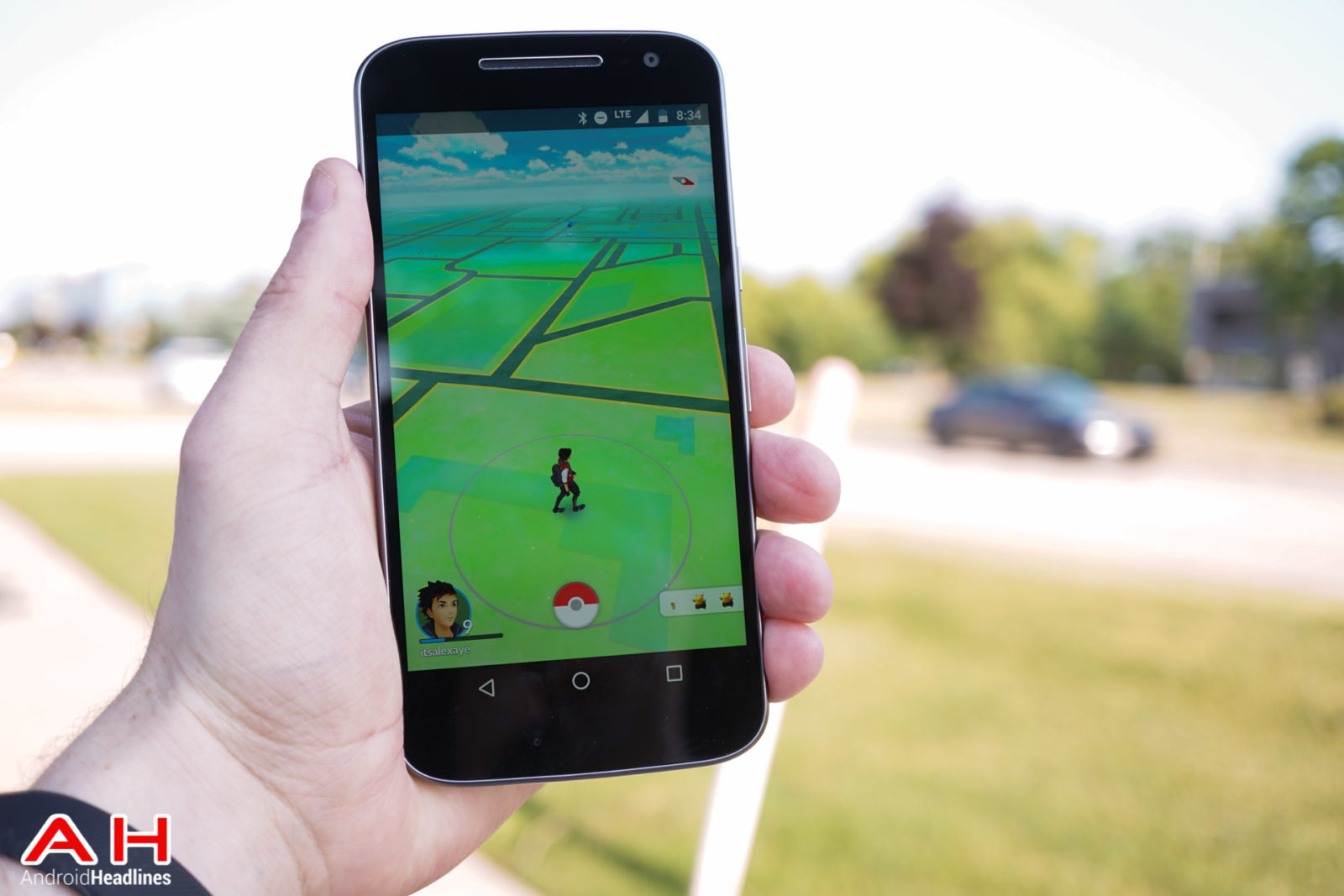 According to John Hanke in the recent interview, Niantic’s strategy has always been to create “a platform underneath a game that can be used for other games, and frankly other experiences that may not exactly be games, but are still within that area of exercise, discovery, and social interaction.”
“The Niantic platform is very much a part of our long-term vision”, said CEO John Hanke, revealing that the company has “some projects that are in the early stages” projects that will apparently be built on top of the so-called Niantic platform.
See the full story here: http://www.androidheadlines.com/2016/09/niantic-working-augmented-reality-projects.html
Electronic empathy: meet the next wave of virtual reality
 “Experiential marketing is about intimacy at scale,” says Jason Alan Snyder, chief technology officer at Momentum Worldwide. “The danger for brands is that the algorithms we increasingly use are pushing us into ever-narrowing information silos and connecting us with tribes of people we agree with. Empathy is about understanding different perspectives and VR can alter perceptions. My hope is to leverage VR into a connective tissue by creating empathetic groups.”
How long will it be before we can touch what we see in AR...
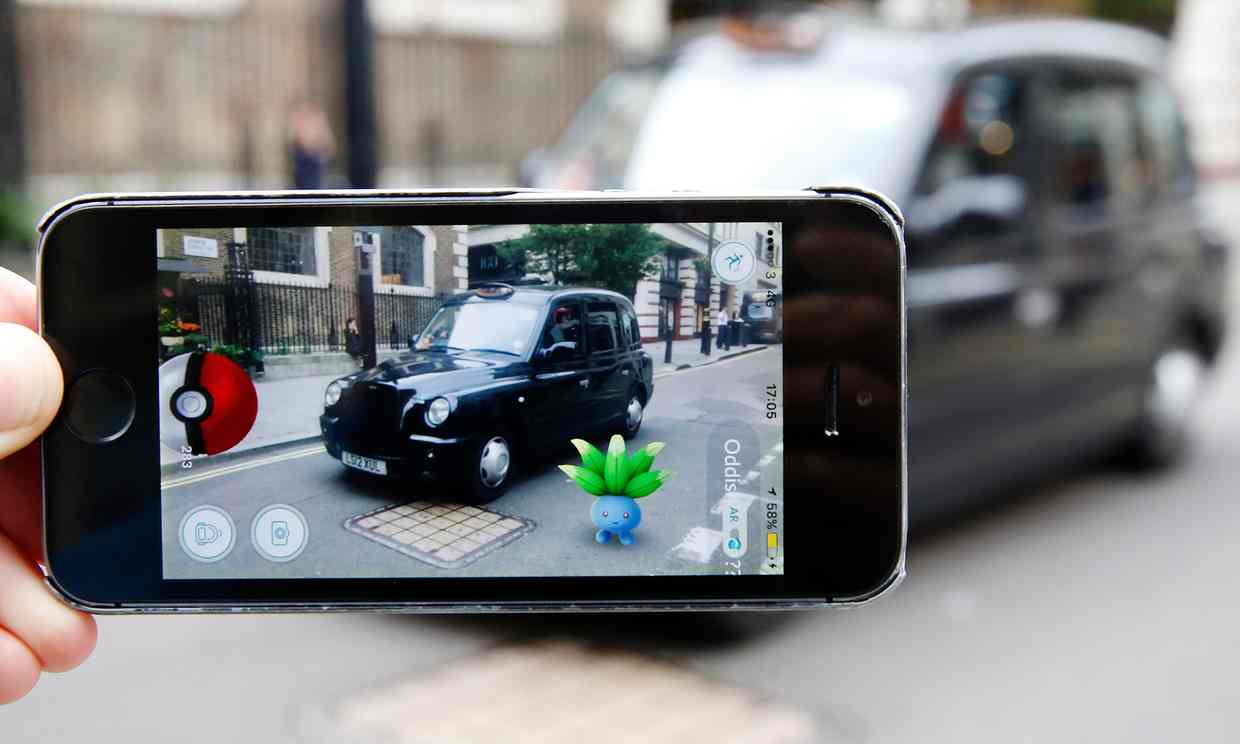
Davis uses video to virtualise physical content so that it can interact with virtual content, so that when you see – on your smartphone – a Pokémon interact with a flexible object, you also see that object react.
“We are still some way from producing real-time dynamic AR, which conveys reactions and behaviours as well as experiences and interactions.”
A recent Virtual Futures Salon highlighted that electronic empathy is about emotional involvement and does not require hyper-realism. “The key is to establish an emotional connection between the consumer and the experience – it is not about the technology,” says Los Angeles based digital content adviser Scott Nocas,...
“Empathy is about discovering things that we share and engage with emotionally,” says Snyder. “Immersive technology needs to focus on connecting humans to humans in a profound way. It can change people’s perceptions, and if used properly it has the potential to change the world.”
See the full story here: https://www.theguardian.com/media-network/2016/sep/08/electronic-empathy-virtual-reality-pokemon-go-oculus
Gartner’s 2016 Hype Cycle for Emerging Technologies Identifies Three Key Trends That Organizations Must Track to Gain Competitive Advantage
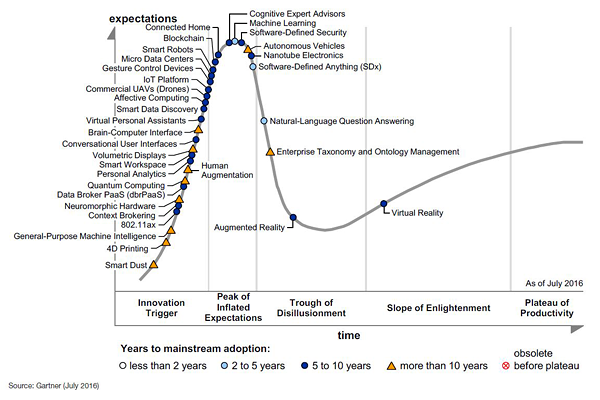 Key Technology Trends
Transparently immersive experiences: Technology will continue to become more human-centric to the point where it will introduce transparency between people, businesses and things. This relationship will become much more entwined as the evolution of technology becomes more adaptive, contextual and fluid within the workplace, at home, and interacting with businesses and other people.
Critical technologies to be considered include 4D Printing, Brain-Computer Interface, Human Augmentation, Volumetric Displays, Affective Computing, Connected Home, Nanotube Electronics, Augmented Reality, Virtual Reality and Gesture Control Devices.
The perceptual smart machine age: Smart machine technologies will be the most disruptive class of technologies over the next 10 years due to radical computational power, near-endless amounts of data, and unprecedented advances in deep neural networks that will allow organizations with smart machine technologies to harness data in order to adapt to new situations and solve problems that no one has encountered previously. Enterprises that are seeking leverage in this theme should consider the following technologies: Smart Dust, Machine Learning, Virtual Personal Assistants, Cognitive Expert Advisors, Smart Data Discovery, Smart Workspace, Conversational User Interfaces, Smart Robots, Commercial UAVs (Drones), Autonomous Vehicles, Natural-Language Question Answering, Personal Analytics, Enterprise Taxonomy and Ontology Management, Data Broker PaaS (dbrPaaS), and Context Brokering.
The platform revolution: Emerging technologies are revolutionizing the concepts of how platforms are defined and used. The shift from technical infrastructure to ecosystem-enabling platforms is laying the foundations for entirely new business models that are forming the bridge between humans and technology. Within these dynamic ecosystems, organizations must proactively understand and redefine their strategy to create platform-based business models, and to exploit internal and external algorithms in order to generate value. Key platform-enabling technologies to track include Neuromorphic Hardware, Quantum Computing, Blockchain, IoT Platform, Software-Defined Security and Software-Defined Anything (SDx).
See the full story here: http://www.gartner.com/newsroom/id/3412017
Round VR walking rugs
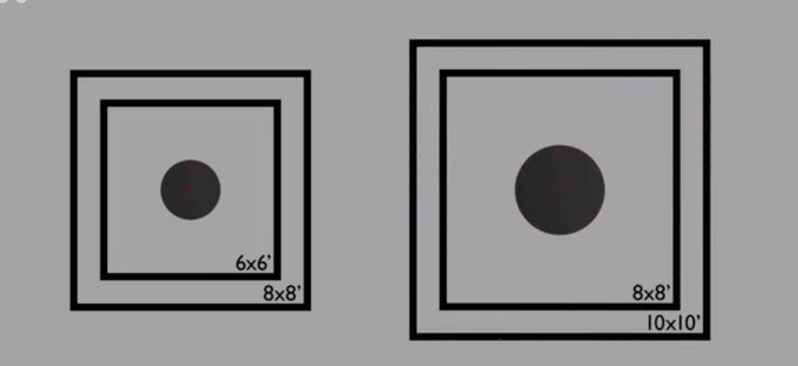 [Philip Lelyveld comment - round rugs are standard for good VR walking experiences. This company is creating premium round rugs designed for VR.]
...24″ and 36″ diameter mat were perfect for standard room sizes. The definable safety zone is considerably larger than the diameter of the mat because it is designed to allow for 1 foot on and one foot off when stepping away from the center of the mat.
The next step was to create a more definable center of the mat which we call the “Home” locator, this was accomplished by using a harder rubber that is taller than the matting itself without creating a catch point or something that could hurt you if you stepped down on it. The choice was a translucent red urethane for the black mat and a translucent blue urethane for the gray mat which were chosen for aesthetics and how well they worked. We are looking at alternatives for the buttons on the final production.
See the full story here: http://www.geeky-gadgets.com/virtual-reality-spatial-proximity-mat-05-09-2016/
Venice Film Festival – VR Theatre
[Philip Lelyveld comment; this image of a VR theatre is less than inspiring.]
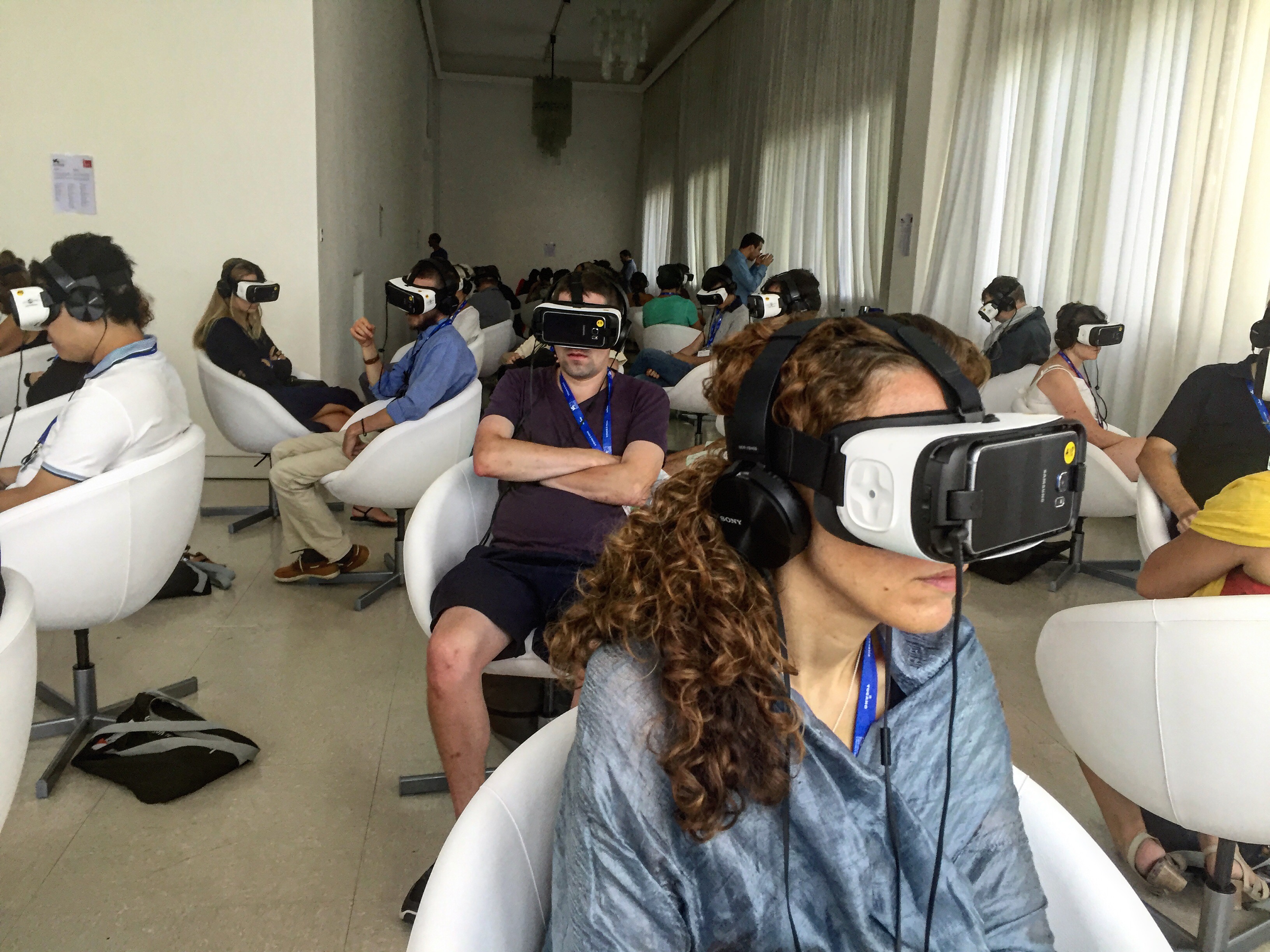 See the full story here: http://www.goldenglobes.com/articles/vr-jesus-venice-virtual-reality-cinema’s-second-coming