Forget Pokémon GO – these are the augmented reality experiences that’ll soon be invading your life
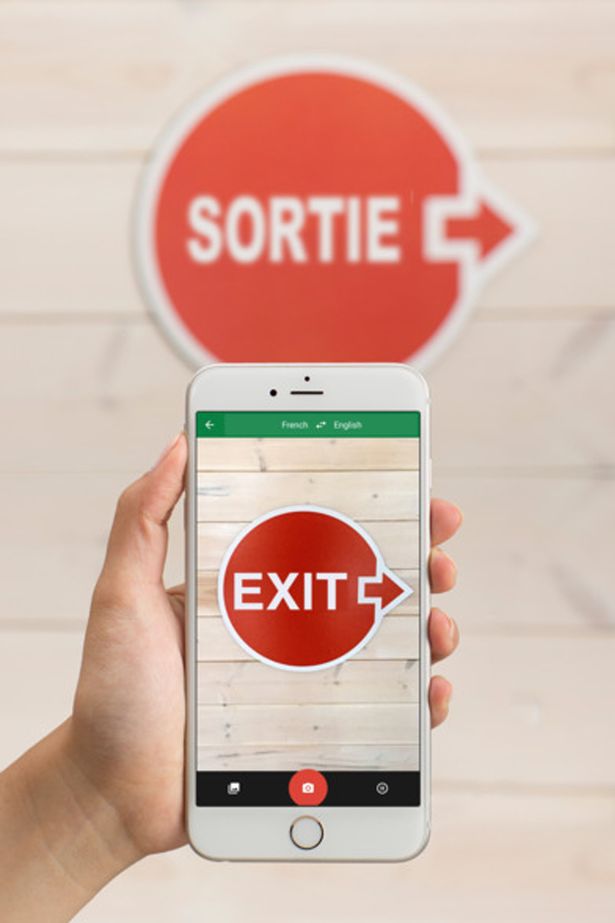 [Philip Lelyveld note: this is a nice collection of AR apps for work, sports, vacation, and home.]
Despite augmented reality (AR) being around for many years, Pokémon GO has thrust it into the limelight. The game has been an inescapable force of nature taking the concept of overlaying our everyday lives with digital information and making it mainstream.
Here's how AR will be cropping up in your everyday life.
See the full story here: http://www.mirror.co.uk/tech/forget-pokmon-go-augmented-reality-8659104
Sony Debuts Immersive Video to Promote Movie on Snapchat
 Wahle says the goal was to give viewers the sense of “being in the dark and feeling claustrophobic,” and that “a stranger with super human abilities is coming at you.” He reports that “initial tests show people spend an average of two minutes with the ad,” and that the use of technology in the campaign is “how movies should be marketed in today’s social media age.”
Making the case to use 360-video was a challenge, says Whale, but he believes that, “there is currently a transitioning happening from regular video to 360 video to VR.” “Because Google and Facebook have been doing such a good job of making 360 video and VR a priority, it’s now seeping into mainstream [culture],” he said.
See the full story here: http://www.etcentric.org/sony-debuts-immersive-video-to-promote-movie-on-snapchat/
‘VR Noir’ Is A Great Example Of How Virtual Reality Will Change Television
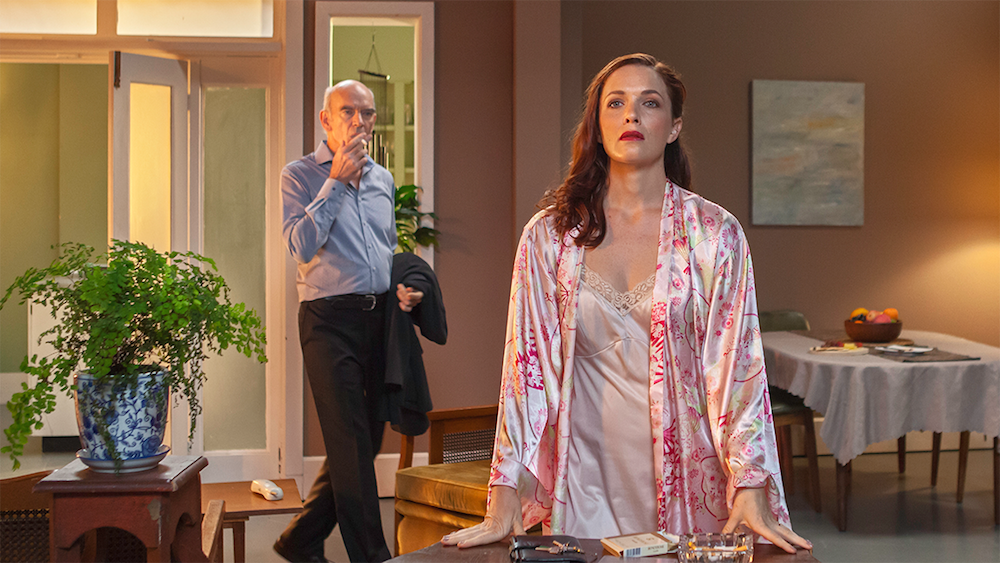 VR Noir is a 360-degree film with interactive elements created by the Australian studio Start VR. The experience hits all the necessary beats of its namesake genre: the rumpled ex-cop P.I., the mysterious femme fatale and an even more mysterious murder to unravel. However, all of these familiar beats seem fresh and innovative in this immersive new medium.
Let’s be clear: if VR Noir was a standard television show it would not be considered that great.
As events unfold in VR Noir, you’re given agency within the narrative. You can choose to ask a client more questions, or simply take a case. You get to take control of a spy camera as you stake out a mark on a rooftop. And above all you get to experience a story as the main character, as opposed to simply watching from the sidelines. In this way, it carries forward the torch that GONE lit before it.
VR Noir is available now to download for free on Android and iOS for Google Cardboard and on the Oculus Store for Samsung Gear VR.
See the full story here: http://uploadvr.com/vr-noir-great-example-virtual-reality-will-change-television/
MIT Media Lab sponsors hackathon pushing limits of VR and AR
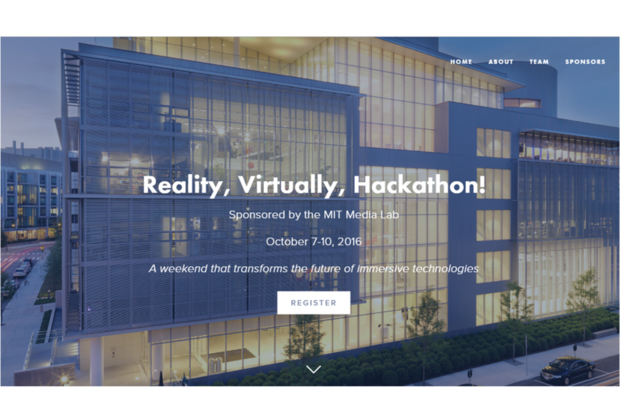 The hackathon theme is consistent with the Media Lab’s purpose: “The MIT Media Lab goes beyond known boundaries and disciplines, encouraging the most unconventional mixing and matching of seemingly disparate research areas. It creates disruptive technologies that happen at the edges.”
Participants from MIT, other top universities, and the VR and AR communities around the United States will form teams to develop innovative software solutions that will unlock the technology’s potential in new categories, some never attempted before.
Up to 400 participants will learn and build new apps during this hackathon using their own, and sponsor-provided, AR and VR platforms. This is the first VR/AR hackathon ever run at this large a scale.
See the full story here: http://www.networkworld.com/article/3109125/events/mit-media-lab-sponsors-hackathon-pushing-limits-of-vr-and-ar.html
THE MAKERS OF THE DEUS EX: MANKIND DIVIDED VIDEO GAME HOST A BIOETHICS CONFERENCE
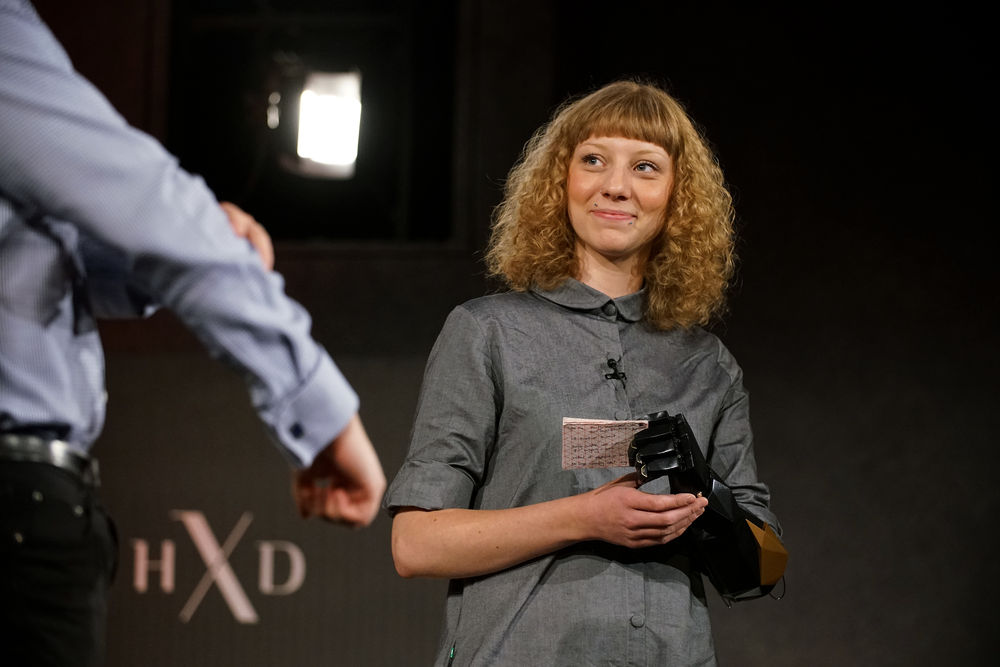
Human X Design Conference, August 3, 2016.
The high points of Human by Design came when Steven Sanchez, who suffered a spinal cord injury, and Cathrine Disney, who was born with a congenital amputation, spoke about how their prosthetics changed their daily lives. Disney described her experience with prosthetic arms as a child. “They're not only offensively ugly in their attempts to mimic human hands, they’re heavy, clunky, and ultimately useless,” she said.
Sanchez and Disney eloquently described how mechanized prosthetics changed theirs. Disney designed herself a new robotic arm with Open Bionicsand Deus Ex. “Instead of being the elephant in the room, all eyes are on us for the right reasons,” she said, describing how the new arm affected her self-esteem.
See the full story here: http://www.popsci.com/augmented-reality-or-augmented-humanity
Synchronized virtual reality heartbeat triggers out-of-body experiences
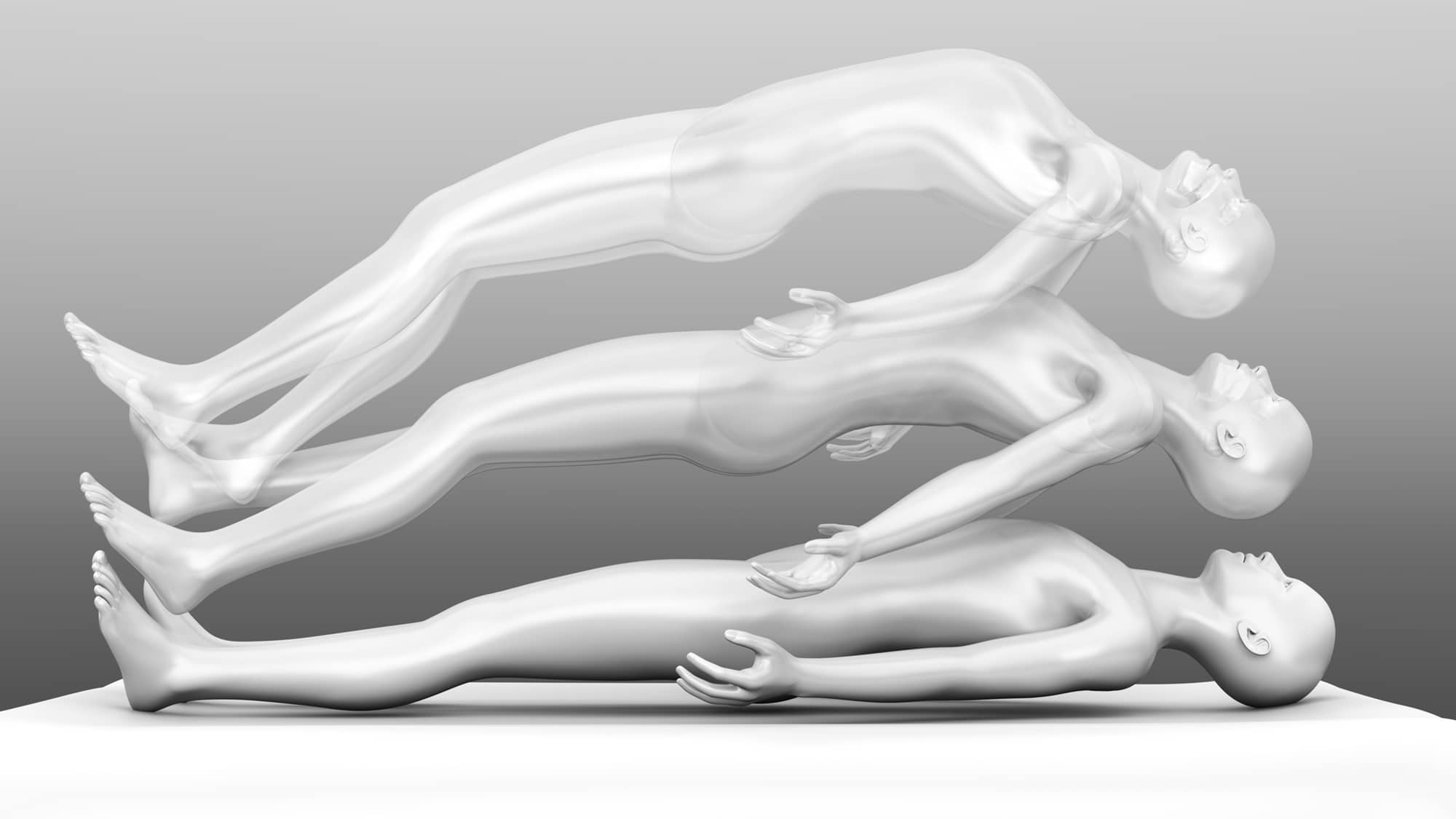 [Philip Lelyveld comment: this has huge potential in storytelling (as well as therapies). If you can get a person to identify with an avatar - even if you can't do a scan of every person who accesses your experience - and you transition a heartbeat to the avatar, this could be an amazing tool.]
New research demonstrates that triggering an out-of-body experience (OBE) could be as simple as getting a person to watch a video of themselves with their heartbeat projected onto it. According to the study, it's easy to trick the mind into thinking it belongs to an external body and manipulate a person's self-consciousness by externalizing the body's internal rhythms. The findings could lead to new treatments for people with perceptual disorders such as anorexia and could also help dieters too.
Aspell and Heydrich decided to find out whether a person's bodily self-consciousness could be influenced by visually representing one of its vital inner rhythms – the pulsing heartbeat. They attached 17 participants to electrocardiogram sensors and had them view videos of their bodies through virtual reality goggles so that their body appeared to be two meters (6.5 ft) in front of them.
Participants saw their own heartbeats visually imposed on their virtual doubles in the form of a flashing outline around the body that pulsed in sync. After a couple of minutes, many of the participants reported sensations of being in an entirely different part of the room rather than their physical body and feeling that their "selves" were closer to their virtual doubles.
According to the team, this is the first study that clearly shows how visual signals containing information about the body's internal organs (in this case, the heartbeat) can change their perception of themselves.
The research could help people with distorted views of themselves to connect with their actual physical appearance. "Patients with anorexia seem to identify with a body which is larger than their physical body," Aspell tells us. "We could use this manipulation to help patients with anorexia to identify with their actual physical self."
See the full story here: http://newatlas.com/visualized-heartbeat-out-of-body-experience/28728/?utm_medium=email&utm_source=flipboard
Digital Domain’s New 360 Camera to Capture 250 Hours of Major Sports Footage
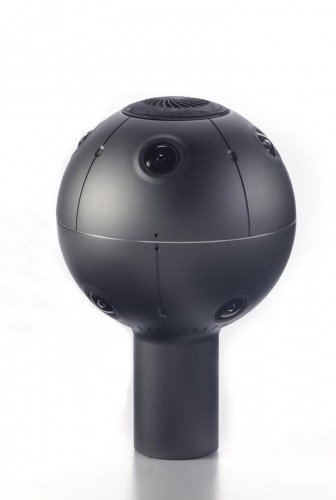 The company have just announced that their recently unveiled Zeus 360 camera is to play a major part in capturing footage at a sporting event in Rio, with Digital Domain claiming they’re filming (and live-streaming) 250 hours of video content, designed to be viewed via virtual reality headsets. DD will be handling the capture and post processing pipeline entirely, even handling the packaging of content to distribution platforms, developing “custom apps for this content to be viewed globally by fans on smartphones, tablets, Gear VR and desktop computers.”
The new device, which bears more than a passing resemblance to Nokia’s own Ozo camera, is apparently capable of footage at a greater than 8k resolution at 10-bit RAW output, capturing a high frame rate of 75 fps. The camera is also capable of seamless 360-degree live-streaming at up to 4k resolution.
See the full story here: http://www.roadtovr.com/digital-domains-new-360-camera-will-capture-250-hours-of-footage/
Mr. Robot Disrupts Digital Engagement
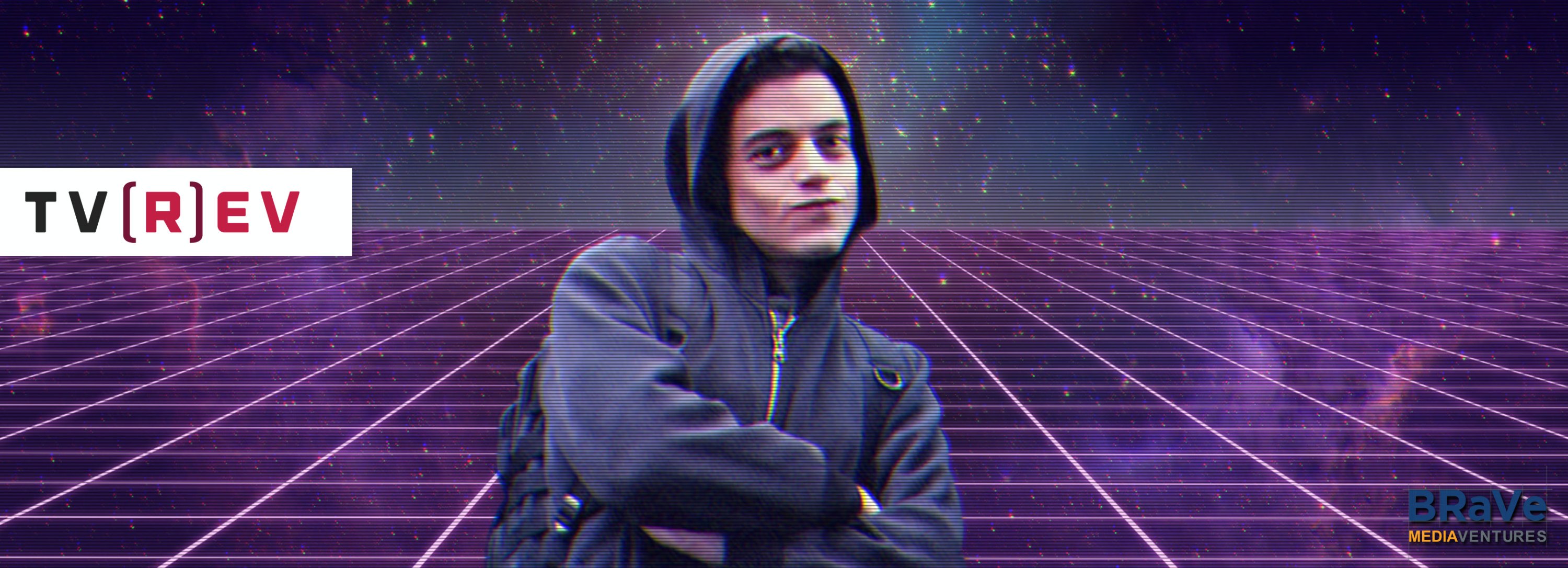 In order to view the experience within the one-hour time limit, viewers had to download the app ahead of time. This created a highly measurable and attributable demonstration of digital engagement that linear hasn’t always been able to achieve. (It’s worth noting that Nielsen’s new Social Content Ratings may help with this moving forward).
Two days before the premier, on July 10th, the show’s actors participated in a Facebook Live Q&A, answering questions about the show and drumming up excitement for the new season.
In the midst of this Q&A, Mr. Robot “took control” of the stream, releasing the first part of the season two premiere. For a short period of time, the one-hour episode was live on Facebook, Twitter, Snapchat and YouTube, allowing the most engaged followers to watch it before its official release.
These strategies are successful, in part, because the show’s target audience is young. They’re less likely to watch shows on linear television, and more likely to stream them; the ratings proved it. Within the first three days of the premiere, the show received a total of 2.25 million viewers, which is a 116% increase on the live viewership, capturing the most important age group: 18-to-49 year olds.
See the full story here; http://tvrev.com/mr-robot-disrupts-digital-engagement/#.V7TNmGW6lgp