DARPA Develops Virtual Eye That Captures a Real Time Virtual Reality View Using Two Cameras
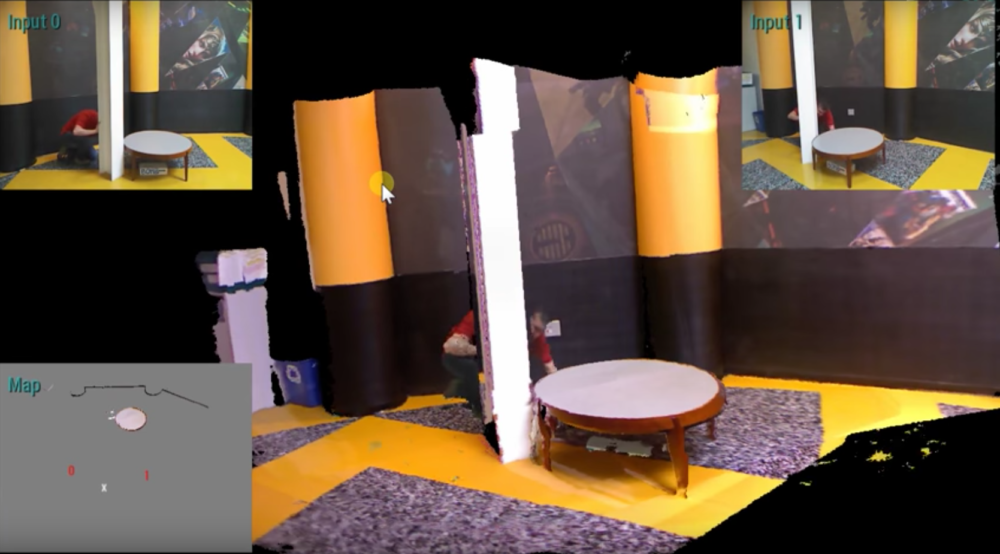 Virtual Eye is a software system that can capture and transmit video feed and convert it into a real time 3D virtual reality experience. It is made possible by combining cutting-edge 3D imaging software, powerful mobile graphics processing units (GPUs) and the video feed from two cameras, any two cameras. This allows first responders — soldiers, firefighters or anyone really — the option of walking through a real environment like a room, bunker or any enclosed area virtually without needing to physically enter.
Two drones or robots would be inserted into a questionable environment, each outfitted with a camera. The cameras would be strategically placed at different points in the room with opposing viewpoints. Both video feeds would then be fused together with the Virtual Eye software and converted into a 3D view, and it will extrapolate any missing data using the 3D imaging software so the real time virtual reality feed is complete.
Currently the Virtual Eye system is only capable of combining data from two cameras, however Tran expects that to change soon. The DARPA team is hoping to have a new demo version that is capable of combining up to five different camera feeds by next year.
See the full story with a 1-minute video here: https://3dprint.com/140953/darpa-develops-virtual-eye/
Virginia Heffernan on technology, virtual reality, and what the Internet means
 Within this little feud, culture critic Virginia Heffernan has been a longtime outlier, peacemaker, and iconoclast. Heffernan has literary East Coast chops—she earned a PhD in English Literature from Harvard, and then worked as a TV and tech critic at the New York Times for close to a decade.
But Heffernan has long celebrated the aesthetic potential of the web’s whackier and more whimsical corners. She may well be the least cranky tech critic east of the Rockies. In her new book, “Magic and Loss,” she argues that “the Internet is a massive and collaborative work of realist art”—a kind of giant role-playing game that demands “a new aesthetics and associated morality,” and, perhaps above all, a sense of wonder.
Are the artistic project and the profit motive incompatible in some ways?
Thing just aren’t produced if money isn’t being made.
Why did poetry suddenly become short when the New Yorker was the gatekeeper for all poetry? If you’re weighing it against a cartoon and columns of text, then suddenly you can’t write like Walt Whitman with long lines. Most great American art forms, including novels, do end up finding a way to make some money. I know some artists don’t like to have to push back on the market, but to a great extent I appreciate the art that finds dynamic tension in that relationship, and not just crushing tyranny.
See the full story here: http://www.salon.com/2016/07/04/im_in_awe_every_day_virginia_heffernan_on_technology_virtual_reality_and_what_the_internet_means/
(Mktg Research) It Doesn’t Look Like Virtual Reality Is a Thing Yet
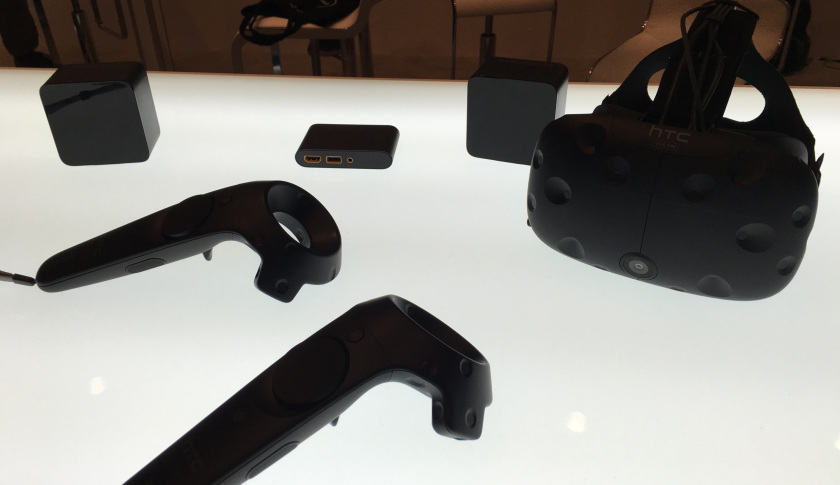 HTC has sold almost 100,000 units of its Vive virtual reality headset that went on sale March, according to an estimate based on customer usage. The $800 Vive headset came with several games that operate on the Steam video gaming network. Steam usage statistics show almost 78,000 people have played Job Simulator, which was bundled with the Vive hardware, the website Road to VR reported on Monday. Several other Vive games that can also be used on other hardware showed usage of almost 95,000.
The Vive sales figures, representing an estimated $62 million of revenue, show that the device isn’t a flop, but it’s not exactly a mass-market hit either. Some analysts have cut their estimates for VR hardware sales this year due to shipping delays at HTC and its competitors, as well as the requirement for a powerful PC. The small numbers for HTC would seem to back up that pessimism.
Analysts are divided over how quickly virtual reality will catch on. At the high end, 20 million units could be sold this year, including all types of VR headsets and accompanying controllers and accessories, according to market research firm Tractica. Neil Schneider, executive director of the Immersive Technology Alliance, came up with a much smaller estimate of 300,000 units in the first 12 months on sale. Cheaper VR hardware that relies on using smartphones and not a PC, such as the Samsung Gear, could sell 10 times as many units, Schneider estimated. And looking out a few years, market tracker Digi-Capital cut its rather optimistic forecast for spending on virtual and augmented reality in 2020 to $120 billion, down from an earlier forecast of $150 billion.
See the full story here: http://fortune.com/2016/07/05/virtual-reality-htc-sales/
Aurasma – AR for marketing, education, ….
 [Aurasma is] the world’s leading augmented reality platform with over 200,000 customers using the technology to make print interactive. Our customers are using Aurasma for marketing, training, and educational purposes across different verticals, use cases, and age groups. Our users include world-renowned commercial brands, as well as primary school-age classrooms and educators. In addition to an app available on the Apple App Store and Google Play, Aurasma includes an intuitive, drag-and-drop AR creation studio. We are laser-focused on ease of creation, and users with no formal technical training can build, launch, share, and track their own augmented reality campaigns.
Other companies who seek to retain their branding throughout the mobile app and AR experience can have Aurasma build them a white-label app or use the Aurasma SDK to embed AR into their existing app. Mohawk Paper, a long-time Aurasma customer, offers interactive print newsletters that launch AR through the Mohawk Live app.
See the full story here: http://mobilemarketingmagazine.com/reality-augmented/
American AR Meta Gains Chinese Stamp Of Approval
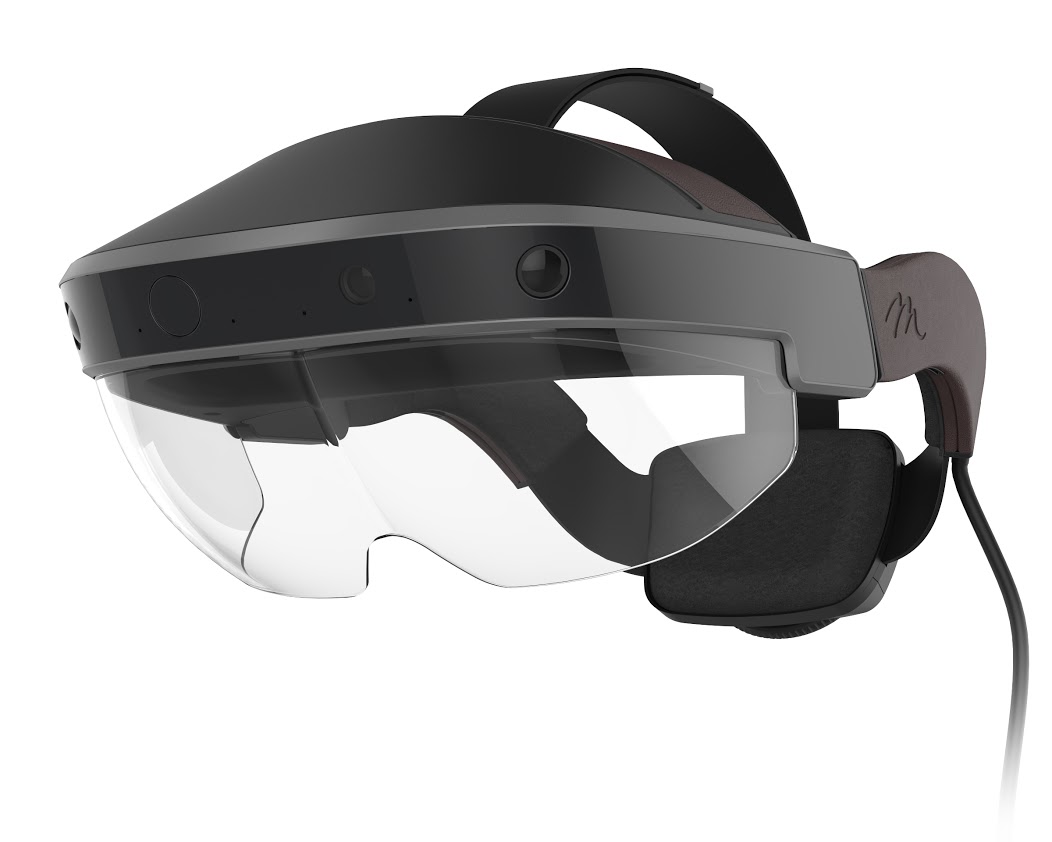 American augmented reality technology company Meta announced the completion of its USD50 million round of funding and its major investors included Horizons Ventures Limited, Lenovo, Tencent, Banyan Capital, Comcast Ventures, and GQY.
Meron Gribetz, chief executive officer of Meta, said that Meta integrates the leading optical solutions with an interactive system designed basing on neuroscience principles. Compared with traditional products, it is easier to use and features stronger functions for users.
Yue Bin, founding partner of Banyan Capital, said that Meta may be the only start-up that can directly compete with large companies such as Microsoft and Magic Leap in the AR sector. Other Chinese firms like Lenovo and Tencent added to the Sino flavoring of this latest round of investment.
See the full story here: https://www.chinatechnews.com/2016/07/04/23715-american-augmented-reality-gains-chinese-stamp-of-approval
Augmented Reality goes deep underwater
 In what might be the first Augmented Reality under water, the US Navy has announced a next generation diving helmet that includes as brand new feature an Augmented Vision Display, AVD.
The display provides high definition visual capabilities that overlaps on the ambient vision. It can display text messages, graphics (including sonar images) transparent images and video. Its functionality can be activated by the diver who also has the possibility to position the images/text in the desired part of the visor to keep an unobstructed view of its surrounding.
The helmet is also incorporating a micro sonar and an advanced camera whose feeds can be displayed by the AVD. This should provide a good vision even in muddy waters.
See the full story here: https://www.eitdigital.eu/blog/article/augmented-reality-goes-deep-underwater/
VisLab: Home to robots, virtual reality, 3-D printing
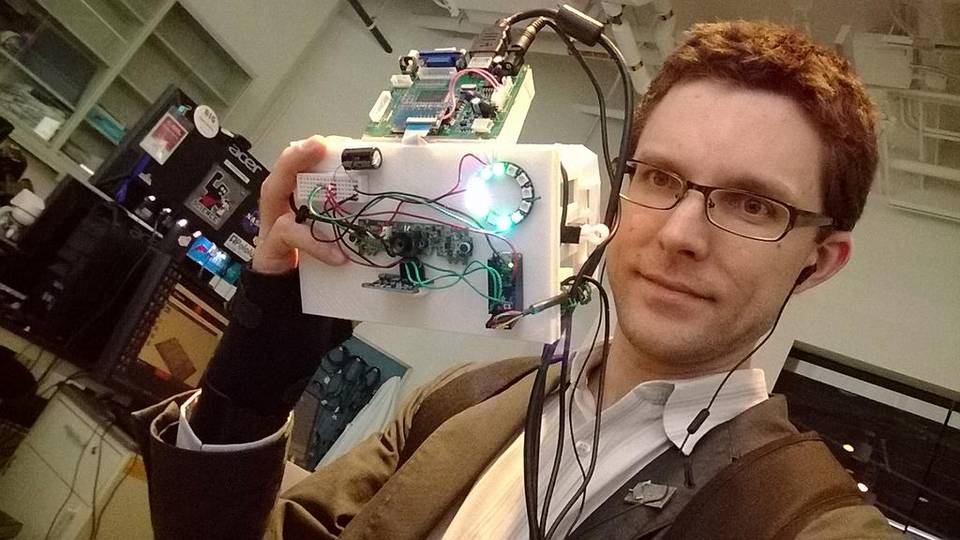 Located on the third floor of the North Carolina Museum of Natural Sciences’ Nature Research Center, the Visual World Investigate Lab (aka VisLab) is highly experimental and not easily defined. It is a Makerspace, it is a public outreach tool, it is a classroom for children and teachers, it is free, it is visited by about 2,000 people a month and it is open every day.
Lab coordinators teach science using scientific visualization techniques – such as virtual reality, augmented reality and GIS (Geographic Information Systems) – and encourage kids to learn how to code and build with impromptu electronics demonstrations and formal classes. The lab boasts many different types of software and hardware technologies such as augmented reality, GIS, Arduino, Raspberry Pi, robotics, 3-D modeling and 3-D printing. The lab’s formal goal is to teach science and how science is done. The lab’s informal goal is to encourage as many children as possible to become the next great scientists and inventors by demystifying the world of science, programming and electronics.
The democratisation of virtual reality
 Companies such as Swedish pioneers Brighter are using a VR dome and bicycle to take elderly patients on gentle virtual rides through their childhood neighbourhoods. This is to help sufferers with dementia and other cognitive-related illnesses a safe environment to get ‘out’ and about, an idea so inspired that it has caught the attention of Sweden’s Queen Silvia.
The importance of VR is illustrated by how it is starkly differentiated from other forms of media: the individual no longer sees something, they experience it. Academics such as Dr Matthew Nicholls, a colleague of Dr Glennerster at the University of Reading, has developed a virtual map of ancient Rome, drawing on sources as wide as surviving ruins, mosaics, paintings, written accounts, and even images on coins. It allows Dr Nicholls to not just speak of ancient Rome, but to take his students on virtual tours of the streets of the Empire as it was in its heyday. Largely a personal labour of love, the project has been so successful that TV companies and even game developers have taken an interest in his work and adopted it for their own endeavours.
Read the full story here: http://www.itproportal.com/2016/07/03/the-democratisation-of-virtual-reality-vr/#ixzz4DNa1o41A