Chicago area’s Stern Pinball plunges into virtual reality
 Stern Pinball, one of the country’s last remaining pinball machine manufacturers, has partnered with Oculus and video game developer FarSight Studios to release the Stern Pinball Arcade, the pinball company announced last week.
The arcade offers virtual reality versions of Stern's physical games.
Playing with a virtual reality headset might not totally translate the tactile aspects of pinball, like the pull of the plunger or the rattle of the machine. But the sounds, lights and music, the company hopes, will give players an authentic experience.
The company has a few hundred employees and said it’s seen steady sales in commercial machines, thanks, in part, to a surge in barcades — trendy bars where gamers can enjoy craft brews and vintage games.
“To not embrace what’s going on with apps and the digital world would be foolish,” Dankberg said.
“Motion sickness is a significant problem in many VR games,” Ward said. “I think one of the things that is probably smart about (Stern’s) approach is that it’s a fairly static frame of reference. … It's something that I think does lend itself to prolonged VR gameplay.”
See the full story here: http://www.chicagotribune.com/bluesky/originals/ct-stern-pinball-virtual-reality-oculus-bsi-20160608-story.html
AARP – videogaming and seniors
Cut and pasted from an Entertainment Software Association 6/8/16 email.
The Entertainment Software Association (ESA) recently interviewed Jo Ann Jenkins, CEO of AARP, about the growing popularity of video gaming among people 50 and older. Thanks for speaking with us, Jo Ann. Could you introduce yourself and your work? Hello, I am the Chief Executive Officer (CEO) of AARP, the world’s largest nonprofit, nonpartisan membership organization dedicated to social change and helping people 50 and over to improve the quality of their lives. I came to AARP six years ago following a 25-year career in the federal government, most recently as Chief Operating Officer at the Library of Congress. I began my AARP career as President of AARP Foundation, AARP’s charitable arm which assists millions of vulnerable Americans age 50 and older in the areas of hunger, income, housing and isolation. In 2013, I became AARP’s Chief Operating Officer, and in September 2014, I took over as CEO. I recently published my first book, Disrupt Aging: A Bold New Path to Living Your Best Life at Every Age to change the conversation in this country about what it means to get older. I believe we need to challenge outdated beliefs and spark new solutions so more people can adapt more fully to the new reality of aging in the 21st century, and that’s what Disrupt Aging does. One of those outdated beliefs is around game play, right? When most people think of video gaming, they think of Millennials, they don’t think of aging Boomers. That’s right. But that’s one of those outdated stereotypes that doesn’t match reality. The new reality is that video gaming is very popular with people 50 and older. We recently conducted a survey with ESA on the attitudes and habits of video gamers age 50-plus. We found that 41 million Americans age 50 and older—that’s one in three—play video games on a regular basis. Three-fourths of them play weekly, and four in ten play daily. And, among gamers age 60 and older, 43 percent play video games every day. “Games” is also one of the most popular sections on our website, aarp.org, with over 1.1 million unique visitors a month. Read more » |


Gamers are a part of 60 percent of American homes; are, on average, 38 years old; and spent more than $23.5 billion on game content, hardware and accessories in 2015, according to a new report from the Entertainment Software Association (ESA). The report, 2016 Essential Facts About the Computer and Video Game Industry, examines video games’ role and influence as one of the largest entertainment industries in America. Of note, this year’s Essential Facts also showcased two increasingly popular trends in the video game industry: virtual reality and eSports. You can read the complete report here. |

VerLASE Gets Another Patent for Color Conversion Technology Targeting Augmented Reality Applications
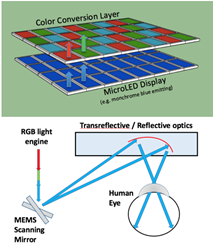
VerLASE Technologies announced today that US Patent No. 9,354,366 has issued, extending aspects of its revolutionary Chromover™ color conversion technology. The technology is a new approach for efficiently converting colors from inexpensive, widely available blue/violet light sources such as LEDs or laser diodes to any color in the visible, in particular to the optimal greens and reds needed for the ideal projection of images, whether in Near Eye Displays (NEDs) for Virtual (VR) and Augmented Reality (AR) applications, or in larger projectors. Not only can the color of the output light be tailored, but also spectral characteristics and directionality. Devices can be designed as a laser, directional LED, or in-between, depending on the application.
The technology is ideally suited for integrating with microLED displays for the next generation of NEDs needed in AR applications. The light sources and microdisplay technologies used today have numerous drawbacks, whether in color quality, resolution, brightness, efficiency, or longevity, or a combination of all these. MicroLED technology, with individually addressable pixels, would be preferred for higher brightness and efficiency leading to longer battery life and very compact physical forms, but they are typically only monochrome (blue /violet) emitters. Phosphors or Quantum Dots have not been shown to work with microLEDs; moreover, many AR approaches use diffractive or holographic waveguide optics which are sensitive to the input angles and spectral width of the input source light.
See the full story here: http://www.prweb.com/releases/2016/06/prweb13465007.htm
Spaces Founder Discusses VR Opportunities In Chinese Theme Parks
 On the heels of its $3 million seed funding led by Comcast Ventures alongside Boost VC, Canyon Creek Capital, Colopl VR Fund, and GREE—virtual reality (VR) startup company, Spaces, has entered into a $30 million joint venture with China’s Songcheng Performance Development, one of the world’s biggest theme park operators.
Utilizing creative tools and technology, Spaces is developing specifically for theme parks. The joint venture will bring new virtual reality and mixed reality (MxR) attractions to Songcheng’s theme parks, which drew nearly 23 million guests in 2015, according to Themed Entertainment Association data.
In Songcheng’s theme parks, VR and MxR elements will be added to existing attractions, including elaborate stage shows that, on their own, attract more than 7 million people annually. Songcheng-Spaces also plans to build unique, standalone virtual reality attractions and parks throughout China.
Spaces will also work with Songcheng to bring its popular livestreaming video site 6Rooms (6.cn), which has more than 33 million unique users a month, to VR and MxR platforms. Spaces will create VR experiences that further enhance China’s largest online platform for performing arts. With 6Rooms, users create and watch more than 50,000 live broadcast hours each day.
VR and livestreaming are enormously complementary. Our technology will give the 6rooms performers and viewers a more personal and rich experience through VR. There is a tremendous power in one-on-one interactions in VR. We have seen this with scripted digital characters, live avatars, and real-time presence capture.
Chinese parks are similar to US parks in many ways with traditional rides and attractions, but they are also quite different. Chinese park goers love having immersive experiences, they enjoy the experience of just being in a theme park—of being somewhere that is very different than reality. Culturally, Chinese audiences are even more open to the addition of VR and mixed reality than anywhere else in the world. Plus, the importance of live stage shows to Chinese theme parks, especially to Songcheng’s parks, gives us some amazing existing attractions to enhance and re-imagine by using VR and MxR.
...fortunately our history at Spaces, and prior, is about rapid innovation, testing and deployment to learn what works. Having a frequently changing attraction may lead to greater attendance and greater marketability,...
See the full interview here: http://www.alistdaily.com/media/spaces-founder-discusses-vr-opportunities-chinese-theme-parks/
Getty’s New Virtual Reality Group Offers 12,000 360 Images Straight Away
 Getty has this week announced the formation of a brand new VR division rather elaborately named The Getty Images Virtual Reality Group. The team offers over 12,000 “premium 360 images” from the off, capturing important events and scenes. For example, the company will be heading to the 2016 Olympics in Rio de Janeiro with a 360 camera so that others can purchase their images for use.
You can see some of the company’s 360 degree work on a new site dedicated to the group. It goes beyond just static photos, also offering 360 degree video (in the given example powered by Visualise) and its high resolution ‘gigapixel’ images that don’t offer a full 360 degree view but boast much higher clarity for what is captured.
See the full story here: http://uploadvr.com/gettys-new-virtual-reality-group-offers-12000-360-images-straight-away/
12 Virtual Reality Stats That Will Blow You Away
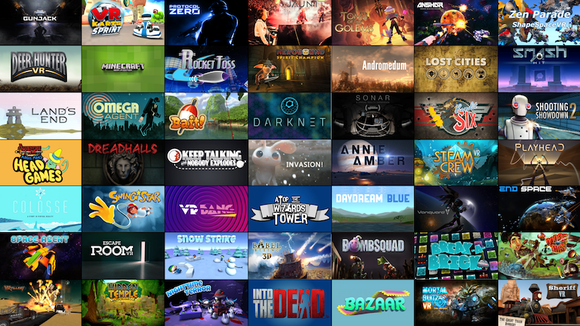 6. One million people have used Samsung's Gear VR over the past month,
7. Nearly 1.3 million people subscribe to the YouTube 360 channel.
10. 200,000 developers have already registered to build games for the Oculus Rift.
12. There are currently 685 virtual reality start-ups with an average valuation of $4.5 million, according to start-up tracking site AngelList
See the full story here: http://www.fool.com/investing/2016/06/06/12-virtual-reality-stats-that-will-blow-you-away.aspx?source=iedfolrf0000001
‘The L Word’s’ Rose Troche Plans LGBTQIA Series- In Virtual Reality
 After collaborating with VR pioneer Morris May of Specular Theory on ground-breaking films on date rape and police brutality, the American filmmaker is planning an 8-part ensemble comedy series entitled LGBTQIA. Casting is underway and she is seeking a partner for what she hopes will be an ongoing series set in a high school which doubles as a community center at night. The narrative will follow people who turn up to attend LGBTQIA group meetings (meaning for the lesbian, gay, bisexual, transgender, queer, intersex and asexual communities) which descend into mayhem. She intends to shoot the first two episodes, each of 8-10 minutes, in late August in time to premiere at the Sundance Film Festival’s New Frontier program.
See the full story here; http://www.forbes.com/sites/dongroves/2016/06/06/the-l-words-rose-troche-plans-lgbtqia-series-in-virtual-reality/#7b366e541596
Iron Man meets Aquaman as Navy turns to augmented reality
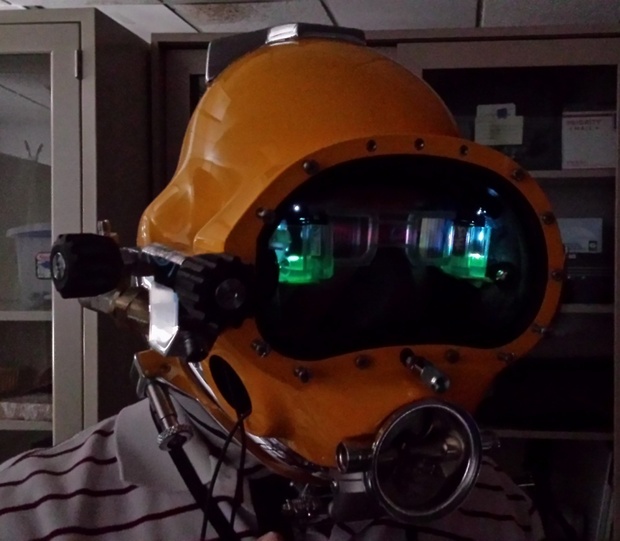 Dubbed the Divers Augmented Vision Display, the augmented reality technology is embedded directly inside the helmet.
"By building this [heads up display] directly inside the dive helmet, instead of attaching a display on the outside, it can provide a capability similar to something from an Ironman movie," Dennis Gallagher, the Navy's Underwater Systems Development Project Engineer, said in a statement. "You have everything you visually need right there within the helmet."
The smart helmet has been demonstrated to about 20 military divers so far.
The Navy expects to conduct in-water simulation testing in October, with expanded field testing set for 2017.
See the full story here: http://www.computerworld.com/article/3079420/emerging-technology/iron-man-meets-aquaman-as-navy-turns-to-augmented-reality.html
Educators Should Look To The Past Before Moving Forward With Education In Virtual Reality
 The future for education in virtual reality and virtual worlds looks rather bright, but it will require educators to embrace the technology to do more than just replicate existing experiences. Educators will also have to be nice to their IT Departments and be realistic with their aims, which may be a bigger challenge!
See the full post here: http://sl.governormarley.com/?p=5684