Your brain isn’t ready for virtual reality
 The damage caused to our bodies and minds by our time in cyberspace is well-documented and beyond argument. The American Psychological Association has released numerous reports on “the psychological toll of the smartphone,” citing study after study after study finding strong positive correlations between heavy smartphone usage and the symptoms of anxiety, depression, insomnia, and other symptoms of mental illnesses. Video games may produce some cognitive and problem-solving benefits, but they alsomake even moderate gamers more anxious socially phobic. The oft-mocked psychopathology of Internet addiction is breeding generations who seek to calm the symptoms of heavy Internet use with more Internet use.
Virtual reality is no different a false escape—and is likely worse.
Early adopters and developers of VR content and hardware reported “virtual reality sickness”—a form of motion sickness caused by the disconnect between an immersive visual world that simulates movement and action and a body that is typically static. Oculus founder Palmer Luckey recently described the jump between VR and the real world as no more a mental shift than leaving a movie theater, but the many threads, mods, and websites solely devoted to calming the VR-fueled mind and body would say otherwise.
See the full article here: http://www.dailydot.com/opinion/your-brain-isnt-ready-for-virtual-reality/
WITH NEW ACQUISITION, TINDER GETS INTO ‘AUGMENTED REALITY’
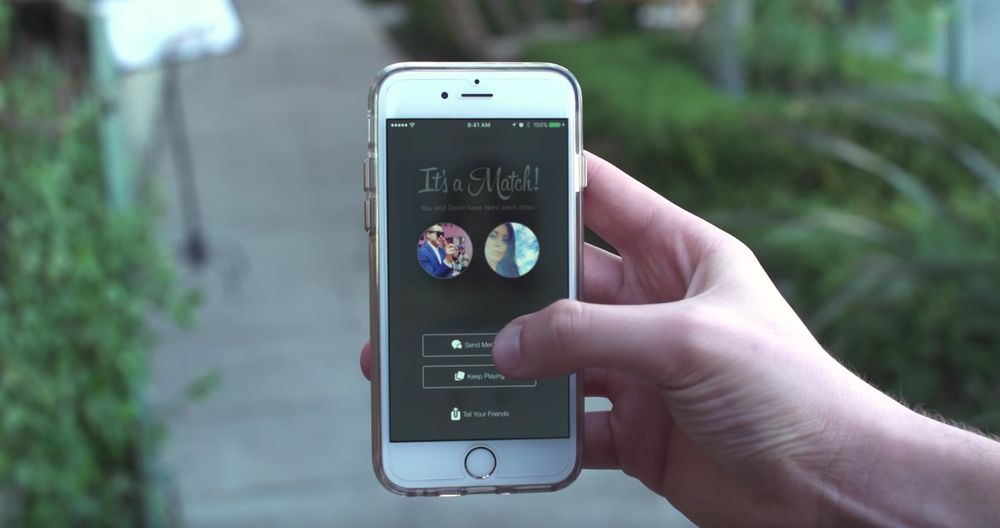 To Jain, Tinder is augmented reality. The app’s entire mission is to enhance communication in the real, physical world. The goal isn’t to keep talking online— it’s to meet, connect, and stay in touch.
“Virtual reality, while it offers a tremendous new world for us to play in, is a different kind of social experience,” he says. “It’s one, I think, where you're more detached from the human connection we all seek.“
Tinder’s goal now is to augment that information, and help put into context; in other businesses this would be called “actionable information.” It’s figuring out how your friends might know each other, or the ability to know that someone else at the bar also really likes the 90s Nickelodeon cartoon Street Sharks. This information is valuable because you can make real-world decisions based on it. A conversation can start out of the blue, or a relationship can be strengthened.
They started talking about how Tinder’s scale could be used as a platform for Humin’s technology, and over the last four months decided to work together to merge ideas.
See the full story here: http://www.popsci.com/with-new-acquisition-tinder-gets-into-augmented-reality
Toyota patents augmented-reality windshield
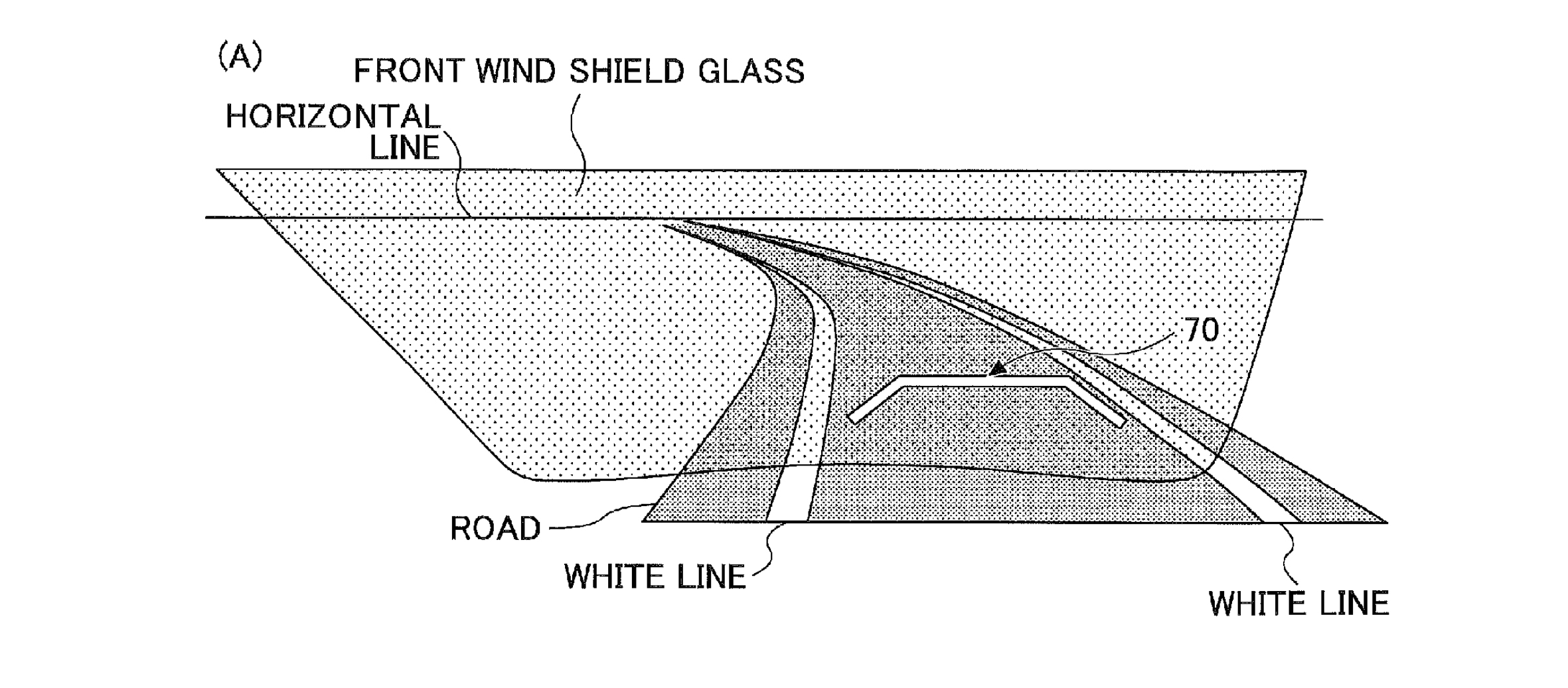 Head-up displays as they currently exist push static images from the dashboard to your windshield using reflections. Toyota's system acts in that same way, but instead of just displaying data pulled from the instrument display, it takes readings from speed and steering-angle sensors to change the output in real time.
Perhaps its main feature, or at least the feature most talked up in the patent itself, is the ability to display the vehicle's lane positioning in real time. As you move, you'll have an image that shows you where the edges of your car lie within the lane. Now, you'll never need to wonder exactly where your vehicle's extremes are -- you'll be able to see them right in front of you.
If this ever makes it to production (a good deal of automotive-patent tech tends to disappear into the ether), I'll finally understand why that damned chime keeps going off.
See the original post here: http://www.cnet.com/roadshow/news/toyota-patents-trick-augmented-reality-windshield/
Y Combinator still has space in next batch for right virtual or augmented reality startups
 Y Combinator still wants your virtual or augmented reality startup to apply to its Summer 2016 batch.
The deadline to apply to the upcoming accelerator session was last week, but company President Sam Altman was so “sad about the lack of VR/AR companies” applying for the summer session that he extended the deadline for startups in that sector.
Even without Magic Leap, investment in AR/VR is still up 20 percent in the first quarter of 2016, compared to the $250 million invested in the fourth quarter of 2015. Analysts expect the AR/VR sector to hit $120 billion in revenue by 2020.
vMocion looks to end motion sickness in virtual reality by tricking your brain
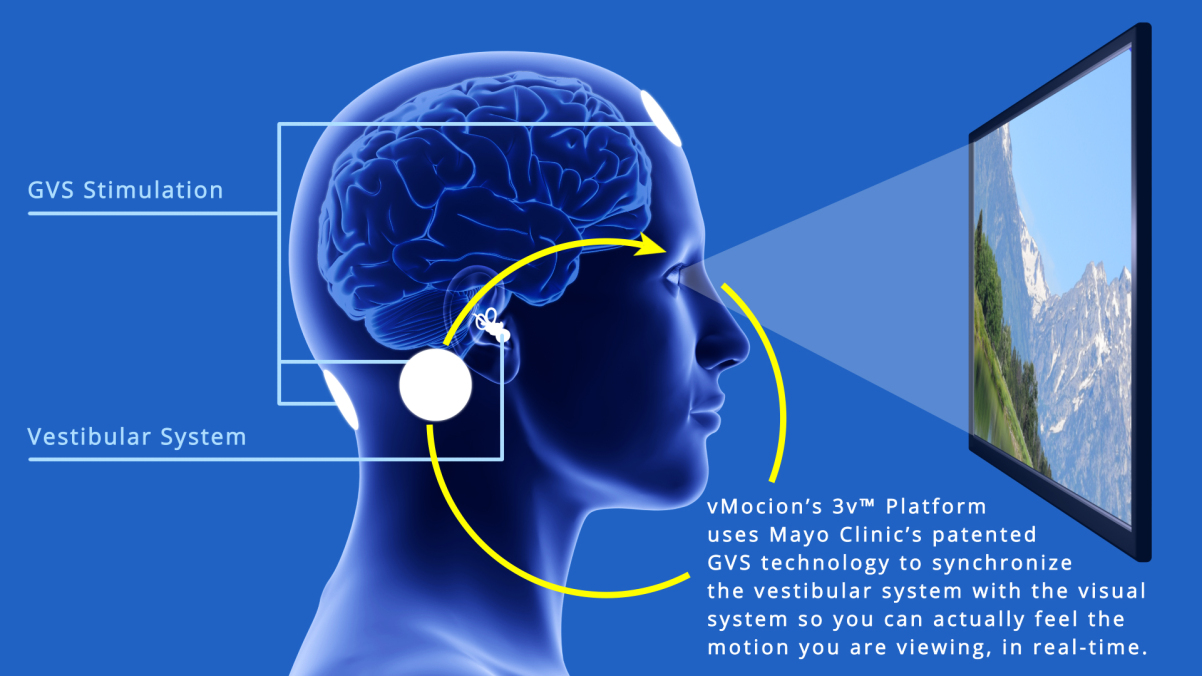 One of the major problems is the mismatch between the visual perception of motion given by the VR headset and the inner ear telling you that you’re standing still. Enough miscommunication and you start to grow a bit queasy.
vMocion is attempting to correct this problem by utilizing technology developed over 10 years of research by the Mayo Clinic’s Aerospace Medicine & Vestibular Research Laboratory. The technology is called Galvanic Vestibular Stimulation (GVS), and it uses strategically-placed electrodes to trick a user’s inner-ear into perceiving motion. In virtual reality, if this is timed perfectly, it can allow a user to feel totally immersed in their current setting and actually feel when the spaceship they’re piloting dives or turns.
If you’re following VR closely, this may not be the first time you’ve heard of GVS technology. At SXSW earlier this month, Samsung showed off a special project they’d been working on, the Entrim 4D headphones. The headphones were demoed in coordination with the Gear VR to show off GVS technology.
Dr. Michael Cevette, chair of the audiology department at the Mayo Clinic, tells me that the differences between Entrim 4D and the technology being licensed by vMocion are much like the differences between Gear VR and Oculus Rift. While Entrim 4D uses a pair of electrodes to measure movement around a fixed point, vMocion allows three-dimensions of motion stimulation.
It’s more than just adding more electrodes however, vMocion’s 3v platform uses its tech to convert simulated motion in existing 2D and 3D content into GVS stimulation. This means that content developers won’t have to specifically implement this technology into VR games and movies and users will be able to gain a more pleasant experience on a wide swath of VR content.
See the full story here: http://techcrunch.com/2016/03/30/vmocion-looks-to-end-motion-sickness-in-virtual-reality-by-tricking-your-brain/
AT&T Park dives into virtual reality

SF Giants unveil new 2016 season special events, food, and fan giveaways and more during the SF Giants Media Day at AT&T Park Tuesday March 29, 2016. (Emma Chiang/Special to S.F. Examiner)
The Giants plan to display five sets of goggles for attendees to view the videos at the @Cafe, located behind the centerfield bleachers, with potential for expansion, according to Bill Schlough, a vice president for the team.
The team has partnered with virtual reality production company Jaunt to create the videos — the first of which transports viewers to spring training in Scottsdale, Arizona using Samsung Gear VR goggles and headphones. Jaunt is a Palo Alto-based computer software company that uses a specially-designed camera to capture the 360 degree videos, according to their website.
Virtual reality isn’t the only new development at AT&T Park this season. Improvements to the stadium’s Wi-Fi system included bringing the number of access points to 1,628, the most in any MLB facility, according to Giants officials.
See the full story here: http://www.sfexaminer.com/att-park-dives-virtual-reality/
Big Changes at Regal Cinemas
 [Philip Lelyveld comment: The immediate-future no-brainer answer to what they'll show is computer-generated images that match up with the mainstream feature on the main screen - since it doesn't pay to shoot 3 screens for such a small installed based. (Maze Runner I and II). Down the road think more creatively - Abel Gance's Napoleon triptychs.]
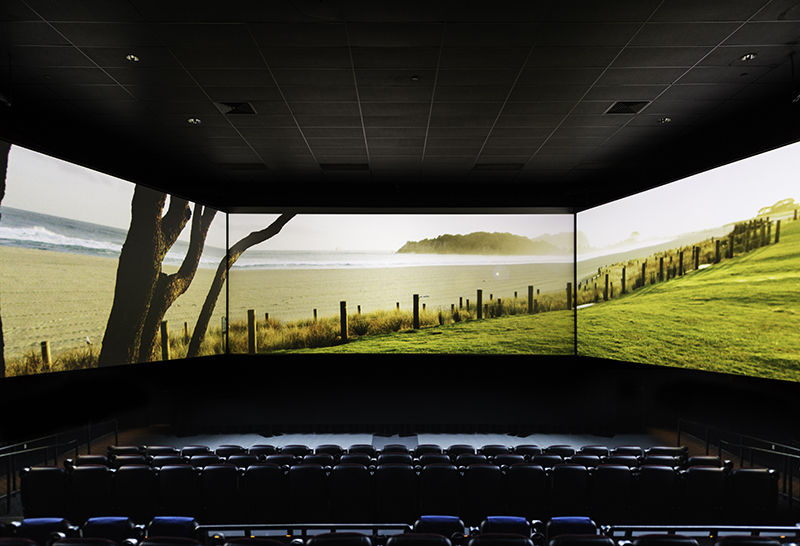
On Friday, April 1, the 14-screen complex will get the unwieldy name Regal L.A. Live: A Barco Innovation Center (no, it’s not an April Fool’s joke), with four key changes. The most significant is the turning of one of the theaters into the “Barco Escape,” which touts three screens in a panoramic layout for a more immersive viewing experience. Additionally, the lobby will be overhauled with a bevy of digital screens, new lighting and interactive displays. The complex is getting Barco laser projectors, initially in two theaters, with the remainder being upgraded later this year. The auditoriums’ sound systems are similarly being replaced by Barco and Auro Technologies products. The April 1 change will be marked by a block party with a DJ, street performers and more. Bonus: Anyone who purchases tickets for movies starting at 6 p.m. or later on April 1 gets a voucher for a small popcorn and small fountain drink.
See the original post here: http://www.ladowntownnews.com/news/big-changes-at-regal-cinemas/article_6e2230be-f508-11e5-b7b1-4f1f95aa60d5.html
Oculus kicks off virtual reality’s slow-motion revolution
 [Philip Lelyveld comment: I'm surprised more people aren't using the quote "the future is here, its just not evenly distributed."]
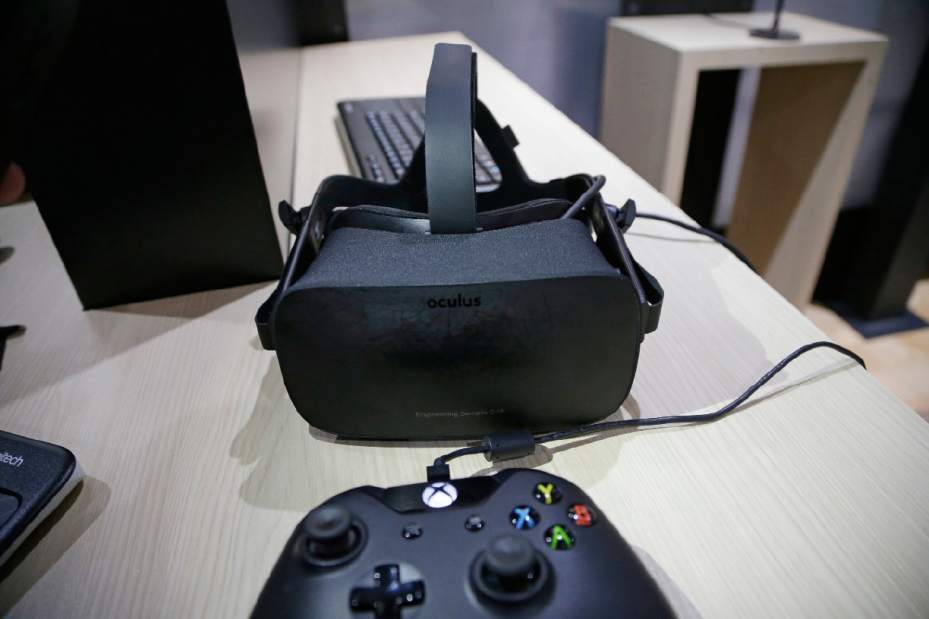
Adi Robertson of the Verge calls the first version of the Oculus a “solid foundation for what's to come.” Setting up the headset is a significantly bigger task than flipping on a new smartphone, though, and games can take a long time to download, Brian X. Chen wrote in the New York Times.
Headsets continue to cause problems with nausea for some users, even though the companies making them have been insisting they're on the precipice of solving this issue for the past few years. Oculus recently announced a new feature in its latest software for developers intended to reduce motion sickness. As it stands, people who use virtual reality report a range of sensitivity to the uncomfortable physical effects of the technology.
All this means that virtual reality is likely to remain a pastime of hard-core gamers and early adopters.
See the full story here: http://triblive.com/business/technology/10217708-74/oculus-reality-virtual
Sony Plans New PlayStation for Graphics-Heavy Games
 The days of waiting six or more years between videogame-console releases are coming to an end.
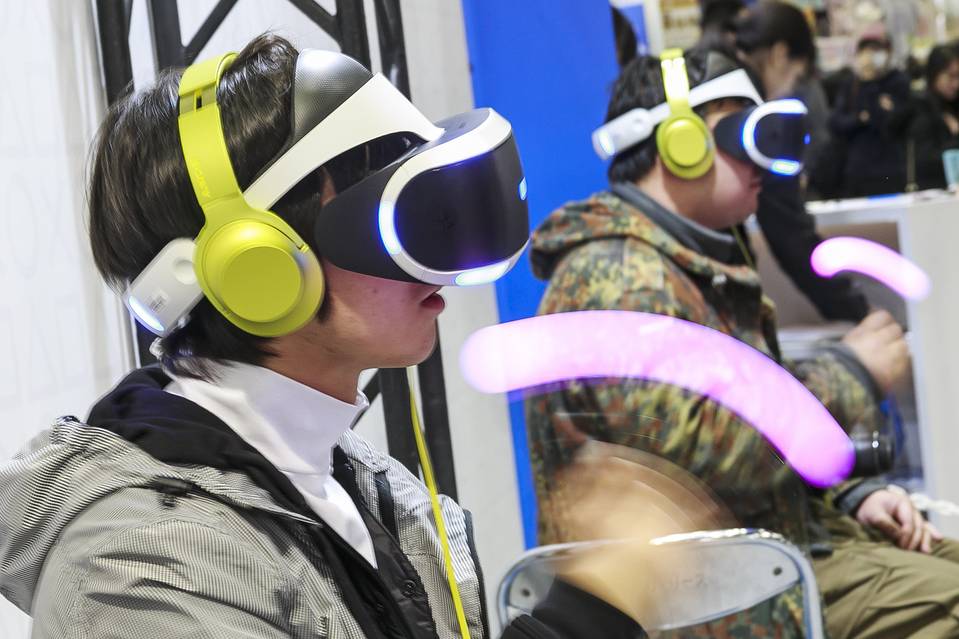
Sony Corp. is planning to sell a more powerful version of its PlayStation 4 machine to handle higher-end game experiences, including virtual reality, people familiar with the matter said, while continuing production of its existing console that has so far sold more than 36 million units world-wide.
Existing PlayStation 4 owners would need to buy the new model to take full advantage of the enhanced graphics and power, though it is likely that the current model and the coming one would share the same software catalog, one of the people said.
See the full story here: http://www.wsj.com/articles/sony-plans-new-playstation-for-graphics-heavy-games-1459152941
Virtual Reality Whiz Palmer Luckey: Future Will Be ‘More Boring Than We Think’
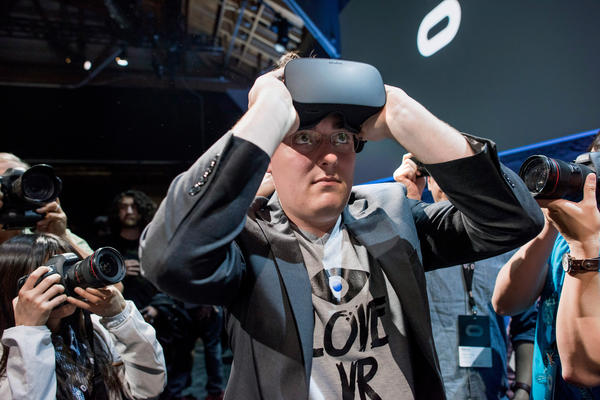
Palmer Luckey, co-founder of Oculus VR, demonstrates the new Oculus Rift headset during the "Step Into The Rift" event in San Francisco in June 2015.
You can listen to the extended interview with Luckey at the audio link above.
In it, Luckey muses about how VR may be better for the environment, why he recommends the novel Ready Player One despite its dystopian view of the VR future, how VR is facing similar pushback to the one faced by rock 'n' roll and swing dancing in their time and what ethical questions are raised by the use of VR for journalism.
See the full story with audio link here: http://kclu.org/post/virtual-reality-whiz-palmer-luckey-future-will-be-more-boring-we-think#stream/0