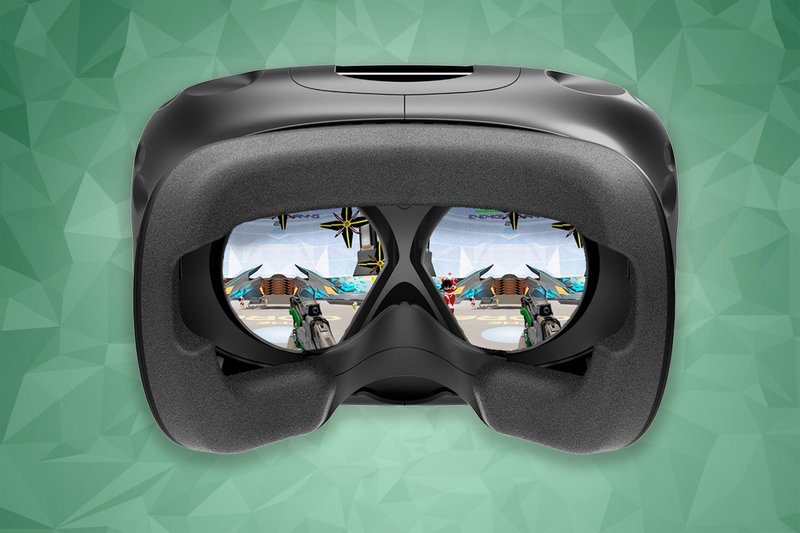
 PPFA last year teamed up with Emblematic Group’s CEO Nonny de la Peña, who has been dubbed the “godmother of virtual reality,” as well as Brad Lichtenstein of 371 Productions and Custom Reality Services and Jeff and Kelli Fitzsimmons of Custom Reality Services, to produce an approximately five-minute virtual documentary that shows what one woman in particular, and many people generally, have experienced when visiting a reproductive health center.
The filmmakers have taken what they say is real documentary audio and video footage from abortion clinic protests and used virtual reality, 360-degree video technology, and computer-generated imagery (CGI) to bring a patient’s experience to life. Jeff and Kelli Fitzsimmons told RH Reality Check at the screening that, as far as they know, Across the Line is the first “hybrid documentary” to blend all of these technologies and storytelling forms.
See the full story here: http://rhrealitycheck.org/article/2016/03/07/filmmakers-use-virtual-reality-depict-abortion-clinic-protests/
 In other words, a few years down the line, rather than watching Valve’s The International through an online stream, you could be watching it though your VR headset as through you were part of the actual crowd, looking up at the big screen and cheering on your side. Alternatively, you might want a truly, “in-game” experience and choose to step onto the map itself. You’ll wander up the mid lane to watch an early rune fight or shadow a carry player’s rotations around the map. But VR’s potential does not stop there
See the full story here: http://www.redbull.com/en/esports/stories/1331781171344/can-virtual-reality-transform-esports
Amazon is creating a new virtual reality platform, a job posting on employer evaluation site GlassDoor has indicated. The posting, spotted by UploadVR, calls for a senior software development manager for a new virtual reality team. The posting doesn't specify exactly what the successful candidate will be working on, but they will be responsible for "building the Virtual Reality experience within Amazon Video."
NETFLIX ALREADY HAS AN APP FOR SAMSUNG'S GEAR VR
The retail giant says that this will include "an ingestion and playback platform for Virtual Reality experiences" that could operate like its competitors' platforms — Netflix already has its own virtual reality app for Samsung's Gear VR headset, while Hulu is scheduled to put out its own VR app, and the content to watch on it, this spring.
See the full story here: http://www.theverge.com/2016/3/8/11177854/amazon-vr-platform-job-posting

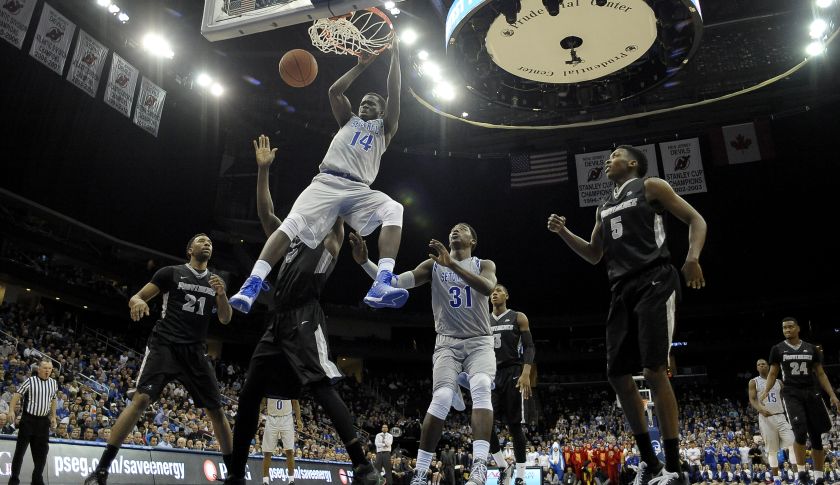
NEWARK, NJ - FEBRUARY 25: Ismael Sanogo #14 of the Seton Hall Pirates dunks the ball against the Providence Friars during a game at the Prudential Center on February 25, 2016 in Newark, New Jersey. (Photo by Porter Binks/Big East Conference) *** Local Caption ***
Fox Sports and NextVR are teaming up to kick off March Madness in virtual reality. As part of the partnership between the sports broadcaster and virtual reality livestreaming company, the entire Big East tournament at Madison Square Garden will be livestreamed in VR.
NextVR will livestream four games on March 10, two games on March 11, and the championship on March 12, marking the first time an entire tournament will be captured for the growing virtual reality audience.
See the full story here: http://fortune.com/2016/03/07/fox-sports-to-stream-march-madness-in-virtual-reality/
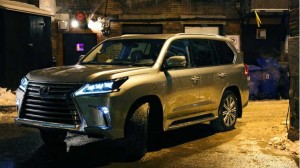 ABC has launched its first scripted virtual reality experience to coincide with the much-anticipated midseason premiere of its hit drama ‘Quantico’, which aired on Sunday March 6th in the USA.
Scripted by show writers, and in partnership with Lexus, the experience enables fans to delve ‘in world’ with the show, assuming the role of a new recruit on a mission with FBI trainees Shelby Wyatt (Johanna Braddy) and Caleb Haas (Graham Rogers) as they track down and apprehend their assigned target. The experience is available at QuanticoVR.com, which includes instructions for accessing it on desktop and via Littlstar's app for headsets, mobile and Apple TV.
“Working in virtual reality opens up so many possibilities and ways to engage fans beyond what can be accomplished on a flat screen,” said Jeffrey Weinstock, vice president and creative director, ABC Integrated Marketing. “We’re literally inviting fans to be a character in the show, immersing them in this world and allowing them to explore and discover parts of the story on their own.”
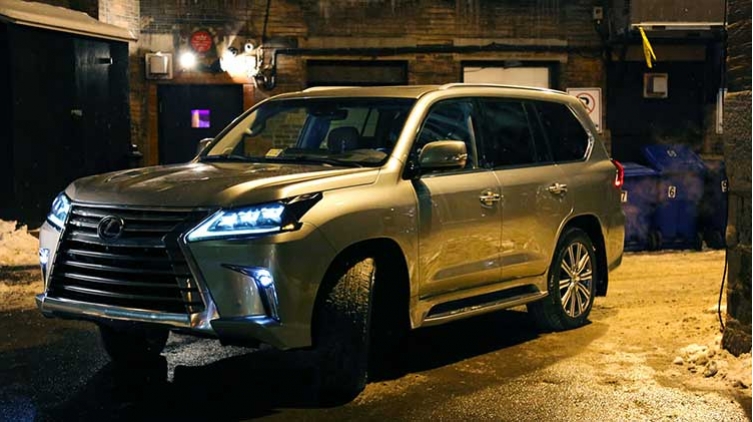
The experience includes two Easter eggs that can be found while scanning the footage. The first unlocks bonus footage from the mid-season premiere. The second, which is visible in the headset, provides telling insight into one of the characters’ motives and connection to terrorist activities. The scene features the characters in a Lexus LX 570 flagship SUV. A “30 spot and a behind-the-scenes featurette are also available for users to view.
See the full story here: http://saatchi.com/en-us/news/team-one-abc-lexus-launch-networks-first-scripted-virtual-reality-experience-for-popular-drama-qu/
 [Philip Lelyveld comment: from the video at the link, the new sound system looks like a neck harness. LG tried that form factor a few years ago. We'll see at the launch...]
Sony announced the launch of its Future Lab Program, a new research and development initiative “that emphasizes an open creative environment and direct lines of communication with society, through which it aims to co-create new lifestyles and user value in the future.” Sony’s program will share prototypes with the user community during development and welcome feedback to help refine projects. The first project — a hands-free interface that offers a new way to experience audio — will be featured in Austin at the SXSW Interactive Festival.
The UI prototype enables “the user to receive audio information without having to insert any object into his or her ear,” explains the press release. It will be one of a number of concept prototypes at Sony’s SXSW booth March 12-14.
See the full story here: http://www.etcentric.org/sonys-future-lab-rd-program-to-showcase-tech-at-sxsw/
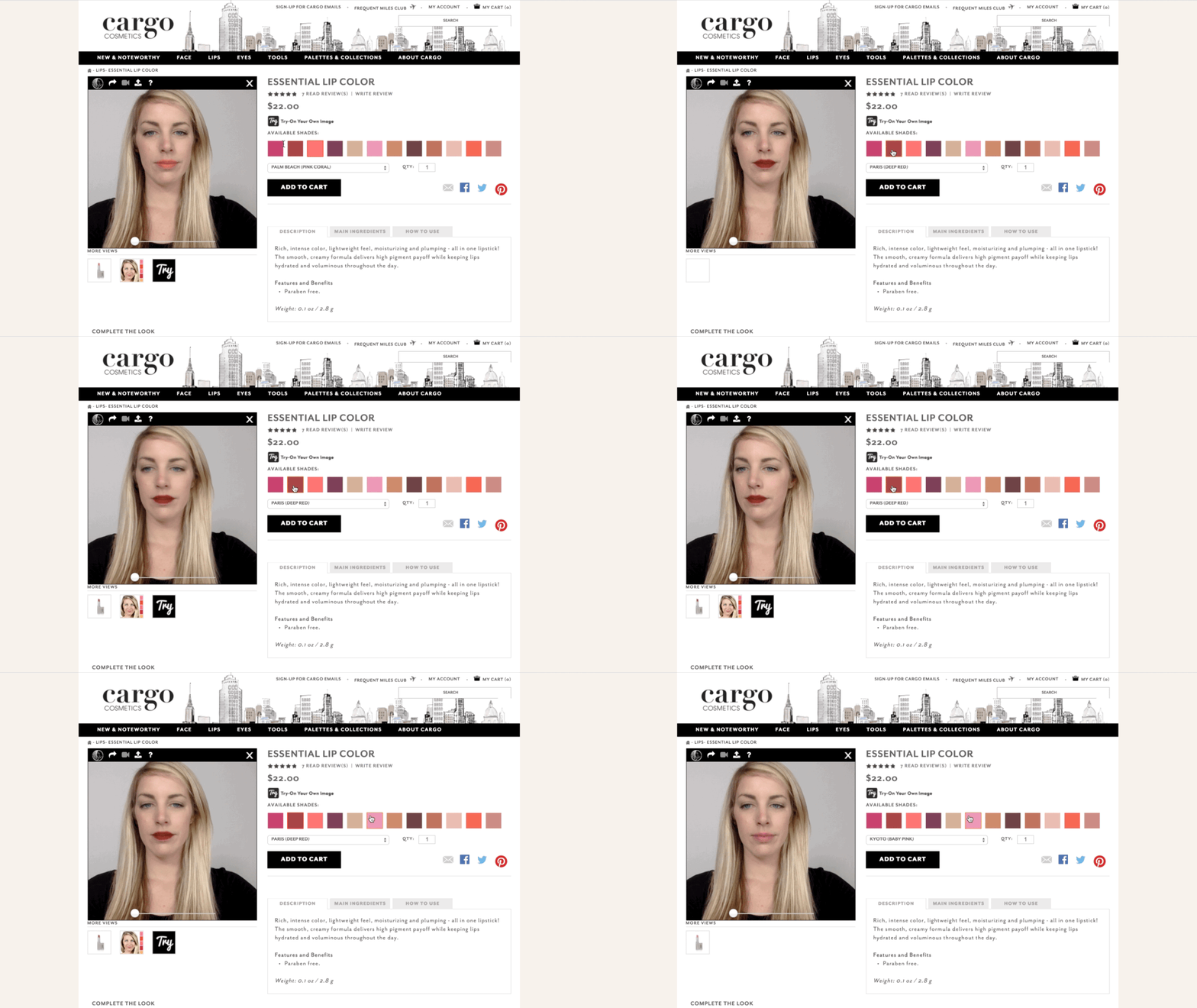
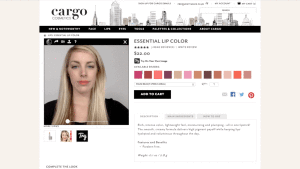 Unlike most virtual makeover apps, you don't have to upload a pic to use it. You don't even have to download any add-on. It was built with HTML5 and JavaScript, and so long as you have a webcam, you can try on virtual makeup in real time right on your browser.
Cargo has already activated the feature on its lipstick and eyeshadowpages, which you can play with right now. While I notice a little bit of lag (and I do wish I can change the program's lip shape to fit mine), the virtual products can follow your face around if you don't move too fast or too close to the camera.
See the full story here: http://www.engadget.com/2016/03/05/cake-augmented-reality-shopping-platform-makeup/
 Based on their analysis of the risks, both researchers from the Department of Philosophy at Mainz University offer concrete recommendations for the use of VR. For example, in experimental work developing new clinical applications, researchers should be careful not to create false hopes in patients. They should repeatedly remind them of the merely experimental nature of the research. Madary and Metzinger also note that a code of ethical conduct, however important it may be, can never function as a substitute for ethical reasoning itself on the part of researchers. Out of concern for consumers of VR, they call for long-term studies into the psychological effects of immersion. They see a special danger with particular content such as violence and pornography, where the advanced technology increases the risk of psychological trauma. Users should be clearly informed of these dangers, as well as risks of hallucinations, personality changes, and the powerful unconscious influence of advertising in VR. Finally, Madary and Metzinger draw attention to the need for regulations regarding ownership and individuation of avatars, regulations that should also address concerns about surveillance and data protection.
The authors sum up their article, "Real Virtuality: A Code of Ethical Conduct. Recommendations for Good Scientific Practice and the Consumers of VR-Technology," by writing, "One of our main goals was to provide a first set of ethical recommendations as a platform for future discussions." The article appears in Frontiers in Robotics and AI, a well-known Open Access platform for scientific publications.
See two versions of the story here: https://www.newscientist.com/article/2079601-virtual-reality-could-be-an-ethical-minefield-are-we-ready/ and here http://esciencenews.com/articles/2016/03/04/first.code.conduct.use.virtual.reality.established
And there is this critique: http://motherboard.vice.com/en_uk/read/vr-code-of-ethics
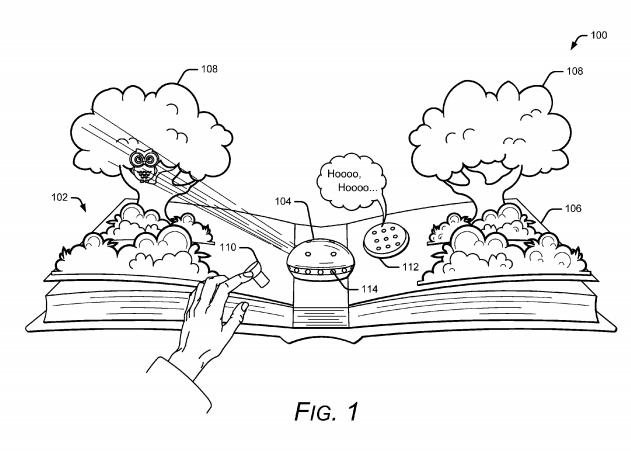
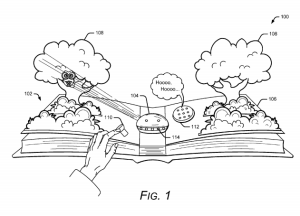 There are two patents in total, the first is for a “Media Enhanced Pop-up Book” and this one will make use of a smartphone or tablet to aid in the process by interacting with the use of the book. So for instance, as you turn a page, the phone or tablet understands and responds accordingly. The second patent is the far more interesting one, as this one essentially forgoes the use of a smartphone and tablet and instead employs a small device which has been likened (in appearance) to a hamburger. The device is placed in the middle of the book and then embedded sensors on the pages allow for a more interactive reading experience. The hamburger will essentially be able to interact with the reader’s pressure or motion and change the imagery displayed on the pages.
See the full story here: http://www.androidheadlines.com/2016/03/google-patents-physical-books-based-on-augmented-reality.html

A general view shows the Temple of Bel in the historical city of Palmyra, Syria, August 4, 2010. The hardline Islamic State group has destroyed part of an ancient temple in Syria's Palmyra city, a group monitoring the conflict said on August 30, 2015. The militants targeted the Temple of Bel, a Roman-era structure in the central desert city, the Syrian Observatory for Human Rights said. Picture taken August 4, 2010. REUTERS/Sandra Auger TPX IMAGES OF THE DAY - RTX1QFZ9
“I’ve lived through this data transition,” said Thomas Levy, an archaeologist and anthropology professor at the University of California, San Diego. “We still dig like our 19th-century predecessors—with trowels, rubber buckets, shovels, toothbrushes, and so on. But we used to be really encumbered by our ability to record data. We had to be more selective. Now, with these digital tools—with GPS, total stations, laser scanning, and structure from motion photography—we can elect an unlimited amount of data.”
Thanks to satellite data, those data points can now be embedded within a topography of the entire planet. For instance, Sarah Parcak, a space archaeologist, analyzes satellite imagery of Earth, looking for telltale features that might signal a long-lost historical site.
Georgia Tech is in the midst of a major renovation of its library system, an overhaul that will include removing many of the books from public spaces.
“The huge issue now is data,” she said. “It’s probably more important than text.
“Having Palmyra real is much more important than having 3-D models of it, obviously,” Levy told me, referring to the ancient city where several historic sites have been destroyed by ISIS in recent months. “But in a world where we have so much intentional destruction of cultural heritage, we’re in a position now to record it in ways that were impossible even a decade ago.”
See the full story here: http://www.theatlantic.com/technology/archive/2016/03/digital-material-worlds/471858/?curator=MediaREDEF