How we could soon all be watching Smell-O-Vision: Film festivals recreate 1960 concept as new virtual reality technology is released
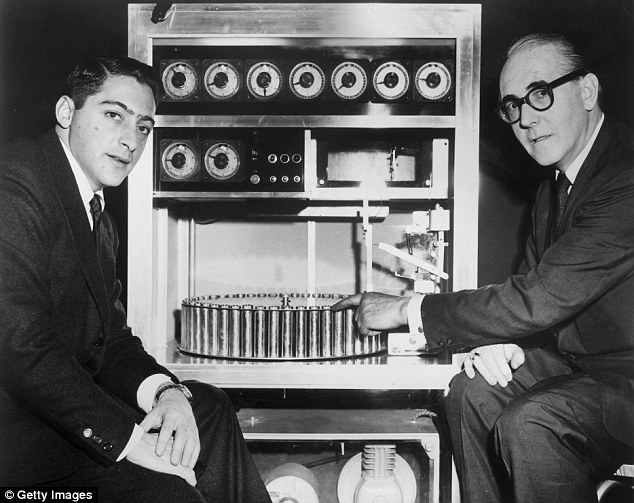 [Philip Lelyveld comment: this is an interesting short history of smell in cinema.]
...new technology now being developed includes a Japanese smelling screen with four small fans - and a virtual reality mask called ‘Feelreal’ which immerses viewers in sight, sound and smell.
More recently in 2013, scientists in Tokyo, Japan, revealed they had invented a 'smelling screen' making smells waft from the spot on a display that their corresponding objects appear.
It works by feeding odours from gel pellets into four air streams in each corner of the screen which are blown across the display’s surface.
Other recent inventions include the oPhone Duo, which came to light in 2014 after scientists sent the smell of champagne and macarons from Paris to New York via an iPhone app.
The oPhone Duo’s system features an app allowing users to make an 'oNote' with a smell created out of a palette of 32 scents that can be combined in 300,000 possible combinations.
In other new technology, the £200 Feelreal virtual reality mask revealed in California in spring 2015 promises users 'the most immersive, unbelievable and fascinating virtual experience you’ve ever known'.
An odour generator built into the headset has seven removable smell cartridges that can be changed depending on the film users are watching or video game they are playing.
See the full story here: http://www.dailymail.co.uk/news/article-3334085/How-soon-watching-Smell-O-Vision-Film-festivals-recreate-1960-concept-new-virtual-reality-technology-released.html
News Corp unites with Ray White to forge new reality in property ads
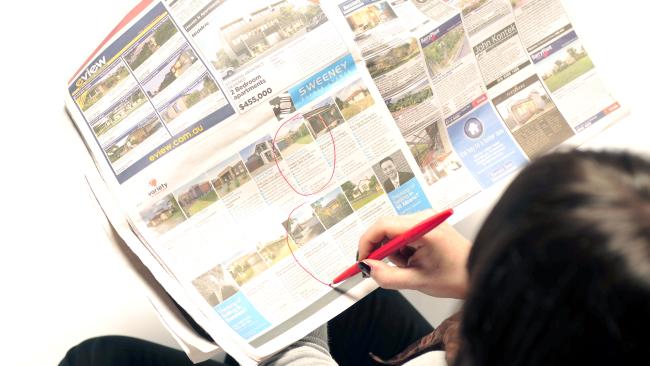 News Corp’s Australian newspapers are reinventing the print advertisement by linking up with real estate agency Ray White to be part of the next wave of virtual reality.
A magazine featuring more than 300 Ray White advertisements for properties set to be auctioned next month will be inserted in News Corp’s Sunday papers on February 28.It will allow readers who have downloaded an application to run their mobile phones over the ads to see more pictures and information about the properties.
Called PropertyAR, the application has been designed by Melbourne-based digital marketing agency, Plattar.Founded by New Zealander Rupert Deans, the agency has worked on the initiative with ASX-listed online property company, REA Group, majority owned by News Corp (publisher of The Australian).
See the full story here: http://www.theaustralian.com.au/business/media/news-corp-unites-with-ray-white-to-forge-new-reality-in-property-ads/news-story/a06ebe8b18a3782c506ef797f8b0f59c
How can BMW’s Head-Up Display support driving?
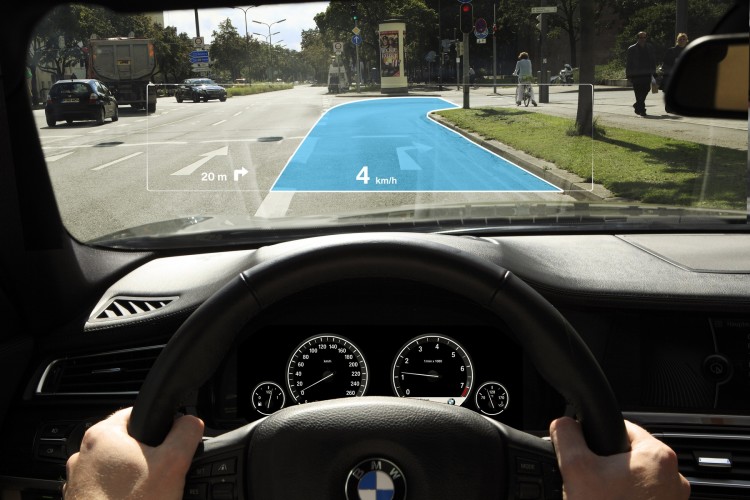
Research project Augmented Reality - contact-analogue Head-Up Display (10/2011)
BMW works very hard on even the smallest of details for its Head-Up display, to make sure that drivers can see the information clearly, quickly and easily without getting distracted. BMW plays with the design, size, placement and color scheme to seemingly no end to make sure that the driver can see the info without it being distracting. It’s actually a very hard balance to strike. How do you design a screen that is bright, colorful and easy to read quickly without making it distract the driver while they’re trying to look past it?
BMW is even working on new Augmented Reality solutions for the Head-Up display, where certain information could be displayed on the windscreen, such as arrows on the street and pointing around turns, as if the navigation system was painted on the road in front of the driver. This sort of Virtual Reality is most likely quite far off, but the fact that BMW is working on it is impressive.
See the full story here: http://www.bmwblog.com/2016/02/20/video-can-bmws-head-display-support-driving/
Watch the video here: http://youtu.be/hYLZ2ehwy-A
Astronaut shows off Microsoft HoloLens augmented reality in space
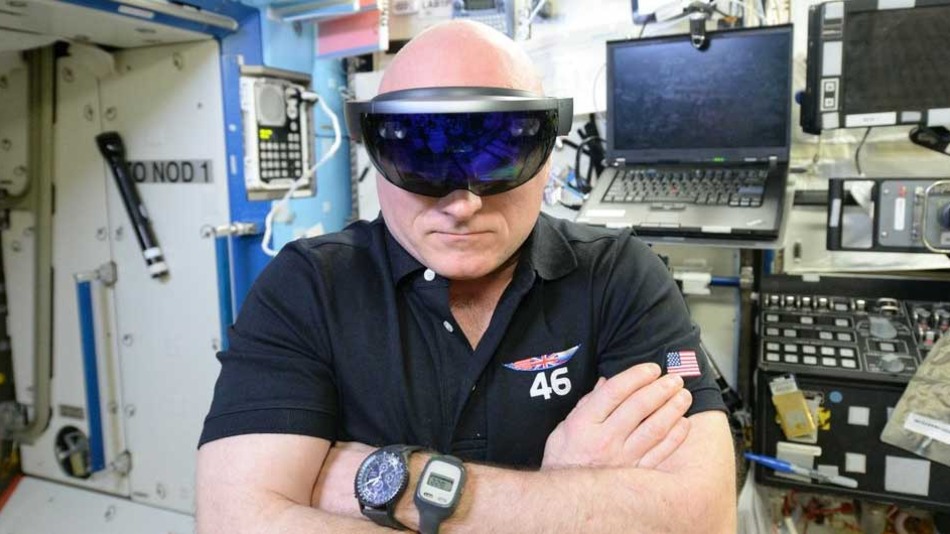 You probably thought you'd already seen the geekiest moments from the International Space Station (ISS). But astronaut Scott Kelly just upped the ante by pulling off what we think is a first: augmented reality in space.
Kelly didn't elaborate on exactly how he's using the device up there so, for now, we'll have to be satisfied with the incredibly cool image.
Nevertheless, based on what we already know about the $3,000 device, the HoloLens could serve as an important tool in the near future for common operations aboard the ISS, such as complex repairs while in orbit.
See the full story here: http://mashable.com/2016/02/21/augmented-reality-in-space/#oo4ynd8dqsqg
New virtual reality gadgets and signs of funding slowdown are among week’s L.A. tech highlights
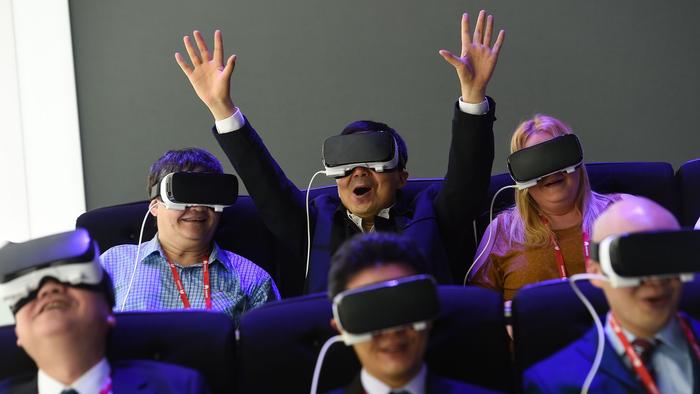 As it stands now, virtual reality headgear from Facebook-owned Oculus VR will start arriving on doorsteps March 28 for $599. The Vive will reach consumers’ hands beginning a few days later for $799. Sony’s PlayStation VR headset is likely to be more affordable when it goes on sale later this year. Google, Apple, LG and others are working on fancier virtual reality viewers too.
Virtual reality has excited traditional entertainment companies too. On Tuesday, ABC’s “Good Morning America” plans to stream to virtual reality viewers a live feed of animals “in their natural habit” in Tanzania.
That follows a virtual reality stream Sunday of the Daytona 500 auto-racing event, which kicked off a five-year agreement struck last week between broadcaster Fox Sports and Laguna Beach-based technology provider NextVR to bring more sports to VR headsets.
They noted the growth in “bridge rounds,” or financing deals smaller than what a company has previously raised.
Essentially, the companies are looking to buy time to reach sales levels or other key milestones that would make them more attractive to buyers or investors seeking to write bigger checks.
See the full story here: http://www.latimes.com/business/technology/la-fi-tn-virtual-reality-la-tech-funding-20160222-story.html
Epson Announces Moverio BT-300 Augmented Reality Glasses, Big Improvements
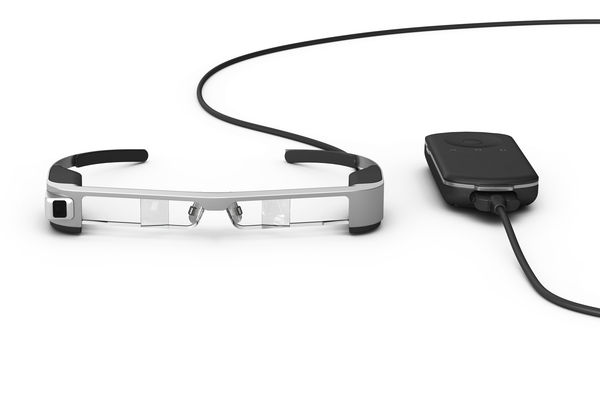 Perhaps the biggest change is a shift from the LCD-based glass display (at a meager QHD resolution) to a custom silicon OLED projection based panel, which should provide more responsiveness, more brightness (the BT-200 measured 1050cd/m2, the BT-300 1200cd/m2), better contrast (it goes from 230:1 in the BT-200 to 100,000:1 in the BT-300), a wider color gamut (90% NTSC vs the 52% for the BT-200), and more visual precision, as well as more efficient power usage. The resolution is now 720p (or 1280x720).
Gone is the ghosting you normally see in many AR experiences. These are still binocular glasses, with a 23 degree field of view.
The BT-300 uses a quad core Intel Atom X5, running at 1.44GHz, using Android 5.1. ...the controller has also changed. ...it is certainly sleeker and more ergonomic. It has a touchpad on the bottom and a directional pad and a selector at the top. It's truly more of a powerful Android controller than a crippled smartphone.
The front facing camera is now 5MP.
The BT-200 included a GPS and compass in both the headset and controller, a gyroscope and an accelerometer, and all of those are in the BT-300, and improved, we're told. Battery life remains the same (6 hours), and WiFi capabilities are better (the BT-200 supported 802.11b/g/n at 2.4 GHz, and the BT-200 adds 802.11a and 802.11ac and supports both 2.4 GHz and 5 GHz). Head tracking performance hasn't changed; the BT-200 polled the gyro at 60fps, and since this isn't VR the head tracking performance doesn't have to be as high, according to Epson.
Epson has worked across industries to build use case partnerships, according to Eric Mizufuka, Epson’s product manager for new ventures. “In addition to pursuing new markets for our technology, we will rapidly scale in areas where we’ve had commercial success, including drone photography, remote support, AR training/maintenance, healthcare, retail, logistics and more.”
The BT-300 will be available later this year and Epson is currently taking pre-orders here. The BT-200 was $700 and the BT-300 will be around the same price.
See the full story here: http://www.tomshardware.com/news/sthash.zQaXXlww.uxfs
THE NEXT FRONTIER FOR VIRTUAL REALITY STORYTELLING? SUBVERSIVE COMEDY AND FART JOKES
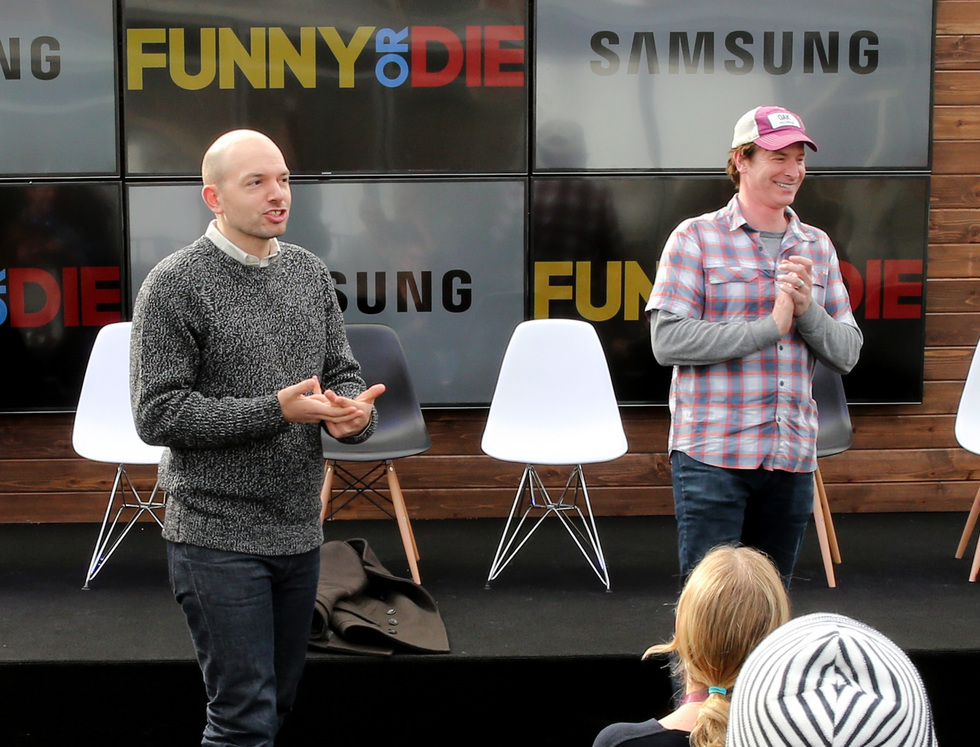
PARK CITY, UT - JANUARY 22: Actors Paul Scheer (L) and Rob Huebel attend Funny Or Die World Premiere of the first-ever virtual reality comedy short, "Interrogation", featuring comedians Paul Scheer and Rob Huebel at The Samsung Studio during The Sundance Festival 2016 on January 22, 2016 in Park City, Utah. (Photo by Neilson Barnard/Getty Images for Samsung)
The unpredictability of the future allows no one to be prophetic. When I ask Scheer how VR will roughly pan out in the next five years, he responds with laughter. "I think the question is, how will VR play out in five months?" He explains that VR has radically changed since he started getting involved a mere eight months ago. "We've talked a lot about doing Crash Test as a VR special, because it would really work for that world."
See the full story here: https://tribecafilm.com/stories/interview-virtual-reality-comedy-funny-or-die-paul-scheer-rob-huebel-reggie-watts
AMD to supply Associate Press with VR equipment
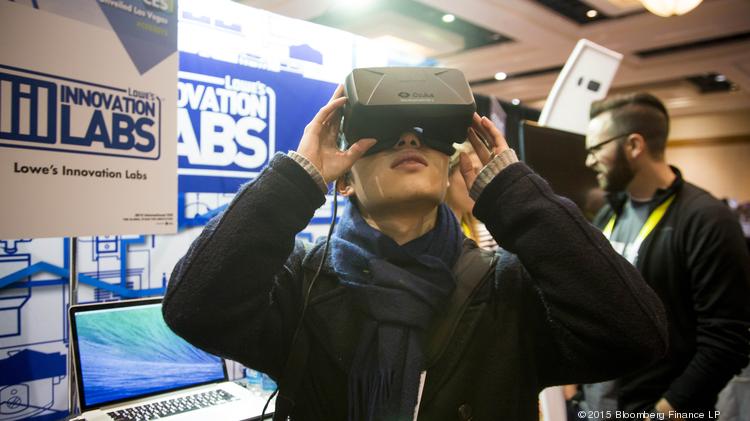 Advanced Micro Devices Inc. will power virtual reality reporting for the Associated Press, enabling the news agency to produce more 360-degree videos and other interactive content.
The company said it will provide the hardware to run AP's virtual reality content on both high-end virtual reality headsets such as the Oculus Rift produced by Oculus VR Inc. as well as cheaper phone-based models. Click here to see some of the AP 360-degree videos already produced using AMD technology.
See the full story here: http://www.bizjournals.com/austin/blog/techflash/2016/02/amd-associated-press-link-up-for-virtual-reality.html