Air National Guard security teams use virtual reality to train for active shooters
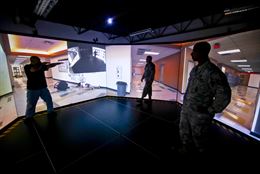 On Dec. 12, these New Jersey Air National Guard members got some highly technical virtual reality training at the U.S. Marshals training site in Lawrenceville, New Jersey.
The V-300 VirTra firearms training simulator offered an unprecedented 300 degree view of interactive screens lit by five high-definition projectors and a sound system that would fit into any major movie theater. A box, strapped to the cops’ belts, shocked them when they were struck by enemy fire.
The U.S. Marshals instructors quipped, "These can be a real motivator."
The Airmen got to go through several scenarios, including a high-risk traffic stop they did as individuals, and an active-shooter scenario where they got to work with a partner.
See the full story here; http://www.nationalguard.mil/News/ArticleView/tabid/5563/Article/637538/air-national-guard-security-teams-use-virtual-reality-to-train-for-active-shoot.aspx
MIT’s Reality Editor Controls IoT Devices via Augmented Reality
 2 types of AR: location-aware augmented reality, where objects are injected into the real-world view based on their location relative to your own position, as opposed to marker-based augmented reality like the Reality Editor, where the real-world view is interpreted in real or near to real time and objects are placed in the view based on markers or other characteristics of the image.
The Reality Editor allows you to point the camera of your smartphone at an object to expose and edit its capabilities. It allows you to drag a line from one object to another to create a new relationship between these objects — for instance, connecting a single switch to a light, or a group of lights. Effectively it lets you edit your reality and manipulate the way objects control and interact with one another. Interestingly, the same objects could theoretically have different relationships for other people.
However what’s most interesting about MIT’s new Reality Editor is that we can play with it. You can download the Reality Editor on the App Store and use it alongside MIT’s Open Hybrid framework to build your own “enchanted objects” using the Arduino Yún and the Raspberry Pi.
See the full story here: http://makezine.com/2015/12/18/mit-reality-editor-controls-iot-devices-augmented-reality/
Take a virtual reality tour of the White House at Christmas time
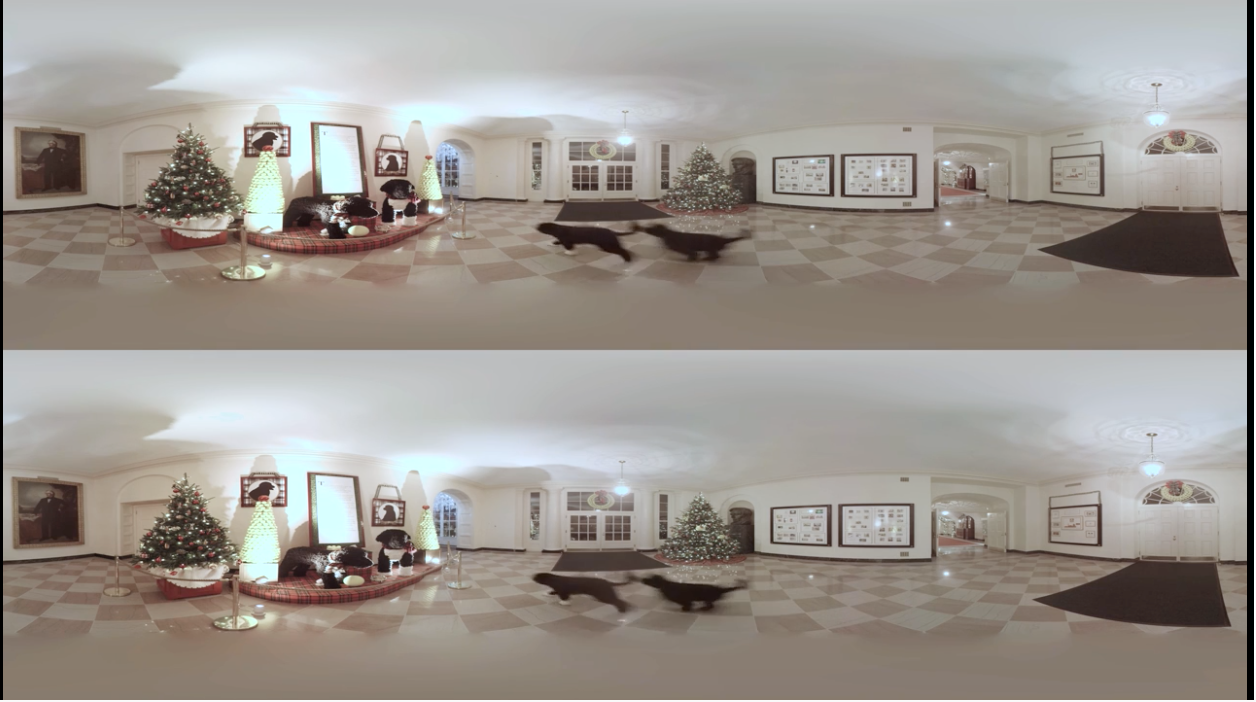
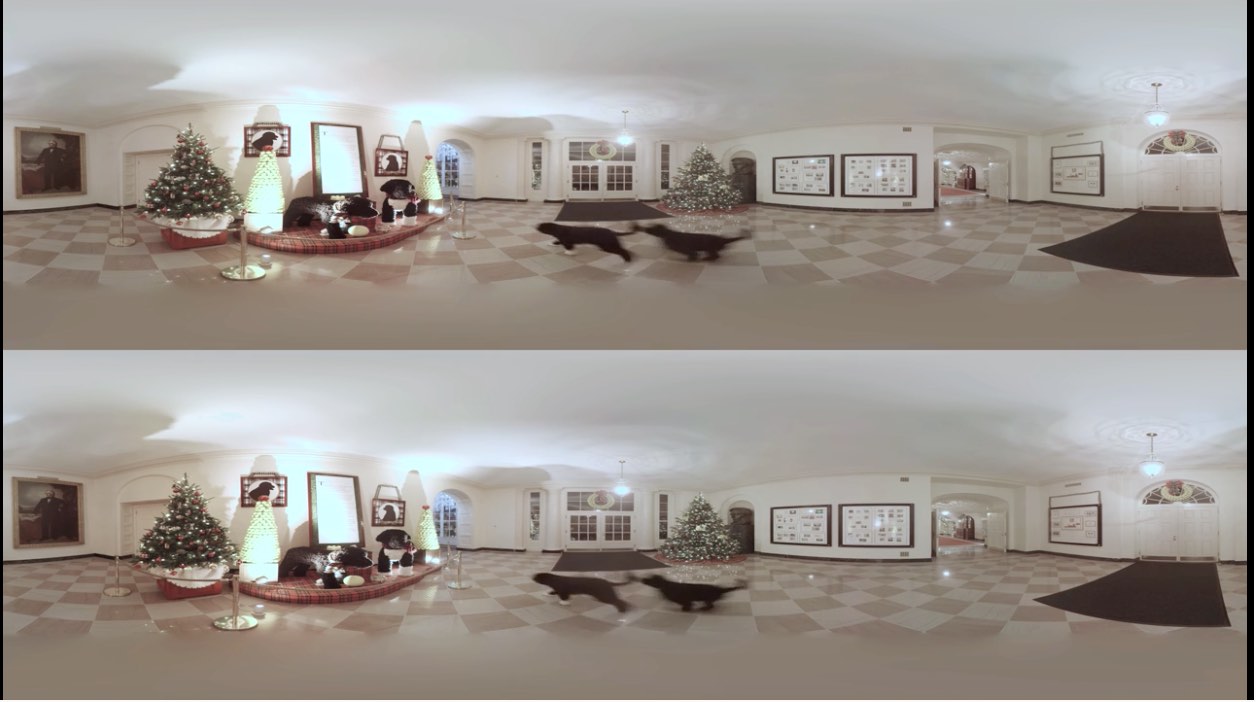 You probably can't celebrate Christmas at the White House, but you can take this snazzy virtual reality tour if you want to see President Obama's humble abode all decked out for the holidays.
To get the full experience, grab an iPhone or iPad, or hold your Android up to Google Cardboard. Google made the 360-look using GoPro co-designed technology that Engadget reports costs a mere $15,000.
Watch the VR video here: http://theweek.com/speedreads/595361/take-virtual-reality-tour-white-house-christmastime
See another story here: http://au.idigitaltimes.com/google-provides-virtual-reality-video-tour-white-house-112203
VR in Movie Marketing (Mission Impossible, The Walk)
Virtual reality in movie marketing campaigns has been on the rise for a few years now. There’s loads of experiences like the one Lionsgate did for The Divergent Series: Insurgent earlier this year during which you sit in chair, wear glasses and watch some footage while a fan blows in your face, but very few truly transport you into a film. However, Paramount did just take a big step in the right direction.
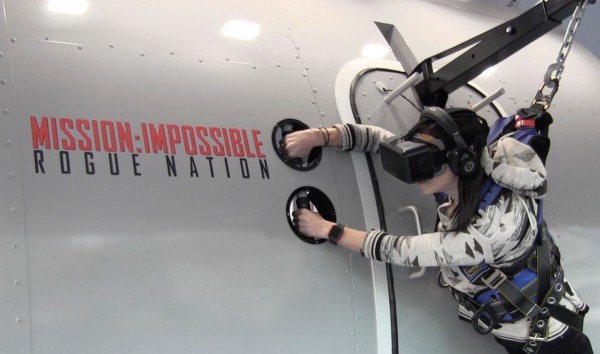 In celebration of the DVD, Blu-ray and digital HD release of Mission: Impossible – Rogue Nation, Paramount set up a virtual reality experience in Bryant Park in New York City that’s meant to make you feel like you’re hanging from the side of a plane, just like Tom Cruise in the movie.
At this point, my favorite movie-themed VR is still the one done for The Walk back in September. In that one, you put the glasses on and see what Philippe Petit (Joseph Gordon-Levitt) sees when he steps out onto the high wire between the towers of the World Trade Center. Clearly you cannot fall, but what gives you the sensation that you might is the fact that you are asked to step out on a small rope taped to the ground. You’re not even elevated in the slightest, but there’s something about being able to feel “the wire” beneath your feet that messes with your head and makes you terrified to take one wrong step.
See the full post here: http://collider.com/mission-impossible-rogue-nation-virtual-reality-experience/
Pokemon Go dev Niantic discusses how augmented reality mobile game will work in small towns
[Philip Lelyveld comment; Niantic is using 'magic window' screen-waving AR for this real world experience.]
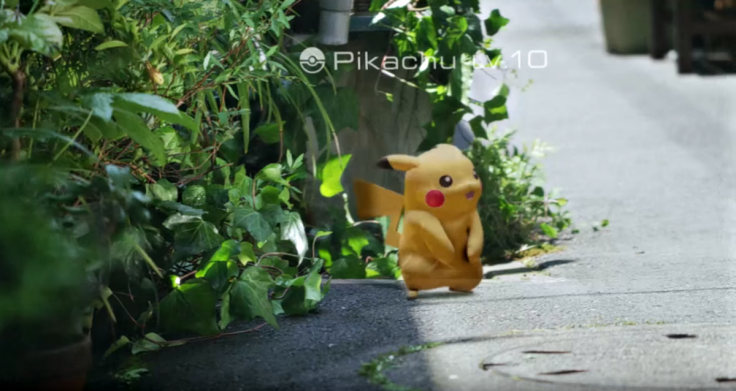 "Our goal is to make it so you can walk out of the house and within five minutes, you can find Pokémon. It may not be the most rare Pokémon in the world, but there'll be a population of Pokémon living near all our players," said Hanke.
Another issue is how you cover an entire planet in Pokémon but ensure anyone, anywhere, has a good experience worthy of the Pokémon name.
"We've learned a lot on those fronts with Ingress," says Hanke. "Even if you're in a small town — I grew up in a town of 1,000 people in Texas. We had that as a design goal.
See the full story here: http://www.ibtimes.co.uk/pokemon-go-dev-niantic-discusses-how-augmented-reality-mobile-game-will-work-small-towns-1534292
What carmakers will reveal at CES
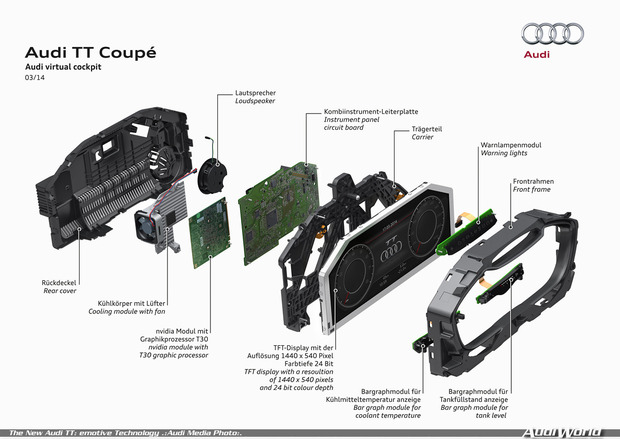 CES will be more of a venue for Tier 1 auto suppliers -- the makers of in-vehicle infotainment (IVI) systems, sensors and other electronics-related parts.
There will be about 464 automotive electronics exhibitors at the show -- a record number, according to IHS. The exhibitors will feature technology related to audio, robotics, wearables and telecommunications, among other things.
One area to keep an eye on is human-machine interface technology, which is rapidly changing the way drivers and passengers communicate with their IVI systems.
"The thing is, it's no longer about just having a navigation system or applications on it. It's about which [system] is easier to use and which one is easier to learn," Boyadjis said. "That why HMI is such a core component."
Cloud-based speech recognition technology that uses machine learning skills to identify speech patterns more quickly to accurately identify commands will become commonplace in automobiles.
Interior cameras and sensors will increasingly enable gesture recognition, where a driver can control infotainment functions, such as system volume or contact list scrolling, with a swipe of a hand through the air.
The OTA (Over The Air) market is expected to reach $45 billion by 2022, Juliussen said. The vast majority of it will be related to the money-saving capabilities of OTA, where vehicles won't need to be taken to dealerships for upgrades or software recalls, he said.
Two companies expected to go head to head with traditional Tier 1 automotive suppliers, and win, are Apple and Google.
See the full story here: http://www.computerworld.com/article/3016999/car-tech/what-carmakers-will-reveal-at-ces.html
LG To Release A CordZero Vacuum With Augmented Reality At CES
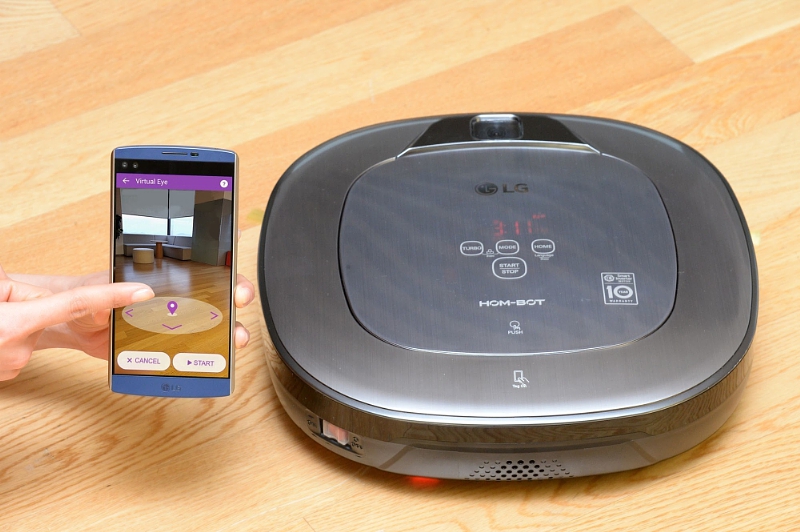 You’ll be able to show to the robot which area of the house you’d like it to clean using the camera sensor on basically any smartphone, which is quite interesting and kind of intuitive. This robot comes equipped with Triple Eye camera sensors which will record surrounding area in order for the robot to know the areas that it has cleaned, and those that he has not. There are some other features built-in this robotic vacuum, like Home-View and Home-Guard. The former will transmit a real-time feed from the robot to your smartphone, and the latter will basically serve as a home security system.
See the full story here: http://www.androidheadlines.com/2015/12/lg-to-release-a-cordzero-vacuum-with-augmented-reality-at-ces.html