Controlling Augmented Reality in the Operating Room: A Surgeon’s Perspective
 Aseptic surgical technique is a concept that came about in the 19th century ... The idea, which is now intuitive, is that during surgery the surgeon, patient, instruments, and drapes must all be sterilized and completely free of microorganisms to minimize the risk of infection. ...once a surgeon is gowned and gloved, he/she cannot touch anything that is not also sterile. If a surgeon does touch something unsterile, he/she is instantly “contaminated” and may need to change his/her gloves and potentially also the gown.
There are various options available for controlling electronics in the OR including voice control, optical hand tracking, EMG-based gesture tracking, remotes/controllers, and foot pedals. I will briefly go over each technology and evaluate their relative advantages and disadvantages from a surgeon’s perspective.
See the full story here: http://www.medgadget.com/2015/10/controlling-augmented-reality-operating-room-surgeons-perspective.html
UTA Signs Digital Content Studio Secret Location
 Last month, the Los Angeles- and Toronto-based company became the first to win an Emmy for a virtual reality project, when the Sleepy Hollow Virtual Reality Experience, an installation experienced by several thousand attendees at Comic-Con this summer, earned an interactive media Emmy for user experience and visual design.
In addition to its unique virtual and augmented reality work, Secret Location also has built websites, apps and created linear digital content (i.e. webseries) for film and TV clients including Insidious 3, NBC’s The Blacklist, IFC’s The Spoils of Babylon and BET’s The Book of Negroes, as well as for brands including Samsung, Toyota and Red Bull. It currently is working with Syfy on a virtual reality series called Halcyon and with GE on a story about China’s largest wind farm.
UTA will work with Secret Location, which has twice won best of show at the Banff World Media Festival, to expand its business in both non-traditional and traditional media. In addition, the agency – which has one of Hollywood’s longest-running and strongest digital departments – will advise on its social and digital media strategy.
See the full story here: http://www.hollywoodreporter.com/news/uta-signs-digital-content-studio-833181
Digital Hollywood: Reality Lab Demonstrates Live VR Broadcast – Quantum Leap
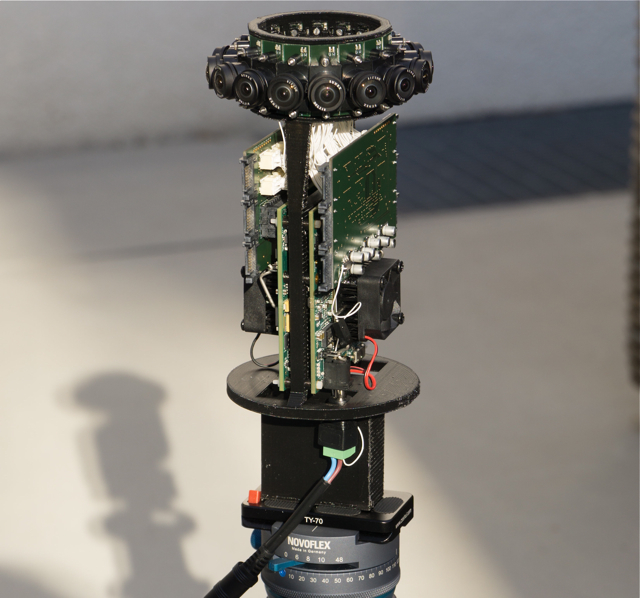 Reality Lab gave a technology demonstration of Quantum Leap, the code name for a VR recording device with 16 cameras and proprietary technology that enables it to render real-time video instantly, without post production, on a Samsung Gear VR running Oculus Connect software. Company founder Halsey Minor calls Quantum Leap, which was featured at a Digital Hollywood luncheon, capable of “the first live VR broadcast.”
“The goal is not to sell or rent the camera,” said Minor, “But to build all the pieces to capture an event.” Minor also recently launched Voxelus, a company that enables the creation of graphical worlds. Although the two companies are separate, the goal is to enable the graphical worlds created in Voxelus to “co-exist with the live video capabilities of Quantum Leap.”
The experience was startling, albeit marred by pixilation, which Minor says is the result of the display’s resolution, and a 6 fps lag, due to the connection between Reality Lab hardware and the Oculus rig. Still, it was hard not to be impressed. “I can definitely see the potential,” said Zazoom Media Group executive Steve Bradbury who stopped by to test out the experience.
Prior to starting Reality Lab, Minor founded and built CNET Networks, founded Uphold, Google Voice, OpenDNS and NBCi and co-founded Salesforce.com and CNET spinout Vignette.
See the full story here: http://www.etcentric.org/digital-hollywood-reality-lab-demonstrates-live-vr-broadcast/#more-97568
The Virtual World’s Fair is where VR hype meets theme parks
 Earlier this year, Landmark announced that it would begin building VR-based attractions called Live Centers, starting with one in China in the summer of 2017. The centers would include a “virtual zoo,” digital art gallery, and various cinematic offerings, all contained in a 200,000-square-foot complex. As the company announced earlier this month, though, it’s also planning to launch at least two home virtual reality services in the next two years. If everything goes right, its VR apps — the self-contained “Pavilion of Me” and much larger “Virtual World’s Fair” — will put Landmark in the company of gaming companies, VR film studios, and software designers. But that’s a huge qualifier — and a sign of how little we really know about the future of VR.
Based on which analyst prediction you happen to click in a Google search, the virtual reality industry will be worth $7 billion, $21.8 billion, or possibly $30 billion by 2020. Landmark predicts there will be 170 million active VR users by 2018. The ultra-simple Google Cardboard notwithstanding, most consumers today have yet to use the technology in any meaningful sense, but Christopher believes that the amount of high-profile support it’s gotten is a sure omen. "There’s too many very, very powerful organizations trying to launch this business for it not to happen," he says.
Both the Virtual World’s Fair and the Pavilion of Me (POM for short) are described as portals; the former is a digital theme park, the latter a personal entertainment complex. POM is slated to arrive first in the fall of 2016, after the launch dates of Oculus, Sony, and Valve’s high-end headsets — Landmark hasn’t officially announced launch platforms, but Christopher says there’s interest from Sony and Oculus. Right now, Landmark is showing off only a video of an early build, a series of separate "rooms" for activities like watching movies, holding Skype calls, lounging with friends, and looking through virtual versions of your old-fashioned photographs.
In other words, Landmark is building a VR user interface — a notoriously hard thing to get right.
See the full story here: http://www.theverge.com/2015/10/26/9615024/landmark-virtual-reality-worlds-fair-pavilion-of-me?curator=MediaREDEF
How Microsoft’s HoloLens actually works
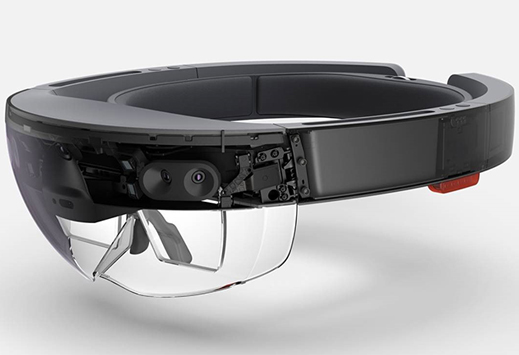 Philip Lelyveld comment: This is a good basic overview.
Microsoft describes HoloLens as the "first fully untethered, holographic computer, enabling high-definition holograms to integrate with your world". The development version is set to ship out the first quarter of 2016.
See the full story here: http://gogglenaut.com/Gear/How_Microsoft's_HoloLens_actually_works
AuraVisor, the first untethered cross-platform virtual reality headset, is seeking to emulate the success of Oculus Rift and has launched its own Kickstarter campaign
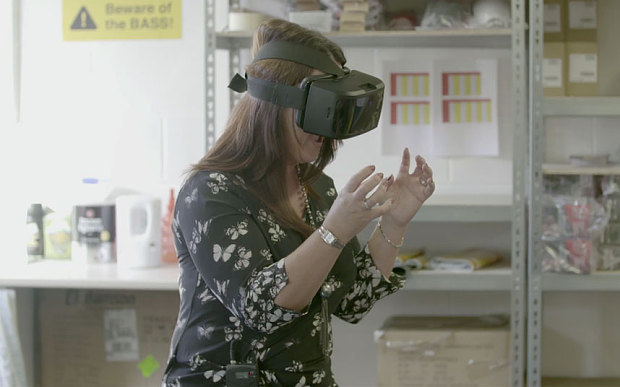 The Bluetooth-enabled headset sports a 5-inch display capable of 1080p HD video and 100 degree field of vision. Users can participate in games via a Bluetooth game controller.
“Because AuraVisor has been designed from the ground up to specifically function as VR, the initial set up is quick and simple and the graphics do not pixelate. The headset does not suffer from noticeable latency or lagging issues as you move your head freely,” he added.
see the full story here: http://www.telegraph.co.uk/technology/news/11951768/First-untethered-cross-platform-virtual-reality-headset-launches-on-Kickstarter.html
Wevr Thinks You’ll Spend Hours in Virtual Reality
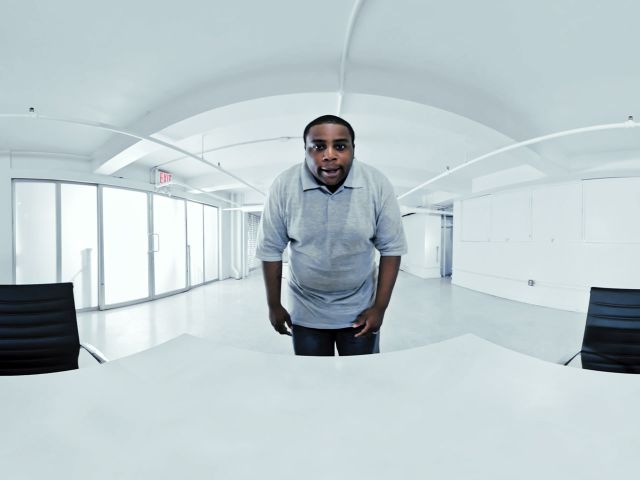 Here are two opinions you’ll hear a lot in virtual reality business circles today: Short experiences are better than long ones, and Apple-like app stores will win the day.
Wevr is hoping that both of those beliefs are wrong. Best known for a demo in which users come face to face with a whale underwater, the Los Angeles-based VR studio is trying to drum up interest in its virtual reality content platform, with an emphasis on longform video and the “open Web.”
“We see virtual reality as so broad that it can’t be confined to app stores,” CEO Neville Spiteri said. The technology Wevr is developing, he added, is intended to make it possible for creators to make something once and publish it on the myriad of VR devices heading to market.
See the full story here: http://recode.net/2015/10/26/wevr-thinks-youll-spend-hours-in-virtual-reality/