Ridley Scott is working on a mysterious virtual reality project
 The mystery project isn’t a totally new frontier for the director, who will release a 15-minute long bit of added content to his recent Matt Damon-starring project The Martian as downloadable content for Oculus Rift. In it, the user will be able to see Mars from the perspective of an astronaut’s helmet, before a series of dark events unfold.
As far as Scott is concerned, it seems as though the use of virtual reality in contemporary filmmaking is inevitable. Asked about the utilization of VR in any of his own projects, the director said, “You have to go for it. You’ve got to, you’d be stupid not to.”
Any new technology offers it’s own set of challenges, but the intriguing possibilities opened up in a 360-degree viewing environment seem to outweigh the negatives. Even the idea of creating digital environments, such as movie theaters, fake outdoor venues, or even other worlds, in which to view content have many in the film industry excited to utilize the new tech. Imagine watching a giant screen playing The Martian on Mars.
See the full story here: http://www.digitaltrends.com/movies/ridley-scott-teases-new-virtual-reality-project/
Google Patents Holograms For Glass, Which Could Involve Magic Leap
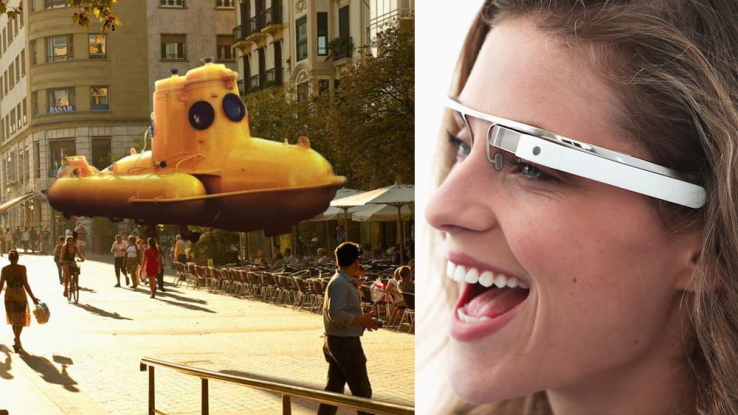 Today Google published a patent application for using holograms in a head mounted display like Google Glass. It would effectively let Google create augmented reality experiences that superimpose computer-generated imagery (CGI) atop the real world.
But what’s perhaps more fascinating is how the patent contextualizes Google Inc leading the $542 million funding round for augmented reality startup Magic Leap. One possibility is that Google’s smart eyewear could be the hardware platform for Magic Leap‘s AR content.
Over the past few years, Magic Leap has filed a bunch of trademarks for forthcoming augmented reality content. These include characters, titles, and games like Super Bionic Bitforce, Roadkill Warriors, Monsta Battle, Moonstone Monsters, Moonsters, and my personal favorite, Flutterboard, which refers to “flying sentient skateboards”.
This patent and trademark research came from legal technology firm SmartUp Legal. The company’s founder Mikhail Avady tells me “I believe Google wants Magic Leap to be the content provider for Google Glass. If we look at their trademark applications, it shows very story and content based trademarks. Magic Leap wants to turn the world into a movie theater and Google wants it to be through Glass.”
See the full story here: http://techcrunch.com/2015/10/01/google-holograms/?ncid=tcdaily
Oculus announces “Oculus Ready,” certified PCs for VR
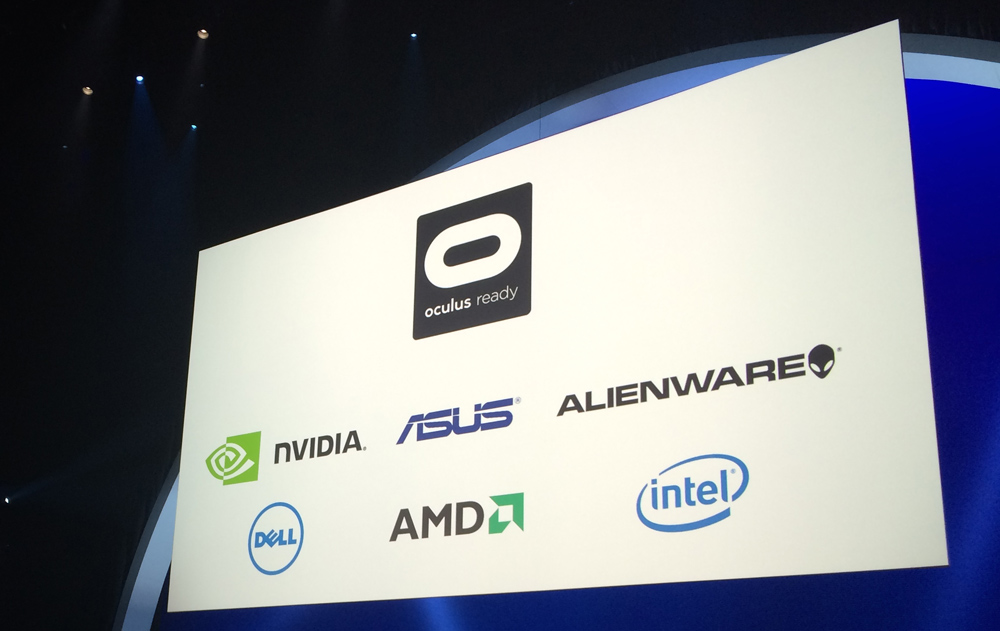 Starting at price points under $1000, NVIDIA, ASUS, Alienware, Dell, AMD, and Intel will all be releasing hardware in the next year that will feature an Oculus Ready sticker, indicating that the hardware is ready for VR.
“Our goal with the recommended specs is that everything just works,” said Nate Mitchell Oculus’ head of product.
See the full story here: http://uploadvr.com/oculus-ready-vr-pc/?utm_source=VR+Digest&utm_campaign=c64e9c99e6-VR_Digest&utm_medium=email&utm_term=0_54068a0706-c64e9c99e6-74843441
Everyone you know will be able to rate you on the terrifying ‘Yelp for people’ — whether you want them to or not
 You can already rate restaurants, hotels, movies, college classes, government agencies and bowel movements online.
So the most surprising thing about Peeple — basically Yelp, but for humans — may be the fact that no one has yet had the gall to launch something like it....
If you haven’t registered for the site, and thus can’t contest those negative ratings, your profile only shows positive reviews.
Unfortunately for the millions of people who could soon find themselves the unwilling subjects — make that objects — of Cordray’s app, her thoughts do not appear to have shed light on certain very critical issues, such as consent and bias and accuracy and the fundamental wrongness of assigning a number value to a person.
To borrow from the technologist and philosopher Jaron Lanier, Peeple is indicative of a sort of technology that values “the information content of the web over individuals;” it’s so obsessed with the perceived magic of crowd-sourced data that it fails to see the harms to ordinary people.
...But at least student ratings have some logical and economic basis: You paid thousands of dollars to take that class, so you’re justified and qualified to evaluate the transaction. Peeple suggests a model in which everyone is justified in publicly evaluating everyone they encounter, regardless of their exact relationship.
Five Entertainment Tech Trends You Need to Know
 Virtual Reality
Augmented Reality
High Dynamic Range
Real-time cloud rendering
Light field
See the full story here: http://variety.com/2015/digital/spotlight/five-entertainment-tech-trends-you-need-to-know-1201593243/
Democratic presidential debate to be live-streamed in virtual reality
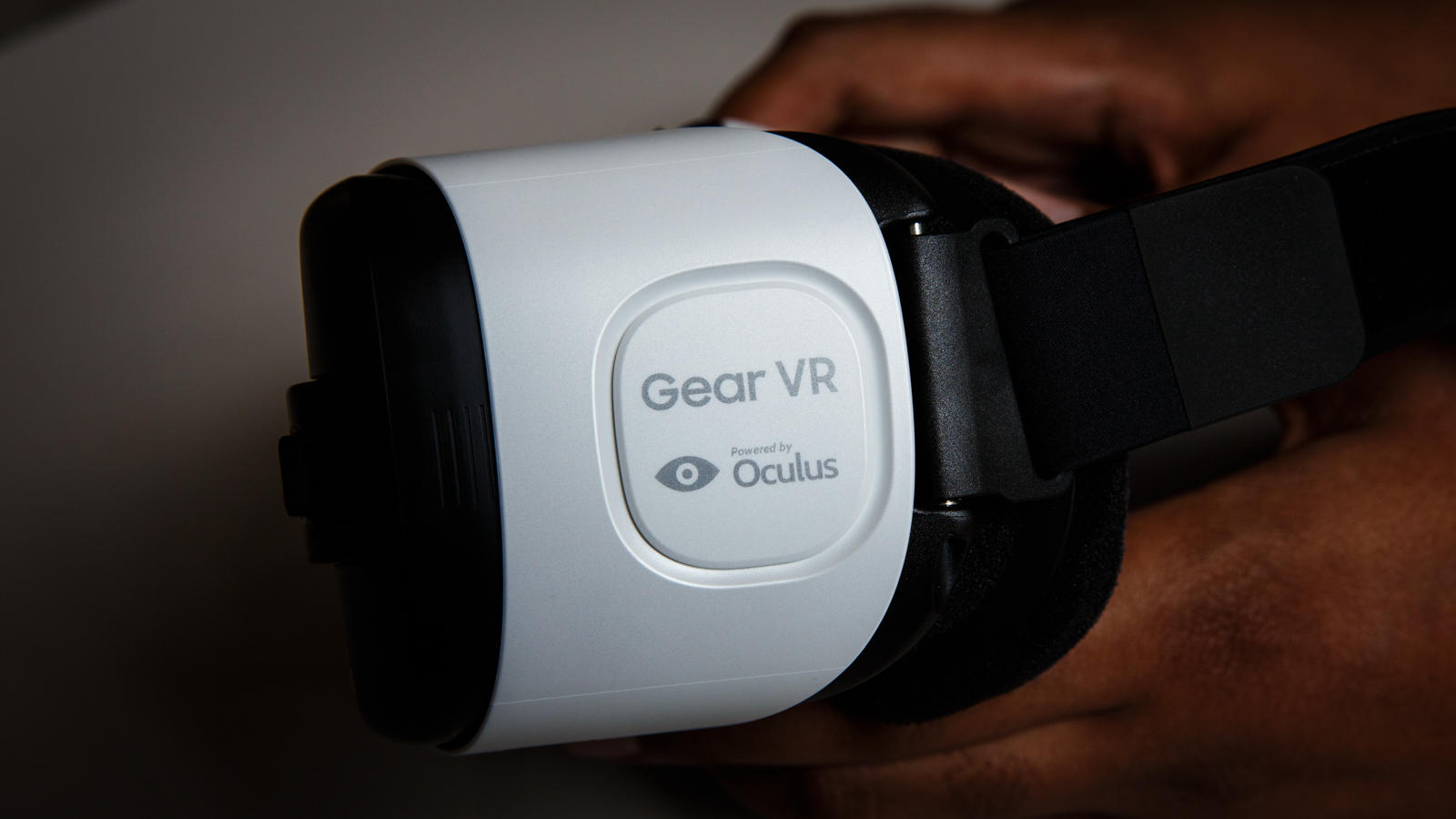 CNN said Thursday that it will live-stream the October 13 debate from Las Vegas in full 3D immersive virtual reality. The Atlanta-based television news network is offering viewers a "front-row seat" to the debate through a partnership with NextVR, a virtual-reality company that broadcasts sporting events in virtual reality via Samsung's Gear VR headset.
See the full story here: http://www.cnet.com/news/democratic-presidential-debate-to-be-live-streamed-in-virtual-reality/
How Netflix works in virtual reality, and why it’s not HD
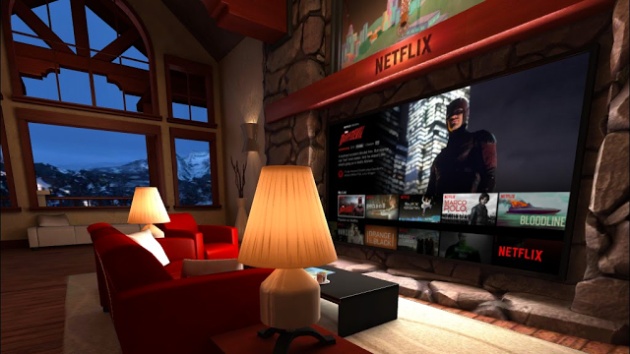 It's true, the Netflix VR app is ready for your compatible* Samsung phone and Gear VR headset (if you don't see it, try uninstalling and reinstalling the Oculus app), and has a virtual living room for you to chill in. Oculus CTO John Carmack worked with Netflix on the app, and in a post to the tech blog explained how it all comes together. Besides the technical details of how the app creates a screen inside a virtual environment, and includes controls for use while browsing or viewing, Carmack also explained one more thing: the streaming video in VR is limited to standard definition (720x480). According to Carmack, because the area you're actually looking at is only composed of so many pixels, 720p is the highest res video you should consider for VR right now. The reason he can't hit that mark? Content protection, aka DRM.
So after all the pixel counting is done, the real question is -- how did it look? I gave it a shot on a Galaxy Note 4 plugged into the original Gear VR headset, and it was surprisingly good. The video stream was clear, and the virtual world actually did help settle me in. The resolution wasn't nearly as much of an issue as you would expect. While it's not the sharpest or highest quality looking stream, I saw very little artifacting, and decent color reproduction.
See the full story here: http://www.engadget.com/2015/09/25/how-netflix-works-in-virtual-reality-and-why-its-not-in-hd/