CES: Samsung Looks to Boost Virtual Reality Ecosystem With Milk VR
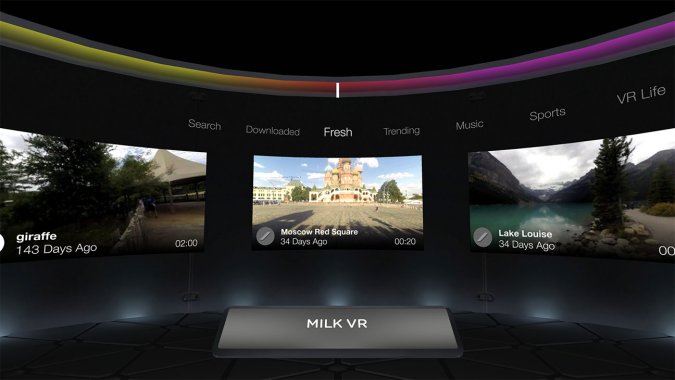 Milk VR, which is initially working with partners such as the NBA, Red Bull and Refinery29, is meant to provide a curated slate of virtual reality content that updates daily across several categories, including music, sports, experiential videos and scripted content. The app, which is free to download from the Gear VR's Oculus Store, doesn't charge for its content and is currently advertising free.
Samsung is not alone in its pursuit for more VR content. Startup Jaunt believes that Hollywood and the music business will be important into the growth of the virtual reality market and has worked with entertainment clients to create experiences. The Gear VR Oculus Store, too, features a range of content available for download. Apfel says that it's all a positive for the emerging industry.
See the full story here: http://www.hollywoodreporter.com/news/ces-samsung-looks-boost-virtual-762129
CES 2015: Hands-on With the Razer HDK VR Headset
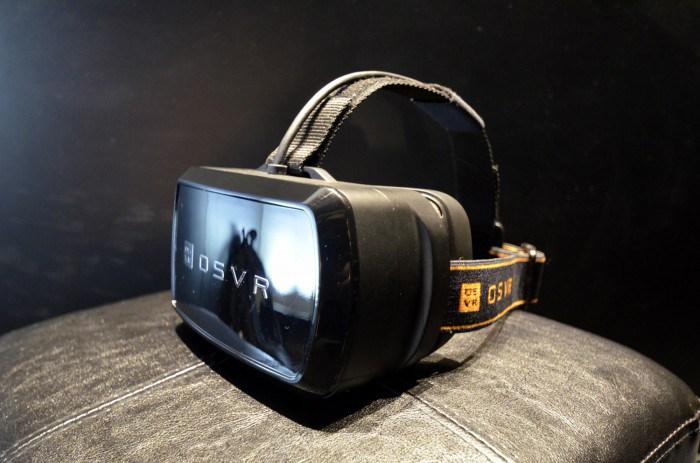 Anyone that’s seen an Oculus Rift will immediately recognize the Razer HDK VR headset. The unit is based on the same fundamental concepts: a small raster display in front of your eyes, separated by lenses that magnify and focus the image, an IMU inside for headtracking, and straps to hold it all comfortably on your head. But that’s not to say the HDK doesn’t bring unique features to the table.
For one, the unit sports independent per-eye IPD and diopter adjustments. That means that you can readily adjust the distance between the lenses (to match the distance between your eyes) and the focus of each lens, to correctly match each user’s need (or not) for corrective vision. This is something that people with glasses and outlying IPDs have been asking about for some time, but we haven’t yet seen from any of the major players, save for a linked diopter adjustment on Samsung’s Gear VR.
Second, the HDK VR headset has a two-element lens system (compared to a single lens from most others in the space) which the company says eliminates the need for pre-warping or chromatic aberration correction of the rendered scene, whereas the majority of headsets out there are using the aforementioned techniques to correct for distortions introduced by their lenses.
The Razer HDK prototype we tried is about what you’d expect from its on-paper specs. The 1080p display offers the same pixel density of the Oculus Rift DK2, but lacks the OLED display tech that affords a number of benefits to the latter, including infinitely dark blacks, low-persistence display, and richer colors. The 90 degree diagonal field of view felt perfectly comparable to that of the DK2. The build quality felt very good for a prototype, which I suppose shouldn’t surprise us given Razer’s penchant for peripheral design.
The current lack of positional tracking (the ability to move your head through 3D space) seems like a big deal, but Gear VR has demonstrated that it very much depends upon the kind of content available for the device. In the end, positional tracking is always going to be better for the VR experience than no positional tracking. Razer and Sensics are aware of the need for positional tracking and say that the open nature of the product means that anyone could decide to create and sell a positional tracking solution made for the HDK, They’ve also mentioned it’s something they may add at a later stage, suggesting that they want the market to decide what’s important for the headset.
We’re looking forward to seeing how the HDK prototype will improve for its initial launch come June, along with execution of the broader goal of OSVR—creating an open source SDK that’s compatible with a multitude of devices from VR headsets to input devices.
See the full story here: http://www.roadtovr.com/razer-sensics-hdk-vr-headset-hacker-developer-kit-hands-on-ces-2015/
Avegant Glyph at CES
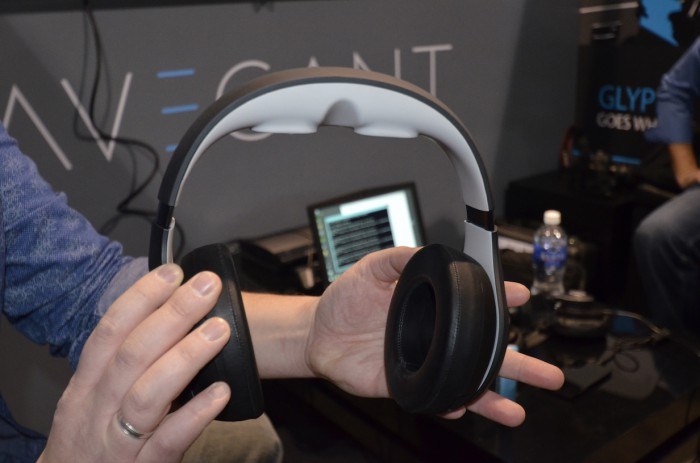
[Philip Lelyveld comment: in the something is better than nothing dept., Avegant showed a non-functioning prototype of their VR HMD at CES.] See the story here: http://www.roadtovr.com/ces-2015-avegant-glyph-new-design-nearing-consumer-level-fit-finish/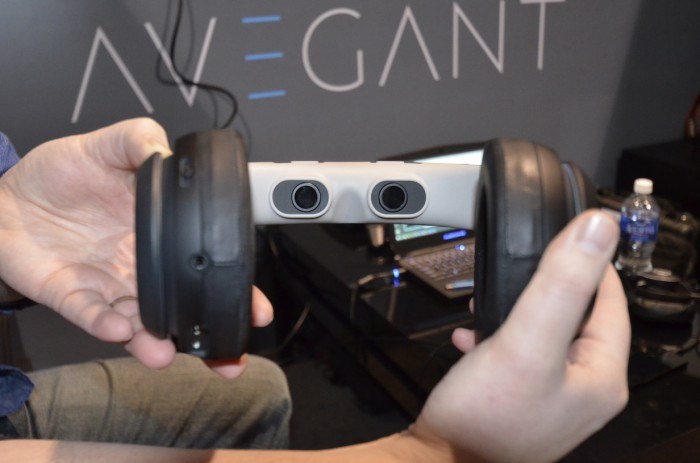
Designers Are Ditching The Mouse For The “Flow” 3D Motion Touch Controller
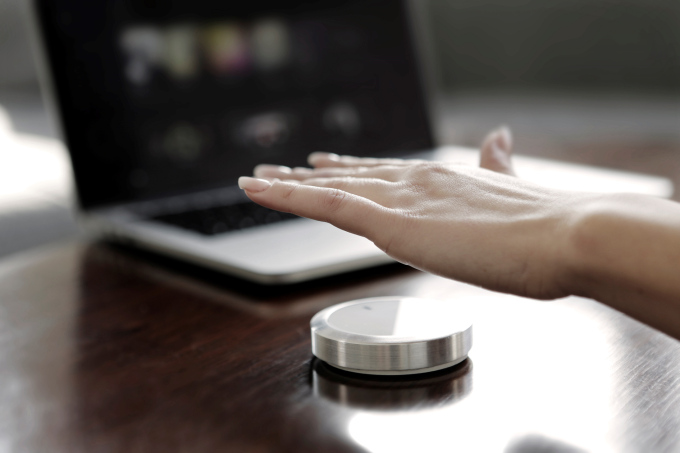 [Phil Lelyveld comment: This little device has 4 ways to control cursors and the internet of things (turn, touch, swipe, press). It requires learning a new gestural language. They hope to replace the mouse and gesture interfaces. But it reminds me of those infomercials for contracting hoses - oh the knots, the tripping, that heavy hose. What's a person to do? All you have to do is increase the sensitivity of your mouse and you can skip this device.]
That’s why Flow is built to work with Spotify, YouTube and SoundCloud. You could hover your hand above Flow to adjust volume, or wave over it to skip to the next song without disconnecting from your friends or the task at hand to stare into a screen. Phillips Hue smart lightbulbs can also be controlled much quicker with Flow than digging up the remote app on your phone.
I’ve played with Flow and the device is well-constructed. The tension on the spinning cylinder gives just the right resistance so you can feel the slightest movement. It combines motion with less tiring gestures rather than just tiringly keeping your hands in the air, which is why Leap Motion never took off. Integrating Flow into your habits will take time, and not everyone has a professional need for it.
“We want to create a new generation of natural user interfaces,” says Eichenwald. With hardware costs, connectivity, and Wi-Fi chips all getting cheaper, anything could be turned into an input. Eichenwald asks “Why not the table? Why not the wall? Why not the objects around you?”
See the full story here: http://techcrunch.com/2014/12/29/pixel-perfect/?ncid=tcdaily
Hollywood’s Streaming Nemesis Popcorn Time Gets A VPN, But You’ll Have To Pay For It
 Popcorn Time, for those who aren’t aware, is a service that lets you stream a tonne of top films and TV shows to your computer for free. It uses unlicensed torrents on the internet for content, which naturally raises a gamut of legal issues.
VPNs, which essentially route a device’s internet through a different country, are seen as an important addition to Popcorn Time. Some users in Germany were fined for using Popcorn Time earlier this year, so a VPN could help movie fans avoid repercussions for their borderline-legal viewing activity — which we at TechCrunch do not condone, by the way.
Mega caveat though, users will have to pay for it.
VPN.ht is priced at $4.99 per month, but Popcorntime.io users can get it for $1 for the first month after which they can cancel. Alternatively they can pay $3.99 per month on a yearly deal.
See the full story here: http://techcrunch.com/2014/12/25/popcorn-time-vpn/?ncid=tcdaily
VRClay Beta Hands-on, the 3D Sculpting Software for VR
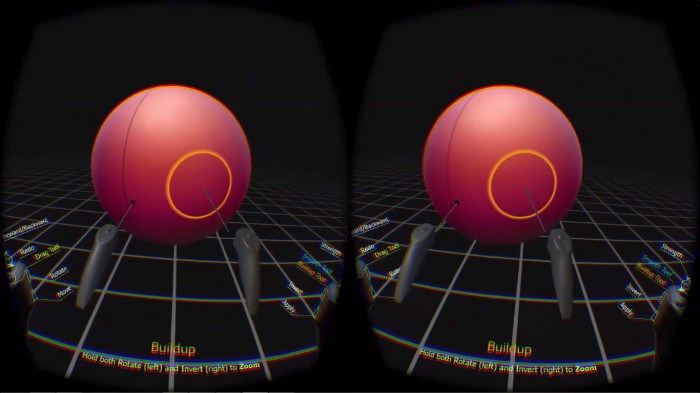 Upon seeing the video we decided to reach out to the so far discreet developers who kindly granted us exclusive beta access to the digital sculpting tool that looks to challenge the current paradigm of mouse-only input used by industry standard software like Autodesk Mudboxand ZBrush.
VRClay is a joy to use. As someone who has always been fascinated with CAD, but has zero experience, jumping in and being able to create free-form digital sculptures was a blast. The Razer Hydra motion input controller was instantly recognized by the game and needed no setup, save for a brief calibration sequence at the beginning.
With no prior practice (or art skills), I felt comfortable creating and manipulating objects in VRClay in no more than 10 minutes. To play with the Drag tool, I set about creating an octopus-like creature, and was fairly happy with what I came up with in another 15 minutes.
See the full story here: http://www.roadtovr.com/vrclay-beta-virtual-reality-sculpting-cad-oculus-rift-razer-hydra-stem/
Here’s how Google’s Ingress will be moving from the phone to your wrist
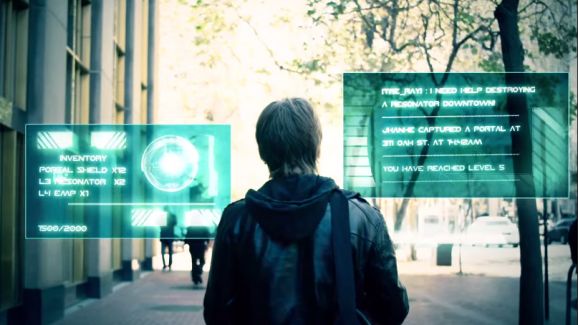 Ingress, the augmented reality game by Niantic Labs (a startup within Google), has picked up an impressively large following since its open beta started just over a year ago. But as it cracks eight million downloads, Niantic founder John Hanke is looking at where to go next.
The game launched on iOS earlier in the year, helping to boost its popularity significantly in a number of markets, particularly Japan. As a game that tries to meld virtual and reality by turning planet Earth into one massive battlefield, wearable tech feels like the next obvious step. And that's exactly where efforts are now being focused.
Hanke explained that once it's up and running on Android Wear, users will be notified when they're near a portal, the real-life landmarks players must virtually take control of. "We're still working through the details on the UI in terms of which particular situations you'll be notified on your watch," he added. "But then you would be able to take an action just by tapping on your watch, so you'd be able to hack the portal, or attack the portal, or deploy Resonators on the portal just by tapping on your watch.
See the full story here: http://www.techradar.com/us/news/gaming/here-s-how-google-s-ingress-will-be-moving-from-the-phone-to-your-wrist-1277454?src=rss&attr=all
Samsung is Demo’ing Gear VR at America’s Largest Mall
 One of virtual reality’s greatests strengths—that it’s a unique and unprecedented experience for most—is also one of its greatest weaknesses when it comes to marketing the technology. Without actually trying VR for themselves, how do you sell someone on the experience?
At the King of Prussia Mall, Samsung has seen fit to install a pop-up booth in one of the mall’s busy corridor hubs. The pop-up booth lets shoppers get their hands on Samsung’s latest gadgets, including Gear VR—which takes up residence in a glass enclosed demo area which is branded with Samsung and Oculus logos.
Samsung has similar pop-up booths inside of Best Buy stores. While Samsung apparently shipped Gear VR demo units to the big-box tech store as early as September, we’ve yet to hear reports that Best Buy has actually put those units on display for the public to try.
See the full story here: http://www.roadtovr.com/samsung-demoing-gear-vr-americas-largest-mall/
Eden River HD Launches on Steam and Google Cardboard, a VR Relaxation Experience
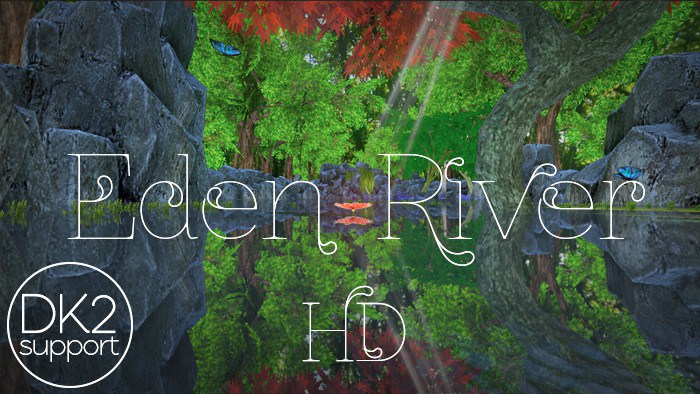 Eden River, a virtual reality relaxation experience, is now available on both Steam and Google Cardboard. The game, which essentially replicates the experience of floating down a lazy river, was produced by indie game studio Unello Design as an effort to elevate the artistic side of gameplay while creating a space for quiet reflection.
Although not a traditional game per say, due to the general lack of concrete objectives, what Eden River excels at is offering a beautifully detailed place to recharge and refresh—making it a new breed of anti-game that VR is so adept at conveying. In fact, the original game has found its way into some rather unconventional environments already, such as The Polish Academy of Sciencesin Warsaw where it has been used in research to see what influences mood and emotion. The kid-friendly title also landed into the classroom of Mathieu Marunczyn, a primary school teacher in Australia who uses the Oculus Rift in conjunction with games like Eden River to help calm down children with moderate to severe autism.
See the full story here: http://www.roadtovr.com/eden-river-hd-launches-steam-google-cardboard-vr-relaxation-experience/
Crayola, Daqri Partner to Make Kids’ Crayon Drawings 3-D
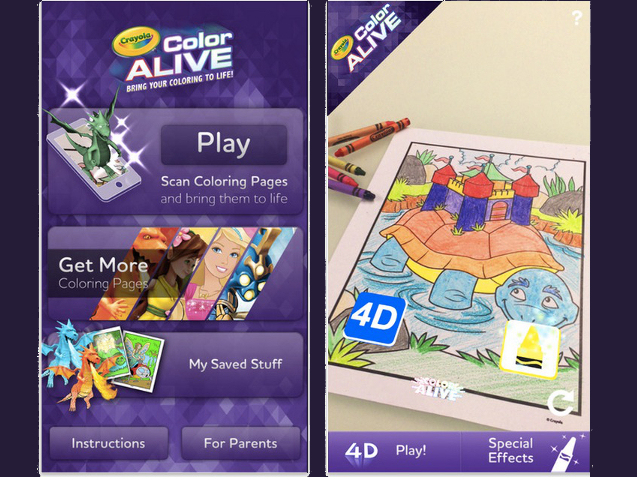 A fun new partnership between Los Angeles-based augmented reality firm Daqri and crayon maker Crayola. An iOS mobile app called Crayola Color Alive, coming to Android this week and Windows Phone next month, scans the pictures from special tie-in coloring pages and turns their colored-in subjects into 3-D characters on the screen.
The app is free, but the 16-page books will cost $6 when they go on sale in January, bundled with seven crayons. Parents can also buy sets of coloring pages, $2 per half book (reprintable endlessly), from inside the Color Alive app.
See the full story here: http://recode.net/2014/12/22/crayola-daqri-partner-to-make-kids-crayon-drawings-3-d/