Sony’s prototype EyeGlass smart specs eye up Google Glass
[Philip Lelyveld comment: Didn't google say they wouldn’t implement facial recognition because of privacy concerns and possible creepiness backlash? So much for that restraint!]
The glasses work by projecting information from your Android phone onto the lens as head-up display, so the words appear to hover in crisp green lettering over your view of the world in front of you.
The system is linked to your phone via Bluetooth or Wi-Fi, so the glasses could potentially tie into your contacts and use facial recognition to identify people you meet...
Unlike Google Glass, the controls aren't on the glasses themselves. Instead, you use a remote control about the size of a hockey puck. Adding a cumbersome remote to a wearable gadget is some typically Sony missing of the point, but it does at least get around the size restriction of trying to add controls to a pair of specs without making them huge.
There's a touchpad on the remote and a camera button to fire the camera that's built into the glasses themselves -- but the main reason for the remote is to house the battery, which in this version is too big to wear on your face. Before the Smart EyeGlass goes on sale the battery will be slimmed down so you don't need the remote.
...eventually the glasses will scan your eye movements to scroll through the information on the screen.
See the full story here: http://www.cnet.com/products/sony-smart-eyeglass/
Matt Graham, senior director at PBS Digital Studios
 Two-thirds of the PBS Digital Studios audience is between the ages of 13 and 34.
PBS Digital Studios has more flexibility to experiment with different types of programming. Our production cycles and budgets are a tiny percentage of what goes into creating a typical broadcast television show.
Frankenstein, M.D., PBS Digital Studios’ first scripted narrative series, is a classic story that enables us to integrate science, technology and math. It reimagines the title character as Victoria Frankenstein, an obsessive, eccentric prodigy in a modern university setting. The story is told through video blogs, the characters’ Twitter feeds, Tumblr and more, and drives to a thrilling Halloween finale.
See the full story here: http://www.c2meworld.com/creation/nextvideo-keynote-matt-graham-considers-the-future-of-digital-content/
Ericsson ConsumerLab TV & Media Report Results Revealed
 The latest edition of the annual Ericsson ConsumerLab TV & Media Report has found that streaming video is now almost level with traditional TV watching, with 75 per cent of consumers watching streamed content several times a week, compared to 77 per cent who watch scheduled broadcast TV programming.
The results, based on interviews with over 23,000 people in 23 different countries, show that a shift in user behaviour continues to drive change in the TV and media industries, ushering in an era of high-quality, on-demand entertainment.
See the full story here: http://www.c2meworld.com/consumption/ericsson-consumerlab-tv-media-report-results-revealed/
Fox, Samsung Partner On Innovation Lab
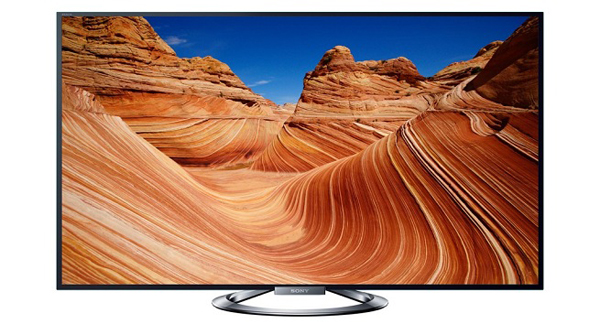 During a press event, Mike Dunn, Twentieth Century Fox Home Entertainment president, and Michael Zoeller, Samsung TV-A/V European sales and marketing director, revealed that Samsung will be the first partner in the Fox Innovation Lab, which was described as an initiative to work on short- and long-term projects “that will enhance the consumer experience of content through televisions and mobile devices of the future.”
The executives also said that in expanding the partnership between the two companies, Fox movies mastered in 4K will be prominently featured in the Samsung Video Pack sold with Ultra HD TVs and previously announced in the United States.
The Video Pack is an external hard drive-based media player pre-installed with Ultra HD movies and television programs. Zoeller reminded that Samsung plans to move beyond the Video Pack with a device tied to a Samsung Ultra HD download service in the future.
He said that because Samsung is supporting SCSA, Fox is making “its entire summer lineup” available in Ultra HD including: “Dawn of the Planet of the Apes,” “X-Men: Days of Future Past,” “The Other Woman,” “The Fault In Our Stars” and others.
See the full story here: http://www.c2meworld.com/creation/fox-samsung-partner-on-innovation-lab/
First 4DX Theater in U.S. a Hit with Audiences, Data Shows
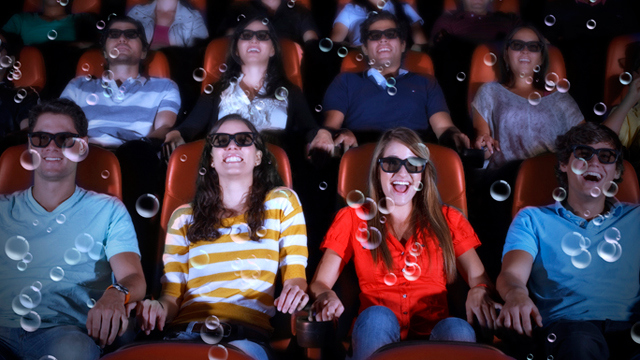 The 104-seat theater, the first of its kind in the U.S., played to sellout weekend crowds and enjoyed a 63% occupancy rate regardless of the day of the week or the showtime...
“There was certainly the ‘new kid in town factor,’ but we’ve seen in other territories that we have three to four times the occupancy rates of most theaters,” said Angela Killoren, chief marketing officer of CJ 4DPlex America, Inc.
Tickets Stateside cost $22 on average, but for that premium price, moviegoers get to kick back in motion-based seating in a theater that spays water, emits odors and jerks visitors around, all synchronized to the on-screen action.
See the full story here: http://variety.com/2014/film/box-office/first-4dx-theater-in-u-s-a-hit-with-audiences-data-shows-exclusive-1201295816/
OLED Color at 1/3 the Price: QD Vision’s Quantum Dots Enable TCL’s Launch of 4K UHD TVs with Full-Gamut Color
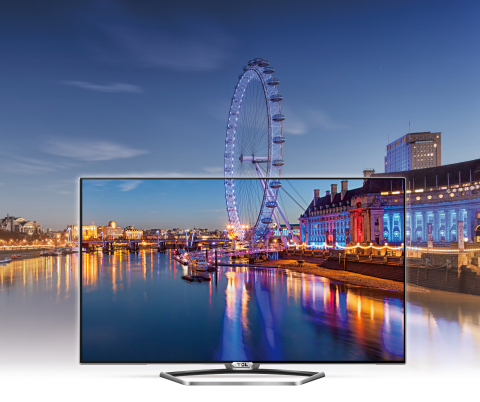 The new 55-in. quantum dot display, developed in partnership with QD Vision Inc., is a light emitting technology that uses semiconductor nanocrystals similar to those in organic light-emitting diode (OLED) displays. The displays also use a small quantity of cadmium sealed within the glass display to enhance colors.
"QD Vision makes quantum dots with very narrow red and green light output. The result in the LCD system is that you get good color separation between red, green and blue light and hence pure saturated color on screen," Mazzuchi said in an email reply to Computerworld.
Quantum dot technology was first implemented commercially by Sony in 2013 in multiple flat-screen TV models. Now other TV and monitor makers are starting to follow suit.
Research shows that “colorfulness” is the single most important perceptual factor in viewers’ estimation of picture quality. Until now, most mainstream LCD TV designs have had to sacrifice color quality, typically only delivering 60-70% of the NTSC color gamut standard. Color IQ is capable of delivering 100% of the NTSC color gamut, and works with all major LCD applications, including LCD TVs, LCD monitors and other displays, providing both superior color performance and high system efficiency.
The new TVs will initially be available in China, followed by additional worldwide availability.
See the full story here: http://www.businesswire.com/news/home/20140903005179/en/OLED-Color-13-Price-QD-Vision’s-Quantum#.VAnkw0tiBrh
How ‘Maze Runner’ and Barco’s New Panoramic Format Could Alter Moviemaking
 [Philip Lelyveld comment: This immersive VR experience (4K front screen, 2K left and right screens) will be available the Cinemark Theatre, Howard Hughes Pkwy (formerly The Bridge and Rave Cinema) on Sept. 19th.]
In the case of The Maze Runner, the film was shot in a traditional way, before the decision to use Escape was made. The center screen will display the live-action film, and imagery on the side screens will be extensions of the scenes — i.e., a larger maze — created using visual effects.
“Based on the speed we needed to get this to market and the creative challenges, we tried a new way of rendering and creating the material,”Ted Schilowitz, who is Barco’s “CinemaVangelist” and also works as a futurist at Fox, tells The Hollywood Reporter. This pipeline was built around a Crytek gaming engine for rendering, and computing hardware from Devil & Demon (Schilowitz is president of D&D).
See the full story here: http://www.hollywoodreporter.com/behind-screen/how-maze-runner-barcos-new-728641
The Rise and Fall and Rise of Virtual Reality
This seems to be an online book on Virtual Reality!
http://www.theverge.com/a/virtual-reality/oral_history
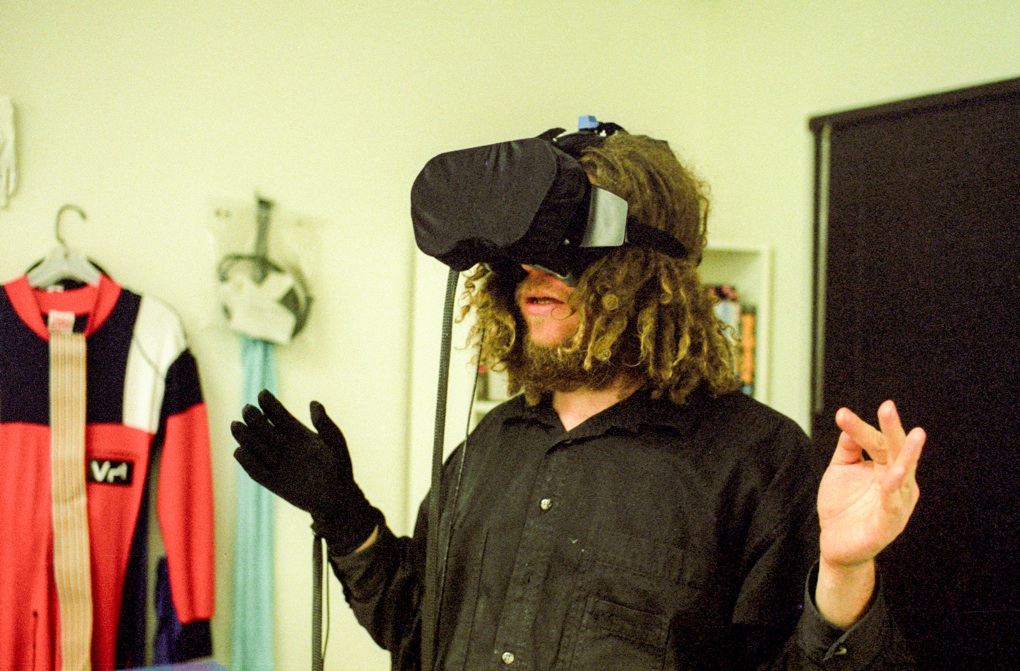
Facial recognition – the death knell of anonymity?
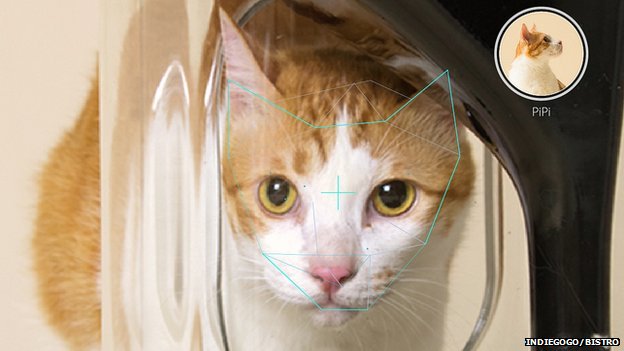 It is being developed for use on keyless doorbells, diagnosing genetic disorders, online education courses - to both verify identity and make sure you are paying attention - interactive cars, longevity prediction for possible use in the insurance industry and yes, even make sure only your cat eats from their bowl.
"This kind of tracking can expose intimate details about our lives - details that we don't want the government, law enforcement, or data marketers to know."
"Our next step is to incorporate moods, so that we can look at you and say 'You are happy', meaning you are more likely to buy this sort of a product, or that 'You are sad' and the ad can react to your mood."
See the full story here: http://www.bbc.com/news/uk-england-28307929?curator=MediaREDEF