With Hackathons Taking Center Stage, The Coming Transformation Of The Computer Scientist
 For the first time next semester, more than 10,000 students are expected to participate in one of 10 mega-hackathons, in a discipline that graduated just about 16,000 students in 2012.
It is telling then that these hackathons are almost exclusively student-run, filling in the gap between their enthusiasm for building new products and their curriculum’s emphasis on theoretical constructions.
Fontenot believes that “People are going to realize that this is more than just a hobby, but an educational revolution.” He emphasized that the skills developed at hackathons go beyond just pure programming, and include product design and working in teams, skills that have traditionally been excluded from computer science work.
Komissarouk, though, cautions that the changes need to be seen more as additive to a traditional computer science education, rather than a replacement.
Fontenot believes that hackathons are already starting to replace the process of interviewing at a company.
That acceleration can already be seen in MHacks, where two of the seven top prizes were awarded to high school students. Indeed, Fontenot argues that if you want to get into college today, doing a hackathon is a particularly strong approach.
See the full article here: http://techcrunch.com/2014/02/15/with-hackathons-taking-center-stage-the-coming-transformation-of-the-computer-scientist/?curator=MediaREDEF
Disney Launches Startup Accelerator Program
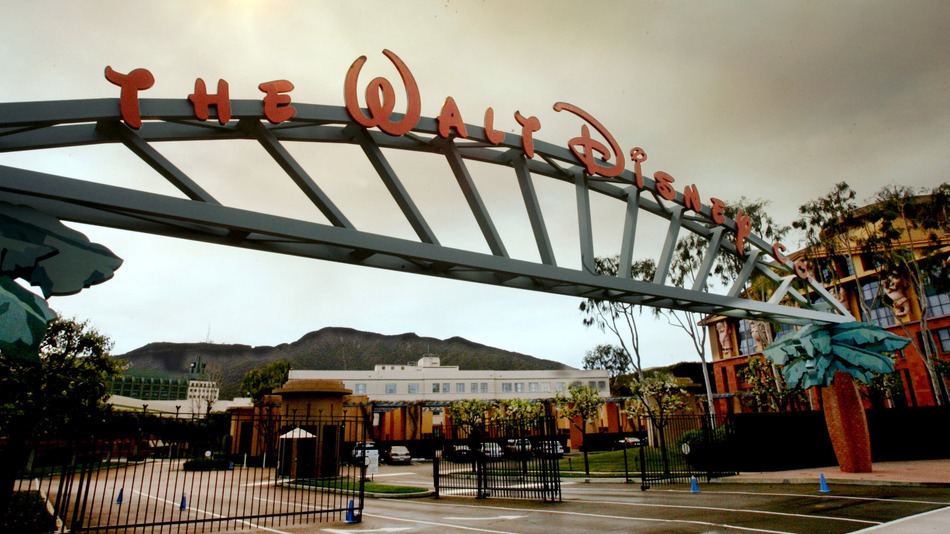 Disney Accelerator, as the program is called, will accept 10 startups, provide each with a seed investment of $120,000 and offer "mentor support" from Disney's CEO and other executives from the company and the industry at large. Perhaps best of all, Disney says those accepted will get "access to stories, characters, technology and other resources from across The Walt Disney Company."
Techstars has worked with a number of prominent businesses to power accelerator programs, including Microsoft, Nike and Barclays.
The Disney accelerator will be managed by Michael Abrams, Disney's SVP of innovation, and Cody Simms, a Techstars mentor who previously worked as an executive at StumbleUpon and Yahoo.
The three-month program kicks off at the end of June and is currently accepting applications until April 16.
See the full story here: http://mashable.com/2014/02/12/walt-disney-startup-accelerator/?utm_cid=mash-com-Tw-main-link
What I Learned by Flipping the MOOC
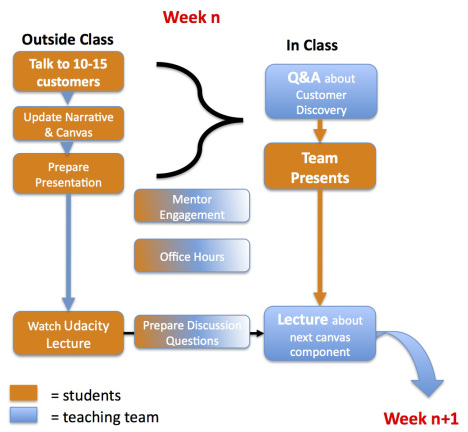 [Philip Lelyveld comment; Flipping = having the students watch the lectures at home and using the classroom for exercises and presentations. MOOC = massively open online course. He learned that he needed sign-ins and metrics to track student behavior at home and in the classroom. Without them, the students didn't do the work.]
We decided we needed to fix these issues, one at a time.
- In subsequent classes we reduced class size from ten teams to eight. This freed up time to get lecture and teaching time back in the classroom.
- We manually took attendance of who watched our MOOC (later this year this will be an automated part of the LaunchPad Central software we use to manage the classes.)
- To get the teaching team front and center, I required students to submit questions about material covered in the MOOC lecture they watched the previous evening. I selected the best questions and used them to open the class with a discussion. I cold-called on students to ensure they all had understood the material.
- We developed advanced lectures which combined a summary of the MOOC material with new material such as lectures focused on domain specific perspectives. For example, in our UCSF Life Sciences class the four VC’s who taught the class with me developed advanced business model lectures for therapeutics, diagnostics, medical devices and digital health. (These advanced lectures are now on-line and available to everyone who teaches the class.)
See the full story here: http://steveblank.com/2014/02/11/what-i-learned-by-flipping-the-mooc/?curator=MediaREDEF
Facebook Deploys Robots to Save Blu-ray From Extinction
 As those one billion users generate increasingly enormous amounts of data — an endless stream of status posts, likes, comments, photos, and videos — the team of engineers working under Facebook vice president of infrastructure engineering Jay Parikh are always looking for ways to more efficiently store all this digital information. With tongue in cheek, they call themselves “Jay’s commandos,” and their latest project is to move some of the older Facebook data onto Blu-ray, which is significantly cheaper than hard disks and flash and better suited to longterm storage. The robotic arms will help move the discs to and from the drives where the data is written and retrieved. Yes, this is a rather slow process compared to storing stuff on hard disk or flash, but it will only be used with data that rarely gets accessed, like very old photos.
Facebook calls it cold storage, and it’s yet another way that the giants of the web are pushing data center design into the future, seeking more efficient ways of processing and, yes, storing your data. It could also signal a larger movement towards the use of robotics in the data center, but at the same time, Facebook is venturing into the past with this rather surprising project. Just when the Blu-ray seemed to be on the way out — undercut by Netflix and other services that stream movies over the internet — another part of the internet has thrown it a lifeline.
See the full story here: http://www.wired.com/wiredenterprise/2014/02/facebook-robots/
Modern Meadow wants to 3D print meat in Brooklyn
 3D printed meat may be coming to Brooklyn, New York. The tissue engineering lab Modern Meadow is in negotiations to lease up to 10,000 square feet at the BioBAT facility in the Brooklyn Army Terminal. The company aims to produce lab-grown leather within two years and 3D printed meat in the more distant future.
Right now, Modern Meadow's lab is located at the University of Missouri, but with new investments and plans to roll out new products, the company wanted to be closer to the vibrant fashion and restaurant scenes of New York.
See the full story here: http://www.3ders.org/articles/20140211-modern-meadow-wants-to-3d-print-meat-in-brooklyn.html
Game Changers – Video game designers go to next level with real-world problems, nuance
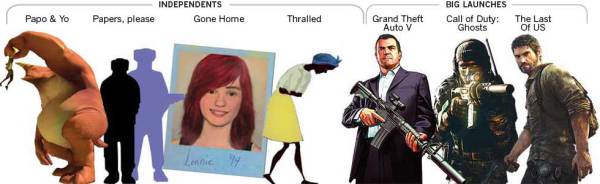 [Philip Lelyveld comment: This LA Times Sunday front-page story discusses how next gen game developers are moving games beyond first-person shooters and into situations that they hope will be just as emotionally engaging as movies. The story mentions the efforts of a number of USC SCA gaming program grads.]