WHAT MAKES THE CLOUD SUITED FOR POST PRODUCTION? Just as large-scale suppliers provide electricity more economically, processing and storage requirements can often be met more economically by cloud services. And just as electricity comes to us directly via connection to a power grid, data comes directly to a computer via connection to the Internet. In addition, cloud services from different providers can easily interact through automated interfaces, providing a highly flexible way of using solutions and add-ons from different suppliers throughout a given workflow.
However, when it comes to video post production, not just any cloud service will do. Generic cloud-computing providers, such as Amazon Web Services, are built for IT and consumer data rather than the voluminous data and throughput performance requirements associated with broadcast video. The requirements for editing video are formidable, with huge amounts of data and the need for real-time response. The process of rendering effects and transitions in a generic cloud environment are expensive since these services charge according to CPU power and time used, and the unresponsiveness would be frustrating for users accustomed to dedicated desktop solutions. When all of this is taken into account, building a broadcast post-production operation on a generic cloud infrastructure simply doesn’t meet broadcast standards for performance, cost or reliability.
See the full story here: http://www.c2meworld.com/creation/the-cloud-and-the-evolution-of-post-production/
See the original post here: http://copyrightandtechnology.com/2014/02/04/national-academies-calls-for-hard-data-on-digital-copyright/
About three years ago, the National Academies — the scientific advisers to the U.S. federal government — held hearings on copyright policy in the digital age. The intent of the project, of which the hearings were a part, was to gather input from a wide range of interested parties on the kinds of research that should be done to further our understanding of the effects of digital technologies on copyright.
The committee overseeing the project consisted of twelve people, including an economist specializing in digital content issues (Joel Waldfogel), a movie industry executive (Mitch Singer of Sony Pictures), a music technology expert (Paul Vidich, formerly of Warner Music Group), a federal judge with deep copyright experience (Marilyn Hall Patel of Napster fame), a library director (Michael Keller of Stanford University), a former director of Creative Commons (Molly van Houweling), and a few law professors. The committee was chaired by Bill Raduchel, a Harvard economics professor turned technology executive perhaps best known as Scott McNealy’s mentor at Sun Microsystems.
Recently the National Academies Press published the results of the project in the form of Copyright in the Digital Era: Building Evidence for Policy, which is available as a free e-book or $35 paperback. This 85-page booklet is, without exaggeration, the most important document in the field of copyright policy to be published in quite some time. It is the first substantive attempt to take the debate on copyright policy out of the realm of “copyright wars,” where polemics and emotions rule, into the realm of hard data.
The document starts by decrying the lack of data on which deliberations on copyright policy are based, especially compared to the mountains of data used to support changes to the patent system. It then goes on to describe various types of data that either exist or should be collected in order to fuel research that can finally tell us how copyright is faring in the digital era, with respect to its purpose to maximize public availability of creative works through incentives to creators.
The questions that Copyright in the Digital Era poses are fundamentally important. They include issues of monetary and non-monetary motivations to content creators; the impact of sharply reduced distribution and transaction costs for digital compared to physical content; the costs and benefits of various copyright enforcement schemes; and the effects of US-specific legal constructs such as fair use, first sale, and the DMCA safe harbors. My own testimony at the hearings emphasized the need for research into the costs and benefits of rights technologies such as DRM, and I was pleased to see this reflected in the document.
Copyright in the Digital Era concludes with lists of types of data that the project committee members believe should be collected in order to facilitate research, as well as descriptions of the types of research that should be done and the challenges of collecting the needed data.
This document should be required reading for everyone involved in copyright policy. More than that, it should be seen as a gauntlet that has been thrown down to everyone involved in the so-called copyright wars. The National Academies has set the research agenda. Now that Congress has begun the long, arduous process of revamping America’s copyright law, we’ll see who is willing and able to fund the research and publish the results so that Congress gets the data it deserves.
Last year, Asahi TV Corp. and content-fingerprinting specialist Vobile Japan partnered on an unusual experiment for an unscripted primetime series that blurred the line between contestant and audience. When the “Survivor”-themed format featured an on-air personality harpooning fish, viewers were invited to use their smartphones to do some spearing of their own, competing for points by snapping photos of the catch onscreen.
The point was to hook not just fish but also viewers in the treacherous waters of live TV, where ad-skipping DVRs and a sea of competitors make achieving decent ratings increasingly challenging.
It’s an odd example, but one that demonstrates the direction TV networks are going to have to go with reality TV to preserve the prime value of that first window, where most revenue is made. This gamification of reality TV is a trend no one has seen coming, yet it feels inevitable: leveraging second screens to bring back an urgency to watching that first screen.
See the full article here: http://variety.com/2014/voices/news/true-interactivity-could-revive-the-reality-tv-genre-1201075198/?curator=MediaREDEF
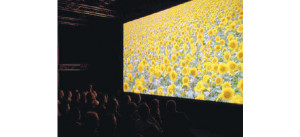 Japan’s NHK says it has successfully transmitted 8K “Super Hi-Vision” television signals via a single standard UHF terrestrial broadcast channel over a distance of 27 km. The field test, conducted on Jan. 20 was performed as a follow-up to a May 2012 demonstration in which the UHD signal was sent slightly more than four km.
The experiment was intended to demonstrate that Super Hi-Vision television could be satisfactorily delivered to the home over a signal path typically encountered in terrestrial broadcasting.
See the full story here: http://www.c2meworld.com/distributiondelivery/nhk-broadcasts-8k-video-over-the-air/
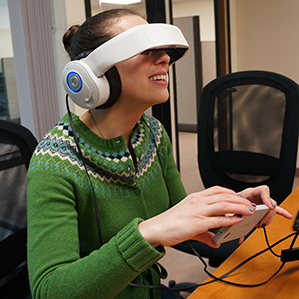 [Philip Lelyveld comment: This is a new augmented reality solution that may be an improvement over the Oculus Rift.]
So what makes the Glyph special? Avegant says it’s the headset’s image projection method, which reflects light onto each retina through a series of lenses and tiny mirrors and makes for sharper, easier-to-watch images than using a screen, as many competing products like Oculus Rift do. Its ability to mimic depth certainly makes it particularly good at showing natural-looking 3-D content.
I first watch an action scene ripped from a 3-D Blu-ray of the movie Avatar, which plays from a connected laptop (the Glyph can connect to any media player with an HDMI input, so you can use it with many smartphones, laptops, and tablets). With the Glyph on, I see what appears to be a large, bright screen in front of my face, with a black frame around it, and I can gaze above and below at slivers of the outside world. The Na’vi appear to fly around in front of my face, yet I don’t sense the delays, screwy coloring, or image doubling that I’ve noticed when viewing 3-D content in the past. There are some pixelated shots, but I’m told those are glitches in the Avatar file, not the device.
The Glyph enables this by emitting light from a low-power LED, which is reflected by an array of two million tiny mirrors onto a lens system and then projected to the back of your retinas. This seems to make for a much more comfortable viewing experience. I would happily watch a whole movie like this if time permitted.
I’m also surprised to learn that I can wear the Glyph without my glasses, since I can adjust the distance between each pupil and focus each eye individually.
See the full story here: http://www.technologyreview.com/news/523966/the-future-of-personal-entertainment-in-your-face/
Rovi Corporation (NASDAQ: ROVI), a global leader in entertainment discovery, today announced that its metadata for the 2014 Winter Olympic Games is available to customers worldwide. Part of Rovi Video data -- Rovi's extensive offering of rich information on TV programs, movies, celebrities and sports, covering 55 countries worldwide -- the data coverage of the games features hour-by-hour event descriptions, athlete profiles, event history, unique facts, and associated multimedia content. Updated as schedule changes require, Rovi's data includes unique identifier tags, keywords, and links throughout the data, that will help entertainment services become 'the source' for when and where Olympic events will be airing and enable consumers to discover, watch, schedule show recordings and enjoy coverage of their favorite teams, personalities and Olympic events.
"Our in-house team of sports editors have spent hours collecting and creating metadata for the upcoming Winter Olympic Games," said John Moakley, executive vice president of Data Solutions at Rovi. "We're ready for the competition to begin and, as we see star athletes and teams emerge, we will be working to capture the details of their stories as history is being made."
Rovi entertainment metadata on movies, TV programs, sports, music, books and games, comprises of more than 5 million TV programs, half a million movies, 3.2 million albums, 30 million music tracks, photos and content-related imagery. The offering is a part of, and developed to work cohesively with, Rovi's portfolio of technologies focused on the discovery and personalization of entertainment. This includes intuitive search, targeted recommendations, cross platform advanced advertising, and interactive program guides for navigating and discovering content on TVs, set-top boxes, tablets and PCs.
See the full story here; http://online.wsj.com/article/PR-CO-20140130-910039.html
[Philip Lelyveld comment; the writer thinks second screen developers have tried too hard to extend the content, rather than meet a need or create a new experience.]
Solutions...
For example, few have tried to build social experiences around TV that involve actual people who watch TV together in the same room.
"There’s also a lot of potential in TV metadata, and the kinds of experiences it could unlock..."
And finally, the combination of wearables, cloud-based TV apps and mobile services could lead to a whole new range of personalized TV experiences (for inspiration, watch this demo video of a personalized workout program using Google Glass and Chromecast).
Read the full story here: http://gigaom.com/2014/01/29/lets-face-it-social-tv-is-dead/?utm_source=General+Users&utm_campaign=6a12b43763-c%3Amed+d%3A01-30&utm_medium=email&utm_term=0_1dd83065c6-6a12b43763-99147229
[Philip Lelyveld comment; this article is a fair assessment of the problem. Silicon Valley used to innovate in new, tech-focused, and uncharted industries. Now they are 'disrupting' existing industries with little regard for the millions of people currently employed by them, or the rules put in place to protect consumers.]
At the heart of this controversy is Silicon Valley’s changing emphasis from pure technological advancement to disruption of existing manufacturing and service industries. For decades, the region worked in greenfield territory – spaces where existing incumbents were only other technology companies or simply did not exist.
Now that the Valley’s companies are increasingly competing against traditional businesses, society is not so quick to give us a pass on this behavior. Take Airbnb and Uber again, both of which have attempted to avoid regulations and taxes in their fields (hotel taxes and taxi and license commission regulations, respectively). The tech press often writes these up as “disrupting” unwieldy government regulations, and to a degree, this is accurate (the best writers also mention that many of these laws were designed with consumers in mind, back when cabs and hotels were far less safe than they are now).
For the most part, these companies have managed to mitigate their insubordination. Yet, the same special rules never seem to apply to small and medium size businesses like an independent bed and breakfast, which lacks the financial and legal muscle to ignore such regulations without risking its entire business. It is this exceptionalism that in the past has been heralded, but in the context of today’s economic environment invites significant blowback.
See the full story here: http://techcrunch.com/2014/01/28/blowback-silicon-valley-is-now-public-enemy-1/?ncid=tcdaily
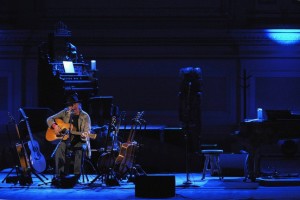 On Jan. 7, Tom Adams went to see a Neil Young concert at Carnegie Hall by himself. It wasn't until days later that he made a connection with a group of other fans who attended. Like him, they had all secretly videotaped the solo acoustic performance, part of a four-night stand by Mr. Young, in his first return to the famed New York venue since 1973.
On Tuesday, Mr. Adams uploaded to YouTube a video of the entire two-hour show, which he had stitched together from footage captured by fellow concertgoers seated around the theater. Most of the video was shot by Mr. Adams, a video producer from Williamsburg, Mass., on a compact Canon camera perched on the railing in front of his $150 mezzanine seat (102, Row AA). All the videos were edited to match a single audio recording made at the concert, which Mr. Adams downloaded from an anonymous source on an online-sharing site.
Read the full story here: http://online.wsj.com/news/articles/SB10001424052702303448204579338600817194242
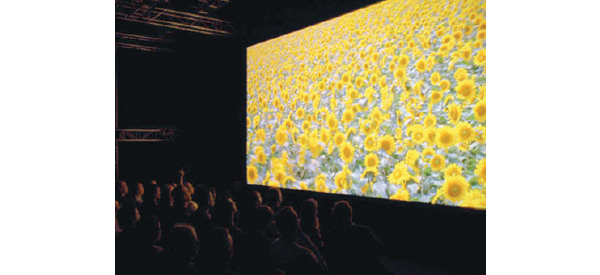 Japan’s NHK says it has successfully transmitted 8K “Super Hi-Vision” television signals via a single standard UHF terrestrial broadcast channel over a distance of 27 km. The field test, conducted on Jan. 20 was performed as a follow-up to a May 2012 demonstration in which the UHD signal was sent slightly more than four km.
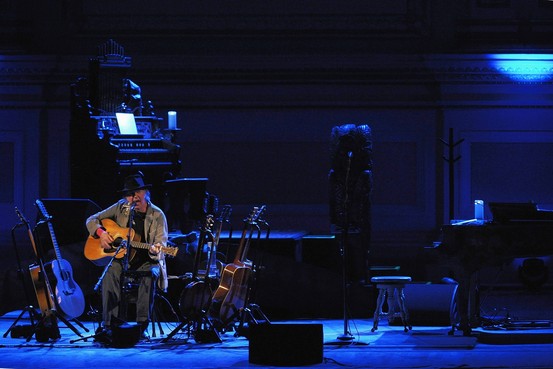 On Jan. 7, Tom Adams went to see a Neil Young concert at Carnegie Hall by himself. It wasn't until days later that he made a connection with a group of other fans who attended. Like him, they had all secretly videotaped the solo acoustic performance, part of a four-night stand by Mr. Young, in his first return to the famed New York venue since 1973.