The Virtual Genius of Oculus Rift
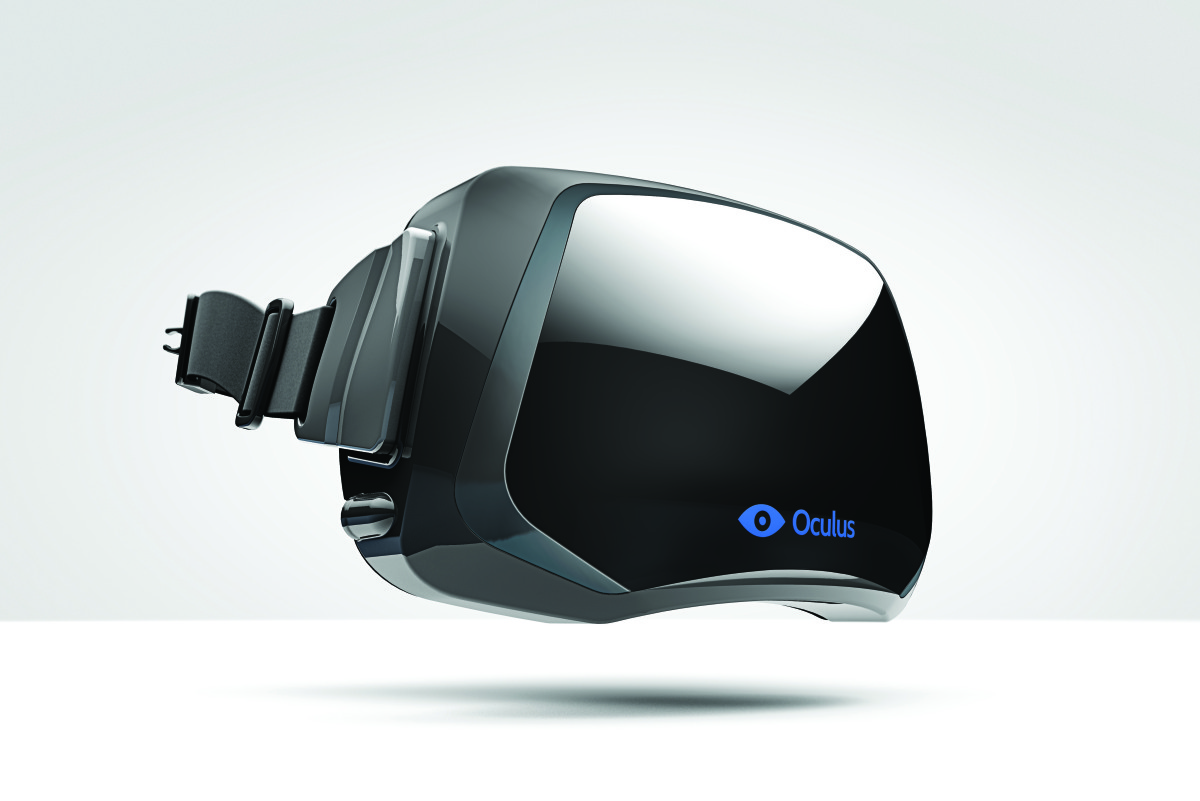 Luckey’s device wasn’t like other headsets. In 2012, what interest there was in VR was mostly in creating a kind of virtual cinema: you’d look in the headset and see a simulated version of a giant screen hanging in the air in front of you, and you’d watch a movie on it. Not many people did. Not only was it Skymall stuff, it was pricey—Sony’s head-mounted set costs $1,000. Luckey’s device was different. It was designed to run games and to immerse you in them. It ran fast, and its field of view was very wide: the display wrapped around to eat up your peripheral vision, putting you well and truly in another world. “That’s the only way to get any kind of immersion,” Luckey says. “I didn’t want to just have a TV you could wear.”
The first time I tried the Rift (which seems to be winning out over Oculus as the shorthand of choice) it showed a simulation of a craggy, rocky mountainside. I turned my head experimentally, and the view changed, with no discernible lag, just as it would have in reality. Instinctively my brain started looking for the edge of the image—but it didn’t come. I kept turning until I was looking all the way behind me. There was nothing but mountain back there.
The Oculus Rift has limitations. The resolution isn’t high enough yet, so you have a slight sense that you’re viewing the world from inside a screened-in porch. Look down and you’ll notice that something’s missing: your entire body. Oculus can bring your eyes and, with headphones, your ears into the virtual world, but nothing else. You haunt the virtual world as a floating, disembodied spirit.
Individuals’ tolerance for latency varies, but at Oculus they peg the maximum allowable lag at 20 milliseconds. On a technical level, that’s a challenging specification to hit. By comparison, an eyeblink takes about 300 milliseconds.
Getting this kind of precision requires tight integration of hardware and software—it’s one of the mantras you hear around the Oculus offices. And beyond that, it takes a solid grasp of the fundamentals of gaming technology. That’s where a guy like Carmack, who invented some of the technology in question, comes in handy. “The science around this is so close to the metal,” Iribe says. “It’s so close to what bits are happening when. Carmack knows he can go in and get that fully optimized.”
See the full story here: http://time.com/39577/facebook-oculus-vr-inside-story/