[Philip Lelyveld comment; this impacts a number of my friends. I hope that they all find new and interesting challenges soon.]
The latest layoffs also hit Home Entertainment Group and Imageworks VFX unit.
As part of its ongoing efforts to cut back the size of its workforce, Sony Pictures Entertainment closed down Sony Pictures Technologies today, laying off Chris Cookson, who has served as president of the unit since 2008. New cuts were also made in the Home Entertainment Group and at Imageworks, the studio’s VFX house.
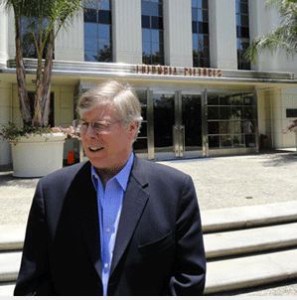 The latest round of lay-offs brings the number of jobs that the studio has eliminated since SPE headsMichael Lynton and Amy Pascal began cost-cutting measures last fall to around 50.
"As part of the Company’s previously announced efforts to evolve its operations, Sony Pictures Entertainment is absorbing the functions of Sony Pictures Technologies into various core businesses. Regrettably, Chris Cookson will leave the Company as a result. In related moves, SPE has streamlined technology groups across its businesses to accelerate creative and technological innovation. The entire Company wishes to express its deep gratitude to Chris, his team, and the other groups involved in these changes,” Sony spokesman Charles Sipkins said in a statement.
Cookson’s team led the studio’s efforts to implement initiatives like UltraViolet and digital distribution and had been overseeing the transition to 4k, 3D and digital file-based workflows throughout the company.
On Jan. 21, the studio also held a staff meeting, announcing that it intends to move more of the Imageworks workforce to its Vancouver, Canada, facility.
See the full story here: http://www.hollywoodreporter.com/news/sony-closes-technologies-unit-lays-673386
by Paul Daugherty, CTO of Accenture
Companies are using digitally fueled technology to create new, visionary business models that are unlocking opportunities in entirely new industry segments, and opening doors to new customer markets. This is resulting in higher growth than would be possible by remaining tethered to traditional business models.
...
These companies are doing two things. First, they are embedding digital technology within every aspect of the business, connecting the company with digitally-enabled suppliers and customers — everyone who touches, buys or services the company’s products. And they are opening themselves up to new flexible ventures and partnerships with other industry sectors. The digital enablement of companies and supply chains facilitates this cross-sector collaboration.
See the full story here: http://recode.net/2014/01/22/big-is-the-next-big-thing/
[Phil Lelyveld comment; did anyone NOT see this coming?!]
I went to AMC (Easton Mall, Columbus, OH) to watch a movie with my wife (non- Google Glass user). It is the theater we go to every week, so it has probably been the third time I’ve been there wearing Google Glass, and the AMC employees (guy tearing tickets at the entrance, girl at the concession stand) have asked me about Glass in the past and I have told them how awesome Glass is with every occasion.
Because I don’t want Glass to distract me during the movie, I turn them off (but since my prescription lenses are on the frame, I still wear them). About an hour into the movie (Jack Ryan: Shadow Recruit), a guy comes near my seat, shoves a badge that had some sort of a shield on it, yanks the Google Glass off my face and says “follow me outside immediately”. It was quite embarrassing and outside of the theater there were about 5-10 cops and mall cops. Since I didn’t catch his name in the dark of the theater, I asked to see his badge again and I asked what was the problem and I asked for my Glass back. The response was “you see all these cops you know we are legit, we are with the ‘federal service’ and you have been caught illegally taping the movie”.
See the full story, including corrections at the bottom, here: http://the-gadgeteer.com/2014/01/20/amc-movie-theater-calls-fbi-to-arrest-a-google-glass-user/
 For one night only, the London Eye hosted a rotating array of simultaneous music tributes to Britain’s club culture that were live-DJ'd and podcast - one per pod; how appropriate (warning; this is a technical article).
Read the full story here: http://www.tvtechnology.com/article/london-eye-links-record-number-of-streams/222947
[Philip Lelyveld comment: this author basically says that, if you have a disruptive technology and hang in there (with enough VC funding), you will win out over the incumbents. I'd add the research of his colleagues Brynjolfsson and McAfee who found that start-ups can act quickly, but if the incumbents can survive, they have the resources to later overpower the upstarts. The disruption occurs, but the winner can be either the upstart or the incumbent - depending on who executes a strategy better.]
 I was talking with a founder/CEO of an enterprise startup about what it is like to disrupt a sizable incumbent. In the case we were talking about the disrupting technology was losing traction and the incumbent was regaining control of the situation, back on their feet, and generally felt like they had fended off the "attack" on a core business. This causes a lot of consternation at the disrupting startup as deals aren't won, reviews and analyst reports swing the wrong way, and folks start to question the direction. If there really is a product/market fit and the technology improves things, then hold on and persevere because almost always the disruption is still going to happen.
See the full story here: http://www.linkedin.com/today/post/article/20140119170759-2293107-perseverance-and-disrupting-big-tech?curator=MediaREDEF
 But in the emerging economies of the world, that’s pretty much how things already work, thanks to a growing number of deals Google and Facebook have struck with mobile phone carriers from the Philippines to Kenya.
In essence, these deals give people free access to text-only version of things like Facebook news feeds, Gmail, and the first page of search results under plans like Facebook Zero or Google Free Zone. Only when users click links in e-mails or news feeds, go beyond the first page of search results, or visit websites by other means do they incur data charges (see “Facebook and Google Create Walled Gardens for Web Newcomers Overseas”).
...
But the existence of a free and dominant chat, e-mail, search, and social-networking service makes it awfully hard for any competitor to arise. And Susan Crawford, visiting professor of law at Harvard University and a co-director of Harvard’s Berkman Center for Internet & Society, calls it “a big concern” that Google and Facebook are the ones becoming the portal to Web content for many newcomers.
“For poorer people, Internet access will equal Facebook. That’s not the Internet—that’s being fodder for someone else’s ad-targeting business,” she says. “That’s entrenching and amplifying existing inequalities and contributing to poverty of imagination—a crucial limitation on human life.”
...
How things unfold in the developing world may have a bigger impact on the future of the Internet. Worldwide, the number of smartphones is projected to double from 1.5 billion last year to three billion in 2017. Most of those 1.5 billion new phones—and new Internet access—will be in the developing world.
See the full story here: http://www.technologyreview.com/news/523736/around-the-world-net-neutrality-is-not-a-reality/?utm_campaign=newsletters&utm_source=newsletter-daily-all&utm_medium=email&utm_content=20140120
[Phil Lelyveld comment; 3D Systems had roving ambassadors scanning people's heads on the CES show floor. It takes about 90 seconds to scan a head, including the top of the head. When they display the captured file on a tablet a few seconds later, missed areas of the head look like black open wounds, giving the model a zombie-esque quality. The $399 Sense is an excellent intermediate product that, when improved, will be ready for the consumer market.]
The Sense, which is about as big as a staple gun, can scan objects with your help. Unlike other scanners, the Sense is meant to be held and circle the object its scanning. This means that it can be difficult to get a perfectly accurate reading, since human error becomes more of a factor.
See the original post here: http://techcrunch.com/2014/01/19/fly-or-die-3d-systems-sense-scanner/?ncid=tcdaily
MailChimp Chief Data Scientist is at Disney World this weekend wearing his RFID-equipped MagicBand. Here’s how he thinks the practice of digitally tracking consumers in the physical world will reach everywhere from theme parks to our homes.
But under all that visual appeal, beneath the surface of the band, was the reason for Disney’s huge investment: a sophisticated RFID tag. These bands, which are individually coded to each visitor, allow Disney to track individuals wherever they go in the parks and resorts with long-range RFID readers. You check into FASTPASS rides with your band, you purchase food by swiping your band and you use it as a key to your hotel room.
The bands are even uniquely colored and monogrammed with your family members’ names so that they won’t get switched up. Why? Because they don’t want their database to get confused and think that you, a 45-year-old man, rode the teacups instead of your little son Timmy. This is one of the first examples I’ve seen of physical design (e.g., monogramming and coloring) for the sake of digital data purity.
See the full story here: http://gigaom.com/2014/01/18/you-dont-want-your-privacy-disney-and-the-meat-space-data-race/
[Philip Lelyveld comment; congratulations to Paul, Oded, and the team.]
The accelerator, which is the brainchild of Greycroft venture partner and former William Morris exec Paul Bricault, Oded Noy, Richard Wolpert and Jeff Solomon, has backed 26 companies with its first fund, resulting in 3 exits and more than $30 million in additional seed and Series A funds raised. Bricault tells me that Amplify has aimed to differentiate itself from the growing sea of accelerators in a number of ways.
First, Amplify doesn’t have set classes/semesters. The accelerator accepts applications from founders and startups on a rolling basis. This is beneficial to startups for a number of reasons, he explains. First, because development process for startups differs (i.e. enterprise vs. gaming), having a set three-month-long program doesn’t necessarily work for all companies. Another benefit to not having classes is that not every startup is fundraising at the same time, and this creates a more collegial atmosphere among founders because most of them are not competing for investors. In fact, Bricault has observed that founders tend to share information and contacts more freely when it comes to investors.
The second differentiating aspect of Amplify is not having set terms/financing for all startups joining the program. Not each startup gets the same amount of cash for the same amount of equity (i.e. $50,000 for 6 percent of the company). “Not all companies are created equally,” Bricault says. Bricault and Solomon will take into account how far along the startup is, the quality of the team, customers and more when accepting and financing a startup. And he adds that, increasingly, companies come to the program having already developed and/or launched a product, so the traditional accelerator terms don’t necessarily fit. Amplify has also brought on a CTO, a director of investments and a business development exec to help startups with raising money, marketing and more.
Bricault says this approach has paid off for the founders themselves. Out of the first 26 companies, 24 raised seed rounds over the past two years, including Stack Social, Bitium, and Battlefy. Many are raising their Series A rounds at the moment, he adds. The three exits mentioned above include Look.io to LivePerson, Shipmate to Cruiseline.com, and Kingmaker to Joyus.
See the full story here: http://techcrunch.com/2014/01/15/as-the-la-tech-scene-heats-up-accelerator-amplify-raises-8-million/
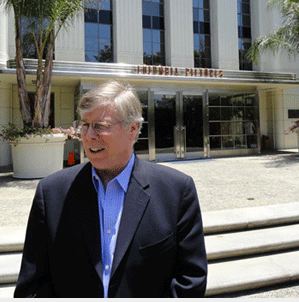 The latest round of lay-offs brings the number of jobs that the studio has eliminated since SPE headsMichael Lynton and Amy Pascal began cost-cutting measures last fall to around 50.
 For one night only, the London Eye hosted a rotating array of simultaneous music tributes to Britain’s club culture that were live-DJ'd and podcast - one per pod; how appropriate (warning; this is a technical article).
 I was talking with a founder/CEO of an enterprise startup about what it is like to disrupt a sizable incumbent. In the case we were talking about the disrupting technology was losing traction and the incumbent was regaining control of the situation, back on their feet, and generally felt like they had fended off the "attack" on a core business. This causes a lot of consternation at the disrupting startup as deals aren't won, reviews and analyst reports swing the wrong way, and folks start to question the direction. If there really is a product/market fit and the technology improves things, then hold on and persevere because almost always the disruption is still going to happen.