 "It's the first strictly narrative full-length feature film, a union film, to be shot with the iPhone 5s," Kowalchuk said. Though SAG cannot confirm that no other iPhone film project can claim to precede Kowalchuck's, SAG-AFTRA's Charlesetta Raymondsaid, "I am unaware of any other iPhone films applying [to be SAG signatories]."
"The resolution needs to be bumped up about 5 percent for theatrical release," says Kowalchuk of the prospects of shooting a theatrical feature on an iPhone. "I look forward to the challenges of making this film with the iPhone 5s," says Turrow. "We will no doubt encounter obstacles, but it will also be exciting and on the forefront of what is happening today with digital technology. It's also great that we are going to produce this motion picture locally with low budget tiered union contracts."
See the full story here: http://www.hollywoodreporter.com/news/first-iphone-movie-applies-sag-662197
[Philip Lelyveld comment: Now things are just getting silly. Mastercoin is simultaneously building out, strengthening, and competing with the Bitcoin infrastructure.]
In the digital age, and especially with Bitcoin, we’ve long since done away with the need for a gold standard. Money and new currencies are entirely manufacturable. Backers of a new “programmable money layer” calledMastercoin claim their system will allow anyone to devise their own currency by using the preexisting Bitcoin economy as a foundation. It will allow anyone in the world to exchange their Bitcoin for Mastercoin, which can then be traded again for user-generated currencies.
See the full story here: http://www.forbes.com/sites/jasperhamill/2013/11/30/fed-up-with-bitcoin-heres-how-to-start-your-own-currency/
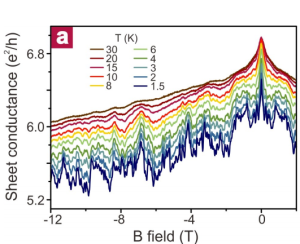 [Philip Lelyveld comment: this is mind-boggling! Nature is amazing.]
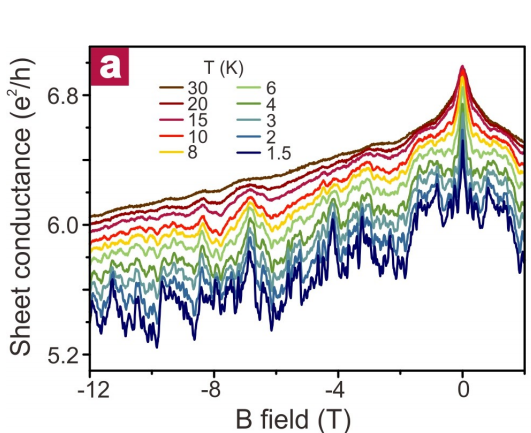
The new material is a grey, metallic mineral called Kawazulite which is made of bismuth, tellurium, selenium, and sulphur.
Topological insulators are one of the more exciting new materials in science. This stuff is odd because is a conductor on the surface but an insulator inside, rather like a block of ice in which melting water flows around the outside but is trapped as a solid in the middle.
But topological insulators have another property. The electrons flowing over the surface of a topological insulator are all aligned in a specific way. In fact, their “spins” are locked at right angles to their direction of motion.
This spin-momentum locking means that the electrons are immune from the buffeting they would get inside an ordinary conductor. Instead, the electrons can move through perfect topological insulators with 100 percent efficiency, even at room temperature.
See the full story here: http://www.technologyreview.com/view/522301/physicists-discover-worlds-first-naturally-occurring-topological-insulator/?utm_campaign=newsletters&utm_source=newsletter-daily-all&utm_medium=email&utm_content=20131206
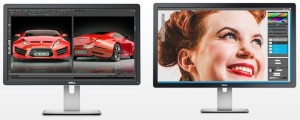 Following the initial revelation of some details on a new 24-inch 3840 x 2160 "4K" Ultra HD display from Dell yesterday, the company has now officially announced that the display launches today in the Americas with a $1399 price tag. A 32-inch model at the same resolution is also available for $3499, while Dell will be introducing a 28-inch 4K display in early 2014 with breakthrough pricing of under $1000.
All three displays carry the same 3840 x 2160 resolution, giving them varying pixel densities ranging from 140 pixels per inch (ppi) on the 32-inch model to 157 ppi on the upcoming 28-inch model and 185 ppi on the 24-inch model.
See the full story here: http://www.macrumors.com/2013/12/02/24-inch-4k-display-from-dell-priced-at-1399-28-inch-4k-model-coming-at-under-1000/
[Philip Lelyveld comment; a perfect example of how technology is morally neutral. He never mentions Stuxnet, the virus spread via USB sticks to harm the Iranian nuclear program.]
His idea is simple: create a self-replicating bootable USB stick that holds an operating system and any software that needs to run on it. This stick is self-replicating in the sense that it can copy its contents to another USB stick with just a few clicks and no expert knowledge.
He has written a script that clones the contents of one USB stick to another of sufficient size. It copies only the designated software, without copying any personal data on the first stick (except for any stored in a special /shared folder). It also preserves any data already on the second stick.
Of course, there are potential disadvantages with this method. The first and most significant is the potential for malware to enter the chain somewhere. Because of this, Monteil recommends that it is used only for short distance communication: in a classroom, for example, where there is not enough time between cloning events for malware to be added.
See the full story here: http://www.technologyreview.com/view/522166/self-replicating-usbs-spread-software-faster-than-an-internet-connection/?utm_campaign=newsletters&utm_source=newsletter-daily-all&utm_medium=email&utm_content=20131203
The NeoLucida allows you to trace what you see. It is the first portable, authentic camera lucida in nearly a century.
[Philip Lelyveld comment: Two art instructors are developing a modern Camera Lucida - a prism/lens tool that allows you to "trace" what you see onto paper. The brief video describes the technology and history of it.
They nicely acknowledge David Hockney's book describing how the old masters may have made extensive use of technology like this.]
See the full story here: http://neolucida.com
NeoLucida (Long Edit) from STUDIO for Creative Inquiry on Vimeo.
[Philip Lelyveld comment; The main point of the story is that inaccuracies in GPS info reported by the cellphone make delivering emergency services (police, fire, ambulance) more difficult. The dispatchers know what the problem is, but the location information can be hundreds of yards away from the person's actual location.
According to the U.S. Centers for Disease Control and Prevention, 38% of US households have now given up landlines and are solely on cellphones. 75% of emergency calls in California in the last 18 months were placed from cellphones.]
See the full story here; http://online.wsj.com/news/articles/SB20001424052702304579404579231913503559556
Their idea that although people may have opposing views on sensitive topics, they may also share interests in other areas. And they’ve built a recommendation engine that points these kinds of people towards each other based on their own preferences.
The result is that individuals are exposed to a much wider range of opinions, ideas and people than they would otherwise experience. And because this is done using their own interests, they end up being equally satisfied with the results (although not without a period of acclimitisation). “We nudge users to read content from people who may have opposite views, or high view gaps, in those issues, while still being relevant according to their preferences,” say Graells-Garrido and co.
It turns out that users who openly speak about sensitive issues are more open to receive recommendations authored by people with opposing views, say Graells-Garrido and co.
They also say that challenging people with new ideas makes them generally more receptive to change. That has important implications for social media sites
See the full story here: http://www.technologyreview.com/view/522111/how-to-burst-the-filter-bubble-that-protects-us-from-opposing-views/?curator=MediaREDEF
[Philip Lelyveld comment: I was not aware of Tor's history. If the government partially funded and were involved in its creation, maybe unknown aspects of it don't give the bad guys as clear an advantage as they may think if it is implemented as a standard.]
The Internet’s main engineers have asked the architects of Tor—networking software designed to make Web browsing private—to consider turning the technology into an Internet standard.
If the discussions bear fruit, it could lead to the second major initiative of the Internet Engineering Task Force (IETF) in response to the mass surveillance by the National Security Administration. Already the IETF is working to encrypt more of the data that flows between your computer and the websites you visit (see “Engineers Plan a Fully Encrypted Internet”).
The Tor Project is a nonprofit group that receives government and private funding to produce its software, which is used by law enforcement agencies, journalists, and criminals alike. The technology originally grew out of work by the U.S. Naval Research Laboratory aimed at protecting military users (see “Dissent Made Safer”).
When someone installs Tor on his computer and takes other precautions, it supplies that computer with a directory of relays, or network points, whose owners have volunteered to handle Tor traffic. Tor then ensures that the user’s traffic takes extra steps through the Internet. At each stop, the previous computer address and routing information get freshly encrypted, meaning the final destination sees only the address of the most recent relay, and none of the previous ones.
See the full story here: http://www.technologyreview.com/news/521856/group-thinks-anonymity-should-be-baked-into-the-internet-itself/?utm_campaign=newsletters&utm_source=newsletter-daily-all&utm_medium=email&utm_content=20131127
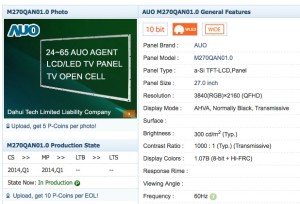 Also in question is whether Apple would even use 16:9 3840 x 2160 panels for a 4K display, as some have suggested that the company may prefer to push Thunderbolt 2 to its limit and support the wider 4096 x 2160 "Cinema 4K" standard given that the display will undoubtedly be targeted at professionals, many of whom in the film industry will be working with content using that resolution standard adopted for film production.
See the full story here: http://www.macrumors.com/2013/11/26/new-display-panels-from-auo-spark-speculation-of-4k-apple-displays/
 "It's the first strictly narrative full-length feature film, a union film, to be shot with the iPhone 5s," Kowalchuk said. Though SAG cannot confirm that no other iPhone film project can claim to precede Kowalchuck's, SAG-AFTRA's Charlesetta Raymondsaid, "I am unaware of any other iPhone films applying [to be SAG signatories]."
 [Philip Lelyveld comment: this is mind-boggling! Nature is amazing.]
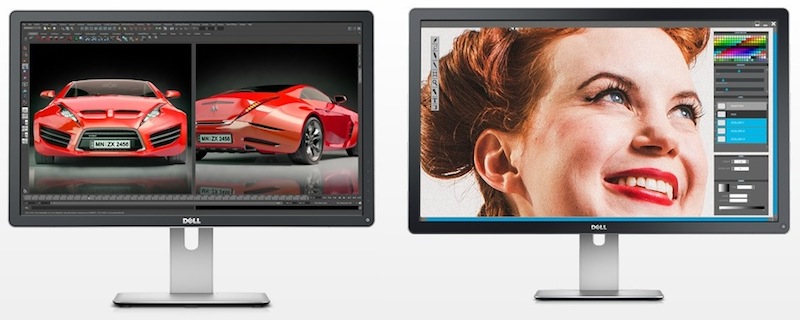 Following the initial revelation of some details on a new 24-inch 3840 x 2160 "4K" Ultra HD display from Dell yesterday, the company has now officially announced that the display launches today in the Americas with a $1399 price tag. A 32-inch model at the same resolution is also available for $3499, while Dell will be introducing a 28-inch 4K display in early 2014 with breakthrough pricing of under $1000.
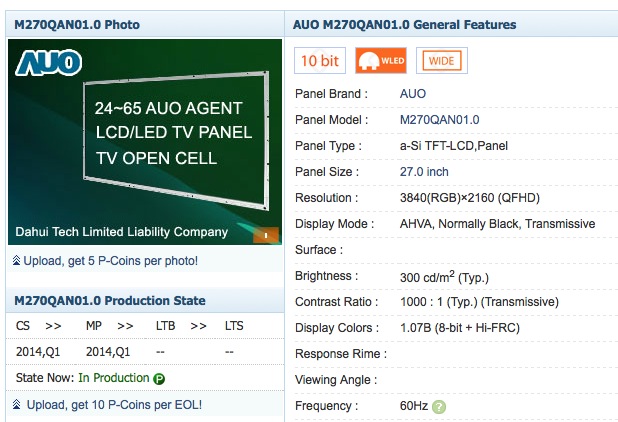 Also in question is whether Apple would even use 16:9 3840 x 2160 panels for a 4K display, as some have suggested that the company may prefer to push Thunderbolt 2 to its limit and support the wider 4096 x 2160 "Cinema 4K" standard given that the display will undoubtedly be targeted at professionals, many of whom in the film industry will be working with content using that resolution standard adopted for film production.