‘Gravity’ Short Film ‘Aningaaq’ Reveals Other Half Of Key Scene
[Philip Lelyveld comment: this is brilliant transmedia content that doesn't scream - hey, I'm transmedia content.]
 "Gravity" fans interested in a look at larger world created by the film would be wise to check out co-writer Jonas Cuaron's short film, "Aningaaq." THR.com debuted the short on Wednesday, which shows what happens on the other end of a key conversation that distressed astronaut Ryan Stone (Sandra Bullock) has during the course of the blockbuster feature.
"They're having a conversation, but they don't understand each other," director Alfonso Cuaron, Jonas' father, told HuffPost Entertainment about "Aningaaq" before the release of "Gravity." Indeed, Jonas' film focuses on an Inuit fisherman living in Greenland. (Subtitles are provided in the short film, but not in "Gravity"; whether knowledge of his attempted communication with Stone deepens the meaning of the scene will depend on the individual viewer.)
See the complete short video here: http://www.huffingtonpost.com/2013/11/20/gravity-short-film-aningaaq_n_4310647.html?ref=topbar&utm_hp_ref=fb&src=sp&comm_ref=false
Google’s Vint Cerf defines Internet of Things challenges
 He also listed seven key challenges facing the Internet of Things, including:
- Standardized interfaces - such as IPv6
- Configuration of massive of amount devices
- Strong access control and authentication
- Privacy and safety
- Instrumentation and feedback
- Dealing with software errors vulnerabilities and software updates
- Potential opportunities for third party businesses
For its part the FTC was looking for answers to its own key questions: For example:
- What are the significant developments in services and products that make use of this connectivity (including prevalence and predictions)?
- What are the various technologies that enable this connectivity (e.g., RFID, barcodes, wired and wireless connections)?
- What types of companies make up the smart ecosystem?
- What are the current and future uses of smart technology?
- How can consumers benefit from the technology?
- What are the unique privacy and security concerns associated with smart technology and its data? For example, how can companies implement security patching for smart devices?
- What steps can be taken to prevent smart devices from becoming targets of or vectors for malware or adware?
- How should privacy risks be weighed against potential societal benefits, such as the ability to generate better data to improve health-care decision-making or to promote energy efficiency?
- Can and should de-identified data from smart devices be used for these purposes, and if so, under what circumstances?
See the full story here: http://www.networkworld.com/community/node/84296/
CES 2014: 3D Printing Ready to Dominate in Las Vegas
 While 3D printing is a technology with endless possibilities, it will also present ethical challenges. Those issues will be on display at CES 2014.
Since 3D printing promises to send a lot of our heads spinning with possibilities and potential problems, CES 2014 will feature Bre Pettis, CEO and co-founder of MakerBot, as a keynote speaker.Pettis has led MakerBot as CEO since its beginning in 2009 and helped to build the company into a leader in desktop 3D printing.
See the full story here: http://www.craveonline.com/lifestyle/articles/606435-ces-2014-3d-printing-ready-to-dominate-in-las-vegas
If Bitcoin Is So Secure, Why Have There Been Dozens of Bitcoin Bank Robberies And Millions In Losses?
 But Bitcoin is not secure.
There have been dozens of robberies of Bitcoin banks and exchanges, and millions of dollars have been lost.
To put that in perspective, if robbers were routinely walking into brick-and-mortar banks and taking millions of dollars, with zero consequences and no arrests, it would make huge headlines every day. The media would be on high alert for the next heist.
But on the Internet, Bitcoin thefts worth hundreds of thousands and millions of dollars happen on a weekly basis and no one cares.
Here are a few recent examples of Bitcoin robberies, and then we'll explain why Bitcoin is not 100% "secure."
- The Chinese Bitcoin GBL went offline earlier this month, taking $4.1 million in users' accounts with it.
- In Australia, a Bitcoin exchange run by an 18-year-old user named "Tradefortress," claims to have lost $1 million of his users' money.
- Also in November, a Czech exchange, Bitcash.cz, declared that hackers had made off with an undisclosed amount stored in its users' Bitcoin wallets.
- In September, Bitfloor announced that it had lost $250,000 in hacked Bitcoins.
- Last year $228,845 was stolen from a trading platform known as Bitcoinica.
Read the full story here: http://www.businessinsider.com/the-history-of-bitcoin-theft-2013-11?curator=MediaREDEF
Aboriginal People’s Television Network Expands With Dejero
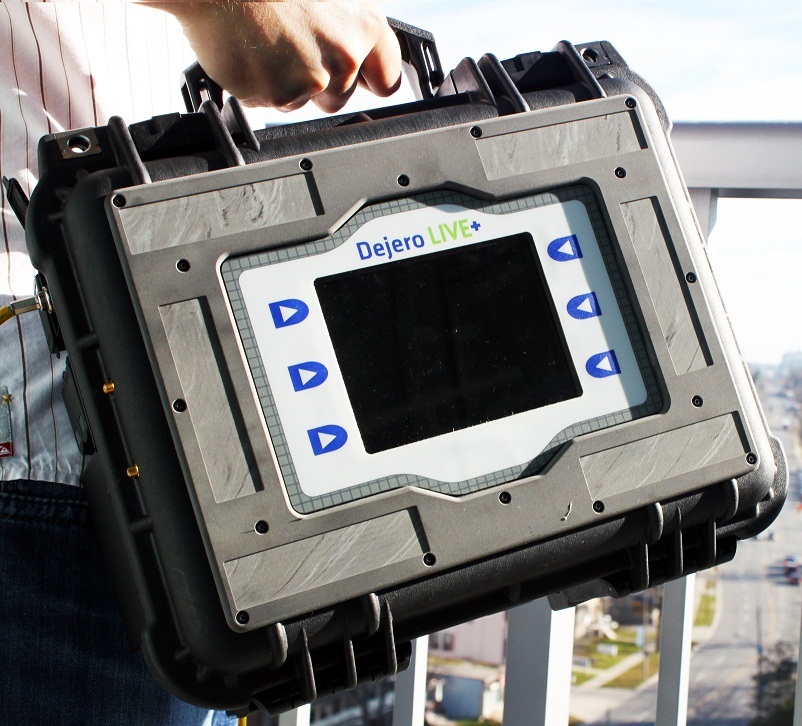 The Aboriginal People's Television Network has adopted the portable Dejero LIVE+ 20/20 Transmitters to add live, remote news coverage from across Canada to its daily news programming. As the premier national television network for Canada's indigenous people, APTN has deployed LIVE+ 20/20 Transmitters at six of its news bureaus.
With broadcast headquarters in Winnipeg, Manitoba, APTN produces a weekday newscast and current affairs programming, as well as several updates throughout the day.
Using Dejero’s cloud-based remote control management tool, APTN personnel in the broadcast center are able to view the status and signal strength of each transmitter and advise the news crews on how to maximize bandwidth and adjust the transmitters for optimal video quality. In a future phase, APTN will deploy the Dejero Mobile App for iOS and Android devices, giving crews another tool using their smartphones and tablets.
See the full story here: http://www.tvtechnology.com/article/aboriginal-peoples-television-network-expands-with-dejero--/222296
The Throwable, Panoramic Ball Cam Is Finally Here—and It’s Incredible
 “The ball handles everything automatically,” reports GigaOM. “It judges when it is at the peak of the toss and takes a picture then. It beams the 36 photos from the cameras wirelessly to your mobile device, which then sends them to Panono’s cloud service to be stitched together. The final image is sent back to your phone or computer, where it can be viewed online or in Panono’s app.”
The team behind Panono has turned to Indiegogo to help fund final development and manufacturing. Discounted pre-orders are available for $499. According to the Indiegogo page, the Panono will ship by September 2014.
See the full story here: http://gizmodo.com/the-throwable-panoramic-ball-cam-is-finally-here-and-i-1462751744