Could robots be the writers of the future?
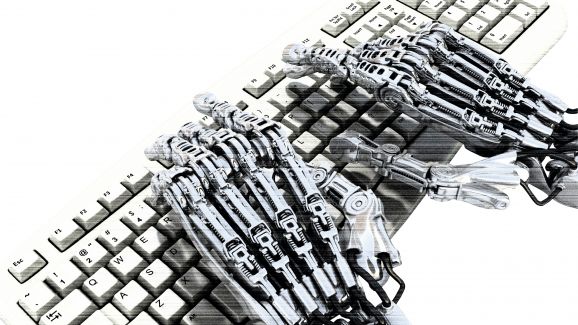 Narrative Science's Quill is the leading automated writing software title. It transforms structured data into readable, plain English stories that are identical to those written by humans, though at far greater speeds. "Quill's power lies in the fact that it is a synthesis of data analytics, artificial intelligence and editorial expertise," says Kris Hammond, Chief Technology Operator at Narrative Science.
See the full story here: http://www.techradar.com/us/news/computing/could-robots-be-the-writers-of-the-future--1141399
Algorithm edits lifecast video down to story arc
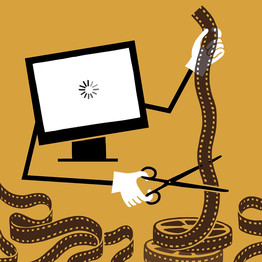 Inspired by analogous work in computerized text-mining, the scientists have created an algorithm that takes account of such factors as the presence of faces, the size of objects and their position in the frame to reduce, say, five hours of video to just 10 or 20 relevant frames. (For now, at least, sound is excluded.) The algorithm also enables the computer to detect whether the camera wearer is static, in transit, or just moving his head. The presence of hands—their proximity to objects, for example—is also used as a cue.
The new technique appears effective, at least compared to earlier methods. In a blind test on 34 volunteers, a majority preferred summaries made using the Texas algorithm over those made by alternative approaches, such as selecting frames at regular intervals.
See the full story here: http://online.wsj.com/article/SB10001424127887323808204579085241433259078.html
An App for Coasting, Rather than Surfing, the Web
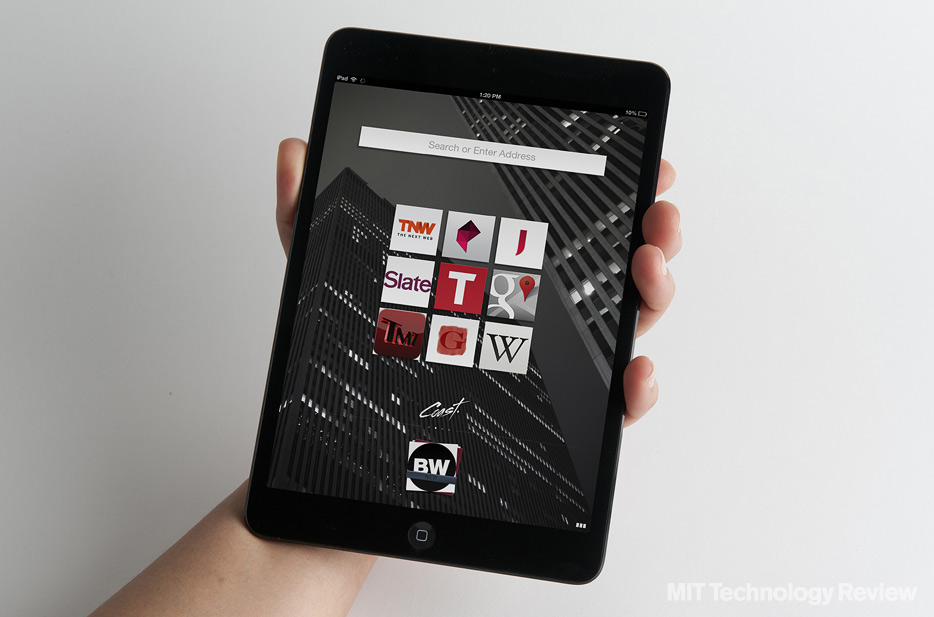 Coast is more for sitting back and watching where the Web takes you—truly browsing—than for going to predetermined destinations. The app banishes the standard URL address bar, treating your favorite websites as on-screen tiles and hiding most options.
MOOCs and the Gartner Hype Cycle: A very slow tsunami
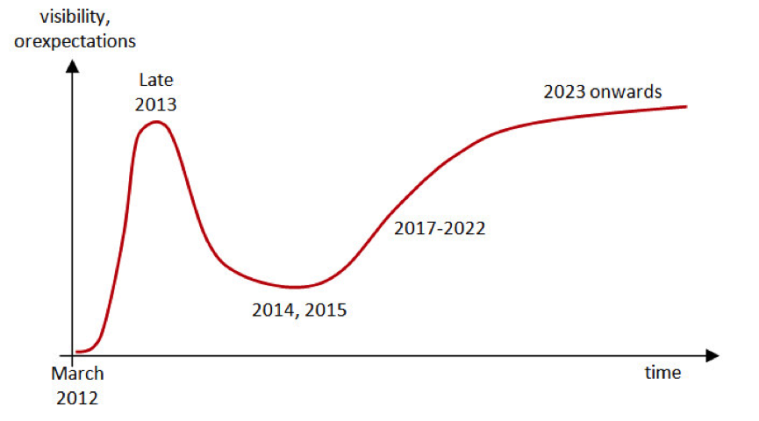 Assuming that you’re an academic and you weren’t planning to retire in the next decade, what then? There’s no simple answer to that; however, knowing that your institution is not going to die next year, but will probably become terminally ill in the next decade, should both sharpen your thoughts and give you some time to develop some strategies for co-existing with the MOOCs.
See the full story here: http://pandodaily.com/2013/09/13/moocs-and-the-gartner-hype-cycle-a-very-slow-tsunami/
Cryptographers Have an Ethics Problem
 [Philip Lelyveld comment: Technology is morally neutral. You cannot know the moral purposes for which it will be used when you are teaching it to others. It is important to have a moral code overlay. It is also important to have ideas about enforcement and penalties when the code is violated. This story doesn't go there.]
...I noticed a poster taped to the wall—the kind put up to inform or inspire students. It was the code of ethics of the Association for Computing Machinery, the world’s largest professional association of computer scientists.
The code is a list of 16 “moral imperatives.” Two items immediately jumped out:
1.3 - Be honest and trustworthy.
1.7 - Respect the privacy of others.
This got me thinking. It looks as if the code-breakers at the National Security Agency—and possibly the academics that often assist them—are in clear, dramatic breach of their own profession’s code of conduct.
Clear Channel-Warner Music Deal Rewrites the Rules on Royalties
[Philip Lelyveld comment: this marks another step in transitioning from the old to the new distribution business model.]
Clear Channel Communications announced a deal late last week with the Warner Music Group through which Warner’s acts will collect royalties when their songs are played on Clear Channel’s 850 stations. This will mark the first time that the music label and its acts — which include Bruno Mars, CeeLo Green, Coldplay and Green Day — will collect payments from Clear Channel. In exchange for the deal and promotion for its acts, Clear Channel will receive a favorable rate for online streaming.
See the full story here: http://www.nytimes.com/2013/09/13/business/media/clear-channel-warner-music-deal-rewrites-the-rules-on-royalties.html?_r=0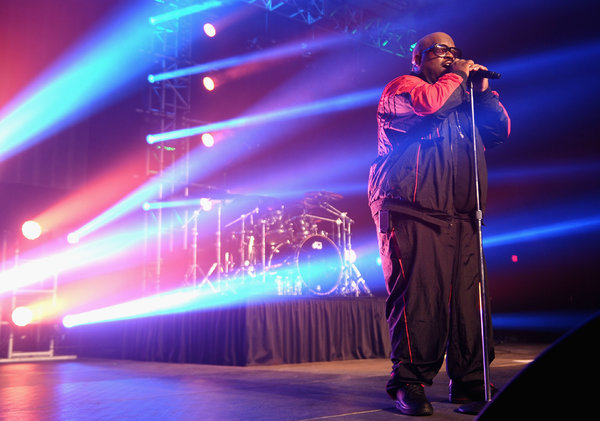
Disney’s Second Screen Live asks moviegoers to bring their iPad this time (video)
Disney has created an iPad app for viewers to download before they get to the theater, which mirrors apps we've seen for home viewing with synchronized games, sing-a-longs and trivia. That's no coincidence, since the movie's return to theaters is timed ahead of its Blu-ray release on October 1st.
See the full story here: http://www.engadget.com/2013/09/11/disney-second-screen-live-ipad-theater-little-mermaid/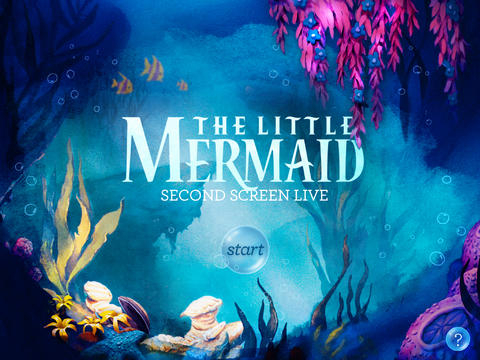
MOVIE SERVICE M-GO UNVEILS PERSONAL CARDS, CONSIDERS LIVE TV
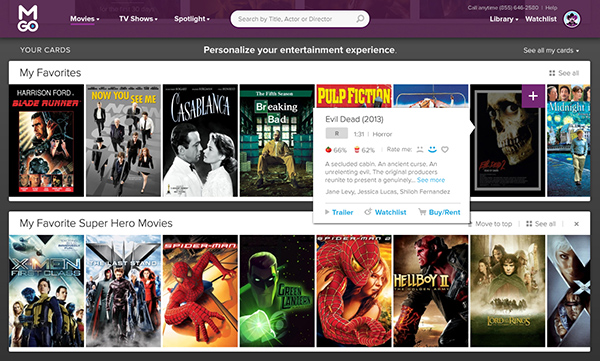 According to M-GO CEO John Batter, what sets his platform apart from similar services such as iTunes, Amazon, Vudu and CinemaNow is personalization. To meet the demands of its customers’ multi-dimensional tastes, the company is launching a series of new features through M-GO Plus, including new means of discovering, browsing, curating and managing content.
Similar features will be available in the future on M-GO’s mobile and connected TV apps. Batter told GigaOMthat M-GO is also considering a locker service as well as live TV.
“At the same time, he warned that getting deals for live TV content is anything but easy, something that competitors like Intel Media and Sony are currently experiencing as well.
Read the full story here: http://www.etcentric.org/movie-service-m-go-unveils-personal-cards-considers-live-tv/#more-64641